Archives 2026

Former President Kovind to attend the Golden Jubilee celebrations of Shri Ram Chandra Mission at Shahjahanpur Ashram

New Delhi, Feb 17: Former President of India Shri Ram Nath Kovind will attend the Golden Jubilee celebrations of Shri Ram Chandra Mission Ashram being held at Shahjahanpur tomorrow. The expansive celebrations marking fifty years of the ashram is being regarded by organisers and followers as a ‘Mahakumbh’ of all faiths being hosted between February 12 to March 2. The twenty-day spiritual congregation will be marked by group meditation, reflection, and service. The group meditation will be led by Revered Daaji – Guide of Heartfulness and President of Shri Ram Chandra Mission.

Speaking on the significance of the golden jubilee celebrations, Revered Daaji – Guide of Heartfulness and President of Shri Ram Chandra Mission said, “The completion of fifty years of the Shahjahanpur ashram is symbolic of the continued spiritual work of our previous Masters. The Shahjahanpur ashram has been the epicentre sending out ripples of spirituality and drawing people from all over the world for collective evolution of consciousness. The place has been serving as a centre for contemplative life, meditation sessions and positive energy.”

Six segments of the golden jubilee celebrations are being observed – the first was held between 12-14 February, second between 16-18 February followed by 20-22 February, 24-26 February and 26-28 February and the final one between 28 February to 2 March. Thousands of devotees are expected to arrive from across India and from several countries abroad, underscoring the Mission’s steady global presence and its enduring appeal among practitioners of Raja Yoga. Arrangements of food and stay have been made for all participants. Volunteers have been positioned at airports in Lucknow and New Delhi, railway station of Lucknow and bus stations in Lucknow and Shahjahanpur.

The ashram inspires inner discipline, collective consciousness, and spiritual renewal. Established as a modern meditation centre and a global hub of the ‘Sahaj Marg’, the ashram has brought together people from all faiths across 164 countries through five decades. The ashram was dedicated by founder Ramchandra Maharaj on Basant Panchami of 1976 in the memory of his Guru Samarth Mahatma Shri Ramchndra ji Maharaj.

Eternal and OpenAI Announce Collaboration to Advance AI Infrastructure Across Eternal’s Commerce and Ecosystem Platforms

Kolkata, India, Feb 17th:  Eternal Limited and OpenAI today announced a strategic collaboration to advance AI capabilities across Eternal’s businesses: Zomato, Blinkit, District, Hyperpure, Zomato’s giveback initiative – Feeding India, as well as its AI-native venture – Nugget.

The collaboration will focus on AI deployments across Eternal’s apps, partner platforms and internal systems. Eternal will also work with OpenAI’s Enterprise API platform to explore new ways customers and partners interact with its platforms, deploy advanced AI tools within partner applications and integrate advanced coding models into its in-house AI orchestration platform.

Eternal is strengthening AI infrastructure across its consumer and enterprise platforms, building AI as foundational infrastructure across its commerce ecosystem. Through this collaboration, the company intends to deploy OpenAI models across select use cases, including AI-assisted workflows for merchants and delivery partners, contextual AI assistants embedded within partner portals, and experimentation around next-generation search and discovery interfaces. These efforts are aimed at making AI useful in everyday decisions and workflows, while maintaining the reliability and speed its platforms require.

The collaboration also extends to Nugget, Eternal’s AI-native venture, where OpenAI’s models will be leveraged across select use cases to accelerate product development and iteration.

Internally, Eternal is also considering integrating OpenAI’s latest coding models, including GPT-5.3-Codex, within Stitch, its in-house automation and developer orchestration platform. Stitch powers end-to-end automation across engineering and non-engineering functions. Eternal expects this integration to strengthen Stitch’s ability to support teams in shipping faster, automating complex workflows and reducing manual overhead across functions.

Eternal and OpenAI will also explore a collaboration on a structured Partner Upskilling Program aimed at driving AI adoption across Eternal’s restaurant and delivery partner ecosystem. The program will focus on deploying advanced AI tools and assistants within partner applications and portals to support operational efficiency, compliance and business decision-making.

“From high leverage areas like software development to real on ground implications of influencing operations, we are learning about the evolving implementations of newer and developing tools in the AI landscape. We are happy that this collaboration with OpenAI will open up even more surface area for us to learn and innovate”, said Albinder Dhindsa, Group CEO, Eternal. 

“Eternal operates at a meaningful scale across consumer and partner platforms,” said Oliver Jay, Managing Director, International, OpenAI. “We are excited to support their teams in applying AI advancements to real-world systems, from AI-native ventures to partner-facing initiatives”. 

Eternal Limited:

Founded in 2008, Eternal is India’s largest new-age tech organization by market capitalization and the first tech company to join the prestigious BSE Sensex 30-share index. Driven by its mission of powering India’s changing lifestyles, Eternal’s line of businesses are spread across diverse verticals, including food delivery (Zomato), quick commerce (Blinkit), going-out offerings (District), and B2B supplies (Hyperpure).

Built in India for India, Eternal generates millions of direct and indirect earning opportunities, fueling growth and innovation across the nation.

ASME Engineering Education Seminar on Drone Technology Highlights Industry-Ready Engineering Skills at REVA University

ASME Engineering Education Seminar on Drone Technology Highlights Industry-Ready Engineering Skills at REVA University
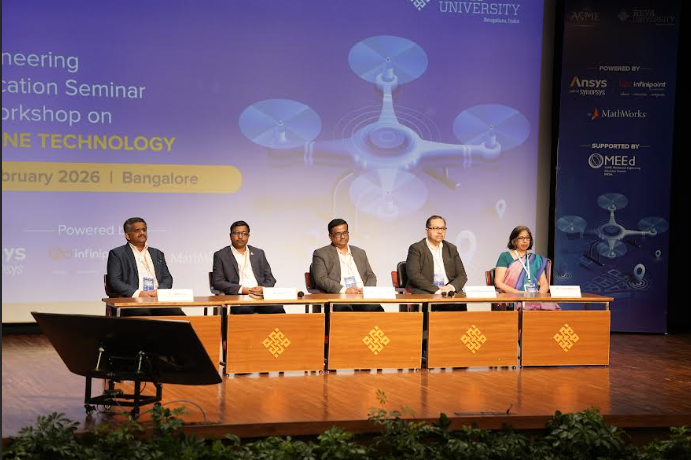
Bengaluru, Feb 17th: The ASME Engineering Education Seminar & Workshop on Drone Technology was held at REVA University as part of the Mechanical Engineering Education Summit (MEEd), focusing on bridging the gap between classroom learning and industry-led drone applications. Hosted in Bengaluru, a growing hub for aerospace, manufacturing, and deep-tech innovation, the seminar examined how engineering education must evolve to align with real-world deployment, regulatory requirements, and business-driven use cases in the drone ecosystem.

Organised by ASME Foundation India, the seminar emphasized  drone technology as an integrated, multidisciplinary system rather than a standalone technical skill. While access to basic drone assembly has become increasingly widespread, the seminar highlighted the growing demand for professionals who can combine mechanical design, electrical systems, digital intelligence, and business understanding to develop scalable, application-ready drone solutions. Through expert interactions and practical sessions, the programme highlighted the need for engineers to develop a broad, hands-on understanding of technology to build careers in drone manufacturing, testing, operations, and field deployment across sectors such as defence, agriculture, logistics, and infrastructure.

Speaking at the seminar, Mr. Madhukar Sharma, president and director of ASME India Private Limited, described the necessity of platforms such as MEEd and IMECE in keeping engineering education up to date with the realities of current engineering practice. “ASME is a not-for-profit, member-driven global engineering society committed to advancing industry-relevant learning and responsible innovation,” Sharma said. “Initiatives such as MEEd and global platforms including IMECE bring together academia, industry, and emerging technologies to shape future-ready engineers. India hosting IMECE outside the U.S. for the first time last year reflects the country’s growing contribution to the global engineering ecosystem. We look forward to the next edition of ASME IMECE India scheduled in Chennai this September.”

Setting the context of the Foundation’s work in relation to the seminar, MsAvni Malhotra, deputy director of  ASME Foundation India, highlighted the importance of application led engineering education. “At the ASME Foundation India, we focus on ensuring that engineering education translates into real-world impact—especially in contexts where access and opportunity are limited,” said Malhotra. “Through initiatives like MEEd, we work to connect students and educators with industry realities, social challenges, and innovation pathways, so that technology is developed not in isolation, but with purpose and relevance.”

Emphasising the role of industry exposure in preparing students for a rapidly changing job market, Dr. KS Narayana Swamy, pro vice chancellor, REVA University, noted that seminars and workshops such as the ASME MEEd programme help students remain relevant amid technological disruption. “Engineering careers today demand far more than academic credentials,” Swamy said. “Students must build problem-solving ability, communication skills, and adaptability, while engaging closely with industry to understand evolving expectations and future career pathways.

The seminar brought together professionals working closely with India’s growing drone and aerospace landscape. Industry leaders such as MrAbhishek Burman, co-founder and CEO, General Aeronautics Pvt Ltd; MrZain Saeed, co-founder and COO, Enord; DrAnanda CM, program director for Civil Aircrafts and head of the Aerospace Electronics Division, NAL; and DrSubrata Nayak, R&D technical lead, ideaForge Technology Inc., shared insights drawn from real industry experience. During the sessions, speakers broke down how drones move from concept to real-world use, covering design decisions, manufacturing processes, certification requirements, deployment challenges, and the regulatory landscape. The discussions also highlighted the blend of technical expertise and cross-functional skills needed to build sustainable careers in UAV-related fields.

Academic insights were shared by DrM. Sivapragasam, professor, M. S. Ramaiah University of Applied Sciences, and DrManjunath S V, associate professor and head of the Department of Aeronautical Engineering at Mangalore Institute of Technology and Engineering. They spoke about the need to better align academic curricula with industry expectations and to strengthen hands-on, experiential learning within engineering programmes.

The seminar also featured a hands-on workshop on Drone Technology in Mechanical Engineering Using ANSYS Simulation, conducted by MrGokul Raj M, technical account manager at Infinipoint Technologies Pvt Ltd, and powered by ANSYS, part of Synopsys. The workshop gave participants a practical look at how simulation tools and AI-enabled UAV workflows are used in real engineering environments, from design validation to testing and operational planning. Two other workshops were also organised: Enabling Next-Generation Autonomous System Workflows: From Design to Deployment by MathWorks, led by Ms. Richa Singh, application engineer, MathWorks; and Physics-Informed Machine Learning for Drones/UAV by ASME Cyber Physical Systems India, conducted by Mr. Anand Nagarajan of Airbus and Mr. Unnat Mankad  of Baker Hughes.

Beyond the technical sessions, the seminar created space for open conversations between faculty members, students, and industry professionals on curriculum relevance, evolving skill expectations, and on-the-ground industry realities. Participants also used the platform to network with practitioners and technology experts, underlining the value of industry-connected learning pathways in drone technology and related engineering fields.

Over the past two years, the MEEd Summits in India have played a key role in bridging the gap between industry and academia, with support from the MEEd India Steering Committee,comprising industry leaders, vice chancellors, and leading researchers. The seminar was supported by technology and industry partners, including ANSYS (part of Synopsys)Infinipoint Technologies, and MathWorks, strengthening the programme’s focus on applied learning, AI driven engineering workflows, and career-oriented skill development.

Experience the Vibrant Culture of Arunachal Pradesh in Delhi through ‘Festival Of Arunachal’

Experience the Vibrant Culture of Arunachal Pradesh in Delhi through ‘Festival Of Arunachal’

New Delhi, Feb 17: The vibrant cultural tapestry of Arunachal Pradesh is set to come alive in the national capital as the ‘Festival of Arunachal 2026,’ organised by Department of Tourism, Government of Arunachal Pradesh with the support of the Ministry of Tourism, Government of India, will be held on 21–22 February 2026 at Dilli Haat, INA, New Delhi.
The two-day cultural and tourism showcase aims to present the rich heritage of India’s northeastern frontier through its indigenous traditions, performing arts, textiles, handicrafts, cuisine, and emerging tourism experiences. The festival will bring together artisans, cultural troupes, performers, influencers, dignitaries, and visitors on a single platform, offering an immersive engagement with Arunachal Pradesh’s living heritage.

The festival will be attended by Shri Pasang Dorjee Sona, Hon’ble Minister of Education, Tourism, Rural Works, Libraries and Parliamentary Affairs, Government of Arunachal Pradesh, along with dignitaries from the Ministry of Tourism and invited guests.

The exhibition will open to visitors from 10:30 AM onwards on both days, offering an authentic experience of Arunachal Pradesh’s cultural and tourism offerings. Exhibitors who have travelled from various districts of Arunachal Pradesh will showcase traditional handlooms and indigenous textiles, handcrafted bamboo and cane products, Tribal jewellery and artefacts, organic produce and local products, authentic Arunachali cuisine, including local delicacies prepared using region-specific herbs and ingredients.

Visitors will have the opportunity to interact directly with artisans and cultural representatives, strengthening awareness about the state’s craftsmanship and sustainable livelihood practices.

One of the major highlights of the festival will be the Traditional Yak Dance performance, symbolising the high-altitude Himalayan culture of Arunachal Pradesh. The dance reflects the close relationship between the communities and their natural environment, particularly in the mountainous regions.

The festival will also feature a grand cultural showcase comprising curated performances, folk music presentations, and an ethnic fashion show celebrating the traditional attire of Arunachal’s diverse tribal communities.

Arunachal Pradesh, often referred to as the “Land of the Rising Sun,” is home to over 26 major tribes and more than 100 sub-tribes, each contributing to the state’s diverse cultural identity. With vast forest cover, extraordinary biodiversity, and growing adventure and eco-tourism opportunities, the state is steadily emerging as a sought-after destination for experiential travel.

By hosting the festival in New Delhi, the organisers aim to strengthen awareness among policymakers, tourism stakeholders, and urban audiences while promoting sustainable and responsible tourism practices.

The event is open to the public, inviting residents of Delhi-NCR and visitors to experience the spirit, artistry, and traditions of Arunachal Pradesh in the heart of the capital.

Event Details:

  • Festival of Arunachal 2026
  • 21–22 February 2026
  • Dilli Haat, INA, New Delhi

Life Celebrated with Children Who Defeated Cancer

Life Celebrated with Children Who Defeated Cancer
Yatharth Super Speciality Hospital raised awareness about childhood cancer

Doctors emphasized that 90–95% of cases are curable with early detection

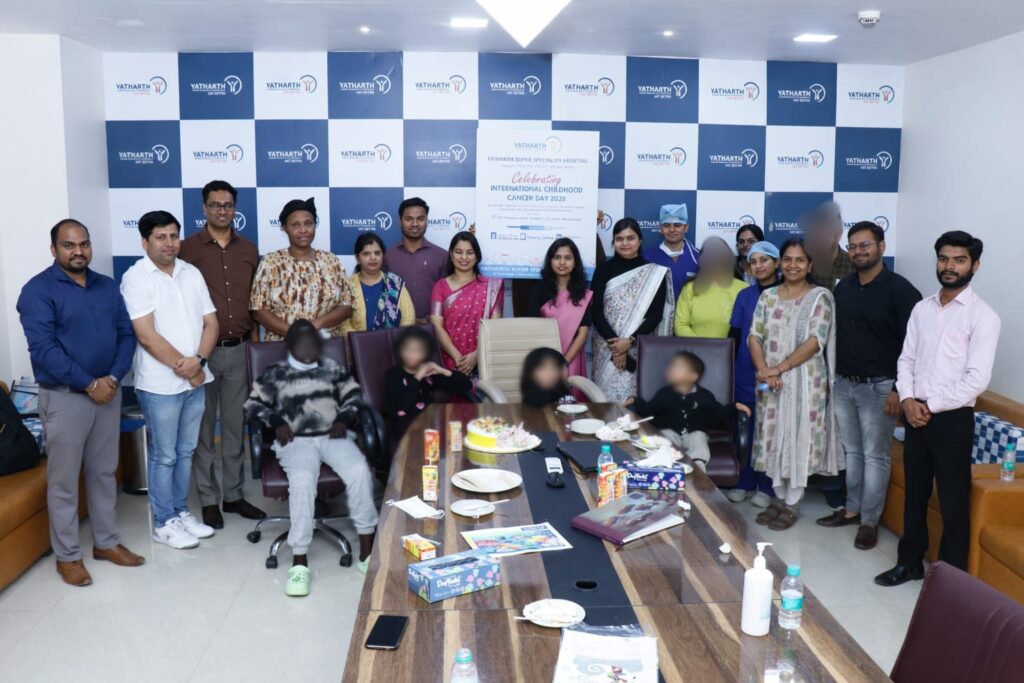
On the occasion of International Childhood Cancer Day, Yatharth Super Speciality Hospital celebrated life with children who have successfully battled cancer. Four young survivors who returned to healthy lives after undergoing difficult treatment participated in the event.

The celebration included cake cutting, games, and a felicitation ceremony for the children. Their smiles filled the atmosphere with hope and courage.

Dr. (Major) Ravi Shankar, Consultant – Pediatric Hemato-Oncology & Bone Marrow Transplant, who treated the children, was also present. He shared that blood cancer is the most common type of cancer among children in Uttar Pradesh and globally.

He advised parents not to ignore symptoms such as recurrent fever, persistent anemia unresponsive to medication, unusual bleeding, lumps in the body, or continuous joint pain. He emphasized that simple tests conducted on time can detect serious illnesses at an early stage.

Dr. Ravi Shankar further noted that in small towns and semi-urban areas, symptoms are often mistaken for common illnesses, leading to delayed diagnosis. “If detected early, 90–95% of childhood cancers are treatable. In fact, treatment success rates in children are often higher than in adults,” he said.

Every year, approximately 50,000 to 60,000 new cases of childhood cancer are reported in India. With improved healthcare facilities, more cases are now being diagnosed and treated effectively.

He also shared the inspiring story of a child who overcame multiple relapses and eventually recovered after a bone marrow transplant, calling every child a true warrior.

Dr. Kapil Tyagi, Managing Director, said, “Celebrating life with these brave children is a proud moment for us. With timely diagnosis and dedicated treatment, 90–95% of cases can be successfully treated.”

Amit Singh, Group CEO, stated, “Awareness is the strongest weapon against childhood cancer. With timely screening, advanced technology, and a committed medical team, we can ensure a healthy and hopeful future for children.”

Dr. Sunil Baliyan, COO, Greater Noida unit, added, “Early diagnosis can save lives. With parental awareness and expert treatment, successful outcomes in 90–95% of cases are achievable. This remains our commitment.”

The initiative conveyed a strong message that awareness and timely treatment can give children a new lease on life.

The cutest lip mask now comes in the cutest flavour- Dr.Jart Vital Hydra Solution Hydrating Lip Mask now in Bubble Gum.

The cutest lip mask now comes in the cutest flavour- Dr.Jart Vital Hydra Solution™ Hydrating Lip Mask now in Bubble Gum.
One of the best hydrating lip masks for dry lips– Dr.Jart+ Vital Hydra Solution Hydrating Lip Mask now in PINK! This leave-on formula with Hyaluronic Acid delivers intense hydration overnight, instantly plumps lips, smooths visible dry lines and boosts shine. This jelly texture formula for dry lips goes on clear and comes in an irresistible jelly bear jar. It instantly plumps lips up and reduces visible fine dry lines for smoother, healthier looking lips. Use it as a night lip mask or as a primer for a hydrating base before lipstick or lip gloss.

Bajaj Foundation Organizes Youth Eco Summit 2026

Bajaj Foundation Organizes Youth Eco Summit 2026

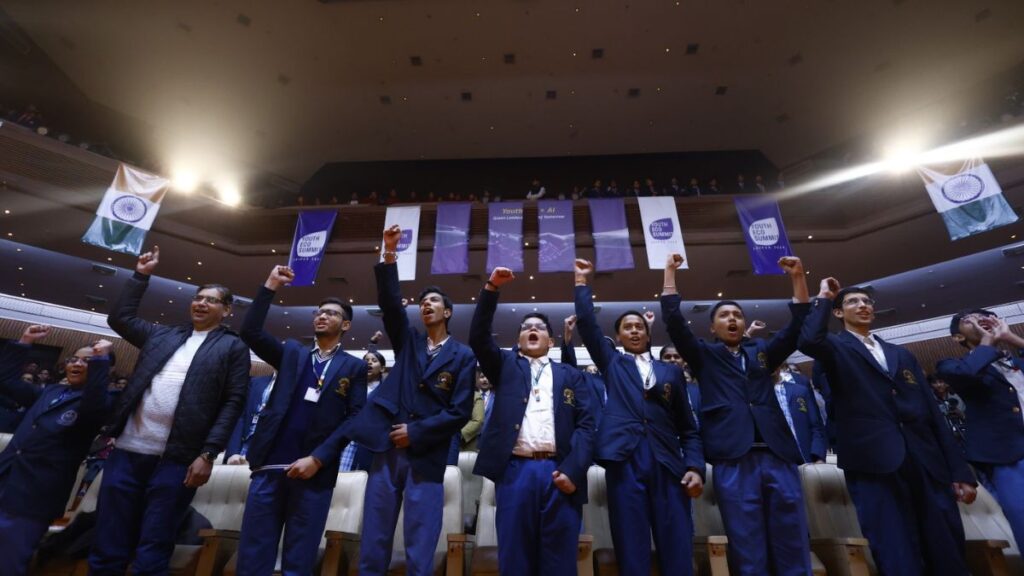
Feb 17: As Artificial Intelligence increasingly shapes everyday life, questions around its environmental and social footprint are moving into the mainstream. At the Youth Eco Summit 2026, these concerns were explored through a convergence of cultural influencers, policymakers and young voices highlighting the growing need for accountability in the age of rapid technological advancement. Organized by the Bajaj Foundation, brought together with the Ministry of Electronics and Information TechnologyMinistry of Environment, Forest and Climate ChangeUNICEF YuWaah and TECNO, the Youth Eco Summit brought together students from 66 cities across India, positioning youth at the centre of discussions on sustainabilityaccountability and technological impact.
The summit saw participation from Environmentalist and Model Milind SomanActor Rohit Saraf and UNDP India Youth Champion and Actor Sanjana Sanghi, who together unpacked the challengesresponsibilities and opportunities emerging from the rise of Artificial Intelligence. Their presence brought a cultural lens to conversations traditionally dominated by policy and technology, reinforcing the idea that responsible innovation must resonate beyond boardrooms and institutions.

Adding a leadership perspective from the technology industry, Arijeet Talapatra, CEO of TECNO Mobile India, spoke about the responsibility that accompanies access to advanced technology. He noted that purpose-driven applications of AI have the potential to address environmental challengesreduce waste and encourage more sustainable lifestyles, emphasizing that innovation must be guided by intent, not excess.

Policy and civic engagement perspectives were reinforced by Seep Agrawal, Lead – Civic Engagement at UNICEF YuWaah, who highlighted the importance of collaboration between youth, institutions and cultural voices. She stressed that meaningful change occurs when young people are treated as collaborators in solution-building, rather than passive participants in dialogue.

The summit experience extended beyond panel discussions through the Green Education and Knowledge Lawn, which featured interactive zones such as Waste ReimaginedTECNO Knowledge WalkTECNO AI Meme Studio and E-Waste Pledge Booth. These spaces translated complex sustainability challenges into tangible, experiential learning moments. At the TECNO AI Meme Studio, students explored themes of green coding, energy-conscious algorithms, and the often-overlooked resource demands of digital consumption. Using memes as a medium, participants transformed technical ideas into accessible narratives that resonated with their peers.

Offering a global perspective, Viransh Bhanshali, Chief of Staff at Oxford Union, spoke about the convergence of technologypolicy and civic action, emphasizing that emerging technologies must evolve alongside accountability frameworks to create lasting impact.

Concluding the summit, Pankaj Bajaj, Director of the Bajaj Foundation, underscored that the presence of students was driven by intent rather than obligation. He remarked that the real outcome of the Youth Eco Summit would be determined by whether the ideas discussed translate into action, choices that will ultimately shape the future.

Radisson Blu Resort Temple Bay Mamallapuram Launches Wellness & Bodhi Prana Experiences for Holistic Rejuvenation

Mamallapuram, Tamil Nadu Feb 17th: Radisson Blu Resort Temple Bay Mamallapuram, one of the most iconic luxury beach resorts near Chennai, has announced the launch of its Wellness & Bodhi Prana Experiences offer, a curated wellness retreat designed to restore balance, reduce stress, and promote mindful living through holistic therapies and immersive wellness practices.

Nestled along the shores of the Bay of Bengal and close to the UNESCO World Heritage monuments of Mamallapuram, the resort offers an ideal setting for a rejuvenating wellness getaway. This new wellness package combines yoga, meditation, spa therapies, mindful nutrition, and nature-led experiences, making it a perfect choice for travellers seeking a luxury wellness resort in South India.

A Complete Wellness Retreat in Mamallapuram

The Wellness & Bodhi Prana Experiences at Radisson Blu Resort Temple Bay focus on both physical and mental well-being. Guests begin their day with guided yoga and meditation sessions, followed by bio-hacking treatments  and prana beach walk energy exercises designed to enhance vitality and inner balance.

Complementing the wellness rituals are nourishing culinary experiences, including a Sunshine Buffet Breakfast at Waters Edge Café, herbal teas, fresh juices, and curated healthy lunch or dinner options. The highlight of the retreat is the personalised spa journey at Bodhi Prana, featuring doctor consultations and two 60-minute spa therapies per stay, aimed at deep relaxation and holistic healing.

Commenting on the launch, Vikram Cotah, Chief Executive Officer, GRT Hotels & Resorts, said: “Wellness today is about intention, not indulgence. With the Wellness & Bodhi Prana Experiences at Radisson Blu Resort Temple Bay Mamallapuram, we wanted to create a space where guests can truly disconnect from the noise and reconnect with themselves. This offering reflects our commitment to evolving luxury—where well-being, authenticity, and meaningful experiences take centre stage.”

GReaT Being is GRT’s philosophy of mindful hospitality—brought to life through GReaT Touch, where wellbeing, purpose, and intuitive service come together in thoughtful gestures and warm, personalised interactions that create stays which restore, inspire, and connect. 

Wellness & Bodhi Prana Experiences offer Include

  • Luxury accommodation
  • Complimentary Sunshine Buffet Breakfast at Waters Edge Café
  • Daily herbal teas and fresh juices
  • Curated lunch or dinner buffet or set menu
  • Two 60-minute spa therapies per stay with doctor consultation
  • Daily yoga and meditation sessions with expert trainers
  • Bio-hacking Treatment
  • Prana beach walk energy exercises

A Luxury Wellness Escape Near Chennai

Designed for wellness enthusiasts, couples, and urban professionals seeking a mindful escape, the Wellness & Bodhi Prana Experiences position Radisson Blu Resort Temple Bay Mamallapuram as a leading spa and wellness resort near Chennai. The retreat blends ancient wellness traditions with contemporary luxury, offering guests a transformative stay by the sea.

Availability & Bookings

The Wellness & Bodhi Prana Experiences offer are available for bookings on our website.

Adani Commits USD 100 Bn to Sovereign AI Infrastructure

Ahmedabad, Feb 17: The Adani Group today announced one of the world’s largest integrated energy-compute commitments, a direct investment of USD 100 billion to develop renewable-energy-powered, hyperscale AI-ready data centres by 2035. The initiative will establish a long-term sovereign energy and compute platform designed to position India as a global leader in the emerging Intelligence Revolution.

The investment is expected to catalyse by 2035 an additional USD 150 billion across server manufacturing, advanced electrical infrastructure, sovereign cloud platforms and supporting industries. Together, this is projected to create a USD 250 billion AI infrastructure ecosystem in India over the decade.

“The world is entering an Intelligence Revolution more profound than any previous Industrial Revolution,” said Mr Gautam Adani, Chairman of the Adani Group. “Nations that master the symmetry between energy and compute will shape the next decade. India is uniquely positioned to lead. At Adani, we are building on our foundation in data centres and green energy to expand into the complete five-layer AI stack focused on India’s technological sovereignty. India will not be a mere consumer in the AI age. We will be the creators, the builders and the exporters of intelligence and we are proud to be able to participate in that future.”

This roadmap builds on AdaniConnex’s existing 2 GW national data centre, expanding toward a 5 GW target that positions India at the epicentre of the global AI economy. This vision is anchored by landmark partnerships with Google to establish the nation’s largest gigawatt-scale AI data centre campus in Visakhapatnam, alongside additional campuses in Noida, and with Microsoft spanning Hyderabad and Pune. The Adani Group is also in discussion with other major players seeking to establish large scale campuses across India thereby further cementing its position as India’s premier AI infrastructure partner.

In line with this vision, the Group will also deepen its data centre partnership with Flipkart, advancing the collaboration toward the development of a second AI data centre purpose-built to support Flipkart’s next-generation digital commerce, high-performance computing and large-scale AI workloads.

The World’s Largest Integrated Data Centre Platform

The 5 GW deployment will create the world’s largest integrated data centre platform, combining renewable power generation, transmission infrastructure and hyperscale AI compute within a single coordinated architecture. Unlike conventional data centre expansions, the program is designed as a unified energy-and-compute ecosystem, where generation, grid resilience and high-density processing capacity are developed in parallel.

Facilities will be optimised for large high-density compute clusters and next-generation AI workloads, supported by advanced liquid cooling systems and high-efficiency power architecture. Dedicated compute capacity will support Indian Large Language Models (LLMs) and national data initiatives, ensuring long-term data sovereignty. Reliable transmission networks and advanced grid systems will underpin the platform, ensuring stability, scalability and uptime at hyperscale.

Leveraging India’s Renewable Advantage

As global AI workloads become increasingly energy-intensive, the Adani Group is uniquely positioned to provide the competitively priced, carbon-neutral power essential for this transition. Central to this strategy is Adani Green Energy’s 30 GW Khavda project, of which over 10 GW is already operational. In addition, the Group is committed to investing another USD 55 billion to expand its renewable energy portfolio, which will include one of the world’s largest battery energy storage systems (BESS).

Strategic connectivity through cable landing stations, including at Adani’s network of ports, will ensure low-latency global integration with the Americas, Europe, Africa and Asia.

Derisking and Building Aatmanirbhar Supply Chains

To reduce exposure to global supply-chain volatility, the Adani Group will also co-invest in domestic manufacturing partnerships of critical infrastructure components, including high-capacity transformers, advanced power electronics, grid systems, inverters and industrial thermal management solutions.

This approach positions India not only as a data hub but as a producer and exporter of next-generation intelligence and compute infrastructure.

Integrating with National Priorities

By leveraging its existing AI-based industry cloud which currently manages millions of renewable assets in real-time, the Adani Group is establishing a digital blueprint for significant internal compute expansion. Aligned with the PM Gati Shakti program, the Group is embedding agentic AI across its logistics, ports and industrial corridors to create hyper-efficient, smart operations. This strategic integration not only modernises national infrastructure but also ensures data sovereignty, bridging the gap between heavy industry and intelligent, secure automation.

Democratising High-Performance Compute
In line with India’s five-layer AI architecture (Applications, Models, Chips, Energy and Data Centres), the Group will actively participate in partnerships across the full stack. A significant portion of GPU capacity will be reserved for Indian AI startups, research institutions and deep-tech entrepreneurs, alleviating compute scarcity and fostering a domestic innovation ecosystem.

Capitalising on India’s Talent

Working with leading academic institutions, the Adani Group will establish specialised AI Infrastructure Engineering curricula, applied AI research labs focused on energy and logistics and a national fellowship program to address the growing skills gap.

This long-term commitment by the Adani Group establishes one of the world’s most ambitious integrated energy and AI infrastructure platforms ever undertaken at national scale. The Adani Group invites global technology companies, sovereign institutions and innovation partners to participate and collaborate in building India’s next-generation AI infrastructure platform.

The Department of Information Technology, Vivekanand Education Society’s Institute of Technology (VESIT), organises its first ever Hackathon ‘Genesis 2026’

The Department of Information Technology, Vivekanand Education Society’s Institute of Technology (VESIT), organises its first ever Hackathon ‘Genesis 2026’

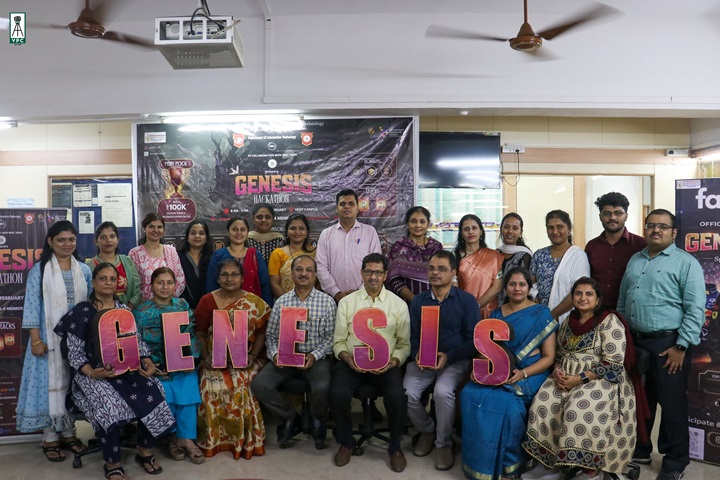
Mumbai, Feb 17:  The Department of Information Technology at Vivekanand Education Society’s Institute of Technology (VESIT), Mumbai, successfully organized its first-ever two-day offline hackathon, ‘Genesis 2026’ marking a significant milestone in experiential and innovation-driven learning. Centered on the theme, “Building Intelligent, Sustainable, and Decentralised Solutions for the Future,” the hackathon brought together students across all departments and academic years.

A key highlight of the event was the collaboration with the Solid Waste Management (SWM) Department of the Brihanmumbai Municipal Corporation (BMC) under Project Swechchha. This partnership enabled students to work on real-world civic problem statements, reinforcing the role of technology in urban sustainability and social responsibility. The initiative was coordinated by Dr. Shanta Sondur, the project Swechchha Coordinator.

A total of approximately 552 entries were recorded, reflecting strong interdisciplinary participation and a culture of problem-solving across diverse technological domains. The hackathon was conducted under the guidance of the Internal Quality Assurance Cell (IQAC) in association with the Institution’s Innovation Council (IIC) through the QuestIT platform of the Department of Information Technology. The dedicated Blockchain track, featuring crypto-based USDC rewards, provided participants with exposure to decentralised technologies and digital ecosystems. Simultaneously, the AI and Sustainability tracks emphasized deployable, real-world solutions addressing pressing civic and environmental challenges.

The event was conducted under the leadership of Dr. Jayalakshmi Nair, Principal, VESIT, and guided by Shri Manoj Sabnis, Head of the Department of Information Technology. Coordination was led by Mrs. Charusheela Nehete and Mrs. Kajal Jewani (OuestIT in-charge), with significant contributions from Mr. Varun Rahatgaokar, Mr. Anish Tawade (Council Member, QuestIT), faculty mentors, and student volunteers. Chief Guest Mrs. Vidya M. Swami shared insights on innovation and learner-centric education, while sponsorship support from Shri Rakesh Kumar of Star Union Dai-ichi Life Insurance Co. strengthened industry–academia collaboration. This partnership enabled students to work on real-world civic problem statements related to urban waste management, reinforcing the role of technology in advancing sustainability and social responsibility

Speaking on the objectives of the event, Dr. Jayalakshmi Nair, Principal, VESIT, said: “This year’s hackathon reflects our commitment to moving learning beyond classrooms into real-world problem solving. As our first offline edition, it brought students together to collaborate intensively on emerging domains like Solid Waste Management, Blockchain, and AI, developing deployable solutions under industry-like conditions. By integrating interdisciplinary teamwork, hands-on innovation, and strong industry engagement, we aim to bridge the gap between theory and practice while nurturing socially responsible technologists.”

The competition was divided into three tracks: Track 1 – Sustainability (focused on Solid Waste Management), Track 2 – Artificial Intelligence, and Track 3 – Blockchain. Tracks 1 and 2 each carried a prize pool of ₹25,000, with ₹12,000 awarded to the first prize winner, ₹8,000 to the second prize winner, and ₹5,000 to the third prize winner. The Blockchain track recognized four winners, each receiving 100 USDC as part of the crypto-based rewards initiative. ‘Genesis 2026’ concluded on a high note, showcasing the ingenuity, technical competence, and social consciousness of participating students. By combining hands-on innovation, emerging technologies, and strong civic and industry engagement, the event reinforced VESIT’s vision of nurturing future-ready professionals equipped to address real-world challenges.