Archives 2026

Ambuja Cements Empowers Self–Help Group Member in Ropar through Sustainable Livelihood Support

Punjab, 23 Feb:  Ambuja Cements, the 9th largest building materials solutions provider globally and part of the diversified Adani Portfolio as part of its CSR initiatives, has transformed the life of Kuldeep Kaur, a member of Guru Teg Bahadur Self-Help Group (SHG) from Ghanaouli village in Ropar district, through its sustained livelihood support initiatives.

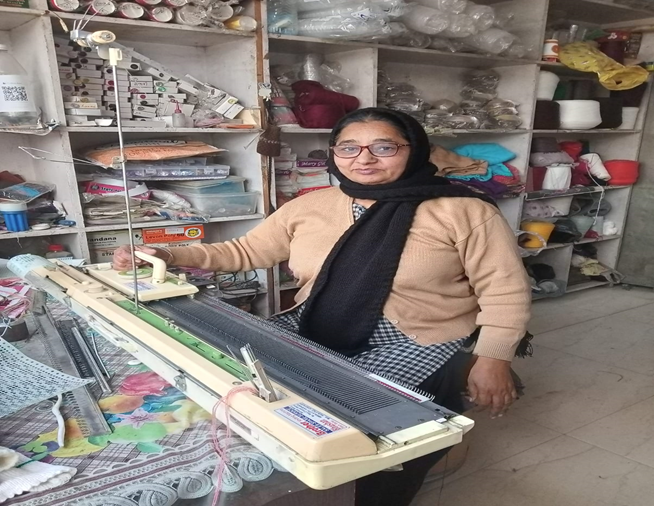
Kuldeep, who belonged to a financially vulnerable family, faced severe hardships after marriage. With her husband earning ₹7,000 per month as a labourer and her son suffering from serious health issues, the family struggled to meet basic needs. In 2005, she joined the SHG and in 2008 began knitting training with support from Ambuja Cements, marking a turning point in her journey.

Despite personal challenges, she steadily developed her skills and established her own income-generating activity in knitting. Her earnings enabled her to secure proper medical treatment for her son, build her own house and support her daughter’s education in the medical stream.

Recognising her dedication, Ambuja Cements encouraged her to become a knitting trainer. Since then, she has trained women across 20 villages, opened a wool shop and distributes knitting orders among SHG members. During peak season, she earns up to ₹80,000 per month. Her journey stands as a testament to the impact of women empowerment and sustainable livelihood initiatives supported by Ambuja Cements.

Messe Frankfurt Trade Fairs India Joins Forces with BusinessLive Trade Fairs to Expand Media Expo

Business Wire India

Under this collaboration between Messe Frankfurt Trade Fairs India and BusinessLive Trade Fairs, Sign India Expo will evolve into Media Expo, marking the launch of Media Expo Kochi and Media Expo Hyderabad while Sign India Expo Chennai transitions under the existing Media Expo Chennai banner. This move significantly expands the overall Media Expo footprint, increasing its presence from three cities to a total of five cities: Chennai, Hyderabad, Kochi, Mumbai and New Delhi.

Media Expo, which has delivered 56 successful editions across Mumbai, New Delhi and Chennai, will now become the primary exhibition platform in the three southern markets of Kochi, Hyderabad and Chennai, transitioning from the long-established Sign India Expo. This move will ensure focused regional engagement while offering the industry consistent and unified platforms across these South Indian markets. The collaboration will be implemented beginning with Media Expo Chennai, scheduled for later this year at Chennai Trade Centre, Chennai, Tamil Nadu.

Sign India Expo is backed by a legacy of 70+ editions across India with a particularly deep presence in the Southern markets like Bengaluru, Chennai, Kochi and Hyderabad. This collaboration brings together two of the most recognised exhibition brands from the industry to create a unified and impactful industry trade fair platform.

This partnership will leverage the region’s strong business potential and create a broader and wider exhibition platform. The combination of their expertise, the organisers aim to expand exhibitor participation and enhance the overall product showcase across the product segments like: printing, signage, digital signage, advertising solutions for out-of-home (OOH) and digital out-of-home (DOOH), retail displays and branding solutions, large-format and industrial printing, fabrication equipment and materials, POP-POSM, LED screens, printing equipment, sign substrates, inks, advanced 3D and laser printing solutions and much more.

By leveraging BusinessLive Trade Fairs established presence in South Indian markets, this alliance enables Media Expo to strengthen its positioning as a central platform for the printing, signage, branding and advertising solutions segment. For the industry, this partnership will deliver increased opportunities by strengthening participation and market reach through the platform, bringing together exhibitors, visitors, associations and professionals from across the printing, signage, branding and OOH-DOOH ecosystem. By consolidating participation and aligning market engagement, this pivotal step will strongly drive buyer-seller connections across South India’s key commercial hubs.

Commenting on the collaboration, Mr Raj Manek, Executive Director & Board Member, Messe Frankfurt Asia Holdings Ltd, said: “South India continues to be one of the most dynamic and opportunity driven regions for the printing and signage industry. This collaboration with BusinessLive Trade Fairs allows us to expand Media Expo’s footprint while offering the industry a stronger, more centralised platform that supports long-term growth and meaningful engagement.”

Likewise, Mr Siva Prasad Palnati, Director, BusinessLive Trade Fairs, added: “Sign India Expo has built a strong and trusted presence across South India over the years. Partnering with Messe Frankfurt Trade Fairs enables us to elevate that legacy by combining regional strength with global exhibition expertise, creating region-specific platforms with Media Expo brand that will serve the industry and its evolving needs better.”

The growth outlook is underscored by industry estimates, with India’s printing and signage market projected to grow from USD 1,074.5 million in 2025 to USD 3,494.3 million by 2034 as per IMARC Group, while the OOH and DOOH market is expected to expand from USD 519.93 million in 2025 to USD 656.13 million by 2030 according to Mordor Intelligence.

Complementary strengths, deep market understanding and being established exhibition brands, the partnership between Messe Frankfurt Trade Fairs India and BusinessLive Trade Fairs marks a strategic move towards building a more cohesive and future-ready printing and signage industry ecosystem in South India.


Press information and photographic material

www.in.messefrankfurt.com


For Events & Entertainment Technologies shows worldwide, please visit:
www.prolight-sound.com/worldwide

Background information on Messe Frankfurt

www.messefrankfurt.com/background-information

Sustainability at Messe Frankfurt
www.messefrankfurt.com/sustainability-information

India’s flagship defence-space Conference & Expo – “DEFSAT 2026” scheduled from 24th–26th February 2026 at the Manekshaw Centre, New Delhi

New Delhi, Feb 23:  The 4th edition of DEFSAT adopts the theme “Space at the Core of National Security,” as SIA-India announces its flagship DEFSAT 2026 Conference & Exposition, scheduled from 24th–26th February 2026 at the Manekshaw Centre, New Delhi. Now in its 4th editionDEFSAT 2026 has become one of India’s most consequential defence-space dialogue platforms, bringing together senior military leaders, policymakers, technology partners and industry to shape how the nation prepares for future space-enabled security challenges. Building on the success of its first three editions, collectively drawing 500+ participants from 20+ countries, 80+ speakers and representation from 60+ organisations — DEFSAT 2026 is scheduled to take place 24–26 February 2026 in New Delhi, featuring a broad agenda spanning operational doctrine, industrial collaboration, technology resilience and geopolitical partnerships.

The backdrop for DEFSAT 2026 is India’s highest-ever defence budget of ₹7.85 lakh crore for FY 2026–27, marking a ~15% increase over the previous year’s estimates and underscoring the government’s commitment to military modernisation, sovereign capability and industrial self-reliance. Within this allocation, over ₹2.19 lakh crore has been earmarked for capital outlay, a near 22% jump aimed at next-generation platforms, advanced weapons, launch systems, and space-enabled technologies, while procurement from domestic defence industries has been prioritised with ₹1.39 lakh crore reserved for Indian suppliers. The Defence Research and Development Organisation (DRDO) allocation has also risen to ₹29,100.25 crore, signalling continued emphasis on technology innovation.

The agenda for DEFSAT 2026 reflects this expansive landscape, with 13 thematic sessions that span from strategic doctrine and resilience to industrial cooperation and doctrine implementation.

Key confirmed and leading participants include Lt Gen Rajiv Ghai (Deputy Chief of Army Staff – Strategy), AVM Manu Midha (Director General, DSA), , Dr. Sanjay Bahl (Director General, CERT-In), and Dr. Vinayak Godse (CEO, DSCI). Top government and military leadership expected to be associated include the Chief of Defence Staff Gen Anil Chauhan, Vice Chief of the Air Staff Air Marshal Nagesh Kapoor, Vice Chief of the Naval Staff Vice Admiral Sanjay Vatsayan, and senior tri-services leadership such as Air Marshal Ashutosh Dixit (CISC) and other senior representatives from the armed forces, defence agencies, and national security institutions. 

From Dialogue to Doctrine: Strategic Defence Space Group

A major milestone at DEFSAT 2026 is the formalisation of the Strategic Defence Space Group (SSG), a high-level multi-stakeholder body to support India’s long-term military space preparedness. Shaped through prior roundtables and now operational under the leadership of Lt Gen PJS Pannu (Retd.) as Advisor to SIA-India and Chairman of its Defence Space Committee, the SSG brings together senior military, government, industry and academic stakeholders for structured policy coordination, capability road-mapping and doctrine development. It will also help shape scenarios for IndSpaceX 4.0, India’s first industry-led defence-space tabletop exercise.

The DEFSAT 2026 programme is supported by a broad range of strategic partners and institutions, demonstrating the cross-sectoral nature of defence-space readiness. Supporting organisations include NITI Aayog, Ministry of Electronics & Information Technology (MeitY), Government e-Marketplace (GeM), CERT-IN, Research and Information System for Developing Countries (RIS), National Maritime Foundation, National Institute of Advanced Studies (NIAS), Economic Council of India, the Institution of Electronics and Telecommunication Engineers (IETE), AIAICPS, and the Ministry of Defence (MoD). The Centre for Land Warfare Studies (CLAWS) serves as the knowledge partner, contributing strategic perspective alongside operational and policy insights.

DEFSAT 2026 will also feature a strong exhibition segment showcasing a cross-section of India’s and the global defence–space ecosystem. So far 22 Exhibitors include HEX20, Times Microwave, Glenair, ChipSpirit, Sky Serve, Tantrayut, Onnes Ruskiv, RDVW Satcom Solutions & Engineers Pvt. Ltd., Agmatel, Sanyark, Raamtel, Galaxeye, Spacelabs Analytics and Dynamics Pvt. Ltd., Geminus Space, Geospatial World, Aule Space, Ananth Technologies, Safran, Cosmoserve, XDLINX, and Elena Geo will represent capabilities spanning satellite communications, electronic and RF components, geospatial intelligence, analytics, avionics, ground systems, and advanced space technologies. Their presence underlines DEFSAT’s role not only as a dialogue platform but also as a marketplace of solutions supporting secure communications, situational awareness, and resilient space-enabled infrastructure.

DEFSAT 2026 also features strong private-sector involvement, with ICEYE as Platinum Sponsor and Ananth Technologies and Safran as Gold Sponsors, reflecting the ecosystem’s expanding role in defence-space development.

Dr Subba Rao Pavuluri, President SIA-India, said: “Globally, more than 50 countries now operate military or dual-use satellites, and space has become central to deterrence and operational readiness. DEFSAT’s theme placing space at the core of national security reflects a shift from viewing space as an enabler to recognising it as a strategic security domain that requires doctrine, resilience and coordinated planning.”

Anil Prakash, Director General of SIA-India, added “With India allocating a record ₹7.85 lakh crore to defence, over ₹2.19 lakh crore in capital modernisation, and nearly ₹1.39 lakh crore reserved for domestic industry, the signal is clear — India is investing in future-ready security. Space sits at the centre of this transformation. DEFSAT 2026 is where policy, military thinking and industry readiness come together to ensure space is not just used, but secured and integrated into national defence doctrine.”

DEFSAT continues to be the platform where strategy, technology and industrial readiness converge.

JSW Group & Government of Assam Collaborate to Build World-Class Heritage Museum in Guwahati

JSW Group & Government of Assam Collaborate to Build World-Class Heritage Museum in Guwahati

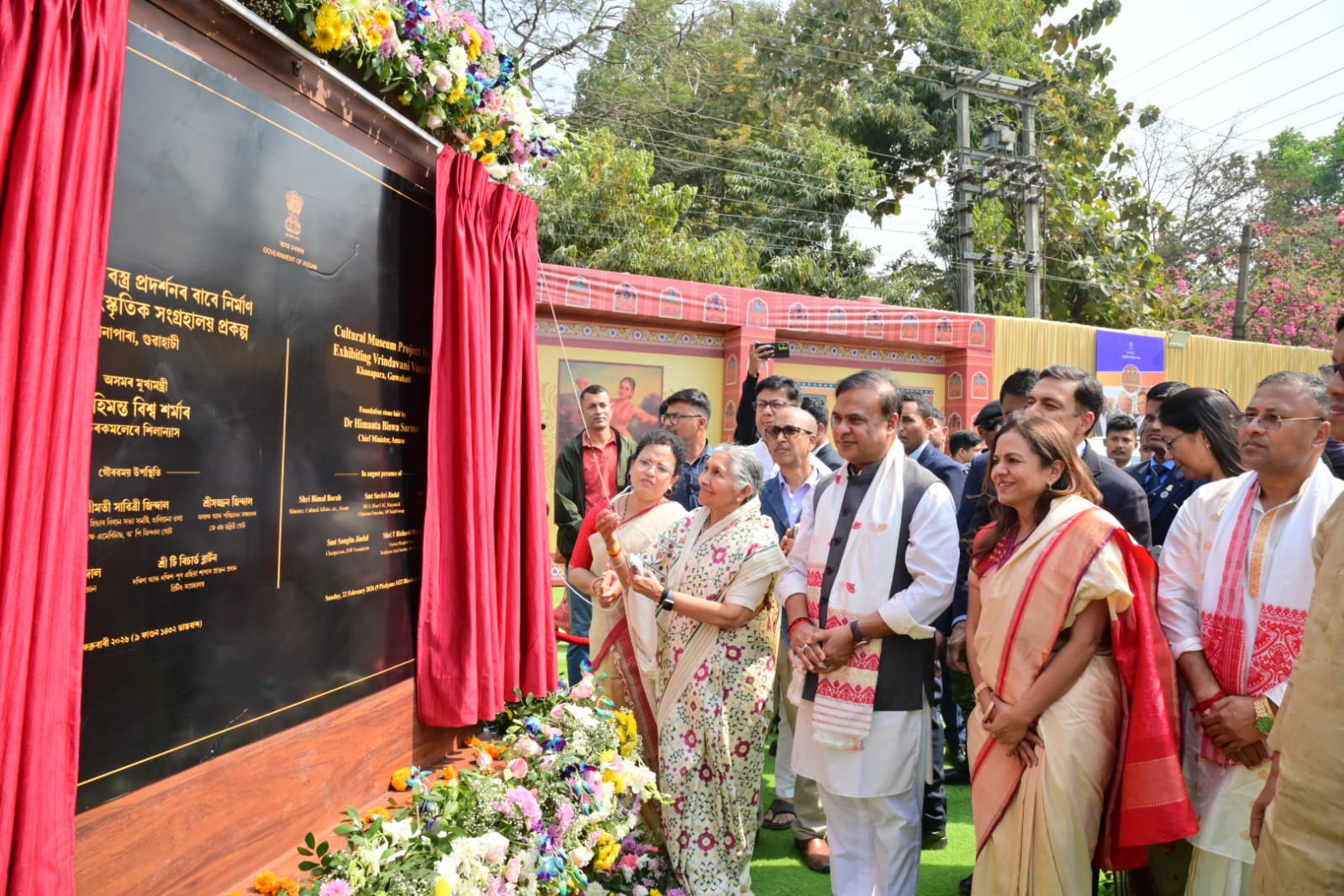
Mumbai, Feb 23: The construction of state-of-the-art heritage museum – being built in collaboration between the JSW Group and the Government of Assam – commenced in Guwahati today. 

The commencement of the construction was marked by the laying of the foundation stone by the Honourable Chief Minister of Assam, Dr. Himanta Biswa Sarma, and Mr. Sajjan Jindal, Chairman of JSW Group. 

The event was also attended by other distinguished dignitaries including Mrs. Savitri Jindal, Mrs. Sangita Jindal, Shri Bimal Borah, Minister for Cultural Affairs of Assam, and Mr. Richard Blurton, Museum Curator & Former Head of South and Southeast Asia at British Museum.

The museum – being built as a landmark cultural institution dedicated to the preservation and promotion of Assam’s art, culture and heritage – is being developed at the Sericulture Farm, Khanapara, on a 45,000-square-foot site allotted by the Government of Assam. The construction of the museum is being fully funded by the JSW Group. Conceived as a world-class cultural destination, the museum will host national and international artefacts, travelling exhibitions and curated cultural showcases, enabling meaningful global cultural exchange.

Speaking on the occasion, Mr Sajjan Jindal, Chairman, JSW Group, said,

“The ground-breaking of this museum marks the beginning of a deeply meaningful journey. At JSW, we believe cultural institutions play a vital role in shaping the society’s identity and inspiring future generations. This museum is our tribute to Assam’s extraordinary artistic and spiritual legacy, and our commitment to creating a world-class space that places Indian heritage at the heart of global cultural conversations.”

The museum will house modern conservation facilities, including advanced climate control and security systems, ensuring the long-term preservation of priceless artefacts. Conceived as a long-term partnership between the Government of Assam and the JSW Group, the museum aims to become a cultural landmark for the Northeast.

Among its highlights will be the inaugural exhibition of the Vrindavani Vastra, the celebrated 17th-century devotional textile woven under the spiritual guidance of Srimanta Sankardev. Regarded as one of Assam’s most significant surviving sacred textiles, the Vrindavani Vastra is composed of multiple woven silk panels depicting narrative scenes from the Bhagavata Purana, from the early life of Krishna in Vrindavan, including the Kaliyadamana and Vastraharana.

The museum underscores a shared commitment to fostering greater understanding of Assam’s cultural heritage and elevating its recognition at both national and international levels. The initiative reflects a collective effort to celebrate Assam’s artistic excellence while strengthening global cultural dialogue.

Three Years, Stronger Every Year: How Sharada Mundada Built a Thriving Insurance Career with PBPartners

Bengaluru, Feb 23: Policybazaar’s PoSP arm, PBPartners, is enabling individuals across India to turn ambition into sustainable insurance careers. One such inspiring journey is that of Sharada Mundada from Bengaluru, a testament to three years of consistent growth, resilience, and determination.

She began her insurance journey with PBPartners, eventually evolving from a new advisor into a high-performing partner while building a solid presence in the industry.

Business Growth, Learning, and Recognition

Over the period of three years, Sharada has grown her business, supported by PBPartners’ integrated digital platform that streamlines product access, servicing, and renewals. She also participated in specialised training programs to strengthen her product understanding and business clarity. Her journey has been recognised through the PBP One loyalty program, where she redeemed multiple rewards and earned international travel opportunities to Dubai, Vietnam, and Thailand.

Building a Diverse and Trusted Insurance Portfolio

Sharada began her journey with a focus on health insurance and gradually expanded into multiple insurance segments. With access to a wide pool of insurers through PBPartners, she was able to offer tailored solutions to customers across categories, helping her strengthen client relationships while expanding her business reach. This flexibility enabled her to build credibility and position herself as a reliable insurance advisor.

Support and Future Outlook

Sharada describes her journey with PBPartners as both independent and well-supported. She shared, “The PBPartners team and my Relationship Manager have always provided dependable support while allowing me the independence to grow my business in my own way.”

With a strong foundation in place, she now looks forward to expanding her reach further and exploring new opportunities with PBPartners.

India’s Power Transition Creates Clear Utility Divide

ARE report finds JSW Energy and Tata Power best positioned for firm-power era; NTPC’s execution critical as coal economics tighten 

SINGAPORE / NEW DELHI, INDIA, Feb 23 - India’s power sector is entering a decisive new phase as electricity demand surges, peak loads hit record highs, and the country moves toward its 500GW non-fossil capacity target by 2030 post a record 52GW capacity added in FY26But the next chapter of the transition will not be defined by installed capacity alone. 

A new report by Asia Research & Engagement (ARE), Powering Net Zero: Pathways to Clean Energy for India’s Utility Companies, finds that the market is shifting toward firm, dispatchable and availability-linked power — creating clear divergence among India’s largest listed utilities. 

The analysis identifies: 

  • JSW Energy and Tata Power as best placed to monetise the transition, combining contracted renewable growth, storage depth and improving cashflow quality. 
  • Adani Green Energy remains the fastest capacity scaler with strong long-term visibility, though storage integration remains at an early stage. 
  • NTPC, India’s largest generator, retains unmatched scale and sovereign-backed financing, but its transition outcomes hinge on execution speed and managing coal’s declining role. 
  • Adani Power remains predominantly thermal, with limited exposure to the structural upside from renewables and storage. 

The report also highlights tightening coal economics. While new ultra-supercritical coal plants clear bids at INR5. 5–6 per kWh, effective delivered costs rise materially once utilisation, fuel volatility and compliance costs are factored in. By comparison, round-the-clock and storage-backed renewable projects are clearing between INR2.7–5.1 per kWh with availability guarantees embedded in contracts. 

“The debate is no longer coal versus renewables,” said Arun Kumar, Strategic Advisor for Power Markets & Technology Innovation at ARE and lead author of the report. “As procurement shifts toward round-the-clock supply, reliability and execution — not just megawatts — will determine competitive advantage.” 

 “While this ARE study highlights significant momentum across the sector, it also identifies areas where sharper strategic clarity, improved contracting frameworks, and stronger delivery capabilities will be essential to meeting India’s long-term decarbonisation goals.” 

The New-Age AU Credit Card Redefines Everyday Payments in India

Business Wire India

India’s digital payments landscape has expanded rapidly over the last few years, and credit cards have moved from being occasional-use instruments to becoming part of everyday financial behaviour. Consumers now rely on them not just for high-value purchases but for groceries, fuel, online shopping, entertainment, and recurring monthly payments. This shift has been supported by AU Small Finance Bank, which is making credit cards simpler, more accessible, and more rewarding for day-to-day use. AU Small Finance Bank (AU SFB) is the India’s largest Small Finance Bank and the first in over a decade to receive in principle approval to transition into a Universal Bank.

A major factor behind this transformation is the rise of digital tools that give customers complete control over their card experience. The modern credit card app has become a central hub for viewing transactions, managing limits, redeeming rewards, and securing the card at any time. Customers also look for simple and intuitive digital interfaces, often searching for a credit card app, reflecting the growing expectation for user-friendly, mobile-first financial management. For business owners and professionals, tailored solutions like the commercial credit card help separate personal and business expenses, streamline accounting, and provide rewards suited to business needs.


What’s Driving This Change at AU

  • Digital onboarding lets customers start using their credit cards almost immediately.
  • Lifestyle-focused rewards in categories like fuel, dining, travel, lounge access, and e-commerce make it practical to use credit cards for everyday expenses.
  • Greater security through biometric login, tokenisation, and instant lock/unlock options increases confidence across online and offline transactions.
  • Convenient access to short-term liquidity through features like Xpress loan on credit card provides customers with quick funds during urgent situations, enhancing the utility of credit cards beyond payments.
  • Tap-to-pay and wearable payment innovations make transactions faster and more seamless, creating a habit of using credit cards for routine purchases.


The growing acceptance of digital payments in Tier-2 and Tier-3 cities has further accelerated credit card adoption. With smartphone penetration increasing and digital literacy improving, more consumers across India are turning to credit cards for their flexibility and convenience. By offering simplified eligibility, transparent features, and mobile-first onboarding, AU Small Finance Bank is enabling this broader adoption by catering to users who are new to formal credit.

Credit cards are also playing a role in helping customers manage their finances more effectively. Spending insights and category tracking help users make informed decisions about their money. This evolution has positioned credit cards not only as payment tools but as instruments that support financial planning and discipline. At the same time, subscription-based payments, whether for OTT platforms, fitness memberships, or digital tools, are now commonly linked to credit cards, offering uninterrupted service and convenience.

A new generation of credit cards is redefining how Indians transact every day. With digital convenience, stronger security, smarter rewards, and flexible credit options, they have become indispensable tools for today’s digitally active consumers. AU Small Finance Bank’s new-age credit cards are set to play an even more prominent role in India’s journey toward a more confident, credit-enabled digital economy.

‘Swarajya’, A Themed Residential Project Launched on Shivaji Jayanti

Mumbai, Feb 23: Marking the auspicious occasion of the birth anniversary of Chhatrapati Shivaji Maharaj, Bhagwati Group and Haware Properties jointly announced the launch of an ambitious and culturally significant residential project titled ‘Swarajya’ in Dombivli, near Mumbai. The Guardians Real Estate Advisory has been mandated to market and sell the project.

Positioned under the ‘MyFirst Home’ category, the launch follows the super-successful editions of the brand at Shil Phata and Kalyan, where over 3,000 families placed their trust in the offering. With ‘Swarajya’, the developers introduce the third edition of ‘MyFirst Home’ in Dombivli, aiming to extend the platform’s promise of aspirational yet accessible homeownership to a wider base of first-time buyers.

‘Swarajya’ is conceptualised as more than just a housing development. It seeks to create a living experience rooted in heritage and identity. Drawing inspiration from the valour, governance principles and visionary leadership of Chhatrapati Shivaji Maharaj, the project aims to reflect themes of courage, integrity and self-rule through its architectural design, landscaping elements and curated community spaces.

Located in the fast-evolving micro-market of Dombivli, the project aspires to offer modern amenities and thoughtfully designed residences while reinforcing a deep sense of cultural belonging. The developers have indicated that the project will integrate elements inspired by Maratha architecture and symbolism, creating a distinctive address that resonates with Maharashtra’s cultural ethos.

On the occasion, a ‘Swarajya’ song was also released, already making a powerful cultural and digital impact across Maharashtra. Featuring vocals by Rohit Raut and music by composer Prashant Nakti, the track was filmed at the historic Chhatrapati Shivaji Maharaj Temple. With Nick Shinde’s star presence, a 110-member crew and 4.5 million organic views within 24 hours, the song has quickly emerged as a state-wide sensation.

Speaking on the development, Mr. Ram Naik, Co-Founder and CEO, The Guardians Real Estate Advisory said, “The ‘Swarajya’ project represents a distinctive evolution in thematic real estate development. In a competitive residential market, differentiation is increasingly driven by storytelling, cultural alignment and emotional connection. By drawing inspiration from the legacy of Chhatrapati Shivaji Maharaj, Bhagwati Group and Haware Properties have created a concept that resonates deeply with the people of Maharashtra. It is not merely a housing project, but an identity-driven community proposition that blends heritage with aspirational living.”

He further added, “Dombivli has steadily emerged as a strong residential destination due to its improving connectivity, infrastructure upgrades and relatively affordable pricing compared to central Mumbai markets. A culturally themed project such as ‘Swarajya’, especially within the MyFirst Home category, adds a powerful layer of brand recall and emotional engagement, which can significantly enhance buyer interest and long-term value perception.”

Over the past few years, Dombivli has witnessed consistent residential demand, supported by expanding rail connectivity, road infrastructure improvements and the region’s growing social ecosystem. Developers are increasingly focusing on differentiated offerings to stand out in a market characterised by rising consumer expectations and aspirational homebuyers.

Professor’s Pathology Slides Will Teach Residents, Fellows for Generations colleen.

It’s often said that when veteran employees leave an institution like Yale School of Medicine, a wealth of knowledge goes out the door with them. That was that case last year when Peter A. Humphrey, MD, PhD, retired after a long and distinguished career as a pathology professor and internationally recognized genitourinary (GU) pathologist.

But some of the knowledge Humphrey amassed over four decades—in the form of hundreds of slides—is being converted to digital form, so training pathologists at Yale and beyond will continue to learn from the rare cases he diagnosed.

“You’re preserving an important piece of a long career of experience and wisdom,” says Andrea Barbieri, MD, associate professor of pathology and director of the Yale Pathology Residency Program. “The digital piece of it allows it to live infinitely, because slides, as you know, are tangible and break.”

Roxanne Wadia, MD, assistant professor of pathology, is overseeing the digital transformation of Humphrey’s slide collection, which numbers in the high hundreds. “We envision this as something that can be shared with our residents, our fellows, and hopefully, as a pathology atlas,” she says.

‘An amazing resource’

So far, around 200 slides have been digitized. The de-identified slides will reside on a secure platform where Yale residents and fellows can access them. It’s still too early to know all the ways in which this resource will be utilized, but it’s expected to initially be used to supplement resident learning as they participate in the GU service.

“We’re being selective about which ones we are uploading in terms of clarity. We may not need 50 examples of one thing, but there are many useful cases,” Wadia says. “We all know Dr. Humphrey was one of the premier GU pathologists of his generation. He’s co-editor of the World Health Organization book Classification of Tumors of the Urinary System and Male Genital Organs. He’s such an expert in the field that he would receive referral cases, some extremely rare entities that he has saved and preserved. It’s an amazing resource.”

Humphrey used the slide collection to teach residents and fellows throughout his career.

“These teaching sessions included daily GU pathology sign-outs and unknown conferences,” Humphrey says. “I also used these teaching slides and static digital images of them in teaching courses at national and international pathology meetings and in presentations for pathology residents when I was a visiting professor at other institutions.”

Humphrey says he’s pleased that future generations will learn from his slides.

“This is very gratifying. And I am very thankful that Dr. Roxanne Wadia is leading this project.”

See disease in full environment

Residents and fellows will view the slides via PathPresenter, software for digital pathology image viewing and management that’s used by many medical education institutions.

“It allows us, without any identifiers on the slide, to share it an educational way, including making presentations with it,” Barbieri says.

“A lot of the teaching materials tend to zoom in on a specific point of the slide,” Wadia adds. “PathPresenter allows us to interact with the sample more, to look around and see it in its full environment.”

Rajendra Singh, MD, PathPresenter co-founder and professor of pathology at University of Pennsylvania, said sharing knowledge—like Humphrey’s slides—is exactly what they had in mind when they created the software.

“Dr. Humphrey’s slide collection represents a lifetime of mastery, an extraordinary legacy that deserves to be more than preserved; it deserves to be shared,” Singh says. “This reflects the vision we set out to achieve—opening access to world-class pathology knowledge so it can continue to guide and inspire the next generation.”

Significant educational value

Pathology Resident Ujunwa Korie, MD, MS, says the slides will have a significant educational value.

“Having access to carefully selected cases with expert annotations helps us understand not just the final diagnosis, but the specific morphologic features that support it and how an experienced pathologist thinks through a case,” Korie says. “The annotations highlight key diagnostic features, subtle findings, and potential pitfalls that are especially helpful for a trainee. When annotation is done right, it’s almost like sitting at a multi-headed scope with an attending as they walk you through a case.”

Although some of the slides are 40 years old, Korie says they remain a useful learning tool.

“While diagnostic criteria and therapies continue to evolve, the fundamental histologic principles underlying many diagnoses have not changed. In some cases, advances in treatment mean that we may not see certain classic disease presentations as frequently during training,” she says. “So, digitizing historical slide collections helps preserve those classic examples so trainees can still study and recognize them, even if they are no longer commonly seen. This is especially important because these entities may still be common in other regions, depending on where trainees end up practicing.”

‘Like sitting there with him’

Wadia, who did her Pathology residency at Yale, had the opportunity to learn from Humphrey.

“I think of all the residents and fellows who have sat with him and used his slides in the past have gained from his knowledge,” she says. “We’re trying to create that on another platform. Unfortunately, Dr. Humphrey won’t be sitting across from you at the microscope. But with his annotations and his guidance, it will be like you’re sitting there with him and he’s talking you through a case.”

Although he won’t be there to teach in person, Humphrey’s timeless advice for training pathologists is imbedded in his work.

“Your diagnoses can change the lives of patients forever,” he says. “Pathologists and GU pathologists should be leaders in diagnostic medicine, teaching, and research. GU pathologists should be innovators and should be on the cutting edge of discovery—and should translate those discoveries into the practice of medicine and pathology.”
Americium, Curium and Californium — Oh My! Crystallizing the Rarest Elements at LLNL

Actinides are a group of heavy, radioactive elements that include uranium, plutonium, americium, curium, berkelium and californium. Understanding how these elements bond with other atoms (known as coordination chemistry), how they behave in water and how they can be separated from one another is crucial for safer nuclear waste management, new reactor technologies and advanced materials.

However, because heavier elements, like curium and californium, do not occur naturally and must be synthesized in specialized nuclear reactors through long, multistep processes, only tiny amounts are available for research. As a result, they are exceptionally difficult to study. Since californium’s discovery in 1950, only a handful of its coordination compounds have ever been structurally characterized. Californium is the heaviest element on the periodic table for which pure compounds can be synthesized and characterized in laboratories.

Despite californium being one of the most elusive elements on Earth, chemists at Lawrence Livermore National Laboratory (LLNL) are putting it on the chemical map by using a novel nanoscale synthesis and crystallization approach to create, isolate and structurally characterize a pure californium-containing compound — the first time this has been achieved at LLNL. The research, conducted by Ian Colliard and Gauthier Deblonde, follows a companion study on americium and curium, making up a set of “twin” papers published in the journal Chemical Communications.

To study these elements, the researchers used a class of inorganic molecules called polyoxometalates (POMs) — large, cage-like clusters made primarily of metal and oxygen atoms. They used a specific type of POM, called Wells–Dawson, which provides a carefully shaped “pocket” within a large structure that can sandwich a single metal ion of interest, such as americium, curium or californium, in a very reproducible way.

This pocket does two crucial things. First, it stabilizes the radioactive element in a solution. Second, it allows scientists to grow tiny but well-ordered crystals — small enough to be made from nanogram quantities of material, yet detectable enough for single-crystal X-ray diffraction, the gold standard technique for determining atomic structure. With this LLNL-developed approach, the researchers only needed about 300 nanograms of californium to perform the chemical synthesis and subsequent characterization experiments.

Colliard and Deblonde first tested this strategy on non-radioactive elements (rare earths) to isolate and crystallize new compounds, eventually extending the same method to americium and curium and then californium. The californium result is particularly noteworthy, as it represents the heaviest element ever crystallized within a POM molecule.

The first paper on americium and curium reveals that these elements can form nearly identical molecular structures under carefully controlled conditions. Americium was found to adopt two slightly different crystal arrangements, while curium formed just one. These subtle differences, which can be linked to the way each compound absorbs light, helped the researchers understand how atomic size and electronic structure influence bonding.

The second paper builds directly on this foundation by adding californium to the series. Because all three elements were studied using the same techniques, the researchers were able to make clear, side-by-side comparisons, allowing them to observe predictable trends in bond lengths and geometry as the elements get heavier — and smaller — across the series. Based on these experimental trends, the authors were also able to predict how berkelium would likely bond and crystallize, even without directly studying it.

Unexpectedly, the work also revealed major differences in solubility, or how readily these compounds dissolve in water. The authors found that when different metals (such as rare earths or actinides) are bound to the POM, they can be separated from each other by adding potassium chloride (a chemical similar to table salt) to the solution.

Potassium chloride causes some metal-POM complexes to precipitate (form solids), while others stay dissolved. For example, californium’s compound remained soluble under conditions that caused americium and curium to crystallize. This difference in solubility allows scientists to separate the metals efficiently. These findings open the door to a new, potentially simpler way of separating heavy elements — an important challenge in nuclear science.

Beyond the individual discoveries, the real novelty of this work lies in the method itself, demonstrating that meaningful structural chemistry for the rarest elements on the periodic table can be done with quantities of material that are invisible to the human eye. Efforts are currently underway to apply these techniques to other radioactive elements and explore whether the newly observed solubility differences can be developed into practical separation technologies for nuclear energy and critical minerals.