

India’s lending industry is entering a new era, where access to credit is no longer limited by lengthy paperwork, physical bank visits or traditional lending procedures. With the rapid growth of smartphones, digital payment systems, financial technology platforms and artificial intelligence, borrowing is becoming faster, more accessible and increasingly technology-driven.
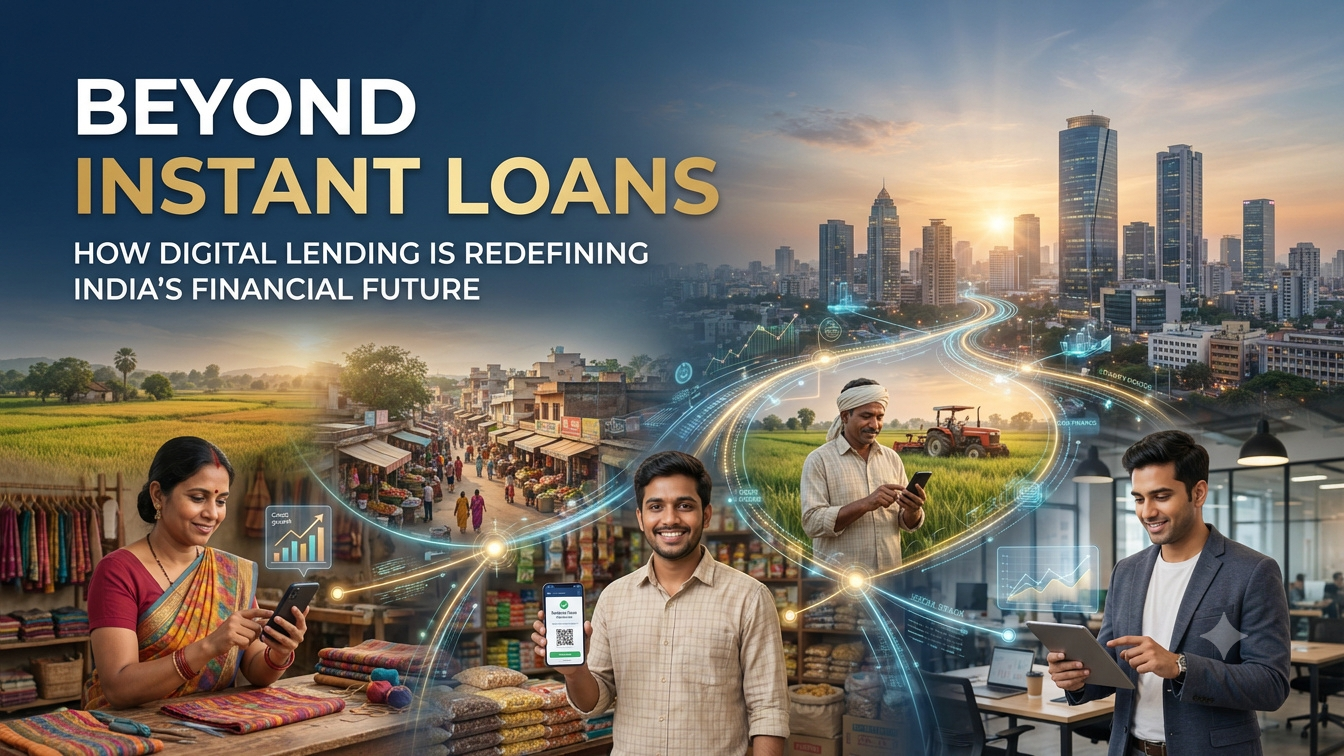
However, the real transformation of digital lending goes far beyond instant loan approvals. It is changing how individuals manage their finances, how small businesses access working capital and how financial institutions evaluate creditworthiness. As India moves towards a more connected digital economy, digital lending is emerging as an important force in shaping the country’s financial future.
From Traditional Banking to a Digital-First Lending Economy
For decades, accessing a loan in India often involved multiple branch visits, extensive documentation, income verification and lengthy approval procedures. While these systems provided structured lending, they created difficulties for people with limited banking access, irregular incomes or insufficient credit histories.
Digital lending is changing this experience by bringing several stages of the borrowing process onto digital platforms. Customers can now discover loan products, submit applications, complete identity verification and receive lending decisions through mobile applications and online platforms.
The expansion of digital financial infrastructure, including Aadhaar-based verification, UPI, account aggregators and electronic documentation, has helped create an environment where financial services can operate with greater speed and convenience.
For borrowers, this means easier access to formal credit. For lenders, it creates opportunities to improve customer onboarding, reduce operational costs and develop more efficient lending models.
The Technology Powering India’s Digital Lending Revolution
The development of digital lending is closely connected to innovations in financial technology. Artificial intelligence, machine learning, data analytics and automated verification systems are helping lenders modernise traditional credit assessment processes.
Artificial Intelligence and Machine Learning: AI-powered systems can analyse relevant financial information, repayment patterns and transaction behaviour to support credit-risk assessment. These technologies may help lenders evaluate applicants who have limited traditional credit records.
Alternative Credit Assessment: Traditional lending decisions often depend heavily on salary slips, credit scores and established financial records. Digital platforms can, where legally permitted and with appropriate consent, consider additional verified financial information to develop a broader understanding of an applicant’s repayment capacity.
Account Aggregator Framework: India’s Account Aggregator ecosystem allows individuals to securely share their financial information with regulated financial institutions through a consent-based mechanism. This can help lenders make more informed decisions without requiring customers to repeatedly submit physical documents.
Automated Loan Processing: Digital identity verification, electronic signatures and automated document processing can reduce manual intervention and simplify loan application procedures.
Together, these technologies are creating a lending ecosystem that is increasingly connected, data-driven and customer-focused.
Small Businesses and MSMEs: A New Opportunity for Credit Access
One of the most significant opportunities created by digital lending lies in India’s Micro, Small and Medium Enterprises (MSME) sector.
Small businesses frequently face difficulties obtaining loans because they may lack substantial collateral, formal financial statements or an extensive credit history. These challenges can restrict expansion, inventory purchases, equipment investment and everyday business operations.
Digital lending platforms are creating additional channels through which eligible MSMEs can seek working capital and business financing.
By analysing verified business transactions, banking information and other permitted financial records, lenders can develop a better understanding of business activity and repayment capacity.
For a small retailer, manufacturer, service provider or emerging entrepreneur, timely access to credit can help maintain cash flow, manage seasonal demand and invest in business growth.
Nevertheless, digital access does not automatically guarantee loan approval or affordable borrowing. Responsible assessment of business income, repayment capacity and loan costs remains essential.
The Role of UPI and India’s Digital Financial Infrastructure
India’s digital payment revolution has created a strong foundation for the expansion of digital financial services. UPI has transformed everyday transactions by making money transfers faster and more convenient. Although digital payments and digital lending serve different purposes, the growth of digital payment infrastructure has encouraged wider acceptance of technology-based financial services.
The integration of digital banking, electronic verification and consent-based financial data sharing is creating opportunities for lenders to understand customers more effectively.
This development is particularly important for individuals in smaller cities, semi-urban regions and rural communities, where access to traditional banking services may be limited.
Digital lending can help connect these communities with formal financial institutions, provided that internet access, digital awareness and appropriate consumer protection are available.
RBI Regulations: Building Trust in Digital Lending
As digital lending expands, trust, transparency and borrower protection are becoming increasingly important.
The Reserve Bank of India introduced the Reserve Bank of India (Digital Lending) Directions, 2025, on May 8, 2025, consolidating earlier regulatory instructions and introducing additional measures to improve transparency and responsible lending practices.
The framework addresses several important areas:
-
Transparent loan offers: Borrowers should receive clear information about matching loan offers when digital platforms work with multiple regulated lenders.
-
Clear disclosure of costs: Important loan details, including the Annual Percentage Rate (APR), must be communicated transparently.
-
Borrower protection: Cooling-off provisions and grievance redressal mechanisms help protect customers.
-
Responsible data usage: Customer information must be handled according to applicable privacy and consent requirements.
-
Verification of lending apps: RBI’s public directory of Digital Lending Apps helps customers verify whether an app claims an association with a regulated entity.
These measures are important because digital lending should not simply prioritise faster transactions. It must also establish accountability, fair practices and confidence among borrowers.
The Challenges Behind the Convenience of Instant Credit
Despite its advantages, digital lending also presents challenges that cannot be ignored. Easy access to loans can encourage unnecessary borrowing, particularly when customers focus on quick approval rather than the total repayment obligation.
One major concern is the growing presence of fraudulent loan applications that may misuse personal information, demand excessive permissions or impose hidden charges.
Another challenge is over-indebtedness. Multiple small loans taken from different platforms can create a significant repayment burden, especially for individuals with unstable incomes.
Data privacy is equally important. Financial information, identity documents and transaction records must be protected from unauthorised access and misuse.
There is also the question of algorithmic fairness. AI-based credit assessment systems may produce unfair outcomes if the information used to train or operate them is incomplete or biased.
For digital lending to become sustainable, technology companies and financial institutions must balance innovation with strong risk management and customer protection.
How Digital Lending Is Changing Consumer Behaviour
Digital lending is gradually changing people’s expectations of financial services. Customers increasingly expect convenience, transparency and personalised financial products.
Young professionals may use digital platforms to manage short-term financial requirements, while small entrepreneurs may explore business credit to support inventory purchases or operational expenses.
However, greater convenience also demands greater financial awareness.
Borrowers must understand interest rates, processing fees, repayment schedules, late-payment charges and the impact of borrowing on their credit history.
The future of lending will therefore depend not only on how quickly financial institutions approve loans but also on how effectively customers understand and manage their financial commitments.
The Future of Digital Lending in India: What Comes Next?
The next phase of digital lending is likely to focus on smarter credit decisions, improved customer experiences and deeper financial inclusion.
Several developments could shape this transformation:
1. AI-Driven Personalised Lending
Artificial intelligence may help financial institutions develop more personalised credit products by analysing relevant financial information and assessing individual repayment capacity.
2. Embedded Finance
Loans could become increasingly integrated into digital platforms used for shopping, business management and other everyday activities. This may allow customers to access suitable financing closer to the point where they need it.
3. Greater MSME Financing Opportunities
Technology-enabled credit assessment could create additional financing opportunities for small businesses, particularly those with limited traditional credit histories.
4. Stronger Digital Security
As online financial transactions increase, lenders will need to invest in advanced fraud detection, cybersecurity, secure data management and customer verification.
5. More Responsible Credit Ecosystems
The future will require closer cooperation between regulators, banks, NBFCs and fintech companies to ensure that innovation does not compromise financial stability or consumer protection.
Conclusion: Beyond Speed, Towards Smarter Financial Access
India’s digital lending transformation represents much more than a shift from paper-based applications to mobile-based loan approvals. It reflects a broader change in how financial institutions understand customers, evaluate credit risks and deliver financial services.
For individuals, it can create more convenient access to formal credit. For MSMEs, it can open additional opportunities to finance business operations and expansion. For financial institutions, it offers new ways to improve efficiency, develop innovative products and reach underserved markets.
However, the long-term success of this transformation will not be measured by the number of instant loans issued or the speed of digital approvals. It will depend on whether borrowers receive fair credit, understand their financial obligations and can access secure and transparent lending services.
