

Goa, Nov 27: The deeply troubling practice of bride trafficking and the exploitation of women sold into forced marriages takes centre stage in Paro: The Untold Story of Bride Slavery, a film featured in the Indian Panorama section of the 57th International Film Festival of India (IFFI).
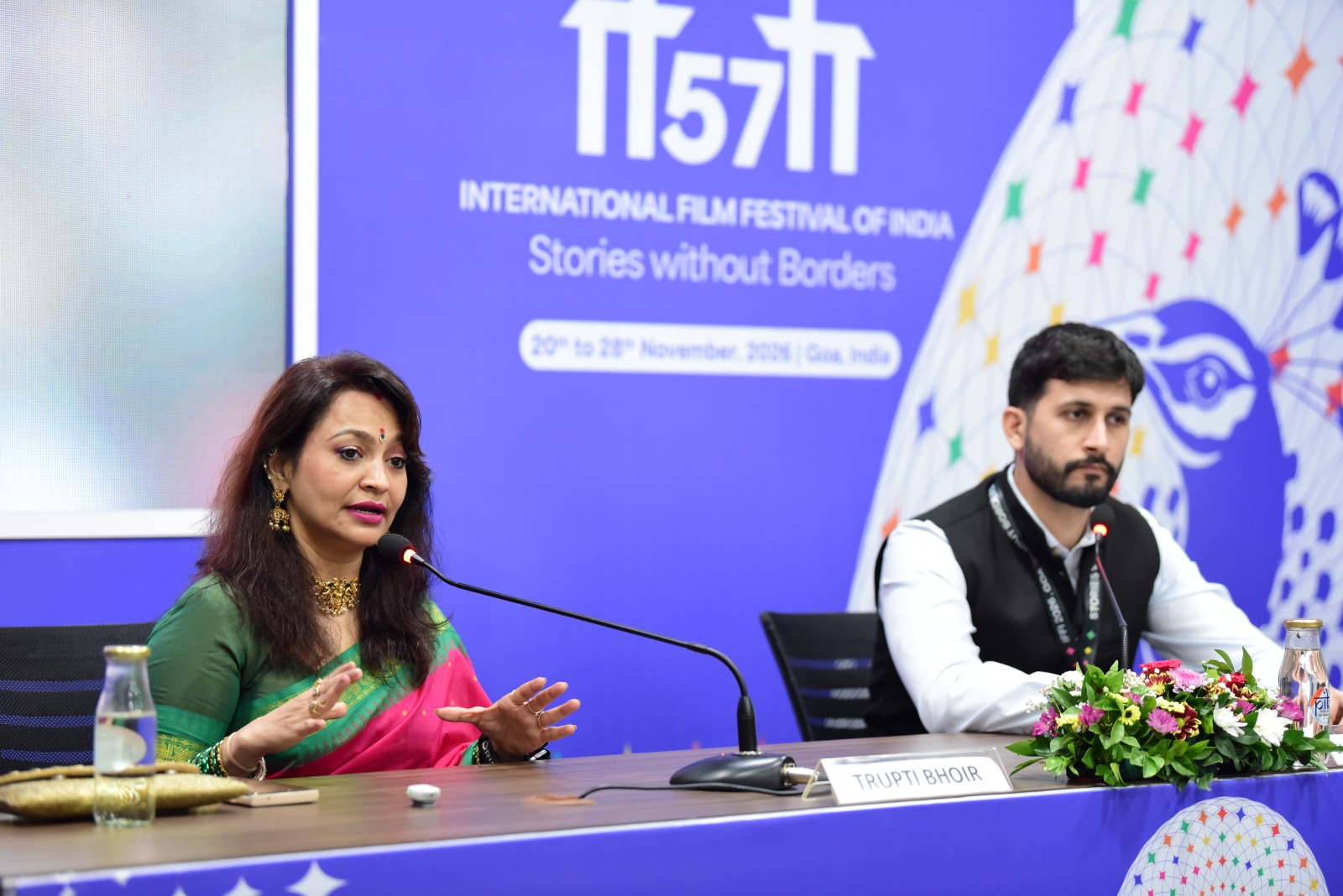
The film, directed through the creative vision of actor-producer and screenplay writer Trupti Bhoir, examines the lives of women trapped in the practice of bride slavery, particularly in the Mewat region of Haryana. The term ‘Paro’ is used locally for women who are bought or sold as brides.
Speaking at a press conference during the festival, Bhoir revealed that the film was the outcome of nearly four-and-a-half years of research. She has taken on three key responsibilities in the project—as producer, screenplay writer and lead actor—making the film a deeply personal undertaking.
Ground-level research shaped the film
Bhoir said the idea emerged after she came across documentaries and media reports exposing the buying and selling of women in parts of India. Disturbed by the accounts, she decided to investigate the issue more closely.
With support from an NGO, Bhoir and her mother visited villages posing as journalists. During their research, they interacted with around 62 to 63 women who had experienced bride slavery. The women came from several states, including Maharashtra, Andhra Pradesh, Odisha, Bihar, Uttar Pradesh, Rajasthan, Gujarat and Delhi.
According to Bhoir, the findings revealed that bride trafficking is closely linked to poverty and gender inequality and is not restricted to a single region. Women from different parts of the country are vulnerable to being trafficked and sold into marriages.
One particularly distressing account involved a girl believed to be between 11 and 13 years old who had reportedly been sold for a very small amount. Her experience became the inspiration for the central character portrayed by Bhoir in the film.
Through the protagonist, the filmmaker seeks to depict the trauma, powerlessness and abuse endured by women whose experiences often remain hidden from public view.
Film seeks to drive action beyond the screen
For Bhoir, the project is intended to do more than tell a story. She highlighted the work of the NGO Shelter Foundation, which has compiled information on approximately 2,000 women affected by bride slavery.
She said the data was submitted to National Commission for Women Chairperson Vijaya Rahatkar around 15 months before the press conference. A fact-finding committee was subsequently constituted by the Union Government to examine the issue.
Bhoir welcomed the steps taken by the authorities and said the need to draw attention to the practice was among the reasons she chose to make the film.
A neglected dimension of human trafficking
The filmmaker also stressed that the buying and selling of brides remains comparatively under-discussed despite growing awareness of human trafficking and sexual exploitation over the past 15 to 20 years.
Her interactions with audiences at film festivals and institutions internationally, she said, have reinforced the need to take the conversation beyond national boundaries. The issue of missing girls, sexual violence and trafficking requires wider public attention and collective action.
With Paro: The Untold Story of Bride Slavery, Bhoir hopes to bring the experiences of affected women into mainstream conversations and encourage greater awareness of gender discrimination, trafficking and women’s dignity and rights.
The press conference at IFFI was moderated by Shubhankar Vashisth.
