Hotspots of Plant Invasion Change From Subtropical Towards Temperate Regions

An international research team led by University of Vienna has, for the first time, developed high-resolution global maps assessing invasion risks for thousands of alien plant species under current and future climate and land-use scenarios. The study, published in Nature Ecology & Evolution, reveals that global hotspots of plant invasion are set to shift geographically, with temperate regions facing increasing threats while some subtropical areas may see declining risks.

The spread of alien plant species—driven largely by human activity—has become a defining feature of the modern environmental era. Many of these species pose serious risks, reducing agricultural productivity and impacting human health, such as allergenic plants like ragweed. Recognizing these growing concerns, researchers sought to understand how invasion hotspots may evolve under changing environmental conditions.

The study analyzed data from 9,701 alien plant species, combining global distribution records with environmental variables. Using advanced modelling techniques, the team mapped current invasion patterns and projected future changes through the end of the 21st century.

Findings indicate that currently, nearly one-third of the Earth’s land surface is suitable for at least 10% of the studied alien plant species, making these areas high-risk invasion hotspots. Most of these regions are concentrated in subtropical and warm temperate zones, including large parts of Europe.

However, the research highlights a significant geographical shift in these hotspots. As global temperatures rise, invasion risks are expected to move toward cooler, temperate regions such as Central Europe, while declining in increasingly hot and dry subtropical regions. Additionally, previously less-affected areas in boreal and polar regions may become more vulnerable to plant invasions.

The study also reveals that not only will invasion hotspots shift, but the composition of invading species will change as well. Under severe climate change scenarios, entirely new sets of plant species adapted to warmer conditions are expected to replace current invasive species in many regions.

These shifts are likely to intensify the impact of biological invasions, particularly in densely populated temperate areas, affecting both ecosystems and human well-being. The findings underscore the urgent need for proactive, region-specific management strategies to mitigate the ecological and economic consequences of invasive species.

This landmark research provides a critical scientific foundation for policymakers and environmental managers to better anticipate and respond to the evolving challenges of plant invasions in a rapidly changing world.

IndiGo Flight Makes Safe Emergency Landing at Delhi Airport

An IndiGo flight was forced to make an emergency landing at Indira Gandhi International Airport on Saturday, following a technical issue reported mid-air. All passengers and crew on board were safely evacuated, and no injuries were reported.

Airport and airline officials confirmed that the flight landed smoothly, and emergency services were on standby as a precaution. Passengers were later assisted with alternate travel arrangements.

IndiGo has stated that it is investigating the cause of the incident and emphasized that passenger safety is its top priority. The airline also reassured travelers that all standard safety protocols were followed.

Authorities are coordinating with the airline to ensure that operations at the airport continue without disruption while the investigation is underway.

PM Modi to Inaugurate ₹891 Crore Rail Projects in Gujarat

PM Modi to Inaugurate ₹891 Crore Rail Projects in Gujarat

Gujarat is set to witness a major boost in railway infrastructure as Prime Minister Narendra Modi prepares to inaugurate a series of projects worth ₹891 crore. The initiatives include a new rail line and multiple track-doubling projects aimed at enhancing connectivity and improving the efficiency of the state’s rail network.

Officials say that the new rail line will connect key regions, reducing travel time and providing better access for passengers and freight transport. The track-doubling projects are expected to ease congestion on busy routes, allowing more trains to run smoothly and improving punctuality.

The launch of these projects reflects the government’s continued focus on strengthening infrastructure to support economic growth and regional development. Enhanced rail connectivity is expected to benefit industries, trade, and tourism across Gujarat.

With these initiatives, commuters can look forward to faster, more reliable train services, while the state’s transport network becomes better equipped to handle increasing passenger and cargo demand.

The Prime Minister’s visit underscores the importance of modernizing the rail sector and delivering infrastructure projects that directly improve the quality of life for residents while fostering economic opportunities.

Microtubules Discovered to Play an Active Role in Correctly Distributing Chromosomes During Cell Division

Mar 28: Microtubules, the dynamic filaments that form the cell’s internal scaffolding, have long been viewed as mere passive structural supports. But a new study reveals they play a far more active signaling role. The findings, published in Science Advances, demonstrate that microtubules are in fact regulators of enzymatic reactions through reshaping geometry of the enzyme’s substrate proteins attached to them and controlling when key events occur to conduct cell division.

The discovery sheds new light on one of the central challenges of cell division. As chromosomes prepare to separate, they must attach correctly to microtubules so they can be pulled to opposite sides of the cell. When these connections form incorrectly, cells must be able to break the faulty ones without disrupting the correct ones. The study shows that microtubules themselves guide this process, directing the enzyme Aurora B kinase to dismantle bad connections while stabilizing proper ones—a quality-control system that helps prevent chromosome-segregation errors that can lead to abnormalities in the number of chromosomes present, a hallmark of many cancers.

“For a long time, people have regarded microtubules as a structural component of the cytoskeleton,” says Yiming Niu, a postdoctoral associate in Hironori Funabiki‘s Laboratory of Chromosome and Cell Biology at Rockefeller. “Our study illustrates that it is also an active enzyme regulator that does important physiological tasks.”

Keeping chromosomes on track

For a cell to divide successfully, it must first copy the chromosomes carrying its genetic material and separate these copies so that each new daughter cell receives a complete set. This delicate task is carried out by the mitotic spindle, a temporary structure of long protein filaments called microtubules that constantly grow and shrink as they probe the cell for chromosomes. Microtubules ultimately latch onto each chromosome at a specialized region called the centromere, where a protein structure known as the kinetochore acts as the chromosome’s coupling device. The microtubules pull the chromosome copies toward opposite ends of the cell so that, when the cell divides, each daughter inherits the genetic material that it needs to thrive.

“When the system is working properly, we call it a bi-oriented configuration,” Funabiki says. “The kinetochores at the centromeres of each chromosome have attached to the ends of microtubules from opposite sides of the mitotic spindle—they’re ready to go.”

But the process seldom goes off without a hitch. Microtubules frequently attach incorrectly, sometimes grabbing both sister chromosomes from the same side of the cell or forming tangled connections to multiple spindle poles. Left unchecked, these faulty attachments would cause chromosomes to segregate unevenly during division, producing cells with too many or too few chromosomes. Such errors would lead to chromosomal instability, and a condition found in most cancers, in which cells carry the wrong number of chromosomes. To prevent this, cells rely on a surveillance system that continually tests chromosome attachments, breaking incorrect ones so the cell can try again until the proper configuration is achieved.

At the center of this quality-control system is Aurora B, an enzyme that somehow both destabilizes and stabilizes microtubule connections. During early cell division, Aurora B weakens incorrect chromosome attachments at the kinetochore, allowing them to detach so the cell can try again. At the same time, it suppresses another enzyme called MCAK, a microtubule destroyer that would otherwise chew up the spindle’s fibers. Aurora B, in effect, breaks faulty connections while protecting the spindle itself—a balancing act that has long puzzled scientists.

Earlier models suggested that correct chromosome attachments pull kinetochores away from Aurora B at the centromere of each chromosome, reducing the enzyme’s ability to modify nearby proteins at the kinetochore. But later evidence showed active Aurora B is found at the kinetochore and can bind directly to microtubules, leading Funabiki’s team to propose an alternative. Perhaps microtubules were physically blocking Aurora B from reaching its targets once a chromosome is properly attached.

If proven correct, the idea could reveal how cells normally prevent chromosome mistakes, and how those safeguards break down in cancer. “If you look at cancer, the vast majority of the tumors have an abnormal number of chromosomes,” Funabiki says. “It has been suggested that one of the things that causes cancer cells to develop is that this process of correcting misplaced microtubules stops functioning properly.”

A new microtubule hypothesis

To test whether microtubules could control Aurora B’s activity, the team recreated the system outside the cell using purified proteins. When they combined Aurora B and its regulatory complex with two microtubule-binding partners—the Ndc80 complex, which anchors chromosomes to the spindle, and MCAK, an enzyme that dismantles microtubules—a clear pattern emerged. When Ndc80 was already attached to a microtubule, Aurora B struggled to modify it, suggesting that the clustered complexes were effectively blocking the enzyme’s access. But MCAK behaved very differently, remaining fully accessible to the enzyme even when bound to microtubules. The result suggested that microtubules were not just structural supports, but active participants that control which proteins Aurora B can reach.

To see how this worked at the molecular level, the researchers used cryo-electron microscopy. They observed that, when the Ndc80 complex attaches to microtubules, many Ndc80 molecules gather together into clusters along the filament. This clustered state hides the sites that Aurora B normally modifies from the enzyme. When MCAK binds microtubules, however, the sites that Aurora B modifies remain fully exposed, making it easy for the enzyme to make changes and let MCAK off from microtubules.

“When MCAK binds microtubules, the filament acts like a molecular flytrap, bringing the two microtubule-binding proteins, MCAK and Aurora B, together and making it easy for the enzyme to rapidly dismantle MCAK,” Funabiki says.

The result is a kind of molecular switch controlled by microtubules. If Aurora B reaches the Ndc80 complex before clustering occurs, the enzyme weakens the attachment so the cell can break it and try again. But once the microtubule organizes Ndc80 into clusters, Aurora B can no longer reach its targets, and the correct chromosome attachment is locked in place. Experiments in living cells confirmed that microtubules must organize Ndc80 into clusters to maintain stable chromosome attachments. Cells engineered with mutant Ndc80 that could bind microtubules but could not cluster struggled to maintain stable attachments and divide chromosomes evenly.

Together, the findings show that microtubules are not just structural scaffolds during cell division. By reshaping the proteins that bind to them, they control when Aurora B can act, shielding some targets while exposing others and ensuring chromosomes separate with remarkable precision.

“Our work reframes how we think about the role of microtubules inside the cell,” Niu says. “We now know that the microtubule actively controls which biochemical reactions occur and when.”

The findings also offer the most detailed view yet of how cells stabilize correct chromosome attachments; understanding how cells distinguish correct attachments from faulty ones provides a molecular blueprint for studying how this safeguard fails in disease. “Knowing how cells normally correct these microtubule attachments can help us explain what happens when that process fails,” Funabiki says. 

Parliament Approves Finance Bill 2026 to Roll Out Union Budget 2026-27

The Parliament on Friday passed the Finance Bill 2026, paving the way for the implementation of the Union Budget 2026-27 from April 1. The Rajya Sabha returned the bill to the Lok Sabha by a voice vote after a brief discussion, during which Finance Minister Nirmala Sitharaman addressed questions raised by members.

The Lok Sabha had cleared the bill on March 25, incorporating 32 amendments. With its approval, the budget proposals now have legal backing for execution in the new financial year.

The Union Budget 2026-27 outlines total expenditure of ₹53.47 lakh crore, a 7.7% rise over the current fiscal year. Capital expenditure is set at ₹12.2 lakh crore, aimed at accelerating infrastructure projects, generating employment, and supporting economic growth—up ₹2.2 lakh crore from the previous year.

To facilitate major infrastructure initiatives, an Infrastructure Risk Development Fund will be established. The fiscal deficit is projected to fall to 4.3% of GDP in 2026-27, balancing growth support with fiscal stability.

The government plans net borrowing of ₹11.7 lakh crore through dated securities to fund the deficit, with gross market borrowing estimated at ₹17.2 lakh crore.

The Finance Bill’s passage ensures that key budget measures, including infrastructure investment and fiscal consolidation, will be implemented smoothly at the start of the new fiscal year.

Gold Surges Over 5% This Week as Crude Prices Ease

Gold Surges Over 5% This Week as Crude Prices Ease

Pic Credit: Pexel

Gold prices gained more than 5% this week, supported by a decline in crude oil prices and easing inflation concerns. The drop in energy costs reduced pressure on global markets, boosting demand for gold as a safe-haven investment.

Analysts note that softer crude prices, combined with cautious investor sentiment amid geopolitical and economic uncertainties, have contributed to the rally. Spot gold rebounded from recent lows, reflecting renewed buying interest and positive market sentiment.

Overall, the weekly gains highlight gold’s appeal as a hedge against market volatility, with investors closely monitoring energy prices and global economic trends for further movement.


OpenEvidence Launches Coding Intelligence to Maximize Physician Reimbursement

Miami, Mar 28: OpenEvidence, the most widely used medical AI and clinical decision-support platform among U.S. physicians, today announced the launch of Coding Intelligence to automate the coding process and capture missing reimbursement, allowing physicians to focus on their patients.

OpenEvidence logo Modern medical billing has become impossibly complex and time-consuming. With tens of thousands of billing codes and multiple ways to code the same visit, the complexity of billing makes it challenging for physicians to get appropriately reimbursed without pivoting their focus away from patient care. We built Coding Intelligence™ to solve this.

OpenEvidence Coding Intelligence is live today in Visits. It delivers automatic ICD-10 diagnoses, E/M level recommendations with supporting MDM rationale written directly into the note, and CPT code suggestions for faster, more accurate reimbursement, all derived from clinical documentation and based on the latest clinical guidelines. Coding Intelligence is applied automatically at the end of every visit and is available the moment a note is finished.

“Without any extra work, OpenEvidence is able to generate concise rationale for their CPT + E/M suggestions. It truly captures the complexity of the encounter and saves me hours when I’m at the ER,” said Ania Bilski, MD, VP of Clinical AI at OpenEvidence.
OpenEvidence Coding Intelligence™ provides:

E/M level recommendations with the full MDM rationale already written. Medical decision-making documentation is one of the most time-consuming parts of medical practice. For every hour of patient care, physicians spend nearly two additional hours on documentation. OpenEvidence generates the MDM breakdown automatically from the clinical note.

Whether billing by complexity or by time, the reasoning is already documented and included in the record. Never guess CPT codes again. Suggestions are automatically surfaced based on what was done during the visit – including uncommon procedure codes that are easily missed for complex cases. The wrong code billed out of habit quietly compounds into significant lost revenue.

Coding Intelligence™ ensures the right code gets submitted helping physicians avoid lost revenue and minimize time spent in paperwork. Automatic CPT code sequencing to maximize reimbursement. Under Medicare’s Multiple Procedure Payment Reduction policy, every procedure after the first reimburses at roughly 50%. The order the codes are listed in determines how much the practice gets reimbursed.

OpenEvidence shows expected RVU values alongside each CPT suggestion so codes can be sequenced correctly before the claim goes out  exactly the way an experienced biller would. ICD-10 diagnosis suggestions that reflect actual complexity of the encounter. ICD-10 diagnosis suggestions are surfaced automatically  no manual lookup, no searching for the most specific code at the end of a full clinic day.

The suggestions reflect the actual nuance of what was documented. “The true ‘gold’ is how the algorithm generates clear, concise, and RVU-billable Medical Decision Making (MDM) statements [it] captures the complexity of the work already being done without forcing the physician to upcode.”

 Kevin Lu, MD
Coding Intelligence is available today for all verified clinicians in OpenEvidence.

Business News For Profit

India Gate Goes Dark to Mark Earth Hour 2026

New Delhi’s iconic India Gate will switch off its lights on Saturday from 8:30 p.m. to 9:30 p.m. IST in observance of Earth Hour 2026, a global initiative aimed at raising awareness about climate change and environmental conservation.

The campaign encourages people and institutions to turn off non-essential lights for one hour as a simple yet powerful gesture in support of the planet. This year’s theme, “Give an Hour for Earth,” highlights the importance of small, collective actions in building a sustainable future.

Organised by the World Wildlife Fund, Earth Hour began in 2007 and has since grown into a worldwide movement, with participation from millions across over 190 countries.

By joining the initiative, India Gate becomes part of a global effort to spread awareness and inspire communities to take meaningful steps toward protecting the environment.

Noida International Airport Project to Strengthen Connectivity and Boost Regional Growth

The Noida International Airport, developed with an investment of ₹11,200 crore, is set to significantly improve connectivity in the National Capital Region (NCR).

In its initial phase, the airport is designed to handle around 12 million passengers annually, with plans for gradual expansion to meet rising demand. It is expected to ease the load on Delhi’s existing airport while offering better travel options for passengers across the region.

Along with passenger services, the airport will also support cargo and logistics operations, helping boost trade and improve supply chain efficiency.

The project is likely to play a key role in driving economic growth by attracting investment, generating employment, and supporting the development of nearby areas. Improved connectivity is also expected to benefit businesses and industries in the region.

Overall, the airport marks an important step toward strengthening infrastructure and enhancing the region’s position as a major economic hub.

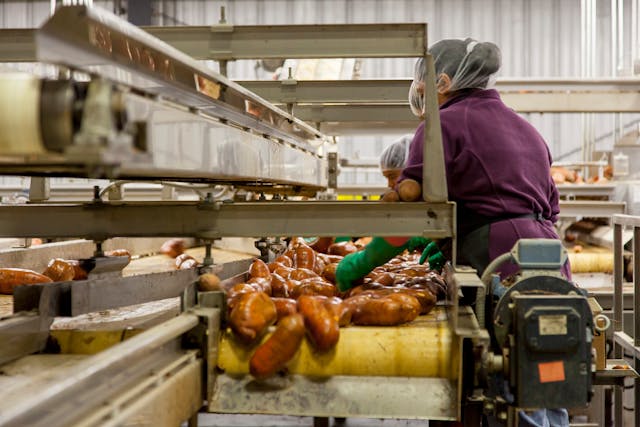
PLI Scheme Boosts Investment in Food Processing Sector

The Production Linked Incentive (PLI) scheme for the food processing industry has attracted investments worth ₹9,207 crore, indicating steady growth and strong industry participation.

Officials stated that the scheme has encouraged companies to expand capacity, adopt modern technology, and improve processing infrastructure. These developments are expected to enhance efficiency and support the sector’s long-term growth.

PLI Scheme Boosts Investment in Food Processing Sector

Pic Credit: Pexel

Industry experts note that the initiative is promoting value addition across key segments such as ready-to-eat products, processed fruits and vegetables, and marine goods. It is also helping strengthen supply chains and improve product standards.

The scheme is further expected to boost exports, create employment opportunities, and increase demand for agricultural produce, benefiting farmers.

Overall, the response to the PLI scheme highlights its role in supporting the growth and competitiveness of India’s food processing industry.