Lexar Forecasts Seamless, AI-Driven Storage Solutions for 2026

Mr. Fissal Oubida, General Manager, Lexar(1)
By:– Mr. Fissal Oubida, General Manager, Middle East, Africa, CIS & Indian Subcontinent, Lexar Co.
“2025 has been a year where people’s relationship with technology has become more personal and more data-driven than ever. From creators and gamers to everyday users, the demand for faster, more reliable, and higher-capacity flash memory increased as digital content, AI tools, and real-time experiences became part of daily life. The industry saw strong momentum toward high-speed interfaces, performance-focused SSDs, and memory solutions that are capable of handling heavier workloads without losing their reliability. 
 
Looking ahead to 2026, the focus will shift even more toward enabling seamless, intelligent experiences, where storage works quietly in the background but plays a critical role. As a leader in flash memory innovation, Lexar remains committed to designing solutions that empower people to create more, work at a higher speed, and have confidence in their data, while being a forerunner in the next stage of a AI data-driven future. 


A Strategic Partnership Accelerating India’s Clean Energy Transition

Chennai, Dec 26:- Suntek Energy Systems Pvt. Ltd., operates with brand name Truzon Solar, today announced a strategic investment and long-term partnership with Mr. Sachin Tendulkar legendary cricketer, global sporting icon, and philanthropist.
 This landmark partnership marks a defining milestone in Truzon Solar’s growth journey, reinforcing its ambition to emerge as one of India’s top three solar EPC companies by 2030. The association with Mr. Tendulkar synonymous with trust, excellence, and national pride significantly strengthens Truzon Solar’s brand credibility and accelerates its evolution into a truly national clean-energy company.
 The strategic investment will support Truzon Solar’s next phase of expansion by scaling execution capabilities, deepening operational infrastructure, and strengthening delivery across the solar value chain. The company will continue to build on its strong footprint in Telangana, Andhra Pradesh, Maharashtra, Madhya Pradesh, Chhattisgarh, and Karnataka, while expanding aggressively into high-potential markets including Uttar Pradesh, Tamil Nadu, Odisha, and Kerala.
Commenting on the partnership, Mr. Charugundla Bhavani Suresh, Founder and Managing Director, Truzon Solar, said:
 “This partnership with Mr. Sachin Tendulkar is more than an investment it is a powerful validation of our values, governance, and long-term vision. His belief in Truzon Solar reinforces our commitment to building a trusted, scalable, and future-ready solar enterprise. Together, we aim to make clean energy a mainstream, responsible choice for homes, businesses, and industries across India.”
 Truzon Solar operates across Residential, Commercial & Industrial (C&I), and large-scale infrastructure segments, delivering end-to-end solar solutions through complete ownership of the development lifecycle. Its integrated capabilities include utility-scale EPC projects, rooftop solar systems, PM-KUSUM agricultural solar programs, industrial CSG projects, and comprehensive operations & maintenance services.
 With a strong execution track record, customer-first philosophy, and increasing national presence, Truzon Solar is building a differentiated solar platform focused on quality, reliability, and long-term impact. The partnership with Mr. Sachin Tendulkar is expected to further enhance stakeholder confidence, unlock strategic collaborations, and strengthen the company’s leadership position in India’s rapidly evolving renewable energy ecosystem.
 The long-term vision of this partnership is to contribute meaningfully to India’s renewable energy goals by empowering millions of rural and urban consumers to transition to solar power, thereby creating a cleaner, brighter, and self-sustaining future for generations to come.

How Premium Housing Surged in Indian real estate in 2025

Delhi NCR, Dec 26: As 2025 is set to end in a few days, activity in Delhi NCR’s premium housing market continues at a surprising pace. Properties in the ₹1 crore plus bracket have found steady takers through the year, mostly from families looking for more space or a better neighbourhood. Developers say many of these buyers began their search early in the year and stayed active regardless of season, which helped sustain sales across quarters. A CBRE–ASSOCHAM study reported that luxury housing sales jumped 85 percent in the first half of 2025, with NCR contributing more than half of those transactions.

That momentum also filtered into the luxury bracket. Homes priced at INR 4 crore and above, once restricted to a handful of sectors, now attract interest across a wider stretch of the region. Market reports show that demand for high-end homes has been rising for some time. ANAROCK’s data highlights the scale of this growth, with average luxury prices moving from about INR 13,450 per square foot in 2022 to nearly INR 23,100 in 2025. Brokers in Gurgaon and Noida say buyers in this range are particular about layout planning, finishes and the reputation of the developer.

According to a recent report by Savills India Research, prices of new villa properties in Goa compare with the apartments in South Delhi and South Mumbai, priced between Rs 7 crore and Rs 10 crore.

Mr. Dheeraj Sharma, CEO, GHD Group says,

“India’s property market in 2025 has maintained solid momentum, supported by confident buyers and improved infrastructure. The push for bigger, better homes is shaping demand across mid and premium tiers. Investor interest is also rising, keeping real estate one of the most stable investment avenues this year. Within this national growth story, Goa has emerged as one of the most dynamic and talked-about markets. The state has seen a sharp surge in luxury villa and holiday home demand, with North Goa locations like Porvorim and Thivim recording price jumps of up to 66% year-on-year. This year, a significant number of investors including NRIs and domestic buyers have actively invested in Goa, drawn by its strong rental potential and lifestyle appeal. Remote-working professionals have also continued to choose Goa as a long-term base, further increasing demand. Goa’s rise has been supported by major infrastructure improvements, including the expansion of Mopa Airport and enhanced highway connectivity, making the state more accessible for residents, tourists and investors alike. These developments have firmly positioned Goa as a premium lifestyle and investment hub. Looking ahead to 2026, Goa’s momentum is set to continue, with demand likely to outpace supply in key luxury and holiday-home hotspots.”

Dwarka Expressway and UER II Reset Connectivity for NCR

A major catalyst for Gurgaon’s premium housing momentum this year has been the completion of the Dwarka Expressway and Urban Extension Road II. Market participants across the board describe these projects as transformative. Many homebuyers and brokers frame the infrastructure push as a much-needed intervention delivered under the leadership of Prime Minister Narendra Modi. The expressway, in particular, is often referred to as a long-overdue “gift” to commuters who spent years navigating bottlenecks on the traditional Delhi–Gurgaon corridors.

With both corridors now operational, access to IGI Airport has become noticeably smoother, and commuters from West and North Delhi report shorter and more predictable travel times into Gurgaon’s commercial pockets. Real estate sentiment along the expressway has shifted sharply. Sectors that had remained inactive for years are now drawing sustained interest. Industry data shows steep price appreciation along the stretch over the last five years, with some estimates placing growth at more than three and a half times. Developers say most new demand here is for premium homes backed by improved access and the steady addition of social amenities.

UER II has had a similar effect in the northern belt. The new link connects Rohini, Mundka, Najafgarh and the Dwarka side with highways leading towards Sonipat and Kundli. For residents in these neighbourhoods, the project has created a faster link to the airport and to Gurgaon. Analysts say the enhanced connectivity has already begun to lift the profile of pockets that earlier struggled to attract buyers.

Venket Rao, Founder & Managing Partner, Intygrat Law:

“2025 has been a defining year for India’s real estate sector. The Reserve Bank of India’s consistent stance on repo rates has ensured a stable borrowing environment, giving both developers and homebuyers the confidence to plan long-term. At the same time, the government’s ongoing labour law reforms are bringing much-needed clarity, compliance transparency, and workforce efficiency to the construction ecosystem — a critical step for an industry that thrives on predictability and organized growth. What truly stands out this year is the government’s sustained push for real estate through infrastructure expansion, digital land governance, and policy incentives aimed at accelerating urban development. These efforts signal a clear national intent: to make real estate a cornerstone of India’s economic transformation. As we close the year, the sector is more resilient, more regulated, and better positioned to deliver sustainable value to investors, end-users, and the broader economy.”

Deepak Rai, Founder & Managing Director, Bootes, said,

“2025 has been a decisive year for real estate, reminding us that pollution, rising temperatures, water scarcity, and high energy consumption are immediate challenges. While the market remained stable and buyer confidence stayed strong across mid-income and premium categories, the biggest shift was the growing demand for sustainable, climate-responsible homes. More buyers now prioritise eco-friendly materials, energy efficiency, and net-zero living.”

He further added, “Looking ahead to year 2026, the real estate sector must take responsibility for mitigating these issues. Sustainability is no longer optional — green certifications, renewable energy integration, water-saving systems, and low-carbon construction will be fundamental expectations. The market will stay balanced, but the demand for climate-conscious homes will rise sharply. At Bootes, we are actively working on these solutions. From net-zero homes to energy-optimised designs and responsible construction practices, we are committed to building homes that support a cleaner, healthier, and sustainable future.”

Mr Gaurav K Singh, Chairman and Founder, Womeki Group says

“2025 has been a year of strong economic stability for India, marked by sustained GDP growth, a steady inflation trajectory, and continued improvement in the ease of doing business. The government’s push on infrastructure development, digital public services, and rationalised labour reforms has further strengthened investor confidence. As we move into 2026, the outlook remains optimistic. With capital investments rising, Tier 2 and Tier 3 markets gaining momentum, and policy consistency driving long-term planning, India is poised to unlock broader opportunities and reinforce its position as one of the world’s most resilient and fast-progressing economies.”

Henam Khaneja, Additional Vice President & Head of Commercial Sales, Elante Group,

“As we all know, this year is coming to an end, and 2025 has been a transformative year for the real estate sector. Stable interest rates, growing income confidence, and a definite shift toward quality-driven developments all contributed to the robust demand we saw in both the residential and commercial sectors. Buyers today are more informed and are prioritizing integrated living, sustainability, and long-term value. Tier-2 markets also gained momentum as infrastructure expansion and hybrid working models created new growth pockets. Heading into the year 2026, the market is expected to stay largely balanced, with a slight tilt towards buyers in a few pockets as inventory gradually increases. Mortgage rates may stabilise, improving affordability and boosting buyer confidence. The premium and luxury segment will continue to stay strong, driven by aspirational and high-net-worth buyers who prioritize lifestyle, design, and long-term value.”

The Outlook

With the year close to wrapping up, the premium segment stands out as one of the most stable parts of NCR’s residential market. A mix of infrastructure upgrades, improved connectivity and consistent end-user demand has defined 2025 for high-value housing. Developers say enquiry levels today indicate that the interest is unlikely to fade as the market moves into 2026.

Project Management Emerges as Strategic Backbone for India’s Growth and Future-Ready Workforce

Amit Goyal, Managing Director, South Asia, PMI-2

By:-Amit Goyal, MD  South AsiaProject Management Institute 

Amidst India’s rapid development, digital changes, hybrid work, and global economic shifts, organizations are fundamentally rethinking operations. Traditional approaches are no longer effective. Structured execution, the essence of project management, has emerged as the critical framework to navigate uncertainty, optimize resources, and deliver strategic objectives. Project management is now an enterprise-wide imperative, moving beyond a specialized skill to a foundational capability. It empowers teams to adopt new technologies, adapt agilely, and achieve tangible outcomes. Integrating AI transforms risk forecasting and resource orchestration, making project management deeply strategic for enterprise growth.

India’s ambitious progress from world-class infrastructure and digital initiatives like UPI to ‘Make in India’ critically depends on robust project management. These mega-projects, shaping India’s future for 2026 and beyond, demand ‘future-ready’ talent skilled in project methods, digital fluency, and adaptability. Project management is the strategic backbone for India’s workforce readiness and sustained national progress.

iQOO turns Phoenix Mall of Asia into a live reveal zone for iQOO 15, brings Tanmay Bhatt on-ground

iQOO transformed Phoenix Mall of Asia, Bengaluru into a live reveal zone for its flagship smartphone, the iQOO 15, with a high-impact on-ground activation that ran from 22 to 28 December 2025. Designed as a curiosity-led experiential campaign, the installation aimed to build anticipation and offer consumers a hands-on iQOO 15 experience during the Christmas season.

Tanmay Bhatt

At the heart of the activation was a giant Amazon-style mystery box installation placed inside the mall. Kept closed during the initial 2 days, the installation sparked curiosity among the people and quickly became a visual attraction, encouraging conversations and speculation around what lay inside. The box was later opened to unveil the iQOO 15 experience zone, turning intrigue into an immersive product experience for mall visitors.

Popular content creator and comedian Tanmay Bhatt added to the excitement by joining the iQOO pop-up and engaging with the crowd, bringing his signature humour and relatability to the on-ground experience. His presence amplified audience engagement through casual interactions and crowd-led moments, adding a layer of entertainment and cultural relevance to the activation.

This installation marked the first time iQOO offered consumers a public, hands-on experience of its new flagship smartphone, iQOO 15, through such an immersive offline format. Visitors were able to explore the device up close, reinforcing iQOO’s focus on experience-driven innovation and youth-centric engagement.

While the pop-up was designed purely as an experience-led activation, the iQOO 15 is available for purchase online via Amazon and the iQOO e-store.

RRTS Positioned as National Growth Engine, Integration Boosts Commute and Investment: Knight Frank

New Delhi, Dec 26:- India’s Regional Rapid Transit System  stands at the threshold of transforming urban mobility and catalysing corridor-led investment opportunities across the country, according to “Regional Rapid Transit System: Testing the Commuters’ Pulse,” a comprehensive report released by Knight Frank India. The findings point to strong commuter satisfaction and a significant willingness among aspirational users to adopt RRTS, provided connectivity and integration challenges are addressed. The report also highlights evolving investor interest around RRTS corridors, driven by visible infrastructure development and perceived economic opportunity.

The report underscores that the RRTS is emerging as a strong catalyst for corridor-led investment, with nearly 80% of surveyed existing users associating improved RRTS connectivity with enhanced economic opportunities in their region. Perceptions of economic development are significantly reinforced where infrastructure upgrades are visible, increasing confidence by over 2.25 times. This translates into tangible real estate interest, with 66% of existing users expressing willingness to invest in property along the RRTS corridor. The presence of commercial activity and active real estate development plays a decisive role in shaping investment sentiment, amplifying investment intent by 10.2 times and 7.7 times respectively. The findings also point to a clear decentralisation opportunity, with 38% of respondents open to relocating away from core urban centres; however, this willingness is closely tied to the availability of supporting social infrastructure, underlining the importance of integrated residential, commercial and civic development in unlocking the full investment potential of RRTS corridors.

Shishir Baijal, International Partner, Chairman and Managing Director, Knight Frank India, said,

“The RRTS is a pivotal infrastructure intervention for India’s urban and regional transport landscape. While commuters place a premium on time savings, safety and reliability, and are ready to adopt modern transport solutions when connectivity works seamlessly. For policymakers and city planners, integration, both in mobility and urban development, is key. For investors and developers, RRTS corridors represent tangible opportunities for growth where infrastructure dovetails with land-use planning and commercial momentum. The RRTS is not just as a transport solution, but a catalyst for decentralised economic growth. Its long-term success will depend on coordinated planning that brings together transport networks, land-use strategy and investment priorities to support sustainable urbanisation.”

Real Estate Growth and Commercial Activity Perceptions Influence Investment Probability:

The survey findings indicate that perceptions of real estate growth and commercial activity along the RRTS corridor play a decisive role in shaping investment probability among respondents. Existing users who observed visible commercial activity, such as offices, retail and business hubs, were significantly more likely to express intent to invest, with commercial development increasing investment likelihood by over ten times. Similarly, the presence of ongoing or completed real estate projects strengthened confidence in the corridor, raising the probability of property investment by nearly eight times. These results highlight that investor sentiment is not driven by connectivity alone, but by tangible signs of economic momentum on the ground. The survey also suggests that infrastructure-led confidence is reinforced when transport development is accompanied by active land use, underscoring the importance of synchronised infrastructure delivery and real estate development in unlocking the full investment potential of RRTS corridors. 

Commercial Activities and Real Estate Development Shape Investment Sentiments

Source: Knight Frank Research

Delhi  Ghaziabad  Meerut Corridor Success and Lessons 

The RRTS  exemplified by the flagship Delhi Ghaziabad Meerut corridor being developed by the National Capital Region Transport Corporation   has already begun its phased rollout. The corridor, approved at a cost of over INR 30,000 crore, will ultimately span 82 km and dramatically reduce travel time between Delhi and Meerut to under an hour. The system’s priority section has commenced operations, and continued funding reflects the Government’s ongoing commitment to completing the project. 

Knight Frank Survey Results 

Knight Frank’s survey indicates that RRTS users demonstrate strong approval for the service, with about 83% expressing satisfaction with their travel experience. While 45% of respondents reported higher commute costs after shifting to the RRTS, this perception of increased fares appeared to have minimal impact on their overall satisfaction. Instead, commuters value reductions in travel time, enhanced safety and productivity gains far more, underscoring a shift in priorities toward quality and reliability in rapid regional transport.

Despite robust satisfaction levels among existing users, the report identifies key barriers that could constrain broader adoption. Limited last-mile access, accessibility hurdles and delays in ancillary infrastructure around stations remain persistent challenges. Critically, the research shows that multi-modal integration  linking RRTS with metro networks, buses, feeder services and pedestrian-friendly infrastructure  drives commuter intent, substantially increasing the likelihood of adoption. This finding underscores that seamless connectivity must be prioritised to translate latent demand into sustained ridership.

The report further finds that awareness of RRTS is exceptionally high, with more than 90% of aspirational commuters recognising the system and its intended benefits. Around 71% of these aspirational commuters expressed willingness to shift their commute to the RRTS, contingent on improvements in connectivity, reaffirming the underlying demand for efficient regional transport.

In parallel with mobility outcomes, RRTS corridors are beginning to shape regional real estate sentiments. Nearly 80% of existing users link improved connectivity to enhanced economic opportunity in their regions. Visible infrastructure investment and development along the corridors bolster perceptions of economic growth, with the prevalence of commercial activity and real estate projects significantly amplifying investment intent among surveyed respondents.

Users’ feedback and preferences 

Investment in RRTS 

The investment opportunity around RRTS corridors is further underpinned by large-scale infrastructure planning beyond the Delhi Meerut link. The development of additional corridors of similar scale signals an expanding national footprint for RRTS-driven infrastructure investment and regional connectivity solutions.

For investors and developers, the implications are clear: RRTS corridors offer emerging nodes of growth, particularly where transport infrastructure is accompanied by commercial and residential development. 

India’s PR in 2025: From Viral Attention to Credible Storytelling, Lessons for 2026

Jyoti Awasthi Director HOC

By:- Jyoti Awasthi, Director, House of Communication

With 2025 drawing to a close, India’s public relations industry is now trying to recalibrate itself in a world that seems dominated by algorithmic amplification, audience scepticism, and fast reputation cycles. That was the year that virality turned from the realm of ‘happy accident’ to that of strategic consequence  engineered, controlled and, in multiple instances, in real-time, turned around and course-corrected. Those campaigns that made it were not only focused on gaining eyeballs  they synced storytelling with business, culture and authority.

Virality Moved from Reach to Relevance

By 2025, raw impressions had lost their monopoly as success signals. For that matter, industry data tells us that, though India crossed 900 million internet users this year, average content attention spans for a social platform hovered between 2.5-3 seconds. Campaigns that worked saw this limitation and were geared for hook, rather than mass message. Most successful public relations narratives had more weight in making their message crystal clear within five seconds’ time frame, and placed importance on context, not snappy jargons. Several BFSI and consumer-tech companies, for example, centered campaigns around financial anxiety, digital safety and everyday decision-making instead of aspirational fluff. They were not loud narratives and they moved because they reflected lived realities.

 Purpose Without Proof Failed Quickly-

2025 was unsympathetic to performative purpose. A report by Edelman Trust Barometer for India showed that over 60 percent of consumers said they had been able to discern and see when brands were using social causes as a marketing nudge. PR teams had learned, sometimes the hard way, that purpose-led campaigns needed operational backing  policy changes, product shifts or actionable metrics. 

Brands that combined announcements with data points, timelines and third-party validation found ways to maintain credibility. Those who relied on symbolic messaging found themselves under swift social scrutiny, sometimes within hours of the start of campaigns. 

Short-Form Content Dominated, Strategy Still Won

Short-form video maintained its dominance of distribution, accounting for more than 25% of worldwide short-video consumption in 2025 with India. But the campaigns that turned virality into reputation equity looked at reels and shorts as gateways, not where to go. PR plans added explanations, earned media stories, and top-down content analysis to keep people longer in view. 

The most salient trend in this regard was the emergence of “moment-led PR”, in which brands would react to cultural or policy moments within 24 to 48 hours with contextual understanding rather than reactionary commentary. Speed was important, but discernment was more. 

Influencer Strategy Matured or Collapsed

 2025 was the dropout date for influencer scale only partnerships. An industry report says that Influencer marketing spend across India is expected to exceed ₹3,000 crore this year, and fatigue set in rapidly for the same for undifferentiated endorsements. Those that succeeded worked with fewer creators but closer alignment, frequently co-creating content rather than delivering briefs. Micro-influencers with domain credibility  finance educators, sustainability advocates, regional creators performed better, including twice to three times better, at engagement than celebrity-led activations. PR teams discovered that influence without trust loses its shine quickly. 

Data Became a Key to Storytelling

Among its most dramatic changes in 2025, was the leveraging of proprietary data as a PR tool. Many of that year’s most quoted media stories were pinned on top of surveys, indices and consumer trend reports. In a world of diminishing newsroom bandwidth, data-driven stories provided journalists with ready relevance. Brands that contributed to annual or quarterly indices gained disproportionate percentage of voice, notably in business and financial media. The message was obvious: owned data is no longer optional; it is narrative infrastructure. 

Crisis Readiness Was Tested Repeatedly

 In the current era with increasing misinformation cycles, 2025 reiterated the importance of active reputation defence being a priority. Social listening statistics indicate the spike in brand scandals is now taking place within the first six hours out of the gate of emergence, as noted by social listening data. Firms with pre-validated response guidelines, professional spokespeople, and defined escalation cycles have been shown to contain damage much better than those responding ad hoc and with no advance notice to mitigate risk. 

PR in 2025 focused on much more than amplification; it was containment, calibration and confidence. 

What It Means for 2026

The take-away for 2025 is that in India, PR is no longer a support function. It is a strategic layer between brand, business, and public sentiment. Virality without trust was brittle. Trust without visibility was not enough. 

As the industry looks ahead, “the winning playbook…will be one of cultural intelligence, data-backed storytelling, ethical clarity and speed with moderation. The brands and agencies that turn these lessons into a part of their culture will not merely have conversations; they will shape narratives that outlast the algorithmic moment. 

Attention was an easy thing to obtain in 2025. Credibility was not. That distinction will help define the next phase of India’s PR evolution.

Corporate Teams Celebrate Innovation at Glued Supercharged, Noida

Corporate celebrations are evolving beyond traditional banquets and boardroom gatherings, as companies increasingly seek engaging, high-energy experiences that foster team bonding. Emerging as a preferred destination for such events, Glued Supercharged, located at Level 1, E-Square, Sector 96, Noida, is redefining how organisations celebrate milestones, offsites, and year-end parties.

IMG_7890

Over the past year, Glued Supercharged has hosted corporate events for leading organisations including EY, HCL, Microsoft, Accenture, and more than 50 other reputed companies, offering a unique blend of entertainment, food, and team engagement under one roof.

Designed as a one-stop experiential venue, Glued Supercharged features seven immersive gaming zones, fully equipped private party halls, and flexible event spaces that can accommodate both small teams and large corporate groups. The venue also provides customised catering solutions, making it ideal for half-day offsites, evening celebrations, and full-scale corporate events.

What sets Glued Supercharged apart is its focus on curated team-building activities and interactive engagement modules, enabling organisations to strengthen collaboration, boost morale, and foster meaningful connections among employees all in a fun, informal setting.

By combining gaming, entertainment, hospitality, and structured team engagement, Glued Supercharged is fast becoming the go-to destination for companies looking to transform routine corporate events into memorable experiences that energise teams and enhance workplace culture.

With its strategic location in Noida and an expanding list of corporate clients, Glued Supercharged continues to position itself as a hub where work meets play seamlessly.

India’s Age-Tech in 2025: Elder Care Goes Beyond Emergencies

Dec 26:- As Indian families continue to become increasingly mobile and nuclear, 2025 emerged as a pivotal year for organised eldercare, revealing a clear shift in what ageing parents need and what families are often unable to provide from a distance. For Anvayaa, one of India’s leading age-tech eldercare platforms, the year underscored a growing move away from episodic, emergency-led care towards continuous, relationship-based support that blends medical assistance with everyday companionship and emotional reassurance.

Over the course of the year, Anvayaa supported more than 85,000 active senior citizens on its platform, marking a 12X growth from its subscriber base, driven largely by rising adoption of companionship services, dementia care, emergency assistance and accompanied medical support. Of this growth, approximately 65–70 % was driven by metros and Tier-1 cities, while the remaining adoption came from Tier-2 and Tier-3 geographies, highlighting the expanding relevance of organised eldercare beyond India’s largest urban centres.

The nature of eldercare requests also evolved significantly through the year. While metros such as Delhi, Mumbai, Bengaluru, and Hyderabad continued to see strong demand for companionship and cognitive care, recording utilisation levels of up to 85%, Tier 2 and Tier 3 cities including Vizag, Pune, Indore, Chandigarh, and Coimbatore showed growing preference for structured home nursing and skilled caregiver services. Dementia care emerged as a particularly strong need in urban centres, with metro cities alone accounting for more than two-third of all dementia care enrollments nationwide. During the year, Anvayaa was also granted its second Patent for its “AI Enabled Method For Providing Personalised Cognitive Therapy & Dementia Care.”

Across geographies, families increasingly sought reliable presence for their parents, someone to accompany them to doctor visits, manage recovery at home, or simply spend time with them highlighting a shift in caregiving expectations.

Technology played a critical enabling role in strengthening response and safety during the year. Anvayaa’s patented Remote Patient Monitoring and emergency response system helped achieve an average SOS response time of under three minutes, enabling proactive intervention in over 400 critical incidents triggered by falls, abnormal vitals, or emergency alerts. Through deeper API integrations across ambulance networks, telemedicine providers, hospitals, and healthcare partners, the platform continued to offer families a single coordinated system for managing medical, emergency, and caregiving needs.

Reflecting on the year, Anvayaa’s leadership noted that eldercare in India is entering a more mature phase. Speaking on this, Mr. Prashanth Reddy, Founder & Managing Director, Anvayaa, said,

 “What 2025 made very clear is that eldercare is no longer just about emergencies or medical tasks, it is about continuity, accountability, and being present when families cannot be. We saw adult children increasingly outsource presence, not responsibility. Companionship, cognitive engagement, and proactive monitoring became as important as clinical care. Our focus has been to combine technology with empathy so that elders feel supported every single day, not only in moments of crisis.”

The year also marked a significant milestone for Anvayaa as it completed 10 years of organised eldercare operations in Hyderabad, one of its earliest and most important markets. As part of this decade-long journey in the city, Anvayaa strengthened Mission Abhay, a Hyderabad-focused initiative aimed at enhancing senior safety through faster emergency response, coordinated on-ground support, and proactive monitoring, reinforcing the city’s role as a cornerstone in Anvayaa’s care ecosystem.

Having steadily expanded its on-ground care teams, clinical specialists, and concierge support to nearly 200 employees nationwide, Anvayaa continues to maintain one of the lowest attrition rates in the sector, a critical factor in ensuring continuity and trust in eldercare delivery.

As the company looks ahead to 2026, several milestones are expected to further strengthen its ecosystem and industry impact. Leading insurance companies are set to launch products that include eldercare as a value-added service with Anvayaa playing a key role in care delivery. Anvayaa Nishcihnt, the company’s corporate eldercare program, is poised to touch nearly 3 lakh lives, signalling a shift in how organisations approach employee benefits and parental care support. Additionally, Project Ratan, an initiative focused on women and elderly safety, is scheduled to go live in Q2 2026. Through the Anvayaa Foundation, the company will also actively work on skill development and certification programs for caretakers and home healthcare workers, addressing a critical gap in the eldercare ecosystem.

As India’s eldercare landscape evolves, the lessons of 2025 point to a simple truth: ageing with dignity increasingly depends on systems that combine human presence with thoughtful, responsive technology.

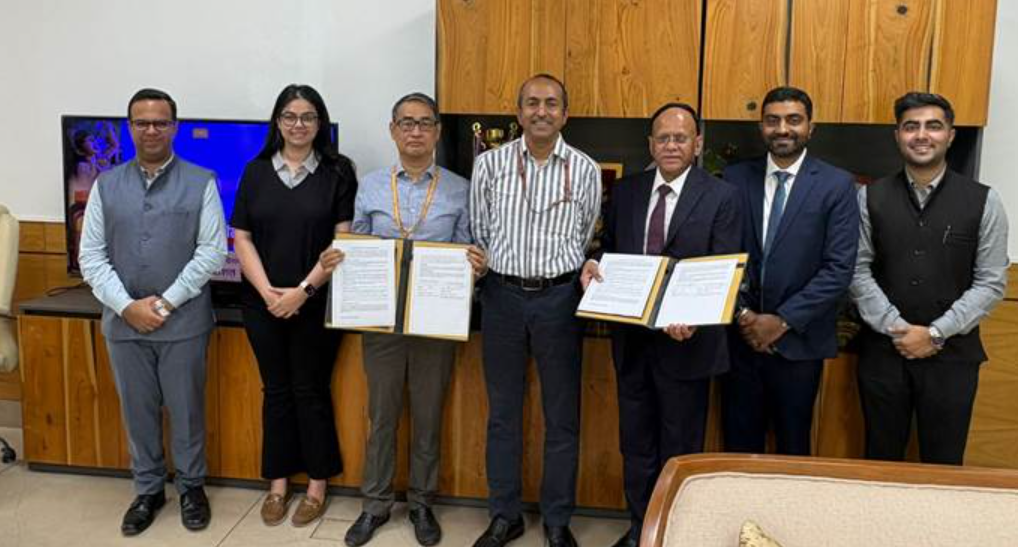
IndieSemic Pvt Ltd and Prizor Viztech Ltd Sign MoU for CCTV System-on-Chip Collaboration

New Delhi, Dec 26IndieSemic Private Limited, an India-based semiconductor design company, and Prizor Viztech Limited, a security and surveillance solutions provider, have signed a Memorandum of Understanding (MoU) for the development, validation and commercial deployment of ISC-S2-PZ, a CCTV-specific System-on-Chip (SoC) designed by IndieSemic. The collaboration aims to strengthen India’s indigenous semiconductor ecosystem for the security and surveillance sector. The scope of the MoU includes joint testing, field trials, validation support and market deployment of the ISC-S2-PZ chipset through Prizor’s manufacturing and supply network.

Under the agreement, IndieSemic will supply the ISC-S2-PZ SoC based on the VEGA processor architecture, while Prizor will undertake validation, field testing and integration into its surveillance products. Prizor has secured exclusive rights to procure, use and distribute the chipset in India and international markets for three years post-validation and has committed to purchase 50 lakh units per year for a minimum period of three years.

Commenting on the development, Nikul Shah, Founder and CEO, IndieSemic Pvt Ltd, said,

“We are pleased to partner with Prizor to take an indigenously designed CCTV-specific SoC from development to large-scale commercial deployment. The ISC-S2-PZ has been developed to address the requirements of the security and surveillance industry, including performance, security and system integration. This collaboration provides a clear pathway for validation, field deployment and volume adoption of a domestically designed chip, while also strengthening India’s semiconductor design capabilities and reducing reliance on imported solutions.”

The partnership also enables Prizor to move towards deeper technology integration by incorporating a domestically designed SoC into its CCTV product portfolio, supporting long-term supply continuity and localisation goals.

Mitali Goswami, Managing Director, Prizor Viztech Limited, said,

“This partnership marks a strategic milestone for Prizor. By validating and bringing IndieSemic’s indigenous ISCS2-PZ chipset to market, we are aligning cutting-edge semiconductor design with our extensive surveillance manufacturing capabilities. The ISC-S2-PZ has been architected for high-performance video analytics, data security and next-generation AI-enabled CCTV features, which fit perfectly with our future product roadmap. Our exclusive rights to distribute and our large-volume purchase commitment underscore our confidence in this technology’s success. With this collaboration, Prizor takes one more step toward backward integration beyond our SMT line, strengthening control over our technology stack and enhancing long-term competitiveness. This partnership supports our commitment to ‘Make in India’ innovation and further strengthens India’s presence in the global security-camera industry.”

IndieSemiC is an India-based semiconductor company engaged in the design and development of integrated circuits, RF modules, and system-level solutions for embedded and industrial applications. The MoU is expected to enable both companies to work closely on the localisation of critical semiconductor components for the surveillance sector. The partnership supports the development of an end-to-end domestic value chain covering chip design, validation, manufacturing integration and market deployment, with a focus on long-term scalability and supply assurance.