Sports Sensors Vary Wildly in Their Measurements. Standards Are Closing the Gap

Did you know that two different wearable sensors can give an athlete two completely different scores for the same workout? 

Those differences, which can be subtle and not-so subtle, make it hard for elite athletes, coaches and even sports leagues to cut through the noise and identify the tools that are best for them. 

That’s exactly the challenge IEEE Member Rachel Hybart wants to address through a standard in development through the IEEE Standards Association. 

IEEE Standard P3716, a Standard for the Quality Assessment of Human and Object Tracking Technologies Used in Field- or Court-based Sports, is intended to provide an objective performance evaluation of electronic systems that measure things like the speed, position and velocity of humans and objects in sports that are played in fields and courts. 

 She recently appeared on the IEEE SA Re-Think Health podcast. As the world’s attention begins to focus on elite winter sports, we touched base with her to discuss how this new standard might help elite athletes, coaches and leagues make more informed decisions.

 “Without a way of assessing the quality of a specific measurement device or method, it’s really easy for teams and leagues to invest in technology that maybe doesn’t best suit their needs,” Hybart told the podcast. 

 Why Accuracy Matters

 From wearables on wrists to GPS vests to special cameras using LiDAR, sensors are everywhere and data is embedded at the highest levels of decision-making. 

 “At the elite level, small errors in timing orientation or force estimation can meaningfully change conclusions about fatigue, asymmetry or injury risk,” Hybart said. 

 And it isn’t just training load. Data from sensors can be used to determine whether an injured player should return to play and to help broadcasters provide context for viewers at home. Sports leagues use data to evaluate rules designed to improve player safety. 

 How Different Sensors Take Different Measurements

 To understand how differences in sensors and electronic devices can impact athlete data, consider the use of satellite-based navigation systems, like GPS, which are often combined with motion sensors worn on the body. While these satellite systems follow common standards, the devices that use them can process the data in different ways. During fast changes in speed or direction, differences in how frequently data is collected, how motion sensors are combined and how the data is smoothed can lead to noticeable differences in reported position and speed between systems.

 Furthermore, the way wearables and other sensors measure athletic performance is frequently locked behind proprietary systems and algorithms that are hard to evaluate. 

 Are Consumer-Grade Sensors Good Enough?

 Of course, the use of sensors and wearables isn’t just driven by elite athletes. Hobbyists and student athletes use them as well.

 “Consumer devices are optimized for consistency and engagement at the individual level,” Hybart said. “Systems used by elite athletes must be precise enough to inform medical, performance and safety decisions.”

 Systems used at elite international events are also designed to integrate multiple data streams such as motion tracking, force measurement, broadcast video and event context rather than relying on a single wearable signal.
Airbnb Finds Nearly 60 Percent of India’s Gen Z Plan 2026 Travel for Live Cricket

India, Feb 25 : India’s cricket season is driving a measurable surge in domestic travel, with new Airbnb data showing significant year-on-year growth in searches and bookings across demand across match-hosting cities, particularly beyond metro hubs.

Demand shifts beyond metros

As marquee tournaments unfold between February and May, travel demand is dispersing into emerging cricket centres such as Ranchi, Thiruvananthapuram, Jaipur and Lucknow, signaling how major sporting moments are reshaping India’s tourism map.

According to Airbnb internal data, searches by Indian guests for several match-hosting cities during the cricket season rose significantly compared to the same period last year, with some of the strongest growth recorded in emerging cricket centres beyond the metro circuit.

  • Ranchi saw nearly a 120% increase in searches year-on-year.
  • Thiruvananthapuram recorded over 110% growth in searches year-on-year.
  • Jaipur and Lucknow witnessed increases of over 70% and 60% in searches year-on-year respectively.

The data suggests that high-profile fixtures are accelerating travel into tier-2 locations, broadening the geographic distribution of visitor demand beyond India’s traditional gateway cities.

Key match-day spikes were even more pronounced

Searches for stays by Indians in the host city Colombo during the India vs Pakistan match weekend surged over 325%, while nights booked recorded a notable increase year-on-year, underscoring cricket’s power to drive cross-border travel during marquee encounters

Similarly, ahead of the cricket world cup final window Ahmedabad recorded a nearly 170% increase in searches reinforcing its position as a marquee cricket destination during major tournament fixtures.

Match day = travel getaway

Behind this surge is a generational shift in how cricket is consumed. What was once largely a living-room experience has evolved into in-real-life travel, especially among younger Indians. From streaming watch sessions to travelling across states to support favourite teams, cricket is increasingly shaping how Gen Z plans trips and getaways.

Airbnb’s Experience-Led Travel Insights survey showed that nearly 60% of India’s Gen Z say they plan to travel to attend live cricket matches in 2026, and 70% prefer to attend with friends or family. While cricket might be drawing India’s Gen Z to a destination, their trips typically extend beyond the match day. Rather than short, single purpose visits, these trips are often built as longer stays as more than half (53%) extend trips beyond match days to explore local culture, cuisine and neighbourhoods. The median trip length for a cricket match stands at 3–4 days, mirroring a growing appetite for immersive, experience-led travel.

Search trends reflect this shift. Airbnb data of Indian travelers leading up to the cricket season suggests that cricket travel is increasingly becoming a group and family-friendly experience:-

  • In Ahmedabad, searches for entire homes were nearly double those for private rooms.
  • Additionally, searches for homes with two or more bedrooms grew in cities such as Ahmedabad Kangra (up nearly 90%), and Visakhapatnam (up over 75%).

Amanpreet Singh Bajaj, Airbnb’s Country Head for India and Southeast Asia, said,

 “Cricket has long united the country in spirit. What we’re seeing now is that same energy translating into travel, with fans building meaningful trips around the game. Increasingly, these moments go beyond the stadium, people are extending their stays, travelling with friends and family, and exploring destinations more deeply. On Airbnb, we’re seeing this shift firsthand, as travellers choose homes that allow them to stay together, experience neighbourhoods more authentically, and turn match days into fuller, more memorable getaways. It’s a powerful example of how culture shapes travel and creates meaningful impact for local communities.”

As India’s tourism ecosystem evolves, cricket-led travel is increasingly extending beyond traditional gateway cities. As fans travel for marquee fixtures and build longer stays around match weekends, visitor activity is reaching a wider set of host cities supporting local hospitality ecosystems and contributing to more geographically distributed tourism demand.

Limelight Diamonds Marks Strategic Expansion in Delhi with Rohini Store Launch

Limelight Diamonds Marks Strategic Expansion in Delhi with Rohini Store Launch

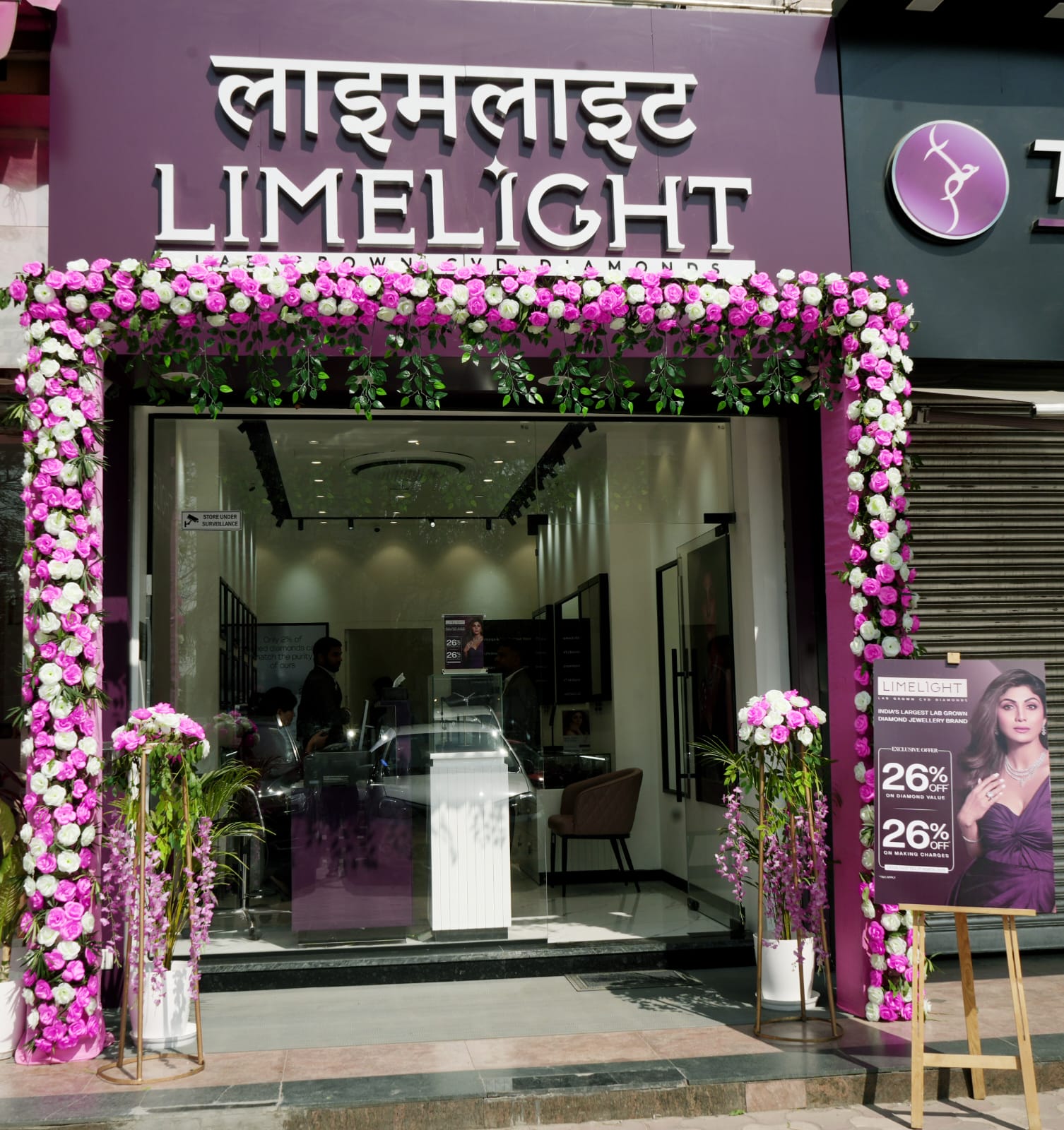
Delhi, Feb 25: Limelight Lab Grown Diamonds, India’s leading and fastest-scaling lab grown diamond jewellery brand, has further strengthened its presence in the capital with the launch of its new store in Rohini, Delhi. The store was inaugurated in the presence of Karamjyot Singh Chawla, Director, Limelight Lab Grown Diamonds, along with Regional Partner Shipresh Wadhwa and members of the brand’s leadership team.

Located in Sector 7’s Commercial Hub at Agarwal E Mall, the new store marks a key milestone in Limelight’s expansion across high-growth urban markets. Catering to Rohini’s design-conscious consumers, the launch further strengthens the brand’s national footprint of 60+ exclusive stores and 40+ shop-in-shops across 45+ cities. The contemporary retail space reflects Limelight’s focus on craftsmanship, transparency, and responsible luxury.

The store showcases an extensive range of CVD-studded lab grown diamond jewellery, crafted using Type IIA diamonds, globally recognised for their superior brilliance and purity. Customers can explore a thoughtfully curated collection featuring classic solitaires, elegant necklaces, modern earrings, bracelets, and versatile everyday wear designs, catering to both occasion-led purchases and daily styling needs.

To celebrate the launch, customers can avail exclusive launch privileges, including 15% off on diamond value and 15% off on making charges, along with a free gold coin on purchases above ₹1 lakh.

Pooja Madhavan, Founder & Managing Director, Limelight Lab Grown Diamonds, said:

“From the very beginning, Limelight has focused on building a strong retail ecosystem for lab grown diamond jewellery, one that prioritises design integrity, clear communication, and responsible sourcing. Our vertically integrated model enables us to maintain consistently high standards of quality while creating jewellery that reflects modern lifestyles. The encouraging response to our existing stores across Delhi has reaffirmed the growing trust consumers place in lab grown diamonds and in the Limelight brand.”

“The launch of our Rohini store is a natural progression driven by this positive customer response and the strong performance of our Delhi outlets. It underscores our commitment to expanding in markets where consumer preferences are rapidly evolving. As awareness around lab grown diamonds continues to deepen, customers are seeking jewellery that offers both meaning and modern relevance. Our goal is to meet this demand by bringing thoughtfully crafted, future-forward diamond jewellery closer to consumers across the Delhi NCR region.

 Karamjyot Singh Chawla, Director, Limelight Lab Grown Diamonds, added:

“The Delhi NCR market continues to be central to Limelight’s growth strategy, driven by a strong appetite for innovation and design-led jewellery. Rohini, in particular, represents a dynamic consumer base that is increasingly open to new-age luxury offerings.”

“As we scale our retail presence across India, each new store plays a strategic role in deepening consumer engagement and strengthening brand recall. The launch in Rohini enables us to further extend Limelight’s reach within the capital, while reinforcing the growing relevance of lab grown diamonds in India’s evolving jewellery landscape.”

Shipresh Wadhwa, Regional Partner, Limelight Lab Grown Diamonds, said:

“Limelight’s leadership in the lab grown diamond segment and its rapidly expanding national footprint made the partnership a natural fit for us. The brand’s emphasis on transparency, contemporary design, and consumer education strongly aligns with the expectations of today’s jewellery buyers. Bringing Limelight to Rohini allows us to introduce a modern jewellery destination that blends global-quality lab grown diamonds with a refined retail experience. We are confident the store will resonate with local consumers seeking jewellery that reflects both style and conscious choice.”

With the launch of its Rohini store, Limelight Lab Grown Diamonds continues to expand its retail reach across North India, further strengthening its position as one of the most trusted and widely accessible lab grown diamond jewellery brands in Delhi and across India. The new Rohini store reinforces this leadership while making conscious luxury accessible to a new and growing consumer base in the capital, appealing to those who value jewellery that is distinctive, responsibly created, and aligned with a more sustainable future.

CHILTIER Unveils Climate-Control Hydro Vest, Opens Pre-Orders Before Kickstarter Launch

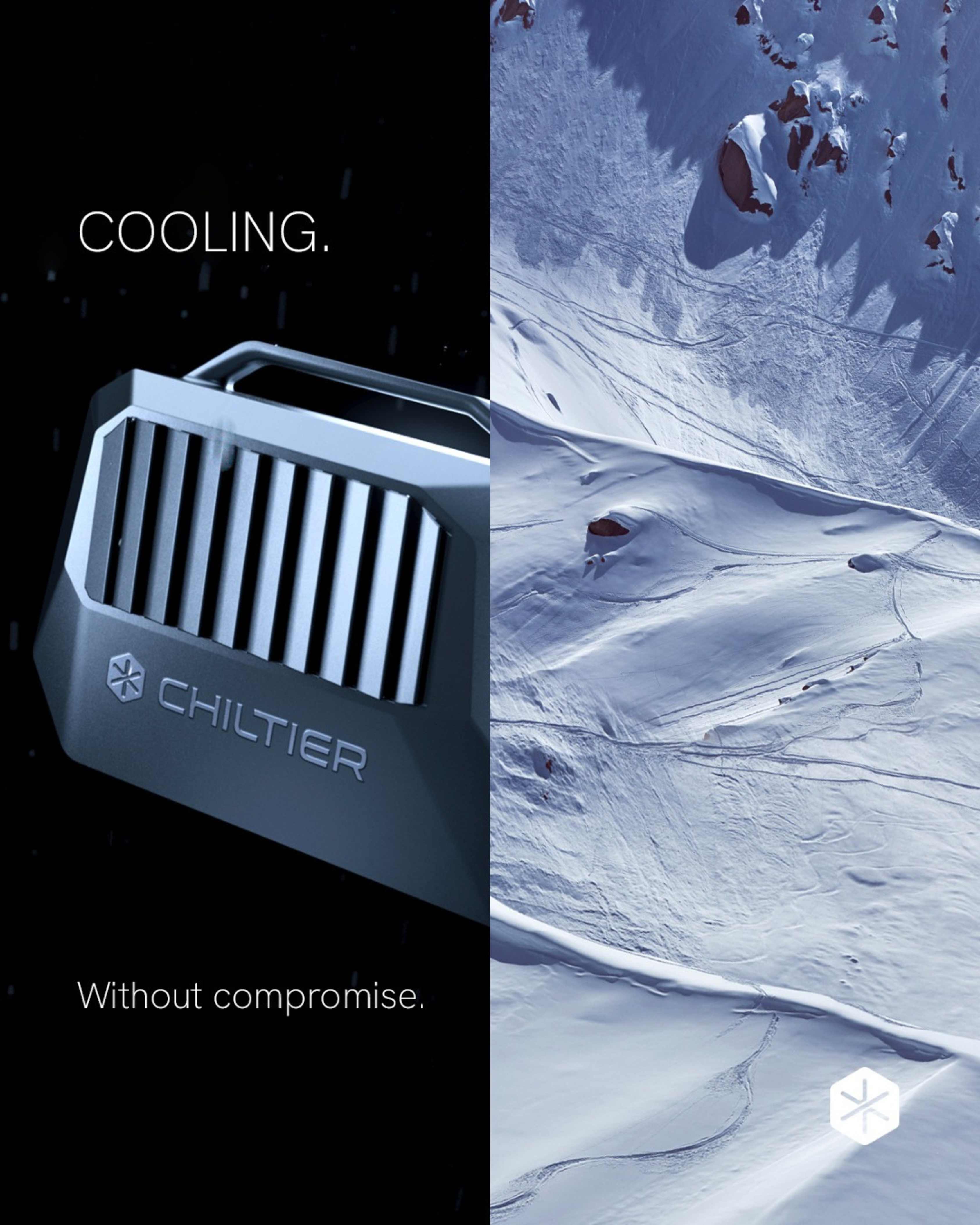
India, Feb 25: CHILTIER, a wearable climate technology company, announced the launch of its much-anticipated Hydro Vest, a thermoelectric personal cooling and heating system. The vest is designed to help users stay comfortable and safe in extreme weather conditions. With early pre-orders now open, the brand is gearing up for a global Kickstarter crowdfunding campaign.

Designed for motorcyclists, outdoor enthusiasts, field professionals, and individuals exposed to harsh climates daily, the Hydro Vest uses advanced Peltier-based thermoelectric technology to cool or heat the body within minutes. Unlike traditional cooling solutions that rely on ice packs, fans, or gel-based inserts, CHILTIER’s system actively regulates temperature through a closed-loop liquid circulation mechanism embedded within the vest.

The Hydro Vest maintains thermal comfort by circulating temperature-controlled liquid through thermally conductive tubing integrated into its inner lining. This helps stabilize core body temperature, reduce fatigue, and enhance endurance during prolonged rides, treks, outdoor work shifts, and adventure activities.

Recognizing varied user requirements, CHILTIER has introduced two configurations of the X1 and Z1 models. The X1 model can maintain unlimited run-time when connected to vehicle power and is designed for riders. Conversely, the Z1 model is fully portable (with a lightweight battery backpack) and can be operated for up to eight hours. Both models feature precision-adjustable temperature settings, lightweight materials quiet operation and water-resistant design for reliable performance in challenging environments.

As rising global temperatures and unpredictable climate patterns intensify the demand for portable thermal management solutions, CHILTIER aims to redefine personal comfort through wearable climate intelligence. The upcoming Kickstarter campaign is designed to create a community of early users, confirm the demand for this product, and support the initial production run.

Kulpreet Sahni, Founder and CEO, Chiltier, said,

“Our vision at CHILTIER is to make climate control as personal and intuitive as wearable technology itself. The Hydro Vest is not just about cooling or heating; it is about giving people control over their environment, enhancing safety, endurance, and performance in extreme conditions. With our Kickstarter launch, we are building a global community that believes wearable climate technology is the future of outdoor mobility and human resilience.”

Beyond the Hydro Vest, CHILTIER plans to expand its innovation roadmap through the development of the Thermo Pod, a scalable and modular platform intended to power a broader ecosystem of wearable climate-control products. Its adaptable architecture will enable integration with other wearable technologies, reinforcing CHILTIER’s long-term vision of intelligent personal thermal systems.

CHILTIER is currently inviting consumers worldwide to sign up for launch notifications and be among the first to access the Hydro Vest when the Kickstarter campaign goes live.

Club Med Phuket Celebrates Holi Sundowner, Bringing India’s Spirit to Thailand

India, Feb 25: Club Med, leader in premium all-inclusive holidays for 75 years, is thrilled to announce that Club Med Phuket will transform its iconic beachfront into a high-energy celebration of Indian heritage. On 4th March 2026, the resort will invite international guests to experience the spirit of Holi through a vibrant sundowner, followed by a curated Indian gala dinner and an immersive party experience. This cross-cultural showcase is designed to bridge borders, uniting guests through the universal language of color, music, and festive joy.

Set along the pristine shores of Kata Beach, the festivities will unfold as a multi-experiential celebration capturing the true spirit of Holi which is spring, renewal, and unity.

The first highlight of the day will be a vibrant Grand Goûter & Color Battle at Coconut Garden. The Phuket team will introduce guests to the meaning of Holi, celebrating the arrival of spring and the spirit of togetherness. This will be followed by a coordinated countdown and collective colour-throw moment, creating a joyful and highly Instagrammable highlight against the stunning beachfront backdrop. Designed as a dry Holi experience, guests will play with organic, natural colour powders and fresh flowers, with safety measures thoughtfully in place to ensure a comfortable and enjoyable celebration for all.

As the sun sets, the festivities will transition into an Indian Flavors Dinner Experience at the resort’s main restaurant. Guests will indulge in a rich buffet complemented by live Indian cooking stations, showcasing authentic regional preparations. A decadent spread of traditional Indian desserts will complete the culinary journey, offering a wholesome immersion into the flavours of the festival.

The celebration will culminate in a high-energy Grand Indian Night Party, transforming the theatre or main bar area into a vibrant, Bollywood-inspired experience. Pulsating Indian beats, dynamic lighting, and spirited entertainment will invite guests to dance the night away, carrying the festive momentum into an unforgettable evening.

By bringing Indian cultural expression to Phuket through this vibrant, day-to-night celebration, Club Med continues to champion meaningful cultural exchange across its international properties creating immersive, joyful experiences that connect guests from around the world through shared celebration and cultural discovery.

Securonix and AWS Launch Agentic Mesh with First Productivity-Based AI Model for SOC

India, Feb 25: Securonix, Inc., working closely with Amazon Web Services (AWS), today announced the Securonix Agentic Mesh and SAM, the AI SOC Analyst. The launch advances agentic AI for cybersecurity with a governed, explainable network of intelligent agents designed to elevate human analysts and measurably improve productivity across security operations.

The Securonix Agentic Mesh, built on AWS AgentCore, provides a unified orchestration layer for AI agents operating within the SOC. It enables AI-driven investigation and response while enforcing policy, governance, and human oversight.

Within the Agentic Mesh, SAM coordinates a modular set of AI agents optimized for specific operational tasks, including investigation context, search assistance, response preparation, noise reduction, and data pipeline optimization.

By orchestrating these agents together, the platform reduces alert fatigue, improves investigation consistency, and accelerates mean time to detection and response without sacrificing governance or visibility.

Analysts can review decisions, request deeper analysis, or pause actions to ensure AI remains transparent and accountable.

The announcement comes at a pivotal moment in the cybersecurity industry. According to the 2025 “Evolution of Cybersecurity Automation and AI Adoption” report, 97% of security leaders now consider automation business-critical, and 56% cite productivity as the top driver for adopting AI.

Introducing Productivity-Based AI Pricing for the SOC

As part of the launch, Securonix is introducing the cybersecurity industry’s first productivity-based AI pricing model. Rather than charging based on ingestion volume or seats, customers license SAM based on the amount of investigation work performed, measured in minutes of analyst time.

Usage is tracked in real time and visible within the Securonix platform, allowing security leaders to clearly see time saved, time billed, and operational impact. Each customer receives a baseline capacity, with the flexibility to expand in proportion to the value realized.

“At HDFC, we look for technology that strengthens our resilience and elevates our people. SAM delivers both. It gives our analysts a trusted partner working beside them at all hours and provides leadership with transparent, measurable AI value.”

said Sameer Ratolikar, Chief Information Security Officer, HDFC Bank

The Human-in-the-Loop SOC Operating Model

Agentic Mesh AI activity operates under Agentic Guardrails that enforce scope, policy, escalation rules, and separation of duties. Analysts interact with SAM through a guided interface where every decision includes step-by-step reasoning. Analysts can request deeper analysis, challenge findings, or pause actions for review, ensuring AI remains explainable, auditable, and aligned with organizational policy.

“We designed SAM and the Agentic Mesh to feel like a trusted teammate, not a black box,” said Kash Shaikh, CEO and President of Securonix. “With governed autonomy, a human-in-the-loop model, and transparent productivity metrics, we are giving security leaders a practical and accountable way to apply AI in the SOC.”

Built-In Governance and Secure Deployment

All AI operations are executed securely within the customer’s AWS environment. Every action taken by SAM or supporting agents is logged and auditable by design, supporting internal security reviews and external compliance requirements. The architecture aligns with Securonix responsible AI principles and ongoing ISO 42001 readiness efforts.

“AWS is proud to power the Securonix Agentic Mesh and SAM with AgentCore,” said Swami Sivasubramanian, Vice President of Data and AI at AWS. “Together, we are enabling customers to deploy scalable, explainable AI with trust and transparency at its core.”

Bridging the AI Fluency Gap in the SOC

Industry research continues to show that successful AI adoption depends as much on analyst readiness as on technology. To address this, Securonix is introducing the Agentic

Academy, a structured enablement program that helps SOC teams learn how to supervise, collaborate with, and derive value from AI-driven workflows.

The program focuses on practical interaction with SAM, interpretation of AI outputs, and effective human oversight to ensure AI-driven operations deliver sustained value.

Together, Agentic Mesh and SAM mark a shift from experimental AI to accountable, outcome-driven security operations.

Primebook Expands Offline Presence via Partnerships with Sangeetha Mobiles & Pai International

India, Feb 25 : Primebook India, the homegrown technology company behind India’s Android-based laptop ecosystem, has announced a major expansion of its offline retail presence through strategic partnerships with Sangeetha Mobiles and Pai International Electronics.

As part of this rollout, Primebook laptops will now be available across Sangeetha Mobiles stores in Telangana and Andhra Pradesh, as well as at Pai International outlets in Hyderabad and Bengaluru. The expansion strengthens Primebook’s omnichannel strategy, building physical retail access alongside its digital-first foundation.

While online retail is expanding rapidly, personal computing remains a category where Indian consumers invest significant time in evaluation before making a purchase. . Industry estimates indicate that offline retail accounts for approximately 66% of the country’s consumer electronics sales, underscoring the continued relevance of physical stores in high

consideration categories.

Consumers often prefer to experience a device physically before making a decision, especially in categories like laptops, where performance, display quality, keyboard experience, and overall build influence buying confidence. As digital discovery increasingly blends with offline validation, physical retail continues to play a decisive role in shaping final purchase decisions. Primebook’s offline expansion aligns with this evolving hybrid consumer journey. The retail rollout will feature Primebook 2 Pro at ₹17,990 and Primebook 2 Max at ₹19,990, supported by Zero Down Payment EMI offerings designed to lower entry barriers in the personal computing segment.

Commenting on the development, Chitranshu Mahant, Co-founder and CEO of Primebook, said,

“Primebook was built to reimagine personal computing for a new generation of users. Expanding into offline retail strengthens our commitment to accessibility, not just in pricing, but in presence. By partnering with established retail leaders like Sangeetha Mobiles and Pai International, we are ensuring that more consumers can experience our laptops firsthand before making a decision.”

Anil Prabhas from the Management team of Sangeetha Mobiles added,

“We are witnessing increasing demand for affordable and performance-driven computing solutions across our markets. Primebook introduces a differentiated Android-based laptop category that aligns well with evolving consumer needs, and we believe this partnership will deliver strong value to customers.”

Mr. S. Rajkumar Pai, Managing Director, Pai International, said,

“Hyderabad and Bengaluru continue to be important technology consumption markets with a growing base of digitally native consumers. Primebook brings an innovative and accessible computing proposition to our shelves, and we are confident it will resonate strongly with our customers.”With expanded retail presence, competitive pricing, and flexible financing options, Primebook aims to accelerate the adoption of Android-powered laptops while strengthening its presence across key markets in India.

Excelsoft Cuts Infrastructure & Internet Costs with ‘Saras Assessments in a Box’

Feb 25: Excelsoft Technologies a global leader in digital learning and assessment solutions, today announced the launch of Saras Assessments in a Box, a compact, plug-and-play assessment appliance designed to enable secure digital examinations anywhere instantly.

Built using Saras Assessment, Excelsoft’s flagship platform, the device enables institutions to set up a fully functional, secure test centre in minutes, with or without internet connectivity. About the size of a matchbox, it eliminates the need for servers or complex IT infrastructure; users simply power it on, connect via Wi-Fi or LAN, and start delivering exams immediately. A single device supports 100+ concurrent candidates, ensuring high-performance exam delivery without bandwidth bottlenecks.

Speaking about the launch, Mr. Dhananjay Sudhanva, Chairman & Managing Director, Excelsoft Technologies, said,

“This marks a paradigm shift in how assessments are delivered. As examination scale increases and access expands, legacy, infrastructure-heavy models are proving inadequate. Saras Assessments in a Box fundamentally changes that equation by reducing the time and cost of setting up secure test centres while enabling a more resilient, inclusive, and reliable assessment experience for end users. Built on our Saras flagship assessment platform, it allows institutions to conduct exams consistently across diverse environments, including national and state-level entrance exams, university and college assessments, recruitment and certification programs, remote and rural initiatives, and temporary or emergency test centres.”

From a technology and architecture standpoint, the innovation reflects Excelsoft’s focus on building assessment systems designed for real-world conditions.

Speaking about the innovation, Mr. Adarsh Sudhindra, Chief Innovation Officer, Excelsoft Technologies, said,

“Assessment technology must be engineered for reliability at scale, not continuous connectivity. Saras Assessments in a Box introduces a distributed, appliance-led architecture that simplifies deployment while strengthening security and performance. By enabling exams to run locally yet remain centrally governed, institutions can conduct high-stakes assessments consistently across diverse environments without being constrained by infrastructure limitations. The solution is designed for a wide range of use cases, including national and state-level entrance examinations, university and college assessments, recruitment and certification programs, remote and rural assessment initiatives, corporate and skill-based testing, and temporary or emergency test centres.”

With this launch, Excelsoft Technologies continues to lead innovation in the assessment sector delivering solutions that simplify complexity, expand access, and enable secure, scalable, and resilient digital examinations anywhere in the world.

5 Publishing Challenges You Can Eliminate Today

By- Sameer Kanodia, Managing Director and CEO, Lumina Datamatics, and Vice Chairman and CEO, TNQTech

Every day, publishers face a recurring challenge on how to deliver content faster, in multiple formats, and still maintain accuracy and compliance. With the growing shift towards digital-first publishing, these demands have only become more complex, putting added pressure on editorial and production teams. Structured content—powered by XML, intelligent tagging, and modular workflows is designed to simplify these processes, improve efficiency, and ensure consistency across platforms. These advancements are particularly valuable for educational, STM, and trade publishers who manage large volumes of content and need to meet global standards. Whether you’re creating textbooks, research journals, or digital trade titles, it’s essential to understand how structured content can reshape your publishing strategy.

It is important to stay informed to better navigate the evolving publishing landscape. Here are five key challenges publishers face.

1. Discoverability Gaps

Unstructured content often fails to surface in search results or align with metadata standards. With structured tagging and semantic enrichment, your content becomes machine-readable, ensuring better visibility on search engines, discovery platforms, and academic databases.

2. Multi-Format Delivery Delays

From eBooks and journals to web platforms and mobile apps, readers consume content in multiple formats. Structured content enables single-source publishing, allowing you to create once and distribute everywhere, cutting time-to-market and reducing production costs.

3. Inefficient Editing & Updates

Editing in traditional workflows is repetitive and error prone. With modular content blocks and XML-based markup, structured content ensures that updates cascade across all outputs, saving time while maintaining version consistency.

4. Compliance & Accessibility Risks

Regulations like WCAG for accessibility and regional compliance standards can be challenging. Structured content embeds compliance at the source, ensuring content is inclusive, standardized, and regulator-ready without costly retrofitting.

5. Scaling Across Global Markets

Localization is a growing priority for global publishers. Structured content supports multi-language workflows by separating content from design, making translation, adaptation, and repurposing more efficient across regions.

With publishing demands becoming increasingly complex, structured content has emerged as more than just a technology; it is a strategic approach. By solving challenges of discoverability, delivery, efficiency, compliance, and scalability, Lumina Datamatics enables publishers to streamline operations and build future-ready workflows.


Rapoo MT760L Wins ‘Best Wireless Mouse’ at DeviceNext Tech Awards 2025

New Delhi, Feb: Rapoo, a global technology brand known for its wireless peripherals and accessories, has been recognised with the “Best Wireless Mouse” award for its MT760L Wireless Mouse at the DeviceNext Tech Awards 2025. The award underscores Rapoo’s continued focus on building intuitive, reliable products that support modern work and digital lifestyles.

Now in its sixth year, the DeviceNext Tech Awards have become a key platform for celebrating innovations that shape India’s consumer technology ecosystem. The 2025 edition highlighted the rapid evolution of IT, computing, and gaming technologies segments that are increasingly central to productivity, creativity, and entertainment. Products across more than 60 categories were evaluated for their design, performance, and real-world impact.

The Rapoo MT760L Wireless Mouse stood out for its precision tracking, ergonomic design, and flexible multi-mode connectivity, making it suitable for users who switch between laptops, desktops, and other devices throughout the day. Designed with comfort and efficiency in mind, the MT760L reflects Rapoo’s philosophy of combining thoughtful design with dependable performance.

This recognition further strengthens Rapoo’s growing presence in India, where the brand continues to expand its portfolio across peripherals and audio products. Recently, Rapoo introduced the A250 and A350 Bluetooth Soundbars in India, reinforcing its commitment to offering practical, value-driven technology solutions for work, gaming, and everyday entertainment.