NITI Aayog Plans INR 7,500 Crore Push to Boost India’s Sports Goods Industry

India is preparing for a major industrial upgrade in its sports goods and equipment sector, with NITI Aayog proposing ₹7,500 crore in structural reforms and fiscal incentives for the period 2027–2031. The initiative aims to position India as a globally competitive hub for sports manufacturing while significantly boosting exports, employment, and innovation.

This ambitious roadmap is built around a seven-pronged strategy designed to strengthen production capacity, modernise infrastructure, and integrate Indian manufacturers into global supply chains.

India’s Sports Manufacturing Sector Set for Major Expansion

The sports goods industry in India has traditionally been driven by small and medium enterprises, but global demand for fitness equipment, sportswear, and performance gear is rising rapidly. Recognising this opportunity, the proposed policy framework focuses on scaling up domestic manufacturing capabilities.

The goal is clear: transform India from a cost-based supplier into a quality-driven global exporter of sports equipment.

Key Objectives of the ₹7,500 Crore Reform Plan

The proposed strategy focuses on long-term structural transformation rather than short-term subsidies. Key priorities include:

  • Expansion of modern manufacturing clusters

  • Technology upgradation in production units

  • Improved testing, certification, and quality standards

  • Better logistics and supply chain efficiency

  • Incentives to attract private and foreign investment

  • Strengthening export-oriented production systems

These reforms are designed to improve efficiency, reduce costs, and enhance global competitiveness.

Boosting Exports and Global Market Share

A major focus of the initiative is to increase India’s presence in the global sports goods market. Currently, India holds a relatively small share despite strong domestic manufacturing potential.

The policy aims to:

  • Increase exports of sports equipment and fitness products

  • Improve international quality compliance standards

  • Promote “Made in India” branding in global markets

  • Strengthen trade competitiveness against established exporters

If successfully implemented, India could emerge as a key alternative manufacturing hub for global sports brands.

MSMEs at the Core of Growth Strategy

Micro, small, and medium enterprises form the backbone of India’s sports manufacturing ecosystem. The reform plan places strong emphasis on supporting MSMEs through:

  • Easier access to credit and incentives

  • Skill development and workforce training

  • Cluster-based industrial development

  • Integration into global value chains

This is expected to create large-scale employment opportunities, especially in traditional manufacturing regions.

Economic and Employment Impact

The sports goods sector has the potential to become a high-employment industry, particularly for semi-skilled and skilled workers. The proposed reforms are expected to:

  • Generate new manufacturing jobs

  • Strengthen export-linked income opportunities

  • Encourage entrepreneurship in small-scale industries

  • Support regional industrial development

States with existing manufacturing clusters are likely to benefit significantly from this growth push.

Conclusion

NITI Aayog’s proposed ₹7,500 crore reform package marks a strategic step toward transforming India’s sports goods industry into a globally competitive manufacturing powerhouse. By combining infrastructure development, export promotion, and MSME support, the initiative aims to unlock long-term growth potential in a sector with rising global demand.

If implemented effectively, this vision could place India firmly on the global map as a leading exporter of sports goods and equipment by the end of the decade.

Large imaging study changes understanding of the origins of Parkinson’s rest tremor

A Finnish clinical imaging study shows that rest tremor in Parkinson’s disease is not explained by greater dopamine loss. In contrast, tremor appears to be associated with relatively better-preserved dopamine function.


Large imaging study changes understanding of the origins of Parkinson’s rest tremor


Researchers from the University of Turku and Turku University Hospital, Finland, analysed clinical data and dopamine transporter (DAT) imaging data from 414 Finnish patients. The cohort consisted of patients examined in routine clinical practice for uncertain parkinsonism or tremor, making the findings exceptionally well generalisable to real-world clinical settings. The results were published on 19 March 2026 in Neurology®, the prestigious medical journal of the American Academy of Neurology.

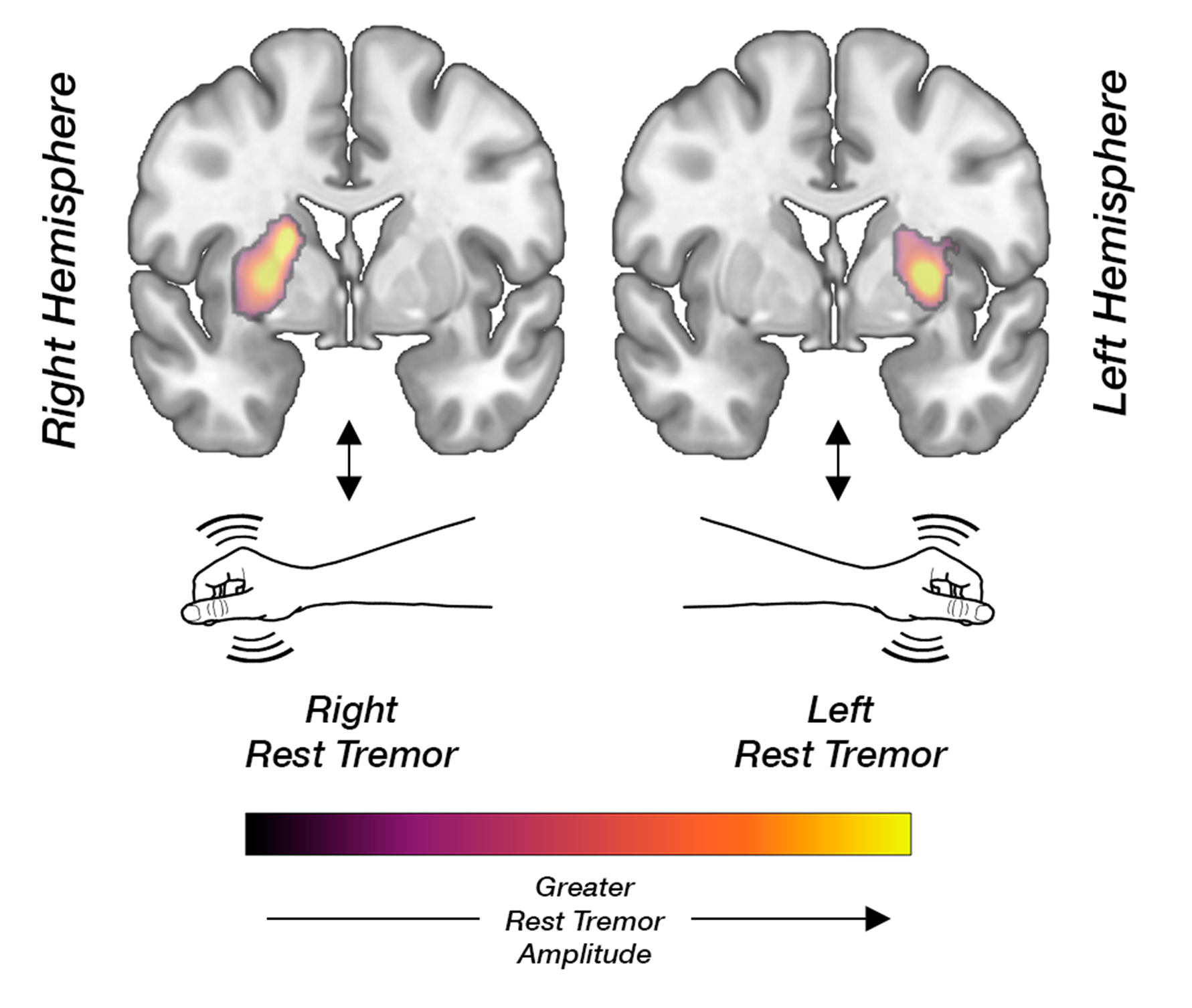
The cardinal motor symptoms of Parkinson’s disease are slowness of movement (bradykinesia), muscle stiffness (rigidity), and rest tremor. Bradykinesia and rigidity are known to reflect degeneration of dopamine-producing neurons. Because most brain pathways cross, this association is typically observed in the striatum on the side opposite to the symptoms. In contrast, the biological basis of rest tremor has long remained uncertain.

The study revealed a clear and consistent phenomenon: rest tremor was associated with higher dopamine transporter binding in the striatum on the same side as the tremor. Other cardinal motor symptoms, however, showed the expected correlation with dopamine deficits in the opposite hemisphere.

“These results show that more severe rest tremor is not simply a marker of more advanced damage to the dopamine system,” says the lead author, Neurologist Kalle Niemi, MD, PhD. “Tremor appears to involve a partly distinct neurobiological mechanism.”

The findings confirm the group’s earlier observations made using data from the international Parkinson’s Progression Markers Initiative (PPMI) cohort, where a novel imaging analysis technique developed by the research team was first applied. The replication of the results in an independent and clinically representative cohort strengthens the reliability of the observed phenomenon.

“Our findings support the view that different symptoms of Parkinson’s disease may be driven by partly distinct neural network and neurotransmitter mechanisms,” Niemi explains. “This may help explain why tremor behaves differently from symptoms such as bradykinesia.”

Using the same methodological framework, the research team also demonstrated that key non-motor symptoms of Parkinson’s disease including depression, anxiety, and REM sleep behaviour disorder are primarily linked to monoaminergic systems other than dopamine.

Taken together, these findings reinforce the concept of Parkinson’s disease as a complex brain disorder involving alterations across multiple neural networks and neurotransmitter systems.

A more precise understanding of the biological differences between symptoms may, in the future, enable the development of more targeted and personalised treatment approaches.

> Read the research article


Baithaki 2026 Set to Enchant Gurugram with a Soulful Celebration of Hindustani Classical Music and the Essence of Raaga & Raasa


Baitaki 2026

Gurugram, Haryana | March 20, 2026:
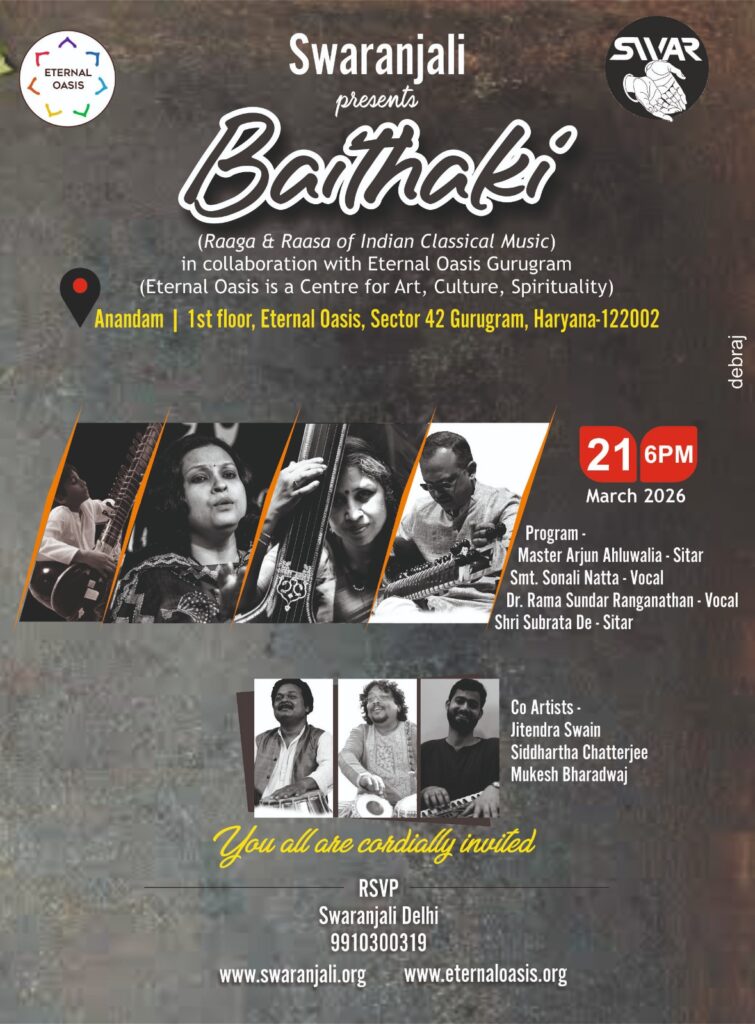
Music connoisseurs and cultural enthusiasts are set to experience an enchanting evening of Hindustani classical music as Baithaki 2026 takes center stage. Presented by Swaranjali Delhi in collaboration with Eternal Oasis Gurugram, the event promises a deeply immersive and spiritually uplifting journey rooted in the timeless themes of Raaga and Raasa.

Scheduled for Saturday, March 21, 2026, at 5:30 PM, the event will be held at Anandam, 1st Floor, Eternal Oasis, 591A, Sector 42 Main Road (near Shiv Nadar School), Gurugram, Haryana.

Designed as an intimate baithak-style gathering, Baithaki 2026 aims to recreate the traditional ambiance of Indian classical music, fostering a close connection between artists and the audience. The evening will explore the emotional depth and spiritual resonance of ragas, offering a serene and contemplative experience.

Stellar Line-Up of Performances

The program features an impressive blend of vocal and instrumental performances by accomplished and emerging artists:

  • Shri Subrata De – Sitar

  • Master Arjun Ahluwalia – Sitar

  • Dr. Rama Sundar Ranganathan – Vocal

  • Smt. Sonali Natta – Vocal

Accompanists:

  • Shri Jitendra Swain – Tabla

  • Pt. Siddhartha Chatterjee – Tabla

  • Shri Mukesh Bharadwaj – Harmonium

Together, the ensemble will present a rich tapestry of melodies, rhythm, and improvisation, reflecting the profound traditions of Hindustani classical music.

About Swaranjali Delhi

Founded in 2000 and registered as a Trust in 2003 by Shri Subrata De, Swaranjali Delhi is a leading non-profit organization committed to preserving and promoting Indian classical music and dance through the revered Guru-Shishya Parampara.

Over the years, the organization has built a strong reputation for nurturing talent and providing a platform for both established maestros and promising young artists.

Key Initiatives Include:

  • Festivals: Gharana Festival, Murchhana Festival, Shraddhanjali, and Baithak series, often in collaboration with institutions like ICCR and India Habitat Centre.

  • Training Programs: Vocal, instrumental, and dance education including Kathak, focusing on foundational techniques and artistic discipline.

  • Inclusivity: Special initiatives to train underprivileged students while maintaining the purity of traditional art forms.

  • Pan-India Presence: Active cultural programming across the country as a charitable Trust.

Upcoming Events by Swaranjali Delhi

Swaranjali continues its cultural journey across India with an exciting lineup of forthcoming events:

  • Amritsar & Bathinda, Punjab: Baithaki Series – March 24 & 25, 2026

  • Agartala: “Colours of India” – April 17, 2026

  • Delhi: Swardhwani Festival – April 19, 2026, at Muktadhara (1 PM – 9 PM), in association with Dhwani Foundation

  • Hyderabad: “Colours of India” – April 25, 2026, at B.M. Birla Auditorium (2 PM – 9 PM)

  • Bhubaneswar: Shraddhanjali – June 27, 2026, at Suchana Bhawan Auditorium (4 PM)

An Evening of Musical Meditation

Baithaki 2026 is more than just a concert—it is a celebration of India’s rich cultural heritage and a meditative journey through sound. With its focus on Raaga (melody) and Raasa (emotion), the event invites audiences to pause, reflect, and connect with the deeper essence of music.

For lovers of classical arts, Baithaki 2026 promises an unforgettable evening of harmony, devotion, and artistic excellence.


Business News For Profit

AAEON to Present Elite Networking Platforms at Upperside World Congress

AAEON to Present Elite Networking Platforms at Upperside World Congress

AAEON will be at Booth 306 of Le Palais des Congrès de Paris between March 24th and March 26th, 2026.


(Taipei, Taiwan – Mar 20) AAEON, a leading producer of AI and networking platforms, will present a range of new products at the Upperside World Congress from March 24th – 26th, 2026.

Date: March 24 – 26, 2026

Booth: 306

Venue: Palais des Congrès de Paris, Paris, France 

The event, which is expected to host over 1,000 participants from 60 countries and 268 companies, will include a number of discussions and keynote speeches from leading industry figures, heavily focused on the role of AI and machine learning in critical networking infrastructures, as well as exploring the issues and challenges faced in scaling modern datacenter architectures.

AAEON will be at booth 306, and will showcase a range of networking and security appliances, with particular emphasis on their utility for uCPE, SD-WAN, UTM, and NGFW solutions, such as:

FWS-2290 & FWS-2291 – Desktop network appliances featuring both Intel Processor N-series and Intel Atom® Processors x7000RE Series for the Edge CPUs, ideally suited to uCPE, SD-WAN, and UTM deployments.

FWS-2370 – High-performance desktop network appliance powered by the Intel Atom® Processor C5315, boasting up to 14 LAN ports, on-chip technologies such as Intel® QAT and Intel® VT-d/VT-x, and 5G, 4G/LTE, Wi-Fi, cellular, and network module support.

FWS-7851 – An enterprise-grade security appliance supporting 12th, 13th, and 14th Gen Intel® Core™ Processors, up to ten 2.5GbE RJ-45 ports, and dual GbE SFP ports, with optional 10GbE SFP+ expansion.

FWS-7700 – High-performance Rackmount Network Appliance featuring Intel® Xeon® 6 Processors and modular NIM slot expansion.

Among its portfolio of hardware platforms, AAEON will also be showcasing an array of NIM modules compatible with upcoming Rackmount Network Appliances, facilitating functions such as dual 100-Gigabit Ethernet connectivity for high-performance server and network security gateway deployments.

Make sure to use the code 30620UWCP6BR for a 20% discount on admission to visit AAEON at Booth 306 from March 24 – 26, 2026.

Innovative Startups in Odisha: Pioneering Technology and Manufacturing Sectors

Odisha is undergoing a significant transformation in its startup ecosystem, driven by strong government support and a growing culture of entrepreneurship. The state aims to become a hub for technology and manufacturing startups through strategies that focus on infrastructure, skill development, and business support.Innovative Startups in Odisha: Pioneering Technology and Manufacturing Sectors

Startup Support and Policies

To foster entrepreneurship, Odisha has introduced policies like the Startup Policy, offering funding, mentoring, and incubation programs. Innovation hubs and technology parks attract investment and provide essential resources for startups. According to Odisha Business News, these initiatives have significantly strengthened the local ecosystem, creating a supportive environment where new ventures can grow and thrive.

Private Investment and Collaboration

Private investors and venture capitalists actively participate in Odisha’s startup landscape. Their involvement, combined with government initiatives, helps connect innovators with industry leaders. Networking opportunities and collaborative platforms further strengthen the ecosystem, making Odisha an attractive location for emerging startups.

Key Sectors Driving Innovation

Startups in Odisha are thriving across sectors such as information technology, manufacturing, and renewable energy. IT ventures focus on software development, artificial intelligence, and data analytics. Manufacturing startups leverage automation and IoT to improve efficiency and reduce waste. Renewable energy initiatives, including solar and wind projects, contribute to sustainability and economic growth.

Startup Success Stories

Several startups highlight Odisha’s entrepreneurial potential. Educational technology ventures provide immersive learning experiences, while logistics startups optimize supply chains using drone technology. In agriculture, digital platforms connect farmers directly to buyers, improving income and market access. These ventures demonstrate how innovation drives both economic growth and social impact.

Challenges Facing Startups

Despite growth, Odisha’s startups face challenges such as limited funding, intense competition, and a shortage of skilled talent. Infrastructure gaps, including co-working spaces and laboratories, also pose obstacles. Addressing these issues requires coordinated efforts from government, industry, and educational institutions.

Role of Educational Institutions

Universities and colleges in Odisha nurture entrepreneurship through research programs, skill development, and mentorship. By aligning academic output with industry needs, these institutions help students translate ideas into viable businesses. Networking events and workshops provide valuable exposure to real-world challenges.

Impact of Technology on Manufacturing

Technology is reshaping manufacturing in Odisha. Automation improves productivity and reduces errors, while IoT enables real-time monitoring and predictive maintenance. Startups also emphasize sustainability through eco-friendly practices and renewable energy, strengthening competitiveness and long-term viability.

Future Trends

Odisha’s startup ecosystem is poised for growth in digital healthcare, education, green technology, and smart manufacturing. Emerging technologies such as AI, blockchain, and IoT are driving innovation across sectors. Collaboration through incubators and innovation hubs will continue to provide critical mentorship and networking support.

Conclusion

Odisha’s startup ecosystem demonstrates the power of innovation, government support, and entrepreneurship. Technology and manufacturing startups are transforming industries, creating jobs, and fostering a culture of innovation. Continued collaboration, investment in infrastructure, and skill development will ensure Odisha remains a hub for sustainable and transformative startups.

BLR Airport Named ‘Best Regional Airport in India & South Asia’ for Third Consecutive Year at Skytrax Awards 2026

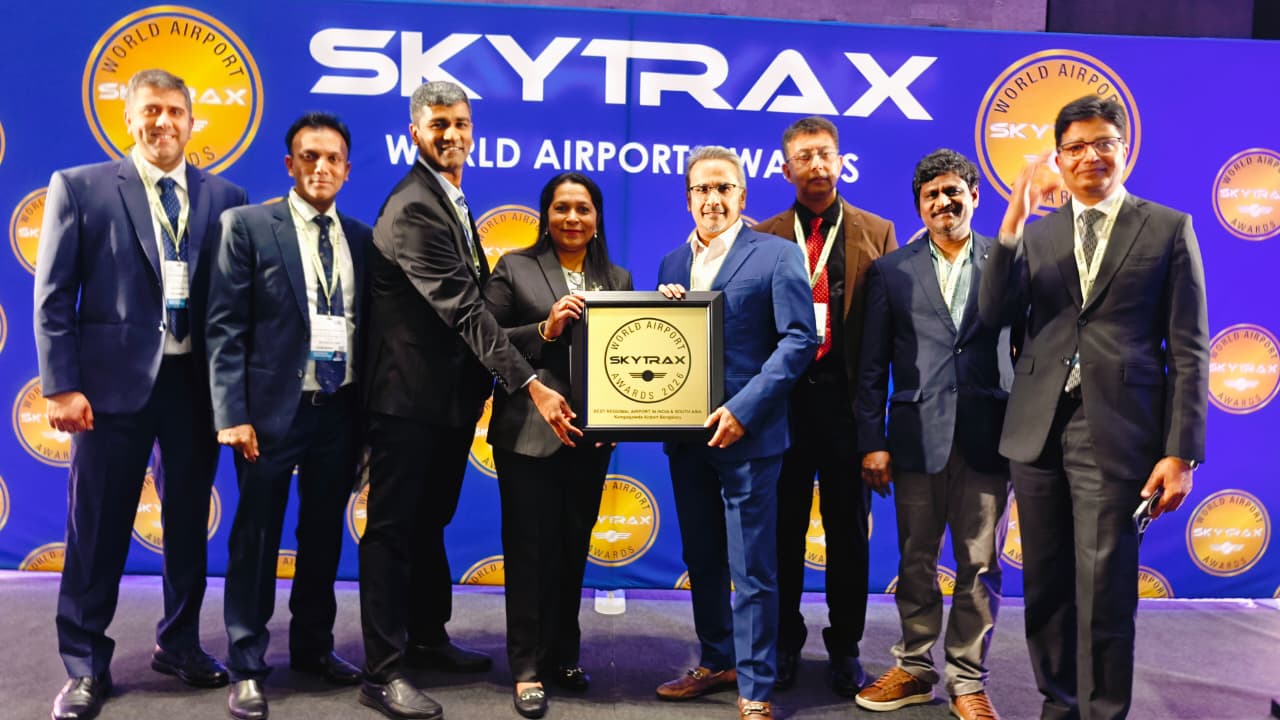
Bengaluru, Mar 20: Kempegowda International Airport Bengaluru (BLR Airport) has once again been recognised as the ‘Best Regional Airport in India & South Asia’ at the Skytrax World Airport Awards 2026, marking its third consecutive win and reinforcing its position as a leading aviation hub in the region.

BLR Airport Named ‘Best Regional Airport in India & South Asia’ for Third Consecutive Year at Skytrax Awards 2026

 Further strengthening its global standing, BLR Airport has climbed the global airport rankings from 48 to 41 in 2026, securing its place among the world’s top 50 airports. This achievement reflects the airport’s continued focus on delivering a world-class passenger experience and operational excellence.

Widely regarded as a benchmark for airport quality, the Skytrax World Airport Awards recognise excellence across key passenger touchpoints, including check-in, arrivals, transfers, retail, security, immigration, and departures. BLR Airport’s consistent performance across these areas has contributed to its sustained recognition on the global stage.

The airport has also earned multiple global accolades in recent years, including being named ‘Best Airport in Arrivals Globally’ for the fourth time. Terminal 2 at BLR Airport became the first in India to receive a 5-star Skytrax rating. Additionally, the airport has achieved the highest Level 5 Accreditation under ACI’s Airport Carbon Accreditation programme and Level 3 Accessibility Accreditation, highlighting its leadership in sustainability, inclusivity, and customer experience.

Commenting on the achievement, Hari Marar, Managing Director & CEO of Bangalore International Airport Limited (BIAL), said,

“Our continued recognition at the Skytrax World Airport Awards reflects the strength of our long-term vision and consistent focus on passenger experience. It is a testament to the collective effort of our teams and partners who continue to push the boundaries of what a modern airport experience can be. As we scale and strengthen our position as a key transfer hub in the region, we remain committed to continuously raising the bar on service and experience.”

Edward Plaisted, CEO of Skytrax, added,

“Winning this award for a third consecutive year is a fantastic achievement for Bangalore Airport and highlights strong appreciation shown by passengers. Terminal 2 has strengthened the airport’s reputation, and Bangalore is now positioned among the region’s most recognisable airports.”

BLR Airport continues to witness strong growth across both passenger and cargo operations. In calendar year 2025, the airport served 43.82 million passengers and handled 520,985 metric tonnes of cargo. Backed by network expansion and infrastructure enhancements, the airport is further strengthening its position as a key transfer hub in the region.

With a continued commitment to innovation, sustainability, and passenger-centric design, BLR Airport is poised to redefine the future of airport experiences in India and beyond.

Sandhills Calving System Continues to Protect Calf Health, Ranch Profitability

On cold spring mornings in the Nebraska Sandhills, calving season can test even the most experienced ranchers.

Twenty-five years ago, a collaboration between a Sandhills ranch family, a rural veterinarian and University of Nebraska–Lincoln researchers led to a management innovation that transformed how cattle producers prevent calf scours. Known today as the Sandhills Calving System, the approach has become one of the most widely recommended strategies for preventing neonatal calf diarrhea — a disease that historically caused significant illness, death loss and treatment costs in beef calves.

The system was first developed through a partnership between Tim Knott, a veterinarian in Arthur, Nebraska; Mart and Cindy McNutt at the McNutt Ranch west of Tryon, Nebraska; and former Husker veterinarians David Smith and Dale Grotelueschen.

Together, they sought a practical solution to outbreaks of calf scours that many ranchers across the Great Plains faced during the spring calving season.

“When you lose 10% of your calf crop and it starts hurting your financial business because you’re spending so much money trying to save them, you get willing to try something different,” Mart McNutt said.
Rather than relying solely on medical treatment, the team focused on changing how cattle were managed during calving.

The resulting system emphasizes separating calves by age and regularly moving pregnant cows that have not yet calved to clean pastures, preventing younger calves from being exposed to pathogens shed by older animals.

“Management practices can have a profound effect on the health of cattle,” said Smith, a veterinarian and epidemiologist who helped investigate the original outbreaks.

Research showed that calf scours was not typically caused by a single new disease. Instead, common pathogens built up in the environment as the calving season progressed, exposing younger calves to higher disease pressure.

“The first calves are exposed to a relatively small dose of pathogens,” Smith explained. “But later in the calving season, those pathogens accumulate in the environment, and younger calves can be exposed to much higher levels.”

By separating calves by age and moving pregnant cows to clean pastures during the calving season, producers could interrupt that cycle.

Research-backed results Initial research conducted in commercial Sandhills ranch herds demonstrated dramatic improvements in calf health after adopting the system.

In early case studies, illness and death from calf scours dropped significantly. Some herds reported no calf deaths due to scours after implementing the system, while veterinary treatment costs during calving declined sharply.

“When we first started trying it, we didn’t know if it would work,” McNutt said. “But once you learn the basics of it, it’s just like turning the scours switch off.”

The system works by reducing the buildup and transmission of pathogens that cause scours — including viruses, bacteria and protozoa — which commonly spread from older calves to younger animals during the calving season.

According to Grotelueschen, the system emerged through close collaboration between veterinarians and ranchers working through the problem together.

“There was never a grant or funding attached to this work,” he said. “It was veterinarians and ranchers working together in a problem-solving mode.”

A Nebraska innovation with national impact Although the Sandhills Calving System was developed and first tested in Nebraska ranch herds, its impact has extended far beyond the state.

The management approach has since been widely shared through veterinary conferences, extension programs and beef industry education efforts. Today it is commonly taught in veterinary schools and recommended by extension specialists and veterinarians across North America.

For Brian Vander Ley, a veterinarian and epidemiologist at Nebraska, the system remains one of the best examples of how applied science can solve real-world problems.

“This is bringing science to bear on a real-world problem to generate solutions that actually work for producers,” Vander Ley said.

Unlike many disease-control strategies that rely on medications or vaccines alone, Vander Ley said the Sandhills Calving System demonstrates the power of management decisions.
“In veterinary medicine, we sometimes talk about solutions delivered through needles,” he said. “This was the opposite of that — understanding the disease, how it spreads and how ranch operations work, and adapting management to solve the problem.”

A legacy of applied research Twenty-five years later, the Sandhills Calving System remains a cornerstone of calf health management in the beef industry. Its success highlights the power of applied research rooted in the needs of producers — and the role Nebraska’s land-grant university continues to play in developing practical solutions for ranchers.

“These guys made a real difference for a lot of people,” Vander Ley said.

What began as a practical solution tested on a Sandhills ranch has grown into a management approach now used by cattle producers across North America — improving calf health, reducing treatment costs and helping ranchers raise more healthy calves each year.

India Launches INR 497 Crore RELIEF Scheme to Safeguard Exporters Amid West Asia Trade Disruptions

India Launches INR 497 Crore RELIEF Scheme to Safeguard Exporters Amid West Asia Trade Disruptions

Pic Credit: Pexel

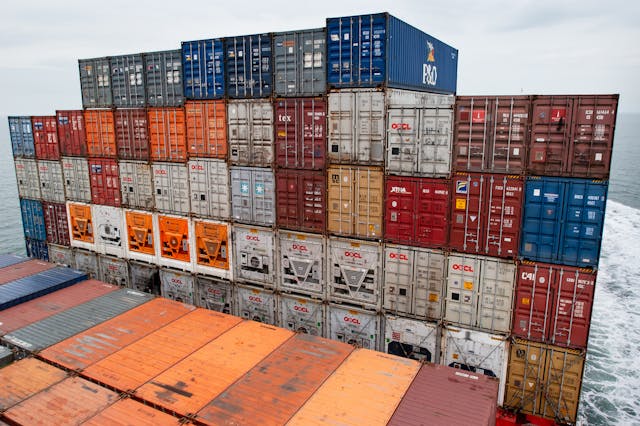
In a significant move to protect India’s export ecosystem from rising global uncertainties, the government has rolled out a ₹497 crore initiative titled Resilience & Logistics Intervention for Export Facilitation (RELIEF). The scheme is designed to cushion exporters particularly MSMEs against escalating logistics costs, shipping disruptions, and insurance pressures triggered by ongoing instability in West Asia.

With key trade routes passing through the Gulf region facing repeated disruptions, Indian exporters have been dealing with delayed shipments, rerouted cargo vessels, and sharply increased freight and insurance charges. The new intervention aims to provide immediate financial and operational relief during this volatile period.

A Response to Rising Global Trade Pressure

West Asia remains one of India’s most critical export corridors, connecting major markets such as the UAE, Saudi Arabia, Qatar, Oman, Kuwait, Bahrain, Iraq, Iran, Israel, and Yemen.

However, recent geopolitical tensions have led to:

  • Increased shipping time due to route diversions

  • Significant rise in freight and logistics costs

  • Higher marine insurance and war-risk premiums

  • Contract uncertainties for small exporters

The RELIEF scheme has been introduced as a time-sensitive buffer mechanism to ensure that export activity continues smoothly despite these disruptions.

What the RELIEF Scheme Offers

The ₹497 crore package is structured around three targeted support mechanisms designed to reduce financial stress and improve export stability.

1. Flexible Export Compliance

Exporters operating under Advance Authorisation and EPCG schemes will benefit from automatic extension of export obligations without penalties, reducing regulatory pressure during disrupted trade cycles.

2. Strengthened Insurance Coverage

The Export Credit Guarantee Corporation of India (ECGC) will expand coverage for shipments between March 16 and June 15, ensuring:

  • Stable insurance premiums despite global volatility

  • Protection against war-risk and disruption-related losses

  • Greater confidence for exporters engaging in high-risk routes

3. MSME-Centric Support

Recognising the vulnerability of small exporters, the scheme offers:

  • Assistance for MSMEs previously outside formal insurance coverage

  • Partial relief for rising freight and logistics expenses

  • Easier access to export credit protection mechanisms

This targeted approach is expected to stabilise the most affected segment of India’s export community.

Why MSMEs Stand at the Centre

Micro, Small and Medium Enterprises form the backbone of India’s export sector, but they are also the most exposed to sudden global shocks. Rising shipping costs and delayed payments can severely impact their cash flow and competitiveness.

By directly supporting MSMEs, the RELIEF scheme aims to:

  • Prevent order cancellations

  • Maintain liquidity flow

  • Ensure continuity in international contracts

  • Strengthen resilience against external shocks

Broader Economic Impact

Beyond immediate relief, the scheme carries wider implications for India’s trade strategy:

Protecting Export Competitiveness

India’s exporters can continue servicing global markets without losing ground to competitors affected by similar disruptions.

Stabilising Supply Chains

By reducing uncertainty in shipping and insurance, the scheme helps maintain smoother trade flows.

 Strengthening Global Trust

Consistent government backing enhances India’s reputation as a stable and reliable export partner.

Supporting Recovery in Volatile Times

The intervention ensures that temporary geopolitical shocks do not translate into long-term business losses.

Conclusion

The ₹497 crore RELIEF scheme marks a timely and strategic intervention aimed at insulating India’s export sector from external shocks in West Asia. By combining compliance flexibility, insurance protection, and MSME-focused support, the initiative provides a crucial safety net for exporters navigating an increasingly uncertain global trade environment.

In essence, it is not just a financial package—it is a stabilisation effort to ensure that India’s export engine continues to run smoothly even amid global turbulence.


ICMAI Concludes RISE India Leadership Summit 2026, Charts Roadmap for CMAs in Advancing Viksit Bharat Mission

 Summit emphasises bridging institutional and industry gaps to accelerate value creation, strengthen GCCs, and support India’s journey towards becoming a developed economy


GBC


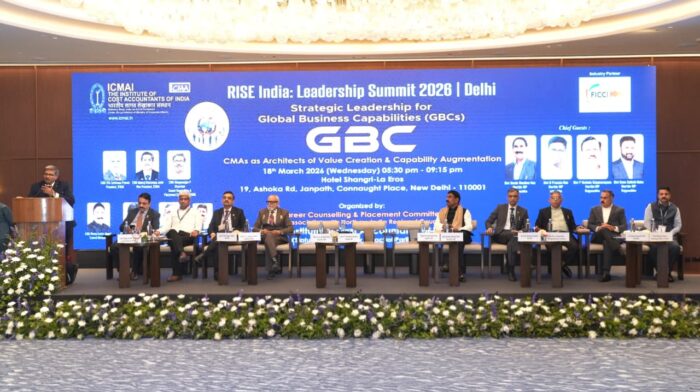
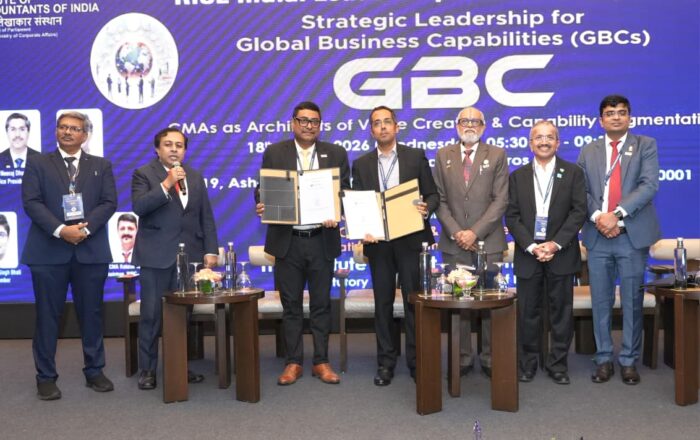
New Delhi, Mar 20: The Institute of Cost Accountants of India (ICMAI), a statutory body established under an Act of Parliament under the administrative control of the Ministry of Corporate Affairs, Government of India, successfully concluded the RISE India Leadership Summit 2026 in New Delhi, bringing together policymakers, industry leaders, and financial experts to deliberate on the role of strategic leadership in advancing India’s vision of Viksit Bharat 2047, as envisioned by the Hon’ble Prime Minister Shri Narendra Modi.

ICMAI, the largest Cost and Management Accounting body in the world and in Asia, with nearly five lakh students and over one lakh qualified CMAs globally, continues to play a pivotal role in strengthening governance systems, ensuring transparency, and promoting financial discipline across India’s economic ecosystem. 

Held at Shangri-La Eros, the summit centred around the theme “Strategic Leadership for Global Capability Centre – CMAs as Architects of Value Creation & Capability Augmentation”, with a strong focus on identifying institutional, regulatory, and operational gaps that must be addressed to accelerate India’s transformation into a developed economy.

v


In his address, CMA T.C.A. Srinivasa Prasad, President, ICMAI, underscored the pivotal role of Cost and Management Accountants in driving efficiency, transparency, and value-based decision-making across sectors. He highlighted that CMAs are uniquely positioned to act as strategic enablers in bridging gaps between policy formulation and on-ground implementation, particularly in emerging areas such as Global Capability Centres (GCCs), digital finance, and sustainable growth frameworks.

The summit witnessed the presence of distinguished dignitaries including Shri Beeda Mastan Rao, Hon’ble Member of Parliament; Shri D Prasada Rao Hon’ble Member of Parliament. CMA Anand Kumar Pal, Advisor Manistry of finance, Shri CMA L.V. Sudhakar Babu, Managing Director, Sagarmala Finance Corporation; Shri Vivek Chandrakant Tongankar, Director (Finance), ONGC; CMA Rajesh Kumar Dwivedi, Director (Finance), BHEL; CMA Rakesh Yadav, Chairman, NIRC, ICMAI; and Shri CMA Sanjay Jindal, Director (Finance), Engineers India Limited, among others.

The event also reflected the collective leadership of ICMAI, including CMA Neeraj Dhananjay Joshi, Vice President; CMA Vinayaranjan P, Chairman, Career Counselling & Placement Committee; CMA B B Nayak , CMA Manoj Kumar Anand, CMA Rajendra Singh Bhati, CMA Navneet Kumar Jain, CMA Chittranjan Chattopadhyaya, CMA Avijit Goswami and Council Members; and CMA Dr D.P. Nandy, Secretary, along with other Council Members who contributed to the success of both the summit and the preceding press conference. 

Deliberations throughout the summit focused on strengthening India’s institutional capacity to support the Viksit Bharat mission by enhancing financial discipline, improving cost competitiveness, and fostering innovation-led growth. Speakers highlighted the need for robust policy alignment, capacity building, and deeper industry-academia collaboration to address skill gaps and ensure that India’s GCC ecosystem evolves into a global benchmark for efficiency and value creation.

The summit served as a high-level platform for dialogue, collaboration, and knowledge exchange, bringing together CEOs, CFOs, Directors, senior corporate leaders, HR professionals, senior government officials, and industry representatives to collectively shape strategies for strengthening India’s global business and capability ecosystem. 

A key takeaway from the discussions was the critical importance of CMAs in enabling data-driven governance, optimizing resource allocation, and supporting regulatory frameworks that align with global standards. The summit also stressed the need to institutionalise best practices in cost management and performance measurement to enhance India’s competitiveness in global markets.

Industry leaders from organisations such as Microsoft India, Indian Oil Corporation Limited, Accenture, Apple India Private Limited, Power Finance Corporation Limited, BHEL, NSIC, REC Limited, Central Warehousing Corporation, Cement Corporation of India Limited, KRIBHCO Green Energy Pvt Ltd,  Accenture, HCL, Samsung, Orange Business and TPM Consultants Pvt Ltd shared insights on building resilient and future-ready enterprises aligned with national priorities.

The RISE India Leadership Summit 2026 concluded with a collective commitment from ICMAI and participating stakeholders to actively contribute towards bridging systemic gaps, strengthening institutional frameworks, and enabling a robust economic architecture—reinforcing the role of CMAs as key drivers in achieving the vision of a Viksit Bharat by 2047.

Odisha’s Emerging Mining Boom: From Diamonds to Rare Minerals Driving Economic Growth

Odisha, already recognised as one of India’s most mineral-rich states, is entering a new phase of exploration and opportunity with the reported discovery of diamonds and other valuable minerals. These findings are positioning the state as a future hub not only for traditional mining but also for high-value resources that could significantly reshape its economic landscape.

Odisha’s Emerging Mining Boom: From Diamonds to Rare Minerals Driving Economic Growth

Pic Credit: Pexel

Recent Breakthrough: Diamond Traces in Nuapada

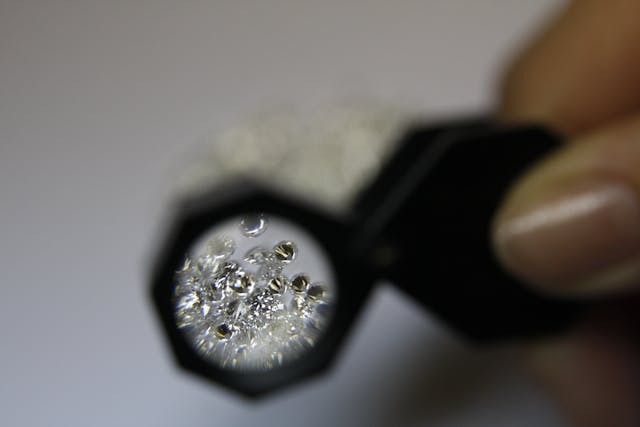
In a major development, diamond-bearing rock formations have been identified in the Kalamidadar region of Nuapada district. The discovery, highlighted in the state assembly, has generated strong interest among policymakers and experts. Detailed geological and feasibility studies are currently underway to assess whether commercial extraction is viable.

Alongside this, indications of ruby deposits have been reported in Kalahandi, while potential gold-bearing zones have been identified in districts such as Mayurbhanj and Keonjhar. Together, these findings underline the largely untapped and diverse mineral potential beneath Odisha’s surface.

 A Diversifying Mineral Landscape

Odisha’s mineral profile is expanding beyond its traditional strengths in iron ore, bauxite, and manganese. Recent surveys and exploration activities have indicated the presence of several valuable resources, including:

  • Diamonds in Nuapada

  • Ruby deposits in Kalahandi

  • Gold indications in Mayurbhanj, Keonjhar, and Deogarh

  • Copper, graphite, and nickel in parts of the state

In addition, potential rare mineral zones along the coastal belt are drawing attention due to their importance in modern industries such as electronics, renewable energy, and electric mobility.

This evolving mineral base is steadily enhancing Odisha’s position as one of India’s most resource-diverse states.

Economic Impact: A Potential Game Changer

1. Investment and Industrial Growth

The possibility of high-value mineral extraction is expected to attract significant interest from investors and industry players. Once feasibility is confirmed, Odisha could see a surge in mining-related industrial activity.

2. Employment and Regional Development

Mining and allied industries have the potential to generate large-scale employment opportunities. Regions such as Nuapada and Kalahandi could benefit from improved infrastructure, income generation, and broader socio-economic development.

3. Growth of Supporting Industries

A strengthened mining ecosystem can support multiple sectors, including mineral processing, logistics, engineering services, and jewellery manufacturing. This creates strong opportunities for small and medium enterprises as well.

4. Strategic Importance for Future Industries

Critical minerals like graphite, nickel, and rare earth materials are essential for electric vehicles, batteries, and advanced manufacturing. Odisha’s growing mineral base could play an important role in India’s transition toward clean energy and high-tech industries.

Policy Direction and Future Outlook

The state government is focusing on scientific exploration, detailed feasibility studies, and sustainable development planning before any large-scale mining begins. Future strategies are likely to include structured mineral auctions to ensure transparency and encourage responsible private participation.

Environmental safeguards and long-term sustainability are expected to remain central to policy decisions as the sector expands.

Conclusion

The discovery of potential diamond, gold, and other high-value mineral zones marks an important shift in Odisha’s economic trajectory. While exploration is still ongoing, the findings highlight the state’s growing importance in India’s mineral future.

If developed responsibly, this emerging mining landscape could transform Odisha into a major high-value mineral and industrial hub, driving economic growth, employment, and long-term development.