Celebrate the spirit of Gudi Padwa: Novotel Mumbai International Airport welcomes the Marathi new year with a festive Lunch

Celebrate the spirit of Gudi Padwa: Novotel Mumbai International Airport welcomes the Marathi new year with a festive Lunch

Mumbai, Mar 13th: Maharashtra prepares to welcome the auspicious festival of Gudi PadwaNovotel Mumbai International Airport invites guests to mark the beginning of the Marathi New Year with a vibrant festive Lunch at Food Exchange, the hotel’s chic all-day dining destination.

Thoughtfully curated to reflect the rich culinary traditions of the festival, the special Gudi Padwa Lunch celebrates authentic Maharashtrian flavours, festive sweets, and comforting classics that bring families together around the table.

Guests can begin their festive meal with refreshing Kairi Panha, a traditional raw mango cooler synonymous with the arrival of summer and the Gudi Padwa season. The celebration continues with an array of beloved festive sweets including Shrikhand, Puran Poli, and Basundi, capturing the sweetness and warmth of the Marathi New Year.

An interactive live Puran Poli station adds a delightful highlight to the experience, where guests can enjoy the iconic festive delicacy freshly prepared and served warm off the griddle.

The savoury spread showcases a selection of regional favourites such as Batata Bhaji, Jhunka Bhakar, Masale Bhaat, and Varan Bhaat, offering guests an authentic taste of traditional Maharashtrian festive fare.

Desserts bring the celebration to a joyful close with a range of classic treats complemented by refreshing beverages and festive indulgences.

Set within the warm and contemporary ambience of Food Exchange, the Gudi Padwa Lunch offers an inviting setting for families and friends to gather, savour traditional flavours, and celebrate the start of the New Year with joy, abundance, and togetherness.

Event Details

What: Gudi Padwa Special Lunch

Where: Food Exchange, Novotel Mumbai International Airport

When: 19th March 2026

Time: 12:30 PM – 4:00 PM

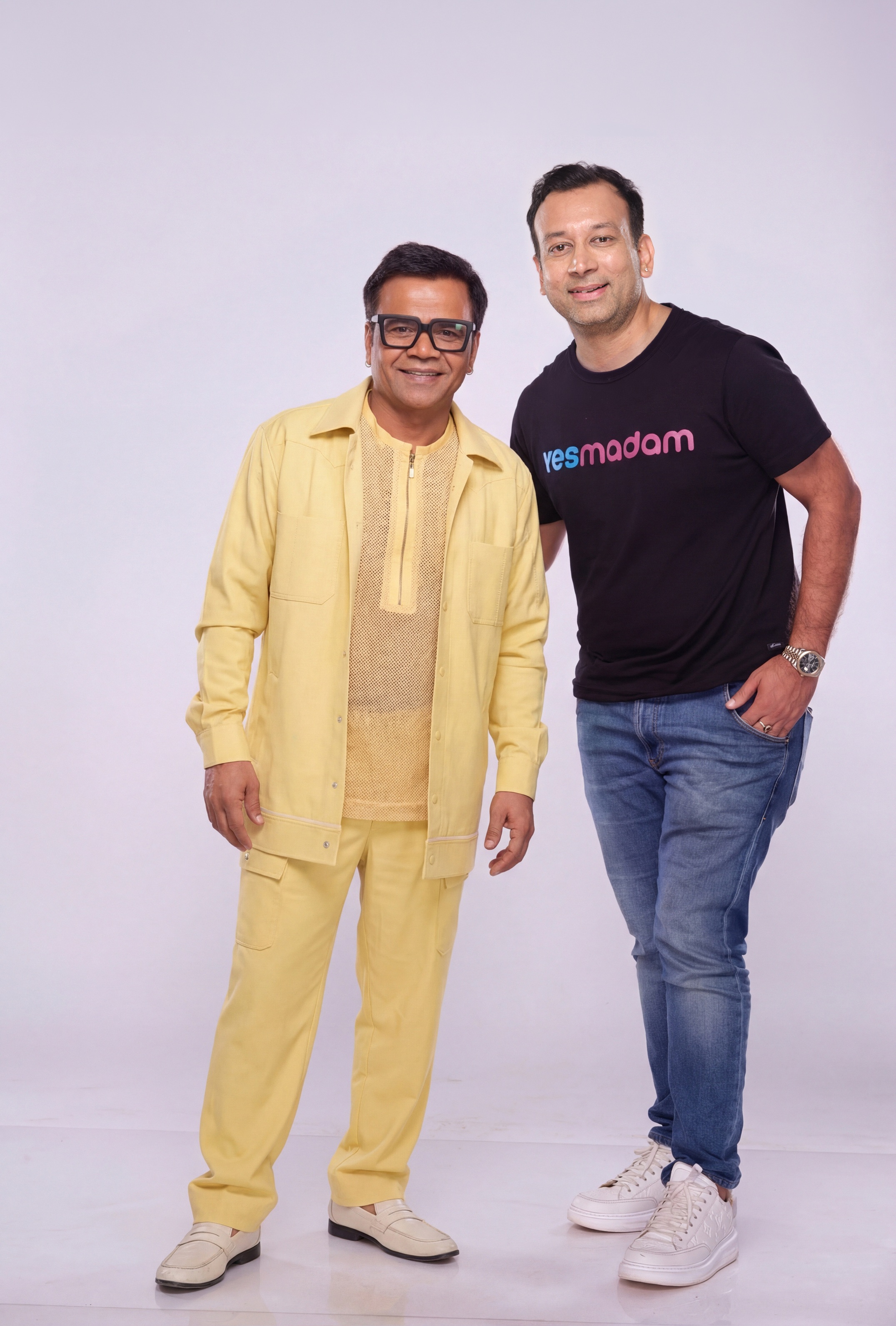
Yes Madam launches digital campaign with Rajpal Yadav and Tanya Mittal, reviving the nostalgia of Chota Don

Yes Madam launches digital campaign with Rajpal Yadav and Tanya Mittal, reviving the nostalgia of Chota Don

Mar 13th: Yes Madam, one of India’s fastest-growing home salon and wellness platforms, has launched a new digital campaign film featuring popular actor Rajpal Yadav and social media influencer and Bigg Boss contestant Tanya Mittal. The campaign marks the brand’s first collaboration with Rajpal Yadav and signifies the trusted and quality services offered by Yes Madam through an engaging narrative.

Produced in association with Footloose Films, the campaign marks Yes Madam’s first collaboration with Rajpal Yadav and revisits his iconic Chota Don character from the 2007 film Partner, blending humour and nostalgia to highlight the reliability of the brand’s services. With this campaignYes Madam becomes the first brand to collaborate with Rajpal Yadav following recent calls for extending more opportunities to the actor.

The film opens with Tanya Mittal surrounded by goons and calling out for help, before Rajpal Yadav appears in his Chota Don avatar to save her and fight them off in his signature comedic style while Mittal cheers him on. The dramatic moment then transitions to Mittal comfortably taking a Yes Madam service at home, insisting the incident really happened while images of Chhota Don are visible across her house. The film concludes with a voiceover by Rajpal Yadav saying that while the incident may or may not have happened, the quality and trust associated with services of Yes Madam are always guaranteed.

Reflecting on the campaign, Mayank Arya, Co-Founder and CEO, Yes Madam, said: “At Yes Madam, we have always believed in creating campaigns that connect with audiences in an engaging and memorable way. I had earlier spoken about the importance of extending meaningful opportunities to Rajpal Yadav, and we are glad to be the first brand to take that step forward with this collaboration. Through this film, we wanted to create a compelling narrative while also reinforcing the trust and reliability that customers associate with Yes Madam’s services.

Sharing her insights, Akanksha Vishnoi, Co-Founder, Yes Madam, added: “Consumers today engage deeply with content that blends entertainment with relatability. With this campaign, we wanted to revisit a nostalgic moment while subtly reinforcing the convenience and reliability of at-home services. Rajpal Yadav’s Chota Don is an iconic character that instantly evokes nostalgia and humour, making it the perfect fit for this campaign. Tanya Mittal’s presence added a vibrant energy and helped us bring the vision of the campaign to life.”

The campaign is being rolled out as a digital-first initiative across social media and video platforms.

Indian Equity Markets Remain Range-Bound Despite Strong Corporate Earnings: Report

New Delhi, March 13: Indian equity markets continue to trade within a narrow range despite strong corporate earnings growth, as global uncertainties and geopolitical tensions keep investor sentiment cautious, according to a recent report by Bajaj Finserv Asset Management.

The report highlighted that companies in the Nifty 500 index posted a 16 per cent year-on-year increase in profits in the third quarter of FY26, marking the strongest earnings growth seen in nearly two years. The performance reflects improving profitability across sectors and indicates a gradual strengthening of corporate balance sheets.

Despite this positive earnings momentum, domestic stock markets have not witnessed a major rally and have remained largely range-bound for more than a year. Analysts attribute this trend to external factors, including global economic uncertainties and geopolitical risks, which continue to influence market movements.

According to market experts, strengthening corporate earnings provide a solid base for the long-term growth of Indian equities. However, global developments have created volatility and limited the immediate upside in the markets.

The report also pointed to improving domestic economic indicators. Credit growth in the banking sector has returned to double-digit levels, signalling a rise in economic activity and demand for loans. Meanwhile, consumption trends have shown signs of recovery following recent policy measures, including tax relief through GST adjustments.

Monetary policy easing has also supported the economy. The Reserve Bank of India’s cumulative rate cuts and liquidity measures have helped reduce borrowing costs for businesses and households, which could support investment and consumption in the coming quarters.

However, emerging global trends are creating new challenges. The rapid expansion of artificial intelligence technologies has raised concerns about potential short-term disruptions in India’s IT services sector, particularly regarding demand patterns and employment dynamics.

Geopolitical tensions in the Middle East are another key risk factor. As India imports the majority of its crude oil, any disruption in global supply routes could lead to higher oil prices, putting pressure on inflation and the rupee.

The report warned that prolonged geopolitical instability may also affect sectors such as aviation, chemicals, paints and oil marketing companies, while increasing the risk of foreign investor outflows.

Meanwhile, the bond market has also witnessed fluctuations due to foreign capital movements and global developments, which have influenced currency movements and government bond yields.

Despite near-term challenges, analysts believe that improving domestic fundamentals and stable inflation could help support market stability in the medium term, although global developments will continue to shape investor sentiment.

Why the 16-Oscar Nominee ‘Sinners’ Is a Radical Act of Industry Resistance


As the film “Sinners” heads into the upcoming Oscars with a record-breaking 16 nominations, Media Studies Professor Phillip Cunningham is available to provide expert analysis on the film’s groundbreaking business model and its potential impact on the future of the film industry.

Professor Cunningham highlights the unique deal between director Ryan Coogler and Warner Bros., which allows Coogler to regain ownership of the film’s rights after 25 years—an arrangement rarely granted by major studios. According to Cunningham, this agreement represents a notable shift in creative control and challenges long-standing studio practices.

Cunningham can offer insights into what he calls the “Anti-Netflix Model,” explaining how “Sinners” prioritizes a focused theatrical experience rather than the “ambient viewing” commonly associated with streaming platforms.

He can also discuss the film’s significance for Black cinema, noting that traditional studios may have underestimated the mainstream appeal of films led by Black casts. The success of “Sinners,” he suggests, could influence how studios approach future theatrical releases featuring diverse talent.

In addition, Cunningham points to the evolving relationship between streaming services and the traditional studio system. He argues that the dominance of streaming platforms has, in some ways, recreated the powerful studio monopolies of the 1940s—while “Sinners” presents a new model that may challenge this dynamic.

With the film gaining strong awards momentum, Cunningham believes its business approach could influence how future Academy Award contenders are produced, financed, and distributed.

Professor Cunningham is available for interviews and commentary on the broader industry implications of “Sinners,” including theatrical strategy, streaming competition, and changing power dynamics between filmmakers and studios

Family Tragedy Spurs UWM Alum in Work to Save Lives with AI

Deepak Arora earned an Executive MBA in Integrated Health Care Leadership at UWM. The program helped give him the leadership skills he would need to run his own tech company.

 Deepak Arora didn’t set out to start a company. When he arrived in the U.S. in 2015, he’d already spent two decades forging a successful career in IT and health care technology in India and Canada. As a senior manager at IBM Watson Health, Arora directed global teams, oversaw projects involving artificial intelligence-integrated products, and had the kind of upward trajectory that made executive leadership seem inevitable.

But then everything changed.

In 2020, Arora and his family experienced a devastating loss: the death of his young daughter, Mahi, who drowned near their home in Hartland, Wisconsin. “We were five minutes too late,” he said. “And the thought just wouldn’t go away: How could we have prevented it?”

The thought became an obsession, and a couple of years later, Arora founded a tech company devoted to answering that question. The executive-turned-entrepreneur’s vision was simple: to develop a wearable, predictive safety device that uses AI to alert caregivers about potential accidents before they happen.

Learning to lead at Lubar

In 2021, Arora enrolled at UWM’s Lubar College of Business, drawn to the program’s new Executive MBA concentration in Integrated Health Care Leadership. He was still working at IBM but wanted to better understand finance, marketing and strategy.

For Arora, the curriculum instilled leadership skills that made him feel he could run a company. In 2022, leveraging his health care background and expertise in AI and software development, he launched Wearable Technologies.

Through UWM’s Milwaukee I-Corps program, Arora conducted market research that led to a crucial insight: the biggest opportunity wasn’t in the children’s market, due to parental concerns and other challenges, but with seniors, a growing segment of the population. That discovery prompted a strategic pivot to focus on older adults, for whom the leading cause of injury-related deaths is falls and wandering.

“I wouldn’t have been able to pivot if I hadn’t gone to Lubar,” he said. “At first, it was hard for me personally, but it made sense. The market we’re tapping into has a real need we can solve.”

Engineering a safer future

In 2025, Wearable Technologies was granted its first patent for an all-in-one safety management solution, Wear-Tech Companion, a smart device powered by AI that scans the environment for potential hazards.

The Wear-Tech Companion can learn a person’s daily patterns, detect anomalies and send alerts to caregivers in real time — whether for a fall, a medical concern or someone with dementia wandering.

“Our user is obviously the person wearing it, but the real user is whoever is monitoring and making sense of the data,” Arora said.

Unlike other wearables, the device has no screen, no need for cloud connectivity, and no reliance on apps. The data processing and decision-making happen inside the device itself — an important innovation that makes it both faster, secure and more reliable. According to Arora, the Wear-Tech Companion can respond to critical events five times faster than competing products. And that difference means everything.

Since its founding, Wearable Technologies has gained national acclaim. In 2024, the company received first prize in a pitch competition in Las Vegas, along with the People’s Choice Award. Among other accolades, it was named a Top-10 AI company of the year by CIO Tech World twice in a row, and last year it was also recognized as one of the Top Trailblazing Startups by USA Today.

While the attention is nice, Arora cares about outcomes  the lives his technology can save, the families it can protect from tragedy. In 2025, Wearable Technologies partnered with Froedtert South to deploy devices for remote patient monitoring, allowing health care providers to prioritize high-risk patients and reduce hospital visits.

“If people think of Mahi when they think of safety, that’s the legacy I want to leave,” Arora said.

 “The next 10-20 years, there will be a huge push in the care economy — child care, elder care, mental and health care. Wear-Tech is positioned to help fulfill those needs.”

World-first trial shows crop waste can replace coal in steelmaking

New Delhi, Mar 13: In a major breakthrough for industrial decarbonisation, researchers have successfully demonstrated a world-first approach to reduce emissions in steel production by partially replacing coal with agricultural waste. The trial marks an important step toward producing low-carbon or “green” steel while utilising India’s abundant crop residue.

The study was led by Australia’s national science agency, CSIRO, in collaboration with researchers from the Indian Institute of Science (IISc). The project validated the use of biomass derived from rice husk pellets to generate biomass-based syngas for iron ore reduction at commercial scale.

The trial was conducted in partnership with RESCONS Solutions Pvt. Ltd. and at the facilities of Jindal Steel in Odisha. Researchers successfully blended 5% and 10% rice husk pellets into the plant’s gasifiers and achieved sustained syngas production without affecting operational performance.

Steel production is among the world’s most carbon-intensive industries, responsible for nearly 10% of global carbon emissions. India’s rapidly expanding steel sector presents both an opportunity and a challenge. The country’s steel capacity is expected to grow to 300 million tonnes by 2030 and 500 million tonnes by 2047, but current production methods rely heavily on coal, resulting in emissions of about 2.55 tonnes of CO₂ per tonne of steel—higher than the global average.

The initiative aligns with India’s broader climate ambitions, as the government aims to achieve net-zero emissions by 2070. As part of this strategy, the Ministry of Steel is promoting several decarbonisation pathways, including electric arc furnaces, increased scrap usage, carbon capture, green hydrogen, and biomass-based energy solutions.

The research was supported through the India–Australia Green Steel Research Partnership, funded by the Australian Government. By converting agricultural residues such as rice husks into fuel for steelmaking, the initiative also addresses the challenge of managing crop waste while supporting sustainable industrial practices.

According to the research team, if biomass-based processes are widely adopted across India’s steel industry, emissions from the sector could potentially be reduced by up to 50%, equivalent to nearly 357 million tonnes of CO₂ annually.

To accelerate adoption, the research collaboration has also developed an interactive digital map showing India’s steelmaking facilities alongside regional biomass availability. This tool enables industry stakeholders to evaluate supply chains and identify opportunities for integrating biomass-based energy solutions into steel production.

The successful trial highlights the potential of combining scientific innovation, international collaboration, and sustainable resource utilisation to transform one of the world’s most carbon-intensive industries, bringing the global steel sector closer to achieving large-scale green steel production.

Australian Fashion Council and R.M.Williams Deliver First-Ever Industry-Backed Plan to Scale Australia’s Fashion & Textile Manufacturing Sector


The Australian Fashion Council (AFC) and R.M.Williams have launched the National Manufacturing Strategy for Australian Fashion and Textiles 2026 – 2036 at Parliament House in Canberra – the first coordinated national roadmap to rebuild targeted domestic manufacturing capability across Australia’s textile, clothing and footwear (TCF) sector.


A group of people standing in a row

AI-generated content may be incorrect.

The National Manufacturing Strategy for Australian Fashion and Textiles 2026 – 2036 launch at Parliament House in Canberra


As the official print and projection partner of the Australian Fashion Council, Epson are fully supporting this national manufacturing strategy, its strategic outcomes and strategic pillars, as detailed below, that that firmly promote Australia’s onshore manufacturing capabilities.


A group of people posing for a photo

AI-generated content may be incorrect.

(l-r) Epson Australia Managing Director Craig Heckenberg, Samantha Delgos, General Manager, Australian Fashion Council, Marianne Perkovic, Executive Chair, Australian Fashion Council and Epson Australia Corporate Marketing Manager, Priscilla Dickason

The ten-year Strategy is the result of almost a year of industry consultation led by the AFC and R.M.Williams, including 14 national consultations with manufacturers, brands, educators and policymakers across the country. More than 300 stakeholders contributed to the process, generating over 1,000 proposed initiatives and nearly 900 votes on strategic priorities to shape the sector’s long-term manufacturing future.

The Strategy was unveiled at a breakfast symposium and AFC member showcase in Mural Hall attended by over 90 industry and parliamentary guests, including members of the Parliamentary Friends of Australian Fashion & Textiles, and its Co-Chairs, Matt Burnell MP, Dai Le MP and Zoe McKenzie MP.

The Strategy comes at a critical time for the industry. With 97 per cent of Australia’s clothing and textile products manufactured offshore, the sector remains vulnerable to ongoing global supply disruptions and trade volatility. Rather than compete against high-volume offshore manufacturing markets, the Strategy is focussed on closing structural gaps and accelerating advanced manufacturing to scale the sector’s comparative advantage, aiming to position Australia to compete globally in premium, technology-enabled and traceable production, built on the country’s natural fibre strengths.

Table 1: Strategy Outcomes & Australia’s Comparative Advantage

Outcome

Comparative Advantage

1. Capture more value from Australian fibre

Australia is one of the world’s leading producers of premium natural fibres, including wool and cotton. Expanding domestic processing and spinning enables more of that value to be captured onshore.

2. Strengthen sovereign manufacturing capability

Australia has capability in specialised textile products where quality, compliance and supply security matter, including defence, healthcare and emergency service applications.

3. Build a globally competitive premium sector

Australia’s strength lies in high-quality, traceable and sustainably produced textiles and apparel, supported by natural fibres, strong design capability and advanced manufacturing.

The Strategy outlines three strategic pillars underpinned by industry and government coordination as the levers required to deliver these outcomes by 2036.

Table 2: Strategy Pillars & Coordination

Strategic Pillar

Focus

1. Activate and drive demand

Demand is the critical enabler. Strategic public procurement (federal and state) can anchor it, while Australian-made identification and coordinated national promotion can extend it through to consumer sectors. 

2. Secure the workforce of the future

Create new skilled pathways for advanced manufacturing roles, enable skills transfer (median age of manufacturer is 57), protect women’s contribution and participation (58% of TCF manufacturers are women) and support the diverse communities in the sector (41% are from CALD communities). 

3. Accelerate advanced manufacturing

Co-invest in modern machinery, new technologies and advanced manufacturing, rebuild early-stage fibre processing and yarn spinning – the sector’s ‘missing middle’ – and enable innovation in circular manufacturing and fibre-to-fibre recycling.

AN ECONOMIC CASE FOR ACTION

Independent modelling by RMIT University that full implementation of the Strategy’s coordinated policy platform will grow TCF manufacturing value added from $2.6 billion to $2.9 billion by 2030/31, delivering a cumulative $1.4 billion economic dividend over five years. The Strategy is also projected to create more than 1,000 new skilled jobs and $864 million in additional wages, with approximately half of those jobs are projected to be filled by women.

At present, TCF manufacturing already employs more than 27,000 Australians – 58 per cent women (compared to 28 per cent in other manufacturing industries) and 41 per cent from culturally and linguistically diverse communities – and pays over $1.4 billion in wages annually. Strengthening this base will increase the competitiveness of Australia’s $28 billion fashion and textile industry, which employs nearly 500,000 Australians across the broader value chain.

SPOKESPERSON QUOTES

“This Strategy sets out a clear roadmap for rebuilding a globally competitive Australian fashion and textile manufacturing sector. Australia already has exceptional design talent, advanced manufacturing capability and globally recognised brands. With the right coordination across industry, skills and procurement policy, we have a real opportunity to strengthen sovereign capability, create skilled jobs and position Australia as a leader in premium manufacturing.”
Marianne Perkovic, Executive Chair, Australian Fashion Council

“Australia is the world’s largest exporter of greasy wool and a globally significant cotton producer. Yet we export raw fibre and import finished goods at multiples of the original value. Re-establishing fibre processing and spinning capability restores the missing link in our value chain. Building the next generation of capability to capture this value – capability that is advanced, technology-enabled and circular – will also require stronger demand signals. Strategic public procurement can help anchor that demand and support the growth of Australia’s domestic manufacturing capability.”
Samantha Delgos, General Manager, Australian Fashion Council

“R.M.Williams has manufactured in Adelaide for more than 90 years. We employ skilled craftspeople, invest in apprentices and continue to modernise production while competing globally. What’s needed now is to activate a flywheel: demand enables investment in skills, skills enable advanced manufacturing, and technology allows Australian manufacturers to scale while maintaining quality.”
Tara Moses, Chief Operating Officer, R.M.Williams

“This Strategy is a serious economic blueprint for communities, supporting skilled jobs, strengthening regional manufacturing, and creating clearer pathways for women into trades and long-term manufacturing careers. It presents a coordinated, cross-portfolio agenda that connects procurement, skills and industry capability. As Co-Chair of the Parliamentary Friends group, I’m committed to supporting the sector to turn this plan into long-term coordinated action.”
Matt Burnell MP, Co-Chair, Parliamentary Friends of Australian Fashion & Textiles

“Epson is firmly committed to our partnership with the Australian Fashion Council and our joint goals around improving local manufacturing, furthering innovation and developing digital transformation. To that end Epson are also working closely with the AFC on a feasibility study for a ‘smart factory’ and shared manufacturing hubs similar to those we have already developed and implemented with The Social Outfit and Citizen Wolf where Epson’s direct-to-fabric digital printing technologies play a part in the overall production workflow. This National Manufacturing Strategy represents an important step forward for Australia’s fashion and textile industry. Epson is proud to support this initiative and help accelerate the adoption of advanced digital technologies that can drive greater sustainability, unlock new opportunities, and create the jobs of the future.”

Craig Heckenberg, Managing Director, Epson Australia

The Strategy’s launch at Parliament House marked an important moment for Australia’s fashion and textile industry. To showcase the capability already operating in Australia, AFC members from across the manufacturing sector presented a cross-section of domestic production. The showcase featured R.M.Williams, Bianca Spender, Bond-Eye Australia, Clothing the Gaps, ABMT, Sylvia P, Waverley Mills, Silver Fleece and Stewart & Heaton. 


A group of people standing together holding shoes

AI-generated content may be incorrect.

The National Manufacturing Strategy for Australian Fashion and Textiles 2026 – 2036 launch at Parliament House in Canberra


The AFC and R.M.Williams also produced a short film titled ‘Made Here, Worn Everywhere’ profiling AFC members including Australian Defence Apparel, The Social Outfit, Maara Collective, Citizen Wolf, Waverley Mills and Silver Fleece highlighting the diversity of manufacturing already taking place across Australia.


WHAT’S NEXT: FOUNDATION TO 2029

The Strategy will be led by the Australian Fashion Council as the peak body for the sector. Progress will be measured through a two-stage assessment framework.

  1. Implementation review (to 2029): This phase will assess progress in establishing the core architecture underpinning the Strategy, including procurement reform, national capability mapping, skills recognition pilots, shared manufacturing infrastructure and governance arrangements to coordinate delivery.
  2. Strategic outcomes review (to 2036): This phase will assess progress against the Strategy’s long-term ambition – a competitive, technology-enabled and domestically anchored manufacturing sector with a sustainable workforce pipeline and globally recognised market position.


The National Manufacturing Strategy for Australian Fashion & Textiles is supported by the Parliamentary Friends of Australian Fashion & Textiles group, co-chaired by Matt Burnell MP, Dai Le MP and Zoe McKenzie MP, with more than 60 bipartisan members across Parliament. 

Squash 101: 7 Things to Know Before the JSW Indian Open Begins

Mumbai, Mar 13: Squash is widely regarded as one of the most physically demanding racquet sports in the world. Combining intense physical endurance with tactical precision, the sport is defined by fast rallies, strategic shot-making, and quick reflexes. As squash prepares to make its historic debut at the 2028 Summer Olympics in Los Angeles, interest in the sport is rapidly growing worldwide.

Squash 101: 7 Things to Know Before the JSW Indian Open Begins

 Amid this rising momentum, the JSW Indian Open 2026 will return for its second season from 18–22 March 2026 at the iconic Brabourne Stadium in Mumbai. Following a successful inaugural edition, the tournament will once again bring together leading Indian and international squash players, offering fans an opportunity to witness top-level competition live.

As the sport continues to gain popularity ahead of its Olympic milestone, understanding the basics of squash can help new fans better appreciate the intensity and strategy behind the game. Here are seven key fundamentals every spectator should know:

1. The Court

Squash is played inside a fully enclosed four-walled court. Players hit the ball against the front wall while keeping it within marked boundaries on the walls. The ‘tin’, located at the bottom of the front wall, acts like a net—if the ball strikes it, the rally ends immediately.

2. Winning the Rally

The objective is to hit the ball so that the opponent cannot return it before it bounces twice. Players use a mix of powerful drives, angled shots, and soft touch shots to outmaneuver their opponent.

3. The Scoring System

Professional squash uses the Point-A-Rally (PAR) scoring system. Each rally awards a point regardless of who served. Games are played to 11 points, and a player must win by at least two points if the score reaches 10-10.

4. The Serve

Every rally begins with a serve. The server must hit the ball above the service line on the front wall, ensuring it lands in the opponent’s back court. The player who wins the rally retains the serve.

5. The ‘T’ – The Most Important Position

The ‘T’, located at the centre of the court, is a crucial position in squash. Players aim to return here after every shot, allowing them to move quickly and cover the entire court efficiently.

6. Lets and Strokes

Because both players share the same playing space, interference can occur. A ‘let’ is called when a rally is replayed due to minor obstruction, while a ‘stroke’ is awarded when a player is denied a clear winning shot.

7. A Game of Speed and Strategy

Squash is not just about power. Top players rely on drop shots, volleys, and tight drives along the wall to control the pace of the rally. Fitness, anticipation, and tactical awareness are essential elements of the game.

With its high-speed action and strategic complexity, squash offers spectators an engaging and dynamic viewing experience. The upcoming JSW Indian Open 2026 is set to showcase the sport at its finest while building excitement in India as squash moves closer to its historic Olympic debut.

BIScience Launches TV Intelligence Suite, Expanding AdClarity Into Cross-Media Ad Coverage

With linear TV data now live alongside digital and CTV, the born-digital platform tracks more than $174 billion in U.S. digital ad spend and $51 billion in U.S. linear TV spend from a single cross-media view

New York, NY — March 13 — BIScience, the company behind AdClarity, the world’s leading AI-driven ad intelligence platform, today announced the launch of its TV Intelligence Suite, bringing U.S. linear TV coverage into AdClarity’s existing digital, social, video, and CTV capabilities. The platform now delivers cross-media intelligence using one consistent methodology and consistent performance metrics.

Most legacy ad intelligence providers were built around linear TV and have gradually expanded into digital. AdClarity took the opposite path: born digital, the platform built best-in-class digital coverage before adding television, addressing a need that has intensified since digital ad spend surpassed linear TV around 2019.

BIScience Launches TV Intelligence Suite, Expanding AdClarity Into Cross-Media Ad Coverage


As advertising budgets continue migrating from linear television to digital channels, organizations that lack cross-media visibility cannot determine whether they are overspending or underspending relative to the market. For senior marketing leaders, media planners, analysts, and operations teams, this gap creates significant operational overhead and an inability to set strategy with confidence. AdClarity covers more than 250 leading categories and industries in the U.S., including top spending sectors such as CPG, financial services, news and media, technology, and others. 

According to AdClarity data, total tracked U.S. digital advertising spend reached $174.4 billion in 2025, up 5.5 percent year over year, with CTV the fastest-growing channel at $38 billion (up 8.1 percent). Adding approximately $51 billion in U.S. linear television spend gives customers visibility into how budgets shift across the full media mix.

AdClarity’s Linear TV coverage spans more than 100 U.S. networks and local affiliates, including ABC, CBS, FOX, NBC, and leading cable, news, and sports channels, with breakdowns by Designated Market Area (DMA), daypart, program, and creative execution. By pairing DMA-specific digital insights with local TV data, the platform delivers what BIScience describes as the most granular picture of U.S. local advertising available. 

The platform is powered by AdClarity’s proprietary data infrastructure, spanning 52 global markets and 30 million opt-in panelists. Data is updated daily, with point-in-time data available from 2018 onward.

AdClarity offers capabilities no other solution provides, including real CTR analysis for each ad and campaign and Ad Objective attribution that classifies ads as performance or brand awareness. The platform also provides DMA-level spend analysis and AI-driven insights with a chatbot for automated competitive and media mix analysis.

“Until now, understanding where advertising budgets are moving between digital and television required stitching together disconnected tools with incompatible metrics,” said Dorit Kaplan, VP Product and Strategy at BIScience. “With the TV Intelligence Suite, AdClarity delivers what the market has been waiting for: a single cross-media view, built on consistent methodology, that enables teams to see the complete picture and make decisions with confidence. Our digital-first foundation gives us a distinct advantage as we bring every major advertising channel into one platform.”

AdClarity serves more than 2,000 customers worldwide, including 27% of the Fortune 500. The platform is used by global brands such as Adidas, Amazon, Booking.com, Disney, Shell, Sony, and Wix, and is trusted by partners including Nielsen, Kantar, WPP, and MediaRadar.

The TV Intelligence Suite is available now for enterprise customers in the United States. CTV coverage is currently available in the U.S., Germany, Canada, the U.K., and Australia.

Lurie Autism Institute Announces Dr. Huda Zoghbi as the Inaugural Recipient of the Nancy Lurie Marks Prize for Autism Research

Mar 13 – The Lurie Autism Institute, a joint initiative of Children’s Hospital of Philadelphia (CHOP) and Penn Medicine created to drive discovery, develop new treatments, and improve the lives of individuals and families affected by autism, is proud to announce that geneticist Huda Y. Zoghbi, MD, has been selected as the inaugural recipient of the Nancy Lurie Marks Prize for Autism Research, the Institute’s highest honor recognizing transformative contributions to autism research.

 Zoghbi is a Distinguished Service Professor in the Departments of Molecular and Human Genetics, Pediatrics, Neuroscience, and Neurology at Baylor College of Medicine, and Director of Texas Children’s Duncan Neurological Research Institute (Duncan NRI). She is also an Investigator at the Howard Hughes Medical Institute. A pioneering pediatric neurologist and physician–scientist, Zoghbi has fundamentally reshaped understanding of the genetic and molecular basis of neurological disease – including autism spectrum disorder – by integrating human genetics, animal models, and systems-level neuroscience to define how disruptions in gene regulation, neuronal maturation, and circuit function drive disease.

 “When thinking of an appropriate inaugural recipient of the Nancy Lurie Marks Prize for Autism Research, we wanted to consider the pre-eminent minds whose long history of incredible work in autism research continues to have a lasting effect,” said prize committee chair Frances E. Jensen, MD, Chair of the Department of Neurology and Professor of Neurology at the Perelman School of Medicine at the University of Pennsylvania and co-director of the Penn Translational Neuroscience Center. “Dr. Zoghbi’s record speaks for itself, and we couldn’t think of a more deserving inaugural recipient who exemplifies the pioneering work in autism research that the Lurie Autism Institute wants to make possible.”

 The Prize Selection Committee recognized Zoghbi for her landmark discovery that mutations in the MECP2 gene cause Rett syndrome, an autism-related neurodevelopmental disorder. This breakthrough transformed Rett syndrome from an enigmatic clinical condition into a foundational model for understanding autism genetics and neurobiology. Her work established core principles that have guided modern autism research; these principles now underpin contemporary large-scale genomic studies of autism and have shaped how investigators conceptualize risk, penetrance, and phenotypic variability across neurodevelopmental disorders.

 “I am deeply honored to receive the inaugural Nancy Lurie Marks Prize for Autism Research,” said Zoghbi. “Nancy’s dedication to autism research and to the families she so passionately championed has left an indelible mark on our field. The Lurie Autism Institute’s continued commitment to advancing impactful autism research benefits us all.  I share this recognition with the patients and families who inspire our work every day, and with the remarkable trainees and collaborators whose insight, creativity, and dedication have advanced our understanding of how genetic disruptions alter brain function.” She continued, “I hope that continued progress in this field will lead to better insights and treatments, ultimately improving the lives of individuals with autism and their families. This honor serves as a powerful reminder of the promise rigorous science holds for truly transforming lives.”

 By demonstrating that de novo mutations underlie Rett syndrome, Dr. Zoghbi helped catalyze study designs that enrich for de novo variation. These studies served as an important basis for projects such as the Simons Simplex Collection, a core project and resource of the Simons Foundation Autism Research Initiative (SFARI) that establishes a permanent repository of genetic samples of families of children with autism. This framework was then later adopted by the Simons Foundation Powering Autism Research for Knowledge (SPARK) and the Autism Sequencing Consortium. This paradigm led to the discovery of dozens of de novo variants and hundreds of autism-related genes, many of which encode chromatin regulators, firmly establishing epigenetic and chromatin-mediated mechanisms as central pathways in autism.

 “Dr. Zoghbi’s incredible discoveries of some key biological mechanisms underlying autism are important steps in the journey we’re on with the Lurie Autism Institute to provide patients with more answers,” said Daniel Rader, MD, Interim Director, Lurie Autism Institute and Chief of Translational Medicine and Human Genetics, Penn Medicine and CHOP. “Her central role in advancing our understanding of neurobiology and translating that basic science into clinical progress makes her an extremely deserving recipient of the inaugural Nancy Lurie Marks Prize for Autism Research.”

 The Nancy Lurie Marks Prize for Autism Research honors the legacy of Nancy Lurie Marks, whose visionary philanthropy has played a pivotal role in advancing autism research and improving the lives of individuals with autism. The Prize includes a $100,000 award and recognizes a single individual whose work has made a profound and lasting impact on the field.

 “The Lurie Autism Institute was established to usher in a new era of scientific discovery in autism, and the work of extraordinary talents like Dr. Zoghbi exemplifies the kind of breakthrough discoveries we hope to make possible,” said Jeffrey Lurie, Chairman and CEO of the Philadelphia Eagles and founder of the Eagles Autism Foundation.

 Zoghbi will be formally honored at the 2026 Lurie Autism Institute Symposium, to be held on May 7, 2026, in Philadelphia, where she will deliver a featured lecture.

 The Lurie Autism Institute, which reflects the combined strength of Children’s Hospital of Philadelphia and Penn Medicine, was made possible through the generosity of the Lurie Family Foundation and the Nancy Lurie Marks Family Foundation. Launched in June, 2025, the Institute is dedicated to advancing autism science and care, while aiming to accelerate discovery, deepen understanding of autism’s complexities and improve outcomes for individuals and families.