GreenCell Mobility Reinforces Commitment to Safe Mobility During National Road Safety Month 2026

New Delhi, Feb 26: GreenCell Mobility, India’s largest electric bus platform, observed National Road Safety Month, reinforcing its commitment to advancing safe and responsible mobility across its operations and the communities it serves. 

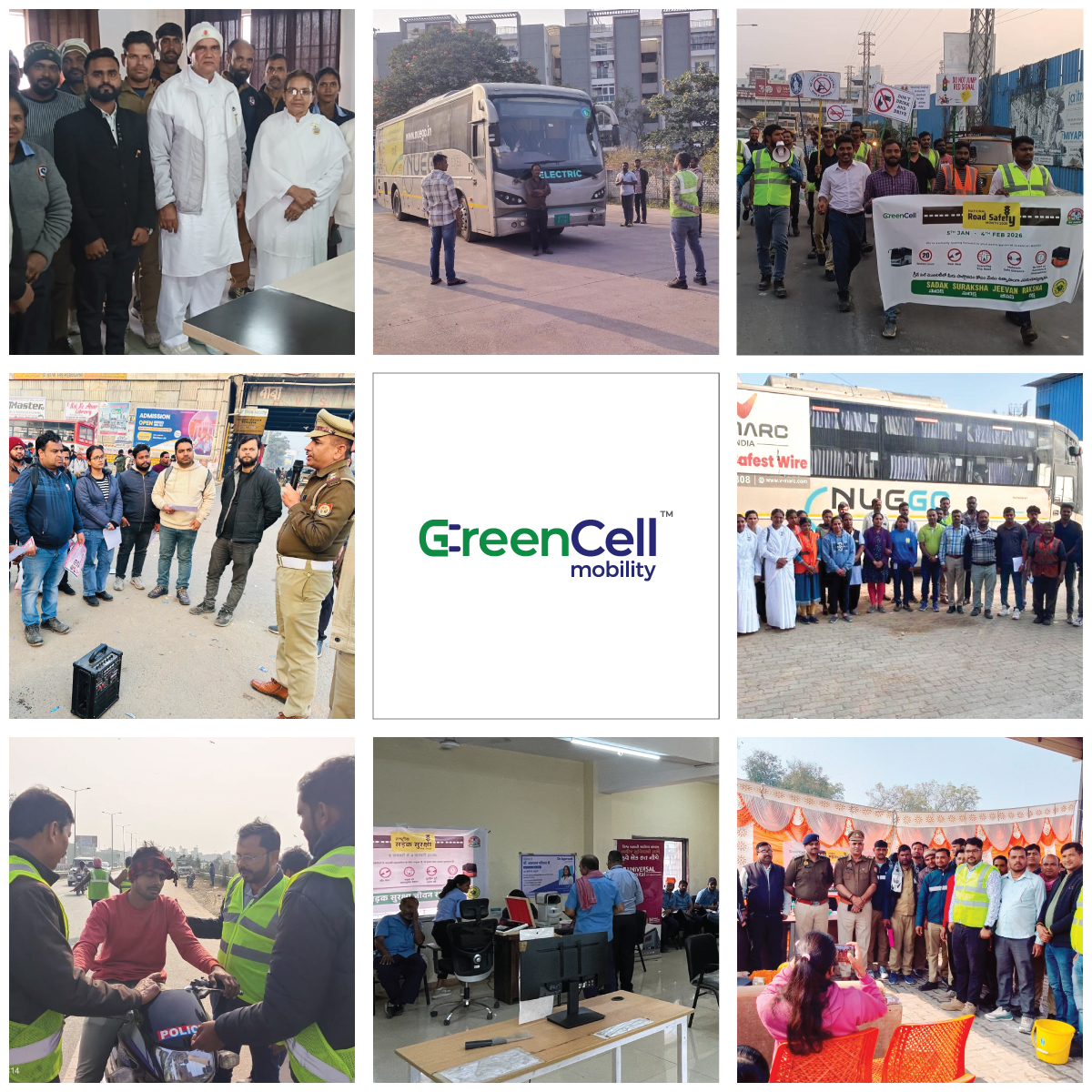
Taking a proactive and community-centric approach, GreenCell Mobility rolled out a series of awareness campaigns, engagement drives and capability-building initiatives across all its depots nationwide. The month-long programme witnessed participation from over 9,500 individuals, underlining the scale of the company’s safety outreach. 

Specialised training sessions were conducted for Coach Captains, focusing on defensive driving practices, passenger safety protocols and emergency response preparedness. Complementing these efforts, the company organised well-being sessions in collaboration with the Brahmakumaris, along with medical and eye check-up camps to support employee health and operational readiness. 

GreenCell Mobility also collaborated with Road Traffic Authorities on public awareness and reward & recognition initiatives to encourage adherence to traffic norms. Fire safety and passenger evacuation mock drills were conducted in partnership with local fire departments to strengthen emergency preparedness across locations. In addition, road safety awareness sessions were organised at nearby schools to instil early awareness among students about responsible road practices. 

Commenting on the initiative, Devndra Chawla, MD & CEO, GreenCell Mobility, said, “At GreenCell Mobility, safety is deeply embedded in the way we operate. National Road Safety Month allowed us to strengthen our focus on driver capability-building, employee well-being and community outreach. By combining structured training, emergency preparedness and public awareness initiatives, we are committed to fostering a culture of responsible and safe mobility across the ecosystems we serve.” 

Further extending its community engagement, street theatre performances (Nukkad Nataks) organised in partnership with NGOs delivered impactful safety messages to the public, while on-ground interactions with bikers, pedestrians and other road users reinforced the importance of complying with traffic regulations. 

The initiative reflects GreenCell Mobility’s ongoing commitment to embedding a strong culture of safety across its ecosystem. At GreenCell, safety is not just a priority – it is a shared responsibility.

Second Hugs Expands Its Marketplace: Now Offering Brand-New Kids’ Products at Competitive Prices

Mumbai, Feb 26: India’s trusted platform for children’s essentials, Second Hugs, is expanding its offering. In addition to gently used, high-quality kids’ products, parents can now shop brand-new products from verified wholesalers, all at highly competitive prices. This strategic expansion strengthens Second Hugs’ mission of making parenting more affordable, sustainable, and empowering for families across India.

Second Hugs Expands Its Marketplace: Now Offering Brand-New Kids’ Products at Competitive Prices


From a Mother’s Realisation to a National Movement

Second Hugs was founded by Swarna Daga Mimani with a simple but powerful insight that children outgrow everything faster than parents can keep up. From strollers and cots to toys and clothes, most products are used for just a few months before they lose monetary value and sit unused in homes.

What began as a solution to help parents resell gently used children’s products soon evolved into something bigger – a community-driven circular economy platform where families could buy, sell, and save.

Over time, Second Hugs has helped thousands of women and families generate secondary income by selling products their children had outgrown – items that would otherwise depreciate rapidly or remain unused. To ensure a seamless and hassle-free experience for users, the platform offers an integrated payment gateway for secure transactions along with doorstep pickup and drop services, making buying and selling effortless for busy parents.

Now Introducing: New Products at Better Prices

With the introduction of new products via wholesalers, Second Hugs is adding another layer of value for modern parents.

By giving wholesalers direct access to its growing, pan-India parent community, the platform enables competitive pricing which are often significantly lower than traditional retail marketplaces. The result? Parents now have a one-stop destination for both pre-loved and brand-new children’s essentials, without compromising on quality or cost.

This move is particularly relevant at a time when the cost of parenting continues to rise – right from nursery setups and feeding essentials to early learning toys and gear.

A Growing Opportunity for Wholesalers

Second Hugs’ expansion also opens doors for wholesalers across India. Through the platform, wholesalers gain access to a highly targeted, engaged, and pan-India database of parents actively looking for children’s products. The direct-to-community model ensures better visibility, faster movement of inventory, and access to a value-conscious audience that prioritises both quality and pricing.

Commenting on the expansion, Swarna Daga Mimani, Founder & CEO of Second Hugs, said,

“Second Hugs was born from a very personal experience – watching perfectly good children’s products lose value in just a few months. I realised there had to be a smarter, more sustainable way to approach parenting purchases. Over the years, we’ve helped thousands of women and families generate secondary income by selling products their children have outgrown. With the introduction of new products through wholesalers, we are taking that vision forward by giving parents even more affordable choices while building a larger ecosystem that benefits families and sellers alike. Parenting is expensive, but with the right platform, it doesn’t have to be overwhelming.”

Building a Circular Yet Complete Parenting Ecosystem

Second Hugs now stands at the intersection of affordability, sustainability, and entrepreneurship, empowering mothers to monetise unused items, helping families save on purchases, and enabling wholesalers to reach an engaged national audience.

In a world where parenting costs are constantly rising, Second Hugs is redefining how families buy and sell children’s essentials.


3 Trends in Education Financing in India for 2026

India’s education ecosystem is at an inflection point. With rising enrolments, tighter regulations, and growing expectations around learning outcomes, education financing is evolving beyond traditional lending. By 2026, three clear trends are set to define how capital flows into the sector, particularly for affordable private schools and education entrepreneurs.

1. Rise of Purpose-Driven Education Finance

Education financing is increasingly being shaped by social impact objectives alongside financial returns. Lenders and investors are focusing on institutions that serve low-income and emerging middle-class communities, where access to quality education remains uneven. This shift has led to the growth of specialised education-focused NBFCs that understand school-level challenges such as cash-flow seasonality, infrastructure gaps, and regulatory compliance. Players like Varthana have emerged in this space by offering customised financing solutions for affordable private schools, aligning capital deployment with measurable education outcomes rather than asset-heavy collateral models.

2. Data-Led Credit Assessment and Digital Lending

By 2026, data-driven underwriting is expected to become mainstream in education finance. Traditional balance-sheet-based assessments are being supplemented with alternative data, student enrolment trends, fee collection patterns, geographic demand, and school performance indicators. Digital platforms are enabling faster loan disbursements and ongoing monitoring, reducing turnaround times for schools that often operate with limited buffers. This approach not only lowers risk for lenders but also expands formal credit access for first-generation school founders.

3. Financing Linked to Quality and Compliance Upgrades

Regulatory norms around infrastructure, teacher qualifications, and safety standards are tightening across states. Financing is therefore shifting towards supporting compliance-led upgrades, classroom expansion, digital learning tools, sanitation, and energy-efficient infrastructure. Lenders are increasingly structuring loans that enable schools to meet these requirements while continuing operations uninterrupted, recognising that compliance is now directly linked to long-term viability.

Together, these trends signal a more mature, impact-aligned education financing ecosystem, one that prioritises sustainability, access, and learning outcomes alongside growth.

Qualcomm-Backed Arduino Teams with Get Set Learn to Boost STEAM Education in India

New Delhi, Feb 26: Get Set Learn, an Arvind Mafatlal Group company focused on future-skills education, today announced a strategic collaboration with Qualcomm Technologies, Inc. and Arduino, provider of a leading open-source electronics platform, to strengthen AI, electronics, and emerging technology education for K–12 learners in India.

As artificial intelligence rapidly evolves beyond the cloud and into real-world physical systems, powering robotics, automation, sensing, and intelligent decision-making, equipping students with the ability to build and apply these technologies has become essential for future workforce readiness and national competitiveness. Through this collaboration, Qualcomm Technologies, Inc., Arduino, and Get Set Learn will bring Physical AI learning and future-ready curriculum into India’s K–12 education ecosystem.

The collaboration aims to make advanced technology more accessible, practical, and buildable in real classrooms. By combining Arduino’s open, developer-trusted hardware and toolchains with Qualcomm Technologies’ energy-efficient on-device and edge AI capabilities, students will gain hands-on experience in designing and building intelligent physical systems that can operate reliably, even in low-connectivity and resource-constrained environments common across India.

Under the collaboration, Get Set Learn, Qualcomm Technologies, Inc. and Arduino intend to:

  • Design and deploy classroom-ready learning pathways that integrate electronics, coding, robotics and artificial intelligence to measurable outcomes from grades K 12.
  • On-device, edge AI experiences where learners design, deploy, and iterate physical systems locally, minimizing cloud dependence while improving responsiveness, privacy, and cost efficiency.
  • Support the transformation of ATL and STEAM labs into structured, certification-led learning spaces aligned with future skills and life skills development
  • Implementation at scale through Get Set Learn’s national school partnerships and content ecosystem, ensuring consistent, classroom level level impact across public and private education systems.

Built for India, Aligned to Global Standards

The initiative embraces open, widely adopted global standards and toolchains so schools can invest with confidence. By focusing on physical computing with on-device AI, programs remain resilient to connectivity variability, reduce recurring costs, and teach the architectural fundamentals engineers use to ship real products- sensing, actuation, control loops, and local inference.

From First Principles to Real-World Impact

Students progress from fundamentals to deployable systems: reading sensors, controlling actuators, implementing feedback and safety, and integrating perception tasks like vision and audio. The result is a portfolio of practical builds and certifications that map to higher education and entry-level industry pathways, building confidence and capability early.

As the implementation partner, Get Set Learn will lead on-ground implementation through its content ecosystem and school partnerships, ensuring that global technology platforms are translated into consistent, classroom-level impact. The initiative aligns with national priorities around digital literacy, innovation and workforce readiness, and reflects Get Set Learn’s focus on delivering future skills at scale.

Savi Soin, Qualcomm Technologies, Inc. Senior Vice President & President, Qualcomm India, commented

India’s AI future will be built on locally deployed, energy-efficient physical intelligence, and that essential journey must begin in our classrooms today. Through our partnership with Get Set Learn, we are placing edge AI directly into students’ hands through accessible, standards-aligned platforms, thereby empowering the next generation of builders to tackle real-world challenges right where the data and people are.”

For India, the question is no longer whether we will participate in the AI era, but whether we will shape it with depth, capability, and responsibility,”

Priyavrata Mafatlal, Vice-Chairman, Arvind Mafatlal Group and Founder of Get Set Learn.

“The partnership creates a practical platform that complements classroom learning by giving students exposure to future skills through building real systems and engaging with real-world problems. If we want a resilient innovation economy, we must start by building confidence and competence in classrooms- early, locally, and at scale.”

“Get Set Learn’s mission is to ensure that future skills are not limited to a few classrooms, but reach learners across geographies and school systems,” said Ameet Zaverii, CEO & Co-founder, Get Set Learn. “By working with Qualcomm Technologies and Arduino, we are bringing together global technology leadership and hands-on learning to create structured, scalable education models that are ready for real classrooms.”

“Arduino has always stood for accessible innovation,” said Fabio Violante, Qualcomm Technologies, Inc. Vice President & General Manager, Arduino, “Together with Qualcomm Technologies and Get Set Learn, we’re scaling Physical AI education so every learner can build, test, and deploy intelligent systems, from first prototypes in school to real solutions in their communities.”

Further details on implementation and scale will be shared at the February 2026 AI Summit, marking the next phase of the collaboration to strengthen AI and future-skills education in India

Jaipuria Group Emphasizes Human Accountability in AI Education at India AI Impact Summit 2026

New Delhi, Feb 26: Seth M.R. Jaipuria Group outlined its position on the future of AI in education at the India AI Impact Summit 2026, held in New Delhi, addressing its approach to integrating AI tools within structured academic systems.

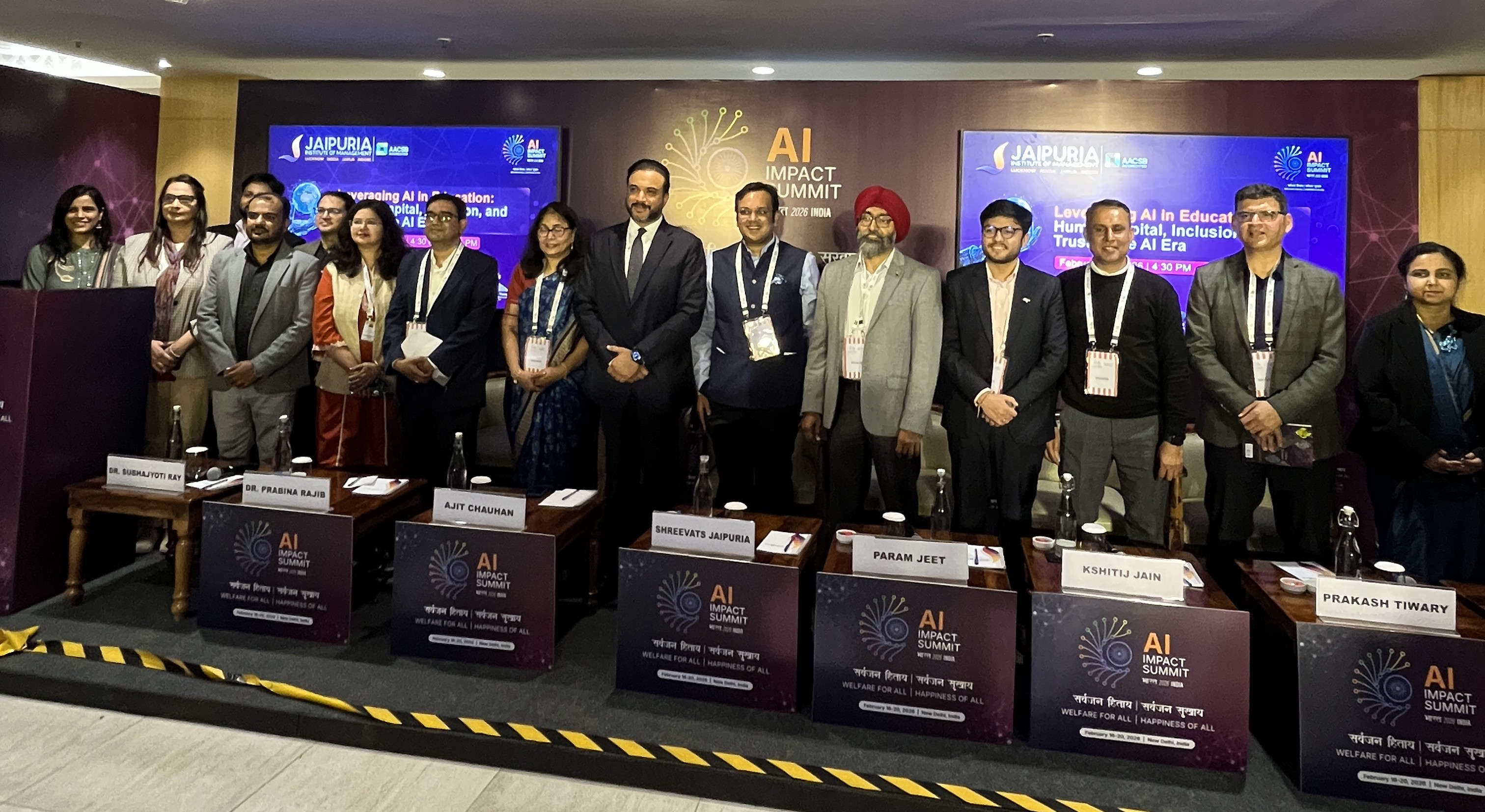
The panel discussion, titled Leveraging AI in Education: Human Capital, Inclusion, and Trust in the AI Era,” was held in New Delhi and moderated by Dr. Subhajyoti Ray, Director, Jaipuria Institute of Management, Noida. The session brought together academic leaders and industry representatives to examine how AI is reshaping expectations from students, faculty, and institutions.

The discussion began with an analysis of how AI is changing what is expected of both students and teachers. Panellists discussed the need to differentiate between technical capabilities and human accountability. During the session, Mr. Shreevats Jaipuria, Vice Chairman, Seth M.R. Jaipuria Group, spoke about the importance of building education systems that are AI-native without losing their human core. He said, “While artificial intelligence has expanded access to information and analysis, responsibility for decisions with long-term consequences continues to rest with people.” According to him, institutions must design learning environments where students work with AI regularly from early age as it’s the need, while also developing judgment and accountability on the sidelines.

Expanding on this, Mr. Jaipuria noted that across the Group’s education institutions, tools such as Script/OneCV for résumé optimisation, rehearse for interview simulations, Showrunner for project management, and the AI Space for real-world practice are being integrated into everyday learning. He added that teaching, mentoring, interaction, and reflection through human engagement should be given equal importance.

The discussions concluded with a structured analysis of how schools and higher education institutions are adapting curricula, assessment methods, and skill-development frameworks to align with AI-enabled workplaces.

Toray Develops Bio-Based Polyamide 4 Production Technology for Cosmetics Microparticle Market

Tokyo, Japan, Feb 26 – Toray Industries, Inc., announced that it has developed a proprietary technology to produce bio-based 2-pyrrolidone, a raw material in its polyamide 4, which delivers excellent biodegradability (see note 1) in marine and other environments and helps address microplastic issues. The company will use this technology to verify the scale-up of bio-based polyamide 4, with a view to offering it by the fiscal year ending March 2029, mainly for microparticles in foundation, eyeshadow, and other cosmetics.


In recent years, ocean discharges of microplastics (note 2) from cosmetics and facial cleansers have become a key environmental issue, prompting various countries (note 3) to restrict their use. Toray set about developing and launching polyamide 4 in response to this situation.

The conventional feedstock for 2-pyrrolidone, the raw material in polyamide 4, is petroleum-based. Toray embarked on R&D into synthesis approaches with sugars and other biomass sources, resulting in its bio-based version. The sizes and shapes of polyamide 4 microparticles from polymerizing and processing 2-pyrrolidone with this technique are comparable to those of conventional offerings. This bio-based feedstock conversion does not affect end products.

 It is also worth noting that reactions are milder than those of regular petrochemical processes. Toray’s breakthrough should help lower carbon dioxide emissions across the value chain, from raw materials through polyamide 4 microparticle production.

The applications of 2-pyrrolidone made with Toray’s technology extend well beyond polyamide 4. It is also a feedstock for N-methylpyrrolidone, used extensively in manufacturing semiconductor materials and engineering plastics (note 4), and for N- vinylpyrrolidone (note 6), a monomer for high-performance polymers in pharmaceuticals and other applications. This opens the door to bio-based production across diverse materials supporting next-generation industries.

Toray is pushing ahead with initiatives to transition to a circular economy and conserve natural resources as part of its sustainability efforts. The company will accordingly keep pursuing R&D in keeping with its commitment to delivering new value and contributing to social progress.

 Results from the Ministry of Environment-funded Projects to Promote the Construction of Decarbonized Circular Economy Systems (FY2023 and FY2024) contributed to Toray’s technological breakthrough.

Notes

1.  With biodegradation, bacteria, fungi, and other microorganisms break down organic compounds into simpler inorganic substances, including water and carbon dioxide. Biodegradation is generally slower in the sea, where microorganisms are less abundant than in the soil.

2.  Microplastic particles are smaller than 5 mm. They include primary microplastic microbeads in products like facial cleansers and secondary microplastic fragments from the degradation and fragmentation of items like plastic bottles and shopping bags owing to ultraviolet radiation and waves. There are concerns about the adverse effects of microplastics on ecosystems and human health across the food chain.

3.  Strengthening of Microplastic Regulations Worldwide

Europe amended its Registration, Evaluation, Authorization and Restriction of Chemicals regulation in 2023 to prohibit the use of cosmetics and other products intentionally incorporating microplastics after a transition of six to 12 years. The regulation exempts plastics meeting specific biodegradability test standards. Toray’s polyamide 4 microparticles meet the OECD 301F ready biodegradability standard and are thus not subject to this regulation.

4.  Engineering plastics offer high mechanical strength and heat resistance. Their light weight and high performance make them common substitutes for metals, including in automotive parts.

5.  N-methylpyrrolidone is a liquid compound in which a methyl group replaces the hydrogen on the nitrogen atom of 2-pyrrolidone. It has a high boiling point, excellent chemical stability, and strong solvency for diverse compounds, and is a common cleaning agent, paint stripper, and solvent.

6.  N-vinylpyrrolidone is a liquid compound in which a vinyl group replaces the hydrogen on the nitrogen atom of 2-pyrrolidone. Polymerization from the vinyl group yields polyvinylpyrrolidone. It serves as a thickener in cosmetics, a binder in pharmaceutical tablets, and a clarifying agent in alcoholic beverages.

Himalayan Siddhaa Akshar Highlights How Precise Bhramari Pranayama Transforms Brain and Nervous System

Himalayan Siddhaa Akshar, Author, Columnist, Founder: Akshar Yoga Kendraa, Work: Yoga and spiritual leader

Why Correct Application of Bhramari Pranayama Changes Its Impact on the Brain

Bhramari pranayama is usually related to rest and peace of mind. While this description is accurate, it does not fully explain the profound neurological influence the practice can have when applied correctly. Calmness is not the final result but an apparent consequence of the more profound processes of control that take place in the brain and the nervous system. Its actual difference consists not in the practice, but in its application.

When Bhramari Pranayama is performed with precision–integrating posture, breath rhythm, sound vibration, and hand placement–it influences brain coherence, autonomic balance, and cognitive regulation in measurable and lasting ways. Misuse or incomplete use will reduce the practice to a temporary calming procedure unless proper use will convert it to a way of conscious control of the nervous system.

The Brain as a Rhythmic System.

The human brain works based on the rhythmical electricity. These rhythms–commonly referred to as brain waves–govern perception, emotional response, attention, and decision-making. When neural rhythms become disorganized, the individual experiences anxiety, restlessness, emotional volatility, and mental fatigue. When these rhythms are synchronized and stable, clarity, focus, and emotional steadiness naturally emerge.

The constant rhythmic input is presented by Bhramari Pranayama. The humming sound produced internally is a vibratory signal that is interacting with the existing neural vibrations. As opposed to external sound, which has to be converted, sifted, and translated, internally generated vibration bypasses numerous stages of sensory multifaceted, and has a direct effect on neural timing and coordination.

Internal Sound and Neural Interaction

Vibration of sound created during Bhramari goes through the cranial cavity, sinuses and bones of the face as well as tissues surrounding the head. These vibrations activate auditory processing, interoceptive, and emotional regulation neural pathways. Since the sound is generated inside a body, it is perceived by the brain as an internal stimulus or signal and not as an external stimulus.

This difference is essential. Internal vibration is processed differently by the nervous system. It encourages assimilation and not response. Circuitry that is used in the detection of threats or sensory alertness subside, whereas networks that are used in regulation and coherence get stronger.

The Role of Sensory Withdrawal

Proper use of Bhramari has the position of hands being applied in deliberate manner thus minimizing outside sensory stimulus. Sensory points on the face are stabilized and the ears are closed softly, which means that the brain receives fewer external signals when the ears are closed. This sensory withdrawal allows internal signals–breath rhythm, vibration, and bodily awareness–to take priority.

The neuroscience research on sensory suppression shows that the reduction of the external stimuli maximizes the activity of the brain networks related to self-regulation and introspective awareness. Meanwhile, the background neural noise which is associated with distraction and rumination reduces. This is also done naturally in Bhramari by posture and the position of the hands instead of by means of a concentrated effort.

Breath Rhythm and Autonomic Balance

The major connection between conscious action and autonomic functioning is breath. Bhramari Pranayama involves slow breathing with a long exhalation of humming, which is a decisive factor in the work of the nervous system.

Prolonged exhaled stimulates the vagus nerve which controls the parasympathetic. This transition facilitates a non-dull relaxation. The heart rate variability is enhanced which indicates that the heart and the brain communicate better. Emotional processing centers get more stable and impulsive reactions to stress are decreased.

More to the point, it is not a state of suppression. The nervous system is not being induced to calmness. Rather it is steered towards coherence by rhythmic contribution.

From Relaxation to Calm Alertness.

Calm alertness is one of the greatest results of properly administered Bhramari. This condition contrasts with sedation or mental retardation. The level of awareness is high, with low reactivity. Attention becomes sustained rather than scattered. Emotional responses become measured rather than impulsive.

Cognitive resources are saved in this state. The brain does not spend as much energy in processing inner noise or emotional changes. This allows higher-order functions such as reasoning, creativity, and decision-making to operate more efficiently.

Neural Adaptation Through Consistency.

Nervous system becomes accustomed to repetition. When there is proper and regular practice of Bhramari, the brain will begin to accept the mode of vibratory-breath as a normal existence. Over time, this leads to durable changes in stress response, attention span, and emotional regulation.

The practice adapts the neural behavior of baselines instead of relief, which is short-lived. The reaction to stress is minimized. Healing of emotional disturbance is quicker. Mental clarity becomes easier to access.

Such adaptive process requires regularity and accuracy. Improper or unbalanced practice will result in inconsistent input, which restricts neurological transformation in the long term.

Method Over Effort

Himalayan Siddhaa Akshar stresses that the transformational effects of Bhramari are a result of a method rather than a result of effort. Straining the breath, forcing the sound, or applying excessive pressure disrupts neural harmony. Precision of posture, gentle hand placement, balanced breath, and smooth vibration allow the brain to reorganize itself naturally.

The rationale behind the practice is that it honors the smartness of the nervous system. It is a structured input and the response of biological processes to it is organic.

Relevance in the Modern Cognitive Environment

Modern life is characterized by constant sensory stimulation, information overload, and chronic cognitive demand. Constant internal coherence in the brain is hardly ever experienced. Over time, this leads to fatigue, anxiety, and reduced emotional resilience.

When practiced properly, Bhramari Pranayama provides an effective and scientifically-supported approach to overcome such effects, being non-invasive. It does not involve the use of external resources, medication, or complicated intervention. It relies on breath, sound, and posture to restore neural balance from within.

Conclusion: Precision Determines Outcome

By integrating sound vibration, breath rhythm, sensory withdrawal, and intentional posture, Bhramari reorganizes neural activity toward coherence and stability. In doing so, it offers a pathway to sustained mental clarity, emotional balance, and cognitive resilience in an increasingly overstimulated world.

 

Sun Neo | Kushagre Dua on Handling Comparisons and Passion in Prathaon Ki Odhe Chunri: Beendani: I believe that when you take pressure you lose…

Starting something new, especially after a big change, often brings expectations and comparisons along with it. Recently, Prathaon Ki Odhe Chunri: Beendani underwent a major transformation with its generation leap, introducing new faces and a fresh direction to the story. After this change, Kushagre Dua, who is playing the lead role of Garv in the show, shared his thoughts on pressure and comparison. Kushagre opens up about how he looks at this new phase and what it means to him as an actor.

Sharing his thoughts on handling pressure, Kushagre said, “I don’t feel any pressure at all. I believe that when you take pressure, you lose your creativity. I stay focused on my character and my acting. I try to understand the character deeply, and once I do that, ideas automatically come to my mind. I just follow those ideas and give my hundred percent to every scene. I am someone who believes in going with the flow and trusting the process.”

Further talking about the comparisons, he added, “If we talk about comparing the old characters with the new ones, that is natural in the beginning because a lot has changed in the show. But the best thing we can do is give our best and stay honest to our work. The real happiness will be when people stop comparing and start remembering us because of our character. That will be a big win for us as actors.”

Watch Prathaon Ki Odhe Chunri: Beendani Everyday at 09:00 PM only on Sun Neo

Youthbeat Secures “Myntra Style Squad” Campaign to Strengthen Creator-led Fashion Influence

New Delhi, Feb 26th: Youthbeat, the youth and creator-focused division of SW Network, a leading integrated advertising agency, has won the Myntra Style Squad campaign. As part of the engagement, Youthbeat will curate a squad of influencers to deliver fashion-forward content for Myntra.

Under this mandate, the team will build and manage a dedicated group of creators across fashion, lifestyle, and youth culture. The focus is on authentic, creator-led storytelling that feels relatable, current, and aligned with how young audiences engage with fashion today.

Expressing excitement about the collaboration, Raghav Bagai, Co-Founder, Youthbeat, said, “We are thrilled to partner with Myntra once again and support their mission of strengthening digital fashion culture. With a powerful line-up of talented creators and a long-term, structured content journey, we aim to craft engaging and trend-forward narratives that resonate with Myntra’s audience. Our focus is on delivering consistent impact while driving measurable value.”

Shubham Chawla, Business Head – Creator & Influencer Vertical, Youthbeat, said, “Creators today play a powerful role in shaping fashion discovery and purchase decisions among young consumers. With the Myntra Style Squad, our goal is to build a high-impact creator ecosystem that blends cultural relevance, trend awareness, and authentic storytelling. By combining Myntra’s strong fashion authority with our creator-first approach, we aim to deliver content that not only inspires but also drives meaningful engagement and long-term brand affinity.”

Commenting on the collaboration, Monalisa Panda, Head of Social, Myntra, said, “Creator-led storytelling continues to be a key growth driver for the fashion category. Partnering with agencies that deeply understand consumer behaviour and prioritise authenticity in content is crucial. Youthbeat’s proven track record and strong creator network make them an ideal partner for the Myntra Style Squad initiative. We look forward to amplifying our brand voice and unlocking new possibilities together.”

With a strong track record of large-scale influencer campaigns, Youthbeat continues to be a trusted partner for brands leading with content and community. The Myntra Style Squad reflects a shared vision to create fresh, inspiring, youth-led fashion content across India.

Africa, Venezuela Advance Practical Trade and Investment Cooperation

Venezuela Advance Practical Trade and Investment CooperationThe African Energy Chamber’s delegation to Caracas advanced cooperation with Venezuelan authorities on expanding trade beyond energy, addressing regulatory bottlenecks and promoting reciprocal investment across the Global South

CARACAS, Venezuela, Feb 26:A high-level working visit to Caracas by the African Energy Chamber (AEC) (https://EnergyChamber.org) this February marked a significant step in strengthening Africa–Venezuela cooperation, moving engagement beyond hydrocarbons toward broader South–South trade and investment opportunities. The discussions focused on removing longstanding transactional bottlenecks and boosting bilateral trade in goods, services and industrial collaboration.

Leading discussions with Coromoto Godoy Calderón, Minister of Foreign Trade of the Bolivarian Republic of Venezuela, the AEC delegation explored strategies to expand African markets for Venezuelan goods while facilitating reciprocal African investment in Venezuela. The visit emphasized creating a comprehensive framework for trade that extends beyond oil and gas, promoting manufactured goods, services and skills exchange.

“Together with the Minister, we discussed opening up African markets on a Global South–South strategy,” said NJ Ayuk, Executive Chairman of the AEC. “A priority is working on Venezuelan goods in Africa – not just energy. We are committed to removing bottlenecks, improving regulations and building a framework that accelerates trade and development between our regions.”

The visit also addressed potential alignment with the African Continental Free Trade Area, signaling new pathways for Venezuelan products to access African markets under continental trade frameworks. This reflects a growing interest in integrated commercial engagement that leverages shared resources and strengthens economic ties between African nations and Venezuela.

Institutional cooperation was another key focus. The AEC and Venezuelan authorities agreed on the importance of sharing best practices to position Venezuela as an attractive partner for African investors. Programs are being developed to promote Venezuelan products in African markets while encouraging investment in Venezuela’s broader non-oil economy.

Financial collaboration is central to this strategy. The delegation met with the Venezuelan Export–Import Bank to explore partnerships with African regional development banks and export finance institutions. These initiatives aim to facilitate trade finance, streamline payments and reduce transaction risks, providing a clearer, bankable framework for industrial and commercial projects.

Both sides pledged to showcase Venezuela in key African trade platforms, including the Intra-African Trade Fair organized by Afreximbank, and African Energy Week 2026, where Venezuelan products and expertise can be highlighted. Capacity-building workshops are planned to strengthen skills and technical exchange, reinforcing long-term trade and industrial collaboration.

The working visit marks a shift from energy-centered engagement to a broader, market-oriented partnership. By addressing regulatory challenges, expanding institutional cooperation and promoting trade-enabling frameworks, Africa and Venezuela are laying the foundations for reciprocal investment, industrial growth and deeper integration across the Global South.

“Our focus is on enabling trade that drives development. By working together to break down bottlenecks and expand commercial exchange, we are helping to shape a future in which African and Venezuelan economies grow stronger through partnership – not just in energy, but across the full spectrum of goods, services and investment,” Ayuk added.