

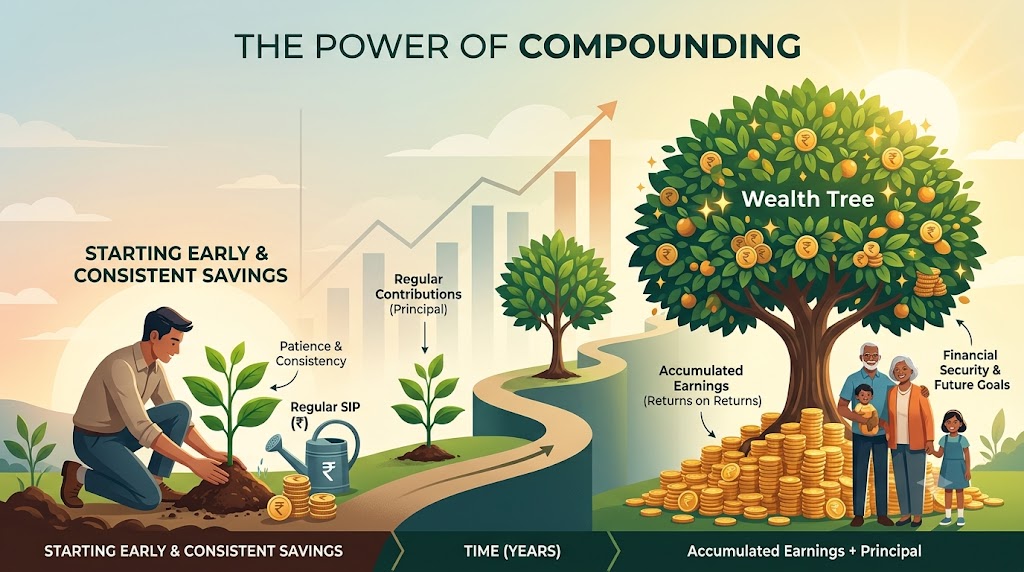
Building wealth is not always about earning a high income or making a large investment at once. Often, it is about making sensible financial decisions consistently and giving money enough time to grow. One of the most effective principles behind long-term wealth creation is the Power of Compounding, a process that allows investments to generate returns on both the original amount and the earnings accumulated over time.
For individuals planning their financial future, the power of compounding offers a practical way to turn regular savings into a potentially substantial investment corpus. Whether the goal is retirement, buying a home, funding a child’s education or achieving greater financial independence, understanding how compounding works can help investors make better decisions.
However, its benefits do not appear overnight. Compounding rewards patience, consistency and a long-term approach to investing.
What Is the Power of Compounding?
The power of compounding refers to the process through which an investment generates returns on its initial principal as well as the accumulated earnings from previous periods. Unlike simple interest, which is calculated only on the original investment, compound interest allows earnings to contribute to future growth.
For example, an investment of ₹10,000 earning an illustrative annual return of 8% would grow to ₹10,800 after one year. If the earnings remain invested, the next year’s return is calculated on ₹10,800 rather than the original ₹10,000.
Over time, this cycle can accelerate investment growth, making compounding an important concept in long-term financial planning.
How Does Compounding Help Build Wealth?
The power of compounding becomes more noticeable as investments remain invested for longer periods. As earnings accumulate, they contribute to future returns, potentially increasing the overall value of the investment.
Regular contributions can strengthen this effect. Investors who contribute consistently through a Systematic Investment Plan (SIP) can combine their savings with potential investment growth to work towards long-term financial goals.
However, actual returns depend on the investment product and prevailing market conditions. Market-linked investments do not offer guaranteed returns, and losses are possible.
Key Benefits of the Power of Compounding
1. Encourages Long-Term Wealth Creation
Compounding allows accumulated earnings to contribute to future growth. Starting early gives investments more time to benefit from this process and can reduce the pressure to make larger contributions later.
2. Makes Regular Investing More Effective
Investing a manageable amount every month can help individuals develop financial discipline. Regular contributions also allow investors to build their portfolios gradually instead of waiting until they have a substantial amount available.
3. Supports Long-Term Financial Goals
The power of compounding can support goals such as retirement planning, higher education, home ownership and financial independence. A clear investment horizon helps individuals select suitable financial products and establish realistic savings targets.
4. Helps Address Inflation
Inflation reduces the purchasing power of money over time. Investments that generate returns above inflation can help preserve or increase purchasing power, although taxes, fees and investment risks must also be considered.
Power of Compounding: An Investment Example
Suppose an individual invests ₹2,000 every month for 20 years. The total contribution would be ₹4.8 lakh. At an assumed annual return of 8%, compounded monthly, the investment could grow to approximately ₹11.8 lakh before taxes and applicable charges.
This illustration shows how regular contributions and investment growth can work together. The actual outcome may be higher or lower depending on the returns earned, and market-linked investments do not guarantee a particular final amount.
How to Make the Most of Compounding
Investors can incorporate the power of compounding into their financial plans by starting early, investing regularly and reinvesting eligible earnings. Choosing suitable investments, managing costs and avoiding unnecessary withdrawals can also support long-term growth.
Mutual funds, equity investments, fixed deposits and other financial products have different risk profiles and return structures. Investors should select options based on their financial goals, risk tolerance and investment horizon rather than focusing only on potential returns.
Maintaining an emergency fund and reviewing investments periodically can further help individuals stay aligned with their financial priorities.
Conclusion
The power of compounding demonstrates how time, consistency and reinvested earnings can contribute to long-term wealth creation. Although it cannot eliminate investment risks or guarantee profits, it provides a useful foundation for disciplined financial planning.
For investors, the most practical approach is to begin with an affordable amount, maintain regular contributions and remain focused on long-term goals. Over the years, consistent financial habits can help turn modest savings into a meaningful foundation for future financial security.

