

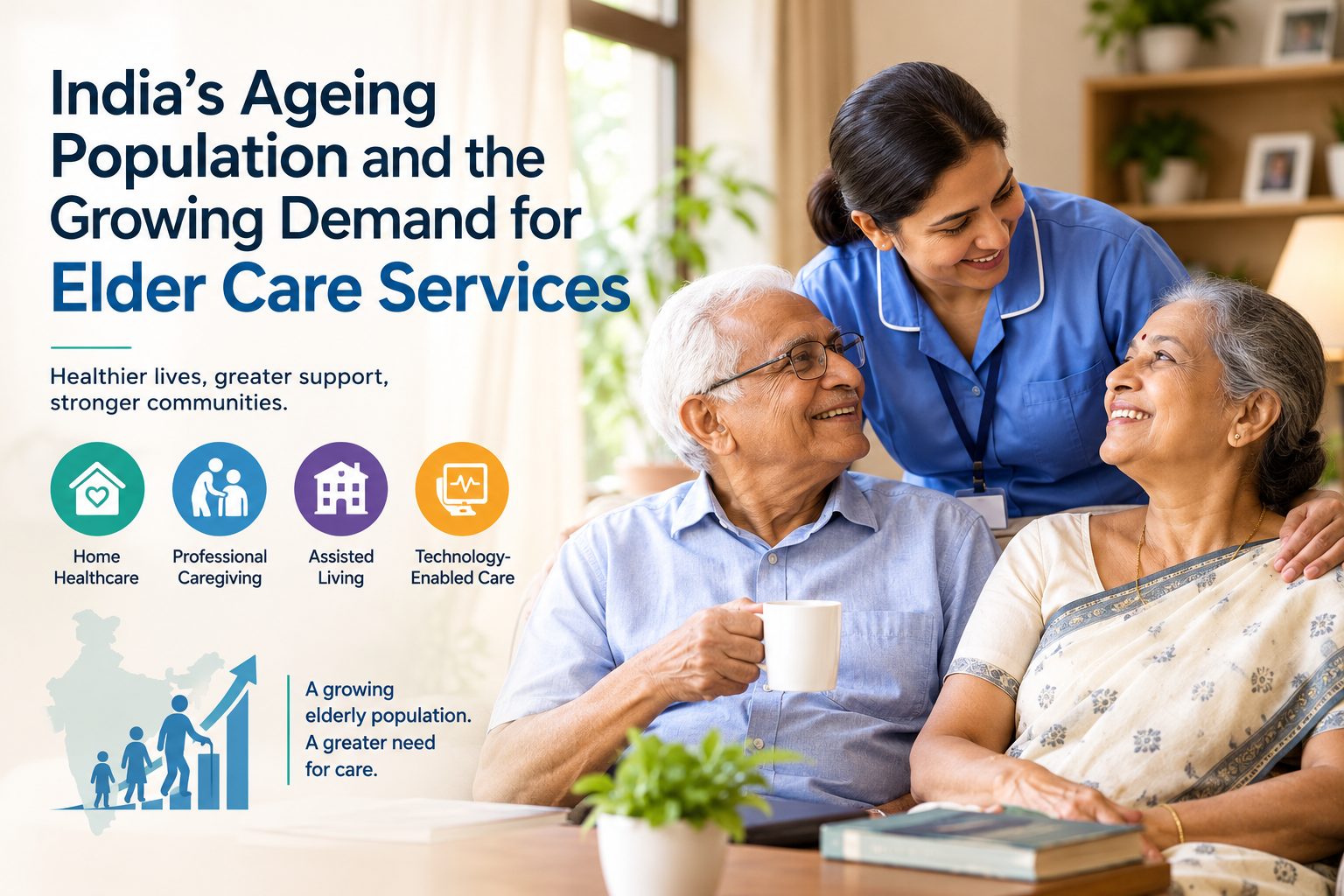
Oct 16: India’s ageing population is creating new demands on families, healthcare providers and businesses. As people live longer, the need for reliable elder care services is becoming more important. Families are increasingly looking for ways to support ageing parents while managing their own careers, childcare responsibilities and financial commitments.
This shift is creating opportunities for businesses offering home healthcare, professional caregiving, assisted living and technology-enabled support. However, the challenge goes beyond providing medical assistance. Older adults also need companionship, financial security, accessible living spaces and the freedom to maintain their independence.
For India, developing an effective elder care ecosystem will be an important part of preparing for the country’s changing demographic profile.
India’s Ageing Population Is Reshaping the Care Economy
India has a relatively young population, but the number of older adults is growing steadily. According to the United Nations Population Fund’s India Ageing Report 2023, the population aged 60 and above was projected to rise from approximately 153 million in 2023 to 347 million by 2050. The report also indicated that older adults could account for more than one-fifth of India’s population by mid-century.
This demographic change has significant implications for healthcare, housing, retirement planning and social services. A larger elderly population will need access to regular medical check-ups, chronic disease management, rehabilitation and assistance with everyday activities.
The demand will not be the same for everyone. Some older adults will remain independent and active well into their retirement years, while others may need help with mobility, medication, personal care or recovery after hospitalisation.
For businesses, this creates a need for flexible services that can adapt to different health conditions, family circumstances and budgets.
Changing Family Structures Are Increasing the Need for Professional Care
Traditionally, families have played a central role in caring for older relatives. However, employment-related migration, urbanisation and changing household arrangements can make it harder for family members to provide daily assistance.
Adult children may live in different cities or countries, while those living with elderly parents may have demanding work schedules. When an older family member needs regular medical attention or help with everyday tasks, arranging suitable care can become a significant responsibility.
Professional caregivers can help families manage these demands. Depending on individual needs, services may include assistance with bathing, dressing, meals, mobility, medication schedules and hospital visits. Trained nurses and healthcare professionals can provide more specialised support when medically required.
This also has implications for employers. Employees who care for ageing parents may struggle to balance work and family responsibilities. Flexible working arrangements, caregiver leave and access to dependable elder care services could help organisations support these employees more effectively.
Home Healthcare Is Becoming an Important Business Opportunity
Many older adults prefer to remain in their own homes rather than move into residential care facilities. Home healthcare and personal assistance services can help make this possible.
Providers can offer nursing visits, physiotherapy, post-hospitalisation care, chronic disease monitoring and support with routine activities. Some families may need a caregiver for a few hours a day, while others may require more frequent or extended assistance.
The business opportunity lies in making these services reliable, accessible and affordable. Providers that offer flexible packages, clear pricing and trained staff may be better positioned to earn the trust of families.
Non-medical services also have an important role. Meal preparation, transportation, grocery shopping, household assistance and companionship can help older people maintain their daily routines.
However, businesses must establish clear boundaries between general caregiving and clinical services. Medical procedures and nursing care should be handled by appropriately qualified professionals, with clear protocols for emergencies and referrals.
What the India Ageing Report 2023 Reveals
The India Ageing Report 2023, prepared by UNFPA in collaboration with the International Institute for Population Sciences (IIPS), examines the demographic and socioeconomic circumstances of older Indians, along with the support systems available to them.
The report draws on sources including the Longitudinal Ageing Study in India (LASI), government population projections and United Nations demographic data. It examines issues such as healthcare access, social security, living arrangements and the needs of older adults with disabilities.
Its findings highlight why elder care must be approached as both a healthcare priority and a social responsibility. An increase in the number of older adults will require more than additional hospital beds. It will also require accessible community services, trained caregivers, suitable housing and better coordination between families and healthcare providers.
The report also reinforces the importance of helping older people remain in familiar surroundings wherever possible, provided their care needs can be met safely.
For businesses, the findings point towards opportunities in home-based care, rehabilitation, assisted living, senior-friendly housing and care coordination. At the same time, providers must account for the financial limitations faced by many households.
Chronic Health Conditions Are Creating Demand for Ongoing Support
Age-related healthcare needs can extend well beyond occasional doctor visits. Many older adults require regular monitoring, medication management and continued support for chronic conditions.
The Government of India’s Longitudinal Ageing Study in India (LASI), Wave 1 provides useful evidence on these requirements. In a March 2021 summary of the study, the Ministry of Health and Family Welfare reported that 32% of adults aged 60 and above had self-reported hypertension, while 14.2% reported diabetes or high blood sugar. The study also recorded self-reported chronic lung disease among 8.3% of this age group.
These figures illustrate the importance of regular healthcare and continuity of treatment. They also create a case for better coordination between hospitals, primary care providers, families and home healthcare professionals.
Businesses could respond through services that help older adults attend appointments, follow prescribed treatment plans and access rehabilitation. Digital tools may support this process, but they should complement rather than replace professional medical care.
Assisted Living and Senior Communities Are Expanding the Care Options
Home-based care may not meet every person’s needs. Some older adults require round-the-clock supervision, specialised assistance or a living environment designed to support limited mobility.
Assisted living facilities, senior living communities, nursing homes and day-care centres offer different levels of support. Depending on the model, services may include accommodation, meals, housekeeping, healthcare coordination, recreational activities and help with daily tasks.
For businesses, the opportunity is to develop environments where older residents can feel safe without losing their independence. Accessible bathrooms, handrails, emergency response systems and trained staff are essential considerations. Social activities and opportunities for interaction can also help residents maintain meaningful connections.
Affordability remains a major barrier. Premium senior living developments may cater to wealthier households, while many families need less expensive alternatives.
Community-based day-care centres, shared support services and partnerships with local healthcare providers could help expand access. Businesses will need to understand local needs and income levels before deciding which model is commercially viable.
Technology Can Help Families Coordinate Elder Care
Technology is creating new ways for families and care providers to manage the needs of older adults, particularly when relatives live far apart.
Teleconsultations, medication reminders, emergency alert devices and remote health monitoring can help people stay connected with healthcare services. Digital care platforms can also help families organise appointments, coordinate caregiver visits and receive updates on routine support.
Artificial intelligence may eventually assist with administrative tasks, identify patterns in monitoring data and help care teams organise follow-ups. However, these applications must be designed with appropriate safeguards for privacy, accuracy and human oversight.
Older adults may also face barriers to adopting digital services, particularly when applications are difficult to navigate or available only in unfamiliar languages. Simple interfaces, regional-language options and telephone-based assistance can make technology more accessible.
The strongest business models will combine digital convenience with human support. Technology can help coordinate care, but it cannot replace personal attention, empathy or professional judgement.
Business Opportunities in India’s Elder Care Sector
As demand grows, several areas offer opportunities for entrepreneurs, healthcare companies and service providers.
-
Home-based caregiving: Providing trained attendants and flexible care packages for older adults who wish to remain at home.
-
Geriatric healthcare and rehabilitation: Offering specialised consultations, physiotherapy, mobility support and recovery services.
-
Senior living and assisted care: Developing residential and community-based facilities suited to different levels of independence.
-
Digital elder care: Building platforms for appointment management, emergency alerts, health monitoring and caregiver coordination.
-
Nutrition and wellness: Offering suitable meal services, supervised exercise and activities that support healthy ageing.
-
Elder care management: Helping families coordinate medical appointments, transportation, home assistance and communication with service providers.
The commercial potential of these services will depend on local demand, household purchasing power, staff availability and the quality of service delivery. Businesses should avoid assuming that every family can afford premium care packages.
Affordable pricing, transparent contracts and reliable service standards will be important for building a sustainable customer base.
Affordability and Caregiver Training Remain Major Challenges
Even when families recognise the need for professional assistance, the cost of care can be difficult to manage. Regular caregiving, medical treatment, rehabilitation and residential services may place pressure on household budgets, particularly when older adults have limited savings or retirement income.
A lack of trained personnel presents another challenge. Elder care requires skills in safe mobility, personal hygiene, communication, infection prevention and emergency response. Caregivers supporting people with dementia or complex health conditions may need additional training.
Businesses must also establish clear recruitment procedures, background checks, staff supervision and complaint-handling systems. Older adults are particularly vulnerable to neglect, financial exploitation and abuse, making safeguards essential.
Partnerships between training institutions, healthcare organisations, government agencies and private providers could help improve workforce skills and professional standards.
For companies entering this sector, investing in staff training and quality control is not simply an operational expense. It is central to customer trust and long-term business growth.
The Role of Employers and Policymakers
Businesses cannot address the challenges of an ageing population alone. Employers, government agencies, healthcare institutions and families all have a role to play.
Employers can support workers with caregiving responsibilities through flexible schedules, caregiver leave and access to dependable service providers. Policymakers can strengthen public geriatric healthcare, improve awareness of social security programmes and encourage suitable standards for elder care facilities.
Public-private partnerships may also help extend services to communities where commercial providers have limited reach.
The needs of older adults vary across states, income groups and rural and urban settings. Effective solutions must reflect these differences while ensuring that access to safe, dignified care does not depend entirely on a family’s ability to pay.
Conclusion: Building a Sustainable Elder Care Industry in India
India’s ageing population is creating a long-term need for accessible healthcare, professional caregiving and support services. Home healthcare, assisted living, rehabilitation and digital care coordination offer opportunities for businesses willing to address these needs responsibly.
However, the future of the sector will depend on more than rising demand. Affordability, trained personnel, transparent pricing and consistent service quality will determine whether providers can build lasting relationships with families.
Businesses that combine professional expertise with compassionate care can help older adults maintain their independence while giving families greater confidence in the support they receive.
As India prepares for a larger elderly population, developing a sustainable elder care ecosystem will be an important investment in the country’s healthcare infrastructure, workforce and social well-being.

