

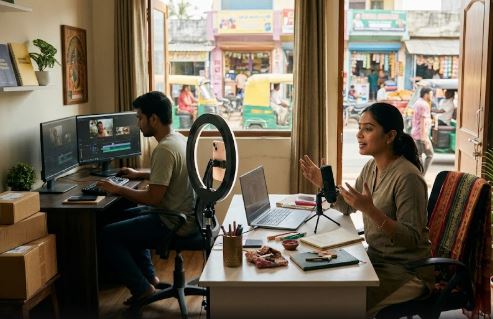
India’s creator economy is changing the way people work, build businesses and connect with consumers. What began as a way to share videos, ideas and personal experiences has developed into a growing commercial ecosystem, creating opportunities for individuals to earn through their creativity and online communities.
Affordable smartphones, wider internet access and the popularity of social media have made content creation accessible to people far beyond major cities. Today, creators produce content across entertainment, education, food, fashion, travel, technology and personal finance. Their influence extends beyond views and likes, helping brands reach customers, introducing new products and shaping purchasing decisions.
For businesses, this has created a different approach to marketing. Instead of relying entirely on traditional advertising, brands can work with creators who have built trusted relationships with specific audiences. For creators, the opportunity is to turn that attention into a reliable source of income.
However, building an audience and building a profitable business are two different challenges. While a few creators earn substantial amounts, many struggle with irregular brand deals, changing platform algorithms and the cost of producing content. As India’s creator economy matures, sustainable income is becoming just as important as online popularity.
Regional Creators Are Expanding India’s Digital Market
The growth of India’s creator economy is increasingly being driven by audiences and talent outside major metropolitan cities. Creators working in regional languages are connecting with people through familiar stories, local culture and subjects that reflect their everyday lives.
Content in Odia, Bengali, Tamil, Telugu, Marathi, Malayalam and other Indian languages is helping creators reach audiences who may not always find content that reflects their interests in mainstream digital media.
This shift is also creating opportunities for businesses. Local retailers, emerging consumer brands, tourism operators and service providers can work with creators who understand regional preferences and communicate naturally with their communities.
For smaller businesses, these partnerships can provide a more focused way to reach potential customers. Instead of paying for broad exposure, they can collaborate with creators whose audiences are relevant to their products or services.
How Creators Turn Audiences Into Revenue
A growing audience can create commercial opportunities, but income usually comes from several sources rather than a single platform.
Brand partnerships and sponsored content remain important revenue channels. Businesses pay creators to introduce products, explain services or develop campaigns that connect with specific audiences. Platform advertising programmes can provide additional earnings for eligible creators, although revenue varies according to content, audience engagement and platform policies.
Some creators are also developing their own businesses by selling digital courses, offering consulting services, launching merchandise or building consumer brands. Paid memberships and exclusive content can generate recurring revenue when followers see sufficient value in the offering.
Diversification is becoming increasingly important. Depending entirely on one platform or occasional sponsorships can leave creators vulnerable to changes in algorithms, advertising budgets and audience behaviour. Multiple revenue streams can provide greater stability when they are built around the creator’s expertise and audience needs.
Why Popularity Does Not Always Mean Profitability
Social media can make success appear effortless, but the financial reality of content creation is often more complicated.
Producing regular content requires time, planning, equipment, editing and sometimes a team. Creators may spend months building an audience before receiving meaningful commercial opportunities. Even after gaining visibility, they may face inconsistent payments, demanding campaign schedules and uncertainty about future earnings.
Brand budgets are also unevenly distributed. Well-known creators often attract a larger share of commercial partnerships, while smaller creators may find it difficult to negotiate fair compensation or secure repeat business.
Follower counts alone do not determine earning potential. Audience relevance, engagement, credibility and the ability to deliver measurable business results all influence how much a creator’s work is worth.
For emerging creators, the priority should be building a loyal audience and a clear identity rather than chasing viral attention at any cost.
What Brands Gain From Creator Partnerships
For businesses, creator marketing offers an opportunity to communicate with consumers in a more personal and engaging way. A creator who understands an audience can explain a product in familiar language, answer common questions and help customers understand how a service fits their needs.
This approach can be particularly useful for small and medium-sized businesses that need to make careful use of marketing budgets. Working with a relevant niche creator may help a business reach potential customers without the expense of a large advertising campaign.
However, effective partnerships require clear objectives. Businesses should consider audience quality, content credibility, campaign costs and measurable outcomes rather than choosing creators solely on the basis of follower numbers.
Transparent disclosures, clear contracts and timely payments are equally important. When brands and creators establish fair working relationships, campaigns have a stronger chance of delivering value to both parties.
Building a Sustainable Creator Business
As competition increases, creators need to approach their work with the same discipline as other small businesses. Consistent content, a clear area of expertise and an understanding of audience interests can help build long-term credibility.
Financial management is another essential part of the process. Income may fluctuate from month to month, making it important to plan for production costs, taxes and periods when paid opportunities are limited. Maintaining savings and developing different revenue channels can help manage this uncertainty.
Creators also need to understand their commercial rights, negotiate reasonable fees and document campaign agreements. These steps can reduce misunderstandings and help protect the value of their work.
Most importantly, audience trust must remain central. Promoting unsuitable products or making exaggerated claims for commercial gain may generate short-term income but can damage credibility over time.
The Future of India’s Creator Economy
India’s creator economy is creating new possibilities at the intersection of creativity, entrepreneurship and digital commerce. It is helping regional talent find wider audiences, giving businesses new ways to communicate with customers and enabling individuals to build businesses around their knowledge and interests.
The next stage of growth will depend on whether these opportunities become more sustainable. Fair compensation, reliable payment practices, transparent brand partnerships and diversified income models can help creators build stronger businesses.
For brands, the opportunity lies in developing meaningful relationships with creators rather than treating content as a temporary promotional tool. For creators, long-term success will depend on turning audience trust into products, services and partnerships that deliver genuine value.
India’s creator economy is ultimately about more than creating content or collecting followers. It is about building a business around creativity, credibility and lasting relationships with audiences. As the industry evolves, the creators best positioned to succeed will be those who combine original ideas with sound business planning and a clear understanding of the people they serve.

