

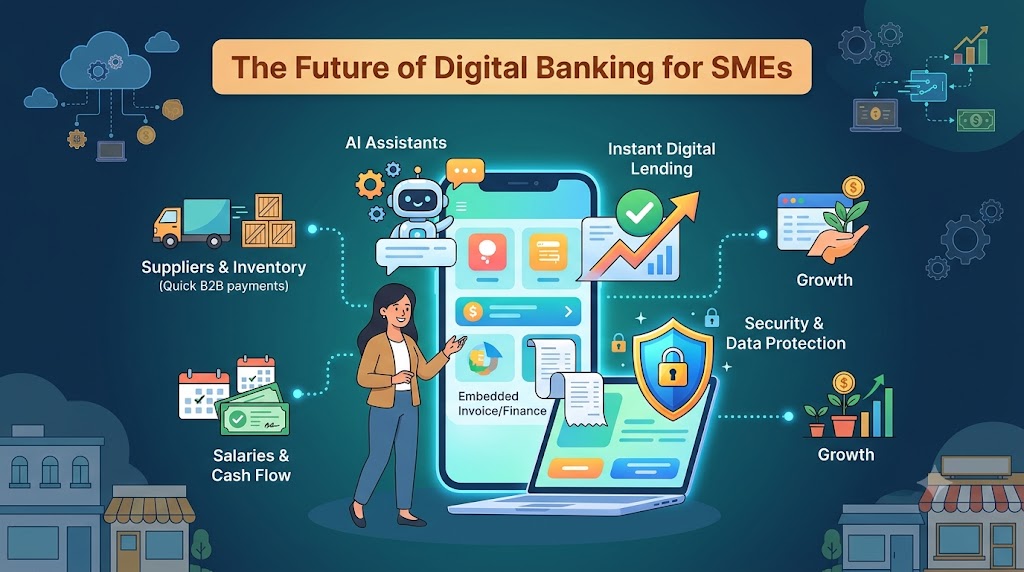
Small and medium enterprises (SMEs) often operate under tight financial constraints. Managing cash flow, paying suppliers, handling salaries and securing working capital can take up valuable time, particularly for businesses with limited administrative resources. As digital technology reshapes financial services, banking is becoming more accessible, connected and convenient for these businesses.
The future of digital banking for SMEs is moving beyond basic online transactions. Banks are developing smarter platforms that combine artificial intelligence, digital lending, automated services and financial tools within a single experience. These developments can help business owners manage everyday finances more efficiently while making it easier to access services when they need them.
For India’s growing small-business sector, this shift offers opportunities to reduce paperwork, improve financial visibility and support expansion. However, the benefits will depend on secure systems, responsible lending and services designed around the practical needs of business owners.
AI Makes Business Banking More Efficient
Artificial intelligence is changing how banks support business customers. AI-powered systems can assist with routine enquiries, identity verification, suspicious transaction detection and parts of the loan assessment process.
For SMEs, this can mean quicker responses, fewer manual steps and more convenient access to banking services. Automated notifications can also help business owners monitor account activity, identify unusual transactions and keep track of upcoming payments.
AI may further help banks provide services suited to different business needs. However, automated systems must be supported by appropriate safeguards, accurate data and human assistance for complex or sensitive decisions.
Digital Lending Improves Access to Working Capital
Access to timely finance remains important for SMEs that need to purchase inventory, pay suppliers or manage delayed customer payments. Traditional loan applications can involve extensive documentation and lengthy assessments, creating difficulties for businesses that need funds quickly.
Digital lending platforms can simplify applications, document submission and parts of the approval process. Where regulations permit, lenders may use verified financial records and business transaction data to better assess a company’s repayment capacity.
For eligible SMEs, this could improve access to working capital and reduce the time spent navigating traditional lending procedures. Nevertheless, digital applications do not guarantee approval. Businesses must assess interest rates, fees, repayment terms and their ability to repay before taking on additional debt.
Embedded Finance Brings Banking into Everyday Business Tools
Embedded finance is making financial services available through platforms businesses already use, including accounting software, merchant applications and enterprise management systems.
Instead of switching between multiple portals, business owners may be able to access payments, financial information and selected lending services within connected platforms. This can simplify routine tasks, reduce manual data entry and improve visibility into business finances.
For banks and technology providers, embedded finance creates opportunities to serve customers more effectively. For SMEs, its value lies in reducing administrative work and making financial services easier to access at the point of need.
Mobile Banking Becomes a Business Management Partner
Mobile banking is evolving from a way to check balances and transfer money into a broader tool for managing business finances. Business-focused applications can bring together payments, account monitoring, tax-related transactions and other financial services.
For small businesses, these features can make supplier payments, transaction tracking and financial record management more convenient. Better access to account information can also help owners plan expenses and monitor cash flow.
When connected with accounting systems, digital banking tools may reduce the effort required to reconcile transactions and prepare financial records. Strong authentication and careful management of employee access remain essential to protecting business accounts.
Cloud Technology Supports Better Banking Services
Cloud-based infrastructure allows banks to develop, update and scale digital services more flexibly. It can also support connections between banking systems and business software.
For smaller banks, cloud technology may provide opportunities to improve digital services without relying entirely on traditional infrastructure. SMEs can benefit from more connected platforms and easier access to banking tools.
However, banks must manage cybersecurity, data protection and service continuity carefully. Reliable banking access is essential for businesses that depend on timely payments to keep their operations running.
New Business Opportunities in the Digital Banking Ecosystem
The expansion of digital banking is creating opportunities for financial technology companies, software providers and businesses offering payment, accounting and cash-flow management solutions.
SMEs can benefit from tools that simplify record-keeping, improve financial visibility and support more organised loan applications. Better financial records may also help businesses communicate their needs more clearly when dealing with lenders and suppliers.
Yet technology alone cannot remove every barrier. Some businesses may need help understanding digital platforms, comparing financial products and protecting themselves from online fraud. Accessible customer support, transparent charges and practical digital education will remain important.
Security and Trust Remain Critical
As more business transactions move online, cyber fraud and data security have become major concerns. Phishing messages, compromised credentials and fraudulent payment requests can create financial losses, particularly for small businesses without dedicated security teams.
Banks must continue investing in fraud detection, secure authentication and responsive customer support. SMEs can reduce exposure by using strong passwords, enabling multi-factor authentication where available, restricting account access and independently verifying unusual payment requests.
Trust will also depend on transparent loan terms, clear fees and responsible use of customer data. Convenience matters, but businesses need confidence that their money and financial information are protected.
The Future of Digital Banking for SMEs
Digital banking is becoming an increasingly important part of how small and medium enterprises manage money and plan for growth. AI-powered services, digital lending, embedded finance and cloud-based platforms are creating new ways to simplify operations and improve access to financial services.
For banks, the challenge is to combine automation with security, transparent practices and meaningful human support. For SMEs, the opportunity is to use digital tools to save time, monitor cash flow and make better-informed financial decisions.
The next phase of digital banking will not be defined by technology alone. Its success will depend on whether financial services become genuinely easier to use, more responsive to business needs and accessible to enterprises of different sizes. When supported by responsible lending and strong security, digital banking can help SMEs build more resilient operations and pursue sustainable growth.

