

Mumbai’s Polluted Air Puts Lung Health at Risk; Experts Urge Citizens to Act Before Breathing Problems Turn Serious
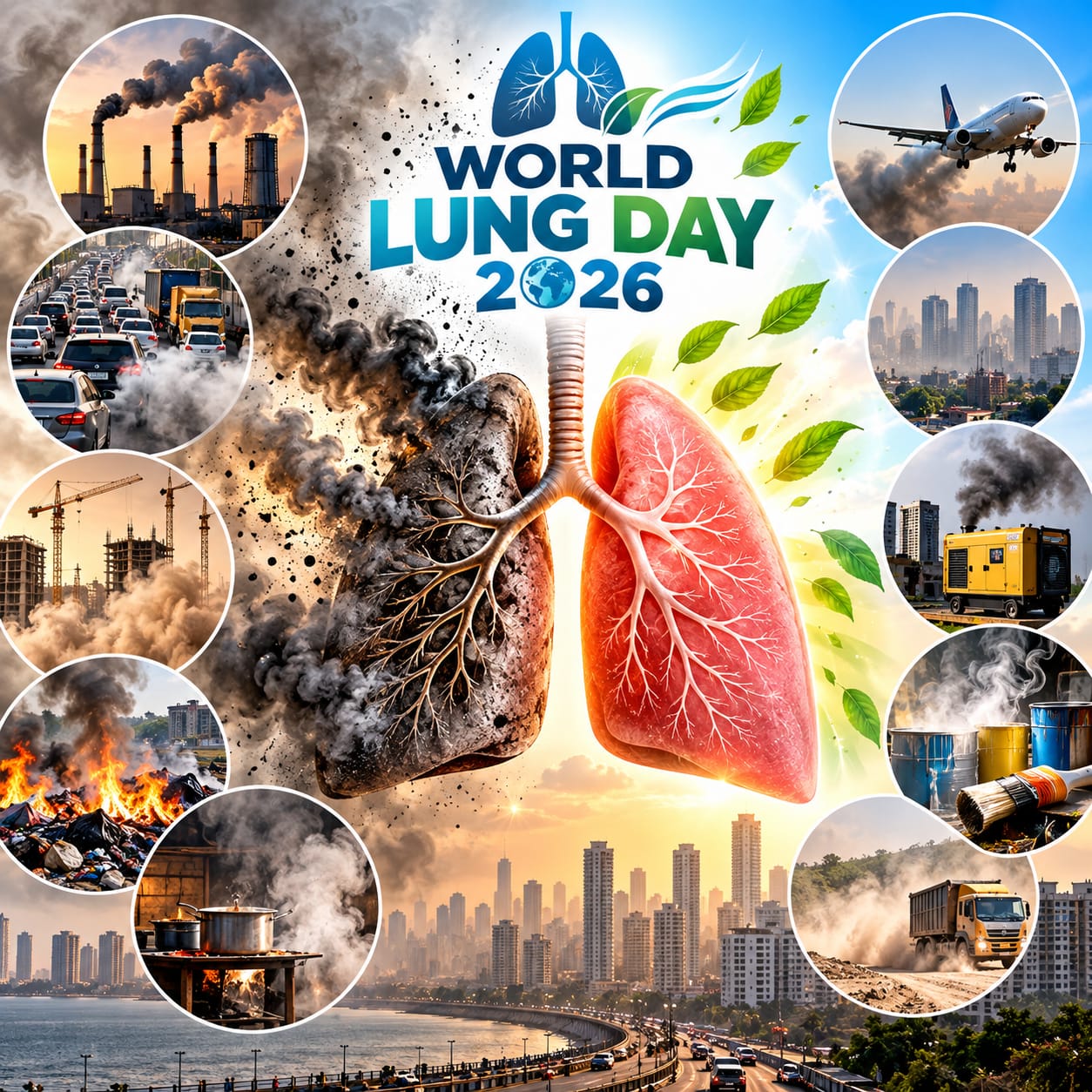
Mumbai | Sept 24- As Mumbai marks World Lung Day on September 25, pulmonologists are drawing attention to the long-term impact of air pollution on respiratory health, particularly from fine particulate matter such as PM2.5. Air-quality data for September 23 showed Mumbai at a moderate level in one CAMS-based city assessment, with an average PM2.5 concentration of 15.4 µg/m³. However, air quality can vary significantly across locations and throughout the day, making individual exposure an important concern.
PM2.5 particles are small enough to penetrate deep into the respiratory system and, with repeated exposure, can contribute to respiratory inflammation and increase the risk of conditions including asthma, COPD and other chronic lung problems. The concern is particularly relevant in a densely populated city where residents are routinely exposed to traffic emissions, construction dust, industrial pollutants and indoor air pollution.
Experts say lung damage does not always announce itself with severe symptoms. Persistent cough, breathlessness, wheezing, chest discomfort or reduced ability to perform routine physical activity can sometimes be early warning signs and should not simply be dismissed as seasonal changes or pollution-related irritation. The World Health Organization estimates that ambient air pollution contributes to approximately 4.2 million premature deaths globally every year, while combined household and outdoor air pollution is associated with nearly 7 million premature deaths annually.
Dr. Sangita Checker, Consultant Pulmonologist, Wockhardt Hospitals, Mira Road commented on this special day ““Every breath we take is an interaction between our lungs and the environment around us. Prolonged exposure to polluted air can trigger inflammation and gradually impair lung function, sometimes even before noticeable symptoms appear. What is particularly concerning is that people often normalise a persistent cough or breathlessness as ‘just pollution’ or a seasonal issue. Individuals with asthma, COPD and other respiratory conditions, along with children and older adults, are especially vulnerable. Persistent cough, wheezing, chest tightness, breathlessness or a noticeable reduction in exercise tolerance should never be ignored. On World Lung Day, the focus must shift from treating lung disease to protecting lung health through prevention, early detection and timely medical care. Our lungs work continuously throughout our lives—protecting them must become a daily priority.”
Dr. Parthiv Shah Pulmonologist, Apex Group of Hospitals, Mumbai commented on this day, “Lung health is no longer a concern limited to smokers or the elderly. In cities like Mumbai, air pollution, traffic emissions, dust and indoor pollutants can silently affect lung function. Persistent cough, breathlessness, wheezing or reduced exercise tolerance should not be ignored, as these may be early signs of respiratory disease. On World Lung Day, we must focus on prevention—avoiding smoking and vaping, reducing exposure to pollutants, staying physically active and seeking timely medical evaluation. Early detection and appropriate treatment can significantly improve long-term lung health and quality of life.”
Mumbai’s respiratory health burden remains a serious concern. BMC data obtained through RTI and reported for 2016–2021 recorded 14,396 COPD deaths, averaging nearly six deaths every day, along with 1,220 deaths from bronchitis and 7,069 deaths attributed to asthma. The burden was particularly high in areas such as M-East (Govandi), which recorded 675 COPD deaths, and K-East (Andheri East), with 971 deaths, highlighting the impact of prolonged exposure to both outdoor and indoor air pollution.
Experts recommend checking air-quality levels before prolonged outdoor activity, avoiding exposure to heavy traffic and visibly polluted areas, using appropriate protective masks when necessary, maintaining good indoor ventilation and avoiding smoking or exposure to second-hand smoke. Regular physical activity, adequate hydration and timely vaccination against relevant respiratory infections can also support overall respiratory health.
