

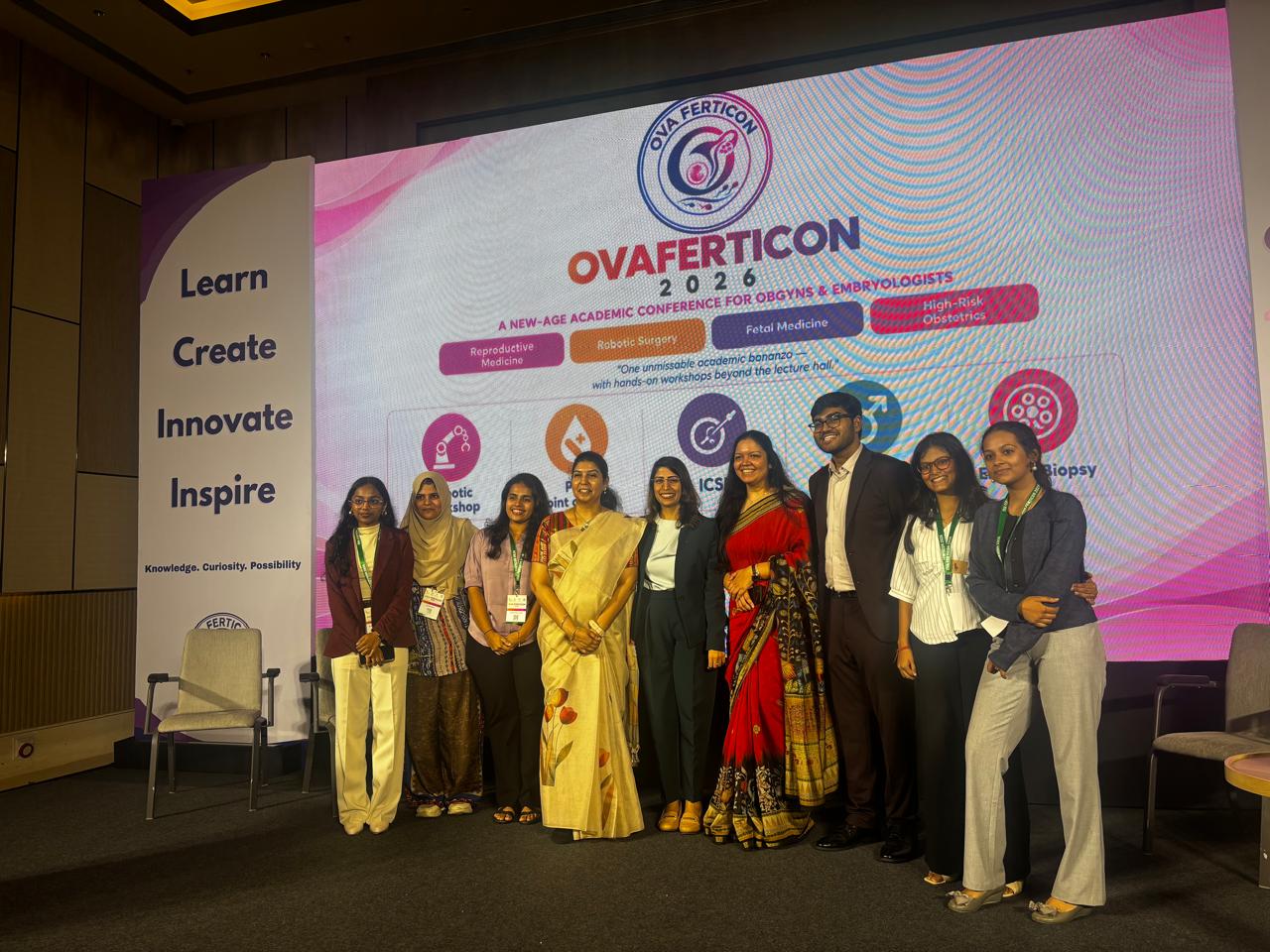
Thane, 13th October, 2026: Ova Ferticon 2026, a two-day reproductive medicine conference held at Taj Vivanta, Thane, on October 10 and 11, brought together over 200+ delegates, including obstetricians and gynaecologists (OB-GYNs), fertility specialists, embryologists and medical students, alongside 45 faculty members from five cities. Discussions focused on the growing role of IVF, fertility preservation for cancer patients and the management of high-risk pregnancies.
Organised by Ova Fertility & Women Care, Thane, in association with the Thane Obstetrics & Gynaecological Society (TOGS), the conference focused on developments in assisted reproductive technology (ART), embryology and maternal-fetal medicine, robotic surgery, oncofertility with an emphasis on practical training and collaboration across medical specialities.
The conference featured experts from across India, including Padma Shri Dr Kamini Rao, who will delivered the Ova Ferticon Oration on “The Art of ART: Evolution, Ethics & Excellence,” along with Dr Satish Tibrewala from Bombay Hospital, Dr Kiran Patole , Dean MPGIMER, MUHS, Nashik, Dr Ashutosh Ajgaonkar, Dr Prakash Mehta -President SMFM (I)- Society of Maternal Fetal Medicine India, Dr Revathi S Rajan Secretary SMFM (I) , Global Chair ISSHP, Dr Cherry Shah, Mumbai, Dr Kanthi Bansal fertility specialist from Gujarat and several other distinguished faculty members. Local dignitaries and senior members of the medical fraternity, including Dr Rekha Thote, President, TOGS, and Dr Padmaja Samant, HOD, KEM Hospital, also participated.
Sessions covered recurrent implantation failure, endometrial receptivity, genetics in infertility, male-factor infertility and medico-legal issues in IVF. A multidisciplinary discussion titled “Fertility to Fetal Outcome: Bridging ART and High-Risk Pregnancy” examined the need for fertility specialists, fetal medicine experts and obstetricians to coordinate care beyond conception, including during high-risk pregnancies.
A session titled “Intelligence That Sees Beyond the Obvious: AI in Reproductive Medicine” explored the use of artificial intelligence in embryo assessment, laboratory practices, clinical decision-making and treatment planning. Discussions also highlighted the importance of clinical validation, ethical safeguards and informed patient consent as AI-based tools become more widely explored in reproductive healthcare.
Dr. Kiran Patole, commented on technology, clinical knowledge and training future doctors, “Technology is transforming modern medicine, but it must always complement not replace sound clinical knowledge and judgement. The responsibility of medical education is to train young doctors to use technology judiciously, interpret evidence critically and make informed decisions that ultimately benefit their patients.”
A panel on “From Survival to Parenthood: The Oncofertility Continuum” focused on fertility preservation for young cancer patients before treatment begins. Options discussed included egg, embryo, sperm and tissue preservation, depending on individual medical circumstances.
Padma Shri Dr. Kamini Rao, shared her opinion on precision, ethics and clinical excellence in fertility treatment, stated, “Fertility treatment rests on three essential pillars: precision, ethics and clinical excellence. As reproductive medicine continues to evolve, it is equally important to nurture the next generation of doctors by sharing knowledge, strengthening clinical judgement and upholding the highest standards of patient care.”
The programme also included four practical workshops covering simulator-based training using the Meril surgical robot, andrology and platelet-rich plasma (PRP) preparation, intracytoplasmic sperm injection (ICSI) and embryo biopsy, and point-of-care placental growth factor (PlGF) testing for preeclampsia. The maternal-fetal medicine workshop was conducted in association with the Society of Maternal Fetal Medicine (India), alongside a keynote on angiogenic biomarkers in preeclampsia management. The conference carried four Maharashtra Medical Council (MMC) credit points.
The event also saw the launch of NextGen Reproductive Medicine, authored by Dr Snehal Kohale, Clinical Director, Ova Fertility & Women Care, Thane, and Dr Sangeetha Kumar, Senior Embryologist and IVF Laboratory Manager, Ova Fertility & Women Care. Published by Jaypee Brothers Medical Publishers, the book covers reproductive biology, endocrinology, genomics, regenerative medicine, artificial intelligence and digital health.
The organisers also announced the Ova Academic Circle, a monthly online academic initiative intended to extend learning beyond the conference through clinical discussions and evidence-based updates. Planned topics include PCOS, endometriosis, fibroids, male infertility, fertility preservation and menopause.
“Ova Ferticon was envisioned as more than a scientific conference. Our goal is to bridge the gap between knowledge and clinical practice, bring multiple women health specialities together, and create meaningful learning opportunities for young doctors through scientific exchange, hands-on training and mentorship. Through our theme, ‘Making Your Legacy’, we hope to inspire doctors to carry knowledge forward, improve patient care and shape the future of reproductive medicine,” said Dr Snehal Kohale, Clinical Director, Ova Fertility & Women Care, Thane.
The organisers said they intend to develop Ova Ferticon into an annual academic platform for reproductive medicine professionals in Maharashtra and beyond.
