

Stockholm, Oct. 6: The 2026 Nobel Prize in Physiology or Medicine has been jointly awarded to Karl Deisseroth, Peter Hegemann and Georg Nagel for their pioneering discoveries involving light-gated ion channels and optogenetics.
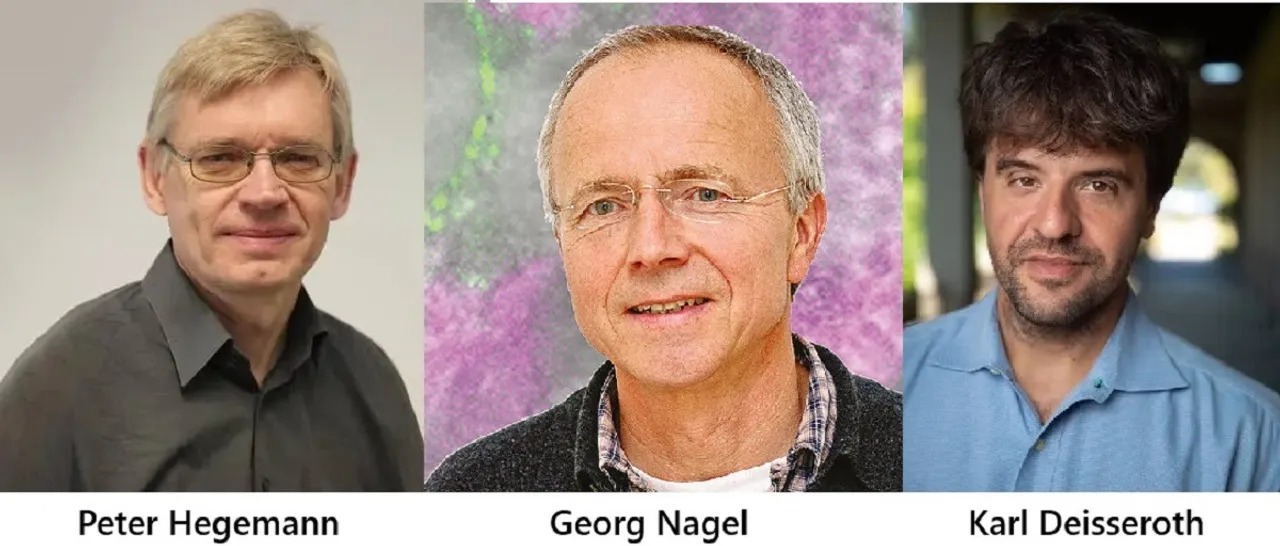
The Nobel Assembly at Karolinska Institutet announced the prestigious award, recognising scientific breakthroughs that have transformed the way researchers study and understand the brain and nervous system.
A breakthrough powered by light
The work of the three scientists laid the foundation for optogenetics, a revolutionary technique that allows researchers to control the activity of specific nerve cells using light.
At the heart of this technology are light-sensitive proteins known as channelrhodopsins. Hegemann and Nagel played a crucial role in discovering and characterising these light-gated ion channels, while Deisseroth helped establish optogenetics as a powerful tool for controlling neural activity and studying the brain.
In simple terms, optogenetics enables scientists to use pulses of light to switch selected nerve cells on or off with remarkable precision. This has opened new possibilities for investigating how neural circuits influence behaviour, emotions, memory and other complex brain functions.
Transforming neuroscience
Before optogenetics, studying the activity of individual groups of neurons with such precision was extremely difficult. The technique has since become an important tool in neuroscience, helping researchers investigate the biological mechanisms behind the brain’s functions and neurological disorders.
The breakthrough is also contributing to research aimed at developing new treatments. Light-sensitive proteins and optogenetic approaches are being explored in areas such as vision restoration, offering potential new avenues for patients with certain retinal disorders.
The Nobel Committee’s recognition of Deisseroth, Hegemann and Nagel highlights how a fundamental discovery about light-sensitive proteins can evolve into a technology capable of transforming modern neuroscience.
