

Punjab , 14 April 2026 :
In homes across India, knee pain is often accepted as an inevitable part of ageing. It begins quietly—difficulty climbing stairs, discomfort while sitting or standing—but gradually starts limiting mobility and independence. For decades, the treatment pathway has remained largely unchanged: when medicines, physiotherapy, and injections fail, knee replacement becomes the next step. But what if that approach needs rethinking?
Dr. N.K. Aggarwal, a veteran orthopaedic surgeon with over 50 years of experience and among the early pioneers of knee replacement surgery in India, once firmly believed in that solution. Having trained and worked at leading centres in India, the UK, Europe, and the United States, and served as Professor and Head of Orthopaedics at Christian Medical College, Ludhiana, he has performed thousands of procedures over his career. His patients often regained mobility. Yet, over time, a concern began to take shape.
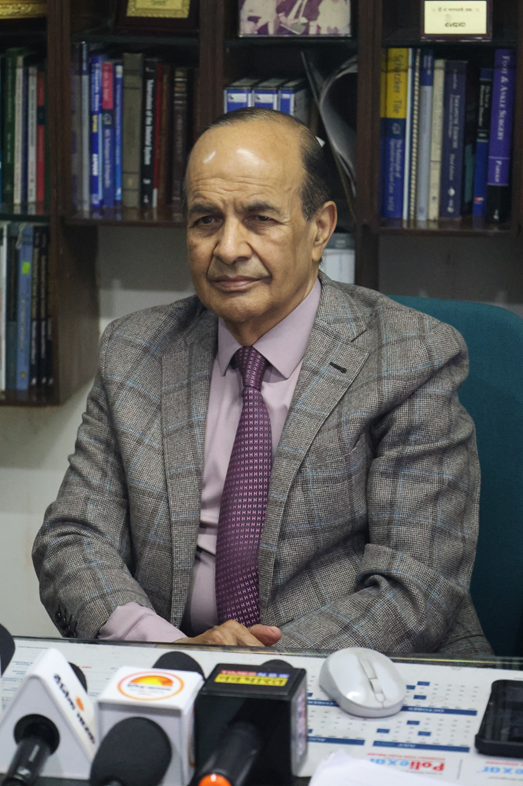
After 15–20 years of performing knee replacements, Dr. Aggarwal observed a pattern that many surgeons worldwide were also beginning to acknowledge. Even when surgeries were technically successful—with complication rates below 5%—nearly 20–25% of patients remained dissatisfied. Pain persisted, stiffness lingered, and mobility did not fully return to expectations. Technological advancements such as robotics and computer navigation improved surgical precision, but they did not significantly improve patient satisfaction. The question became difficult to ignore: were surgeons addressing the disease itself, or only its most visible outcome?
A Personal Turning Point
The shift in perspective was not driven by research alone, but by personal experience. Around a decade ago, Dr. Aggarwal’s wife, herself a doctor, began suffering from severe knee pain. Her condition worsened to the point where walking became difficult, and travel required the use of a wheelchair. Like many patients, she was advised knee replacement by leading specialists.
However, Dr. Aggarwal hesitated. His years of clinical experience had shown him that even a technically successful surgery did not always guarantee a satisfactory outcome. This moment prompted him to look beyond conventional solutions and re-examine the underlying causes of knee pain.
A deeper exploration of global research led to a crucial insight: knee osteoarthritis is not merely a result of mechanical wear and tear. Increasingly, it is understood as part of a chronic, low-grade inflammatory process associated with ageing—often referred to as “inflammaging.” This gradual inflammation affects not just the cartilage, but also ligaments, muscles, and surrounding tissues.
In this context, knee pain is not just a localised joint issue, but a manifestation of a broader systemic condition. Treating only the joint, therefore, may not address the root cause of the problem.
The Shift to Regeneration & Birth of the Ludhiana Protocol
Building on this understanding, Dr. Aggarwal began integrating a range of established, non-surgical treatments that had previously been used in isolation. These included joint lavage (cleaning of the joint), lubrication therapies, platelet-rich plasma (PRP) and growth factor-based treatments derived from the patient’s own blood, as well as orthobiologic interventions using fat or bone marrow.
Alongside these, he incorporated systemic measures aimed at reducing overall inflammation through medication, supplements, and lifestyle modifications.
This integrated approach, known as the Ludhiana Protocol, focuses on reducing inflammation, improving the joint environment, and supporting the body’s natural healing processes—shifting the emphasis from replacement to regeneration.
His wife was among the first to undergo this treatment and experienced significant improvement over time. Encouraged by these results, Dr. Aggarwal extended the approach to other patients. Since then, hundreds have been treated, with over 95% reporting improvement in pain and mobility. Many who had been advised knee replacement are now managing without surgery.
The procedure itself is minimally invasive. It typically does not require hospital admission, major anaesthesia, or prolonged bed rest. Patients are often able to walk in and walk out on the same day.
Not a Miracle, But a Realistic Path Forward
While the results are promising, Dr. Aggarwal emphasises that regenerative treatment is not a universal substitute for surgery. In advanced cases, particularly where the knee is severely deformed, replacement may still be necessary. However, in early to moderate stages, timely intervention can help delay or even avoid surgery.
Improvement is gradual rather than immediate—patients may notice changes within weeks, with more significant benefits developing over two to three months.
A Growing Public Health Concern
Knee osteoarthritis is a significant and growing health concern in India. Studies indicate a high prevalence among individuals aged 60 and above, with women more commonly affected. Sedentary lifestyles, obesity, and longer life expectancy are contributing to an increasing number of cases, even among younger populations.
In this context, approaches that focus on early intervention and preservation of natural joints may play an important role in reducing long-term burden.
Dr. Aggarwal’s journey reflects a broader transition in orthopaedic care—from replacing damaged joints to understanding and treating the underlying disease.
Now based at the N.K. Aggarwal Joints & Spine Centre in Ludhiana, he continues to advocate for early diagnosis and informed decision-making. As he puts it, “We cannot stop ageing, but we can control its painful effects on the knees. The earlier we begin treatment, the better the chances of preserving the natural joint.”
He still performs knee replacement, when necessary, but considers it a last resort rather than the first line of treatment.
For patients, the message is clear: knee pain should not be ignored, nor should surgery be the only option considered. With evolving medical understanding, a more balanced and patient-centric approach is now emerging—one that prioritises preservation, function, and long-term quality of life.

