

New Delhi, Oct 15: Mobile phone users across India are set to receive a new layer of caller identification, with the Department of Telecommunications (DoT) directing telecom operators to implement the Calling Name Presentation (CNAP) service across their service areas from November 1, 2026.
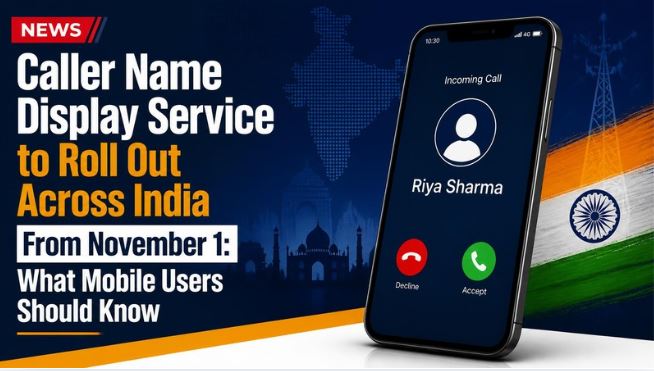
Representational Image
The service will enable recipients to see the caller’s name alongside the phone number on incoming calls, potentially making it easier to identify unknown callers and helping users make more informed decisions about answering calls.
According to the DoT guidelines, telecom operators have already conducted trials of CNAP on wireless terrestrial networks using 4G and higher-generation technologies. The facility will be made available automatically to eligible subscribers, without requiring them to submit a separate request.
How Will the New Caller Identification System Work?
Under the existing system, incoming calls generally display the caller’s phone number, unless the number is saved in the recipient’s contact list or identified through another service.
With CNAP, the Calling Line Identification (CLI) information will include two fields: the caller’s telephone identifier and the caller’s name.
The name displayed will depend on whether the number is already saved on the recipient’s phone.
Saved contacts: The name stored in the recipient’s contact list will continue to appear.
Unsaved domestic numbers: The caller’s name recorded in the originating telecom operator’s subscriber database will be displayed.
International calls: Incoming international calls will be identified as “International Call”.
The new framework is intended to provide name-based identification through telecom networks rather than relying exclusively on contact lists or third-party applications.
Automatic Activation, With Further Expansion Planned
The DoT has directed operators to introduce CNAP across their service areas from November 1. Eligible users will not need to activate the service through a separate application or submit an individual request.
The initial implementation covers 4G and higher-generation wireless networks. The rollout for 2G and 3G networks, as well as public switched telephone networks, will be considered separately following further examination.
The phased approach reflects the need to assess the technical requirements for extending the facility across different types of telecom infrastructure.
Privacy and Network Security Safeguards
The government has incorporated privacy and security requirements into the CNAP framework.
The guidelines call for a “security-by-design” approach, requiring telecom operators to ensure that the query-response mechanism used to retrieve a caller’s name does not retain the calling name identity after the call has ended.
Operators must also ensure that their networks, databases and connectivity systems can handle CNAP requests efficiently without compromising service quality.
The framework has been introduced in line with Rule 48(1) of the Telecommunications (Authorisation for Provision of Principal Telecommunication Services) Rules, 2026, which requires authorised entities to ensure secure presentation of calling line identification and prevent tampering.
Businesses Can Display Registered Names
The guidelines also provide flexibility for businesses and bulk subscribers that wish to display a preferred name instead of the name recorded in standard subscriber records.
However, the preferred name must meet specified verification requirements. It must either be a registered trademark listed with the Trade Marks Registry or a registered trade name recorded on the Goods and Services Tax (GST) portal.
This provision is intended to help businesses maintain consistent identification when contacting customers while ensuring that displayed names meet recognised registration criteria.
What Does the Rollout Mean for Users?
The introduction of CNAP could make it easier for mobile users to identify callers whose numbers are not saved in their contacts. It may also provide an additional layer of transparency in incoming calls.
However, displaying a caller’s name should not be treated as a guarantee that a call is genuine or trustworthy. Users should continue to exercise caution when asked to share passwords, banking details, one-time passwords (OTPs) or other sensitive information.
With the November 1 rollout approaching, CNAP marks a significant change in how caller identity is presented through India’s telecom networks. Its effectiveness will depend on implementation across operators, accurate subscriber records and the continued protection of user privacy.

