Virtualware Reports Audited 2025 Results: Margin Improvement and Record Bookings

Gross margin rises to 93.7%, EBITDA reaches €672K (15.53% margin), and the company moves to a pro forma net cash position

Bilbao, March 30, 2026.- Virtualware (Euronext Growth Paris: ALVIR) closed 2025 with a gross margin of 93.7%, up from 86.8% in the prior year, and EBITDA of €672,626 (15.53% margin), according to audited annual results filed today with Euronext.

The figures confirm the operational picture outlined in the February preliminary communication and show margin improvement, reflecting discipline and resilience throughout the year.

Audited revenues reached €4.32 million, in line with the preliminary figure. The EBITDA improvement from the €598,500 (13.8%) reported in the unaudited release reflects the final allocation of depreciation and subsidy recognition under the audited close.

The gross margin expansion was driven by the growing weight of software and XRaaS in the revenue mix and a reduction in direct costs.

The VIROO XRaaS line, which includes the international commercialization of the company’s proprietary VIROO platform, contributed €1.95 million. Annual bookings reached a record of over €8 million, driven primarily by government and nuclear projects.

Virtualware Reports Audited 2025 Results: Margin Improvement and Record Bookings

 “The audited results confirm that our model delivers both operational discipline and financial flexibility. We enter 2026 with the strongest liquidity position in our history, a record backlog, and expanding margins. This combination allows us to invest selectively while maintaining the financial sustainability that has defined our trajectory,” said Unai Extremo, CEO of Virtualware.

Net financial debt was approximately €2.70 million as of year-end 2025. However, a €6.22 million payment received on January 8, 2026, corresponding to a receivable on the balance sheet, enabled the company to repay debt and move to a pro forma net cash position.

This post-closing event normalizes working capital and strengthens financial flexibility for selective growth. It does not affect the 2025 income statement.

In June 2025, Virtualware uplisted to Euronext Growth Paris under the ticker ALVIR, broadening its market access and investor visibility.

The company enters the final year of its 2024-2026 Strategic Plan supported by a record backlog, expanding gross margin, operational discipline, and a post-collection cash position that enables selective investment and prudent capital allocation.

Founded in 2004, Virtualware is one of the leading companies in enterprise software based on immersive and 3D technologies for industry and education.

Virtualware serves global organizations and institutions including GE Vernova, Volvo, Gestamp, Alstom, ADIF, Bosch, Biogen, Kessler Foundation, Invest Windsor Essex, McMaster University, the University of El Salvador, Ohio University, the Spanish Ministry of Defense or the Basque Government.

The company’s headquarters are in Bilbao, Spain, with offices in Orlando, US, Toronto, Canada, and Skövde, Sweden.

Investors can consult the company’s Equity Story by clicking on the following link.

An investor conference will take place on April 14th online. Investors can join the following link:

https://virtualwareco.com/investors/call/


Udaan Gears Up for IPO; SoftBank Bets Big on OpenAI

Bengaluru-based e-commerce unicorn Udaan has raised $114 million in its latest funding round, bringing its total capital to over $2 billion as it prepares for a planned IPO in 2026. The B2B platform, which connects small retailers with suppliers across India, plans to use the new funds to expand into fast-moving consumer goods and the HoReCa sector, while strengthening its core operations ahead of going public.

Meanwhile, Japanese tech giant SoftBank has secured a $40 billion loan to fuel its ambitious investments in OpenAI. The massive facility underscores SoftBank’s commitment to artificial intelligence and positions the company to make further strategic bets in the rapidly evolving AI landscape.

Together, these moves show how startups and global investors are actively shaping the next wave of growth in e-commerce and artificial intelligence, blending ambition with strategic foresight.

Tanusha Tyagi’s ‘Odyssey of Love’: A Mesmerising Dance of Devotion

Tanusha Tyagi’s ‘Odyssey of Love’: A Mesmerising Dance of Devotion

New Delhi, Mar 30: At the LTG Auditorium, a soulful evening of Bharatanatyam unfolded as Aayam presented Odyssey of Love, a solo recital by Tanusha Tyagi, disciple of Guru Sindhu Mishra. Conceived and choreographed by the Guru, the performance sought to trace love in its many resonances— cosmic, devotional, and deeply human, through the cosmic Shiva- Parvati pair.

Structured as a traditional Margam, the recital opened with an invocation to Ganesha and Shiva. The Ganesh Kriti, set in raga Nattai, established a tone of auspiciousness, with Tyagi’s vibrant movements carrying both the joy of praying to the Lord, and years of tedious practice. This was followed by Bho Shambho in Revathi, where the dancer moved between stillness and fluidity, invoking Shiva not merely as the cosmic dancer but as a compassionate, omnipresent force.

The central Pada Varnam, drawing from the Ramcharitmanas, explored Parvati’s steadfast devotion. Here, Tyagi carried the dual demands of nritta and abhinaya with sincerity and grace. The narrative—Parvati’s penance and her testing by the Saptarishis—was rendered with emotional clarity.

A more unusual presentation came with the Padam, again sourced from the Ramcharitmanas, depicting the wedding of Shiva and Parvati through the eyes of a startled and resistant maternal gaze.

The tension between fear and faith was delicately suggested, with Tyagi’s abhinaya depicting the nuance in Maena’s disbelief and Parvati’s quiet resolve.

The recital concluded with a lively Desh Thillana, where rhythmic agility took precedence. Tyagi’s footwork here was energetic, providing a fittingly vibrant close to this deep, contemplative evening.

The live orchestra—featuring G. Elangovan (Carnatic vocals and flute), Nitin Sharma (Hindustani vocals), Sachin Sharma (tabla), and Dr. Ramamurthy Kesavan (mridangam)—offered a textured musical canvas. Guru Sindhu Mishra’s nattuvangam anchored the performance, maintaining cohesion across the repertoire.

Odyssey of Love remained anchored in its thematic intent—exploring love as surrender, endurance, and transcendence.

India’s Trauma Care Push Gets a Boost as HOSMAT Launches Golden Hour Network At First-Of-Its-Kind Trauma Conclave

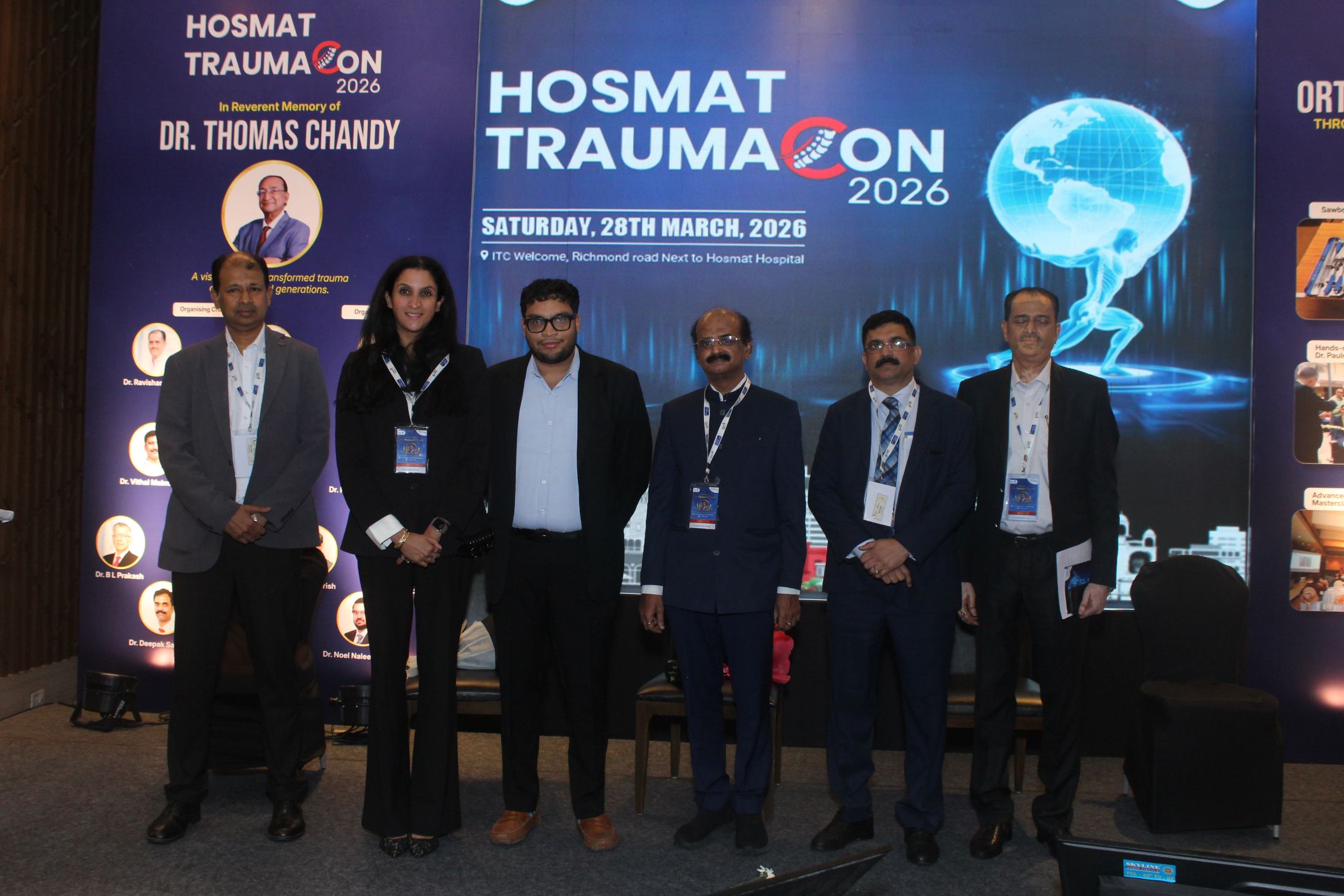
Bengaluru, Mar 30: In a significant step towards strengthening trauma care systems in India, HOSMAT Hospitals, a leader in orthopaedics and trauma care, in collaboration with the Bangalore Orthopaedic Society, successfully hosted HOSMAT Traumacon 2026, a first-of-its-kind, practice-driven trauma conference, marked by the formal launch of the HOSMAT Alumni Association, and Golden Hour Network (GHN).
India’s Trauma Care Push Gets a Boost as HOSMAT Launches Golden Hour Network At First-Of-Its-Kind Trauma Conclave

 Positioned as a pioneering initiative, the Golden Hour Network is a structured, professional trauma care community that brings together surgeons trained within the HOSMAT ecosystem under a shared commitment to rapid, precise, and outcome-driven trauma care.

More than an alumni collective, GHN is designed as a co-governed clinical and academic network, with a defined programme of monthly clinical rounds, quarterly specialty-focused discussions, and an annual TraumaCon gathering as its apex platform.

Named after the critical “golden hour”, the first hour following injury where timely intervention determines survival, the network reflects a deeper philosophy: that trauma care is not defined by institutions, but by the urgency, precision, and shared responsibility of the clinicians delivering it. Over the next six months, the network will establish its governance structure, onboard senior alumni, and initiate its first clinical engagements.

The launch of GHN underscores HOSMAT’s evolution beyond a high-volume clinical institution into a research-led and academically driven centre of excellence in orthopaedics and trauma care.

Over the past 33+ years, HOSMAT has built one of the country’s most significant trauma ecosystems, performing 25 to 30 trauma surgeries daily, placing it among India’s highest-volume trauma centres. The institution has also contributed extensively to academic medicine, leading over 300 research initiatives, with more than 80 publications in internationally indexed journals, and playing a key role in shaping clinical practice in orthopaedics and trauma.

Its impact on medical education is equally significant. According to Orthopaedic Society of India estimates, nearly 10% of Bengaluru’s orthopaedic surgeons have trained at HOSMAT, reinforcing its role as a major training hub for the next generation of specialists. Over the decades, HOSMAT has also touched nearly one-third of Bengaluru’s population through trauma care, reflecting both its scale and community trust.

Held at the ITC Welcome Hotel, Richmond Road, Traumacon 2026 brought together 150+ leading orthopaedic surgeons, trauma specialists, and clinicians from across India, creating a platform for real-world learning, surgical innovation, and collaborative problem-solving. The event was held in memory of Late Dr Thomas Chandy, a globally respected orthopaedic surgeon and pioneer in trauma care, whose legacy continues to guide the institution’s clinical and academic philosophy.

India continues to face one of the highest trauma burdens globally, with over 4.8 lakh road accidents annually and nearly 1.7–1.8 lakh deaths each year, making trauma one of the leading causes of mortality among young adults. Against this backdrop, Traumacon 2026 was conceptualised to address a critical gap – the need for practice-led, experience-driven learning platforms that directly impact patient outcomes.

The conference featured a comprehensive, full-day scientific agenda with over 25+ expert-led sessions, covering upper limb trauma, complex lower limb injuries, paediatric trauma, non-union surgeries, complication management, medico-legal aspects, and orthopaedic practice efficiency. A defining feature of the conference was its case-based and discussion-led format, enabling clinicians to engage with real-world scenarios and refine decision-making in high-pressure environments.

Reflecting on the significance of the conference and the launch of GHN, Anisha Chandy Eckardt, Managing Director, HOSMAT Hospitals, said:

“Trauma care in India does not suffer from a lack of clinical expertise – it suffers from gaps in time, training, and integration. At HOSMAT, this is a reality we have long recognised, guided by the enduring belief of Dr Thomas Chandy that every patient deserves timely, precise, and compassionate care without compromise. Through Traumacon 2026, we are bringing together some of the finest minds in the field to address these critical gaps – not just through discussion, but through driving real, practice-led change that can improve outcomes where it matters most, in the golden hour of care.

At the same time, we are very consciously investing in transforming HOSMAT into a high-end orthopaedic and trauma research institute. That is the direction we see for ourselves in the years to come – where clinical excellence is deeply integrated with academic leadership, research, and innovation.”

Dr Ravishankar M R, Head of Orthopaedic Trauma, HOSMAT Hospitals and Chairman of Traumacon 2026, added:

“At HOSMAT, trauma care is built on a strong foundation of clinical volume, academic rigour, and continuous research. Managing 25 to 30 trauma surgeries every day gives us a unique depth of real-world experience, while our academic and training programmes ensure that this experience is translated into knowledge. Traumacon reflects this balance – where clinical practice, research, and collaboration come together to create more consistent, evidence-based trauma care systems.”

Adding perspective on the legacy behind the institution, Dr Subodh M Shetty, President, Orthopaedic Society of India, said:

“Dr Thomas Chandy was not just a surgeon – he was a mentor who shaped generations of orthopaedic and trauma specialists in this country. Many of today’s leading surgeons carry forward his approach to precision, discipline, and patient-first care. What we see today in Traumacon is a reflection of that legacy – a commitment to learning, sharing, and continuously improving. The Golden Hour Network, in that sense, is a powerful extension of his vision. It has the potential to bring together expertise across the country and significantly strengthen trauma response systems where it matters most.”

With strong participation, high engagement, and a uniquely practical approach, HOSMAT Traumacon 2026, along with the launch of the Golden Hour Network, marks a significant step towards building a more integrated, collaborative, and research-driven trauma care ecosystem in India.

Building on the success of its inaugural edition, Traumacon is expected to evolve into a national platform for trauma education, research, and clinical collaboration, bringing together clinicians, institutions, and innovators to shape the future of orthopaedic and trauma care in India.


Bureau Veritas and Trade Technologies Join Forces to Streamline Global Trade Operations

Business Wire India

Bureau Veritas, a global leader in Testing, Inspection, and Certification services (TIC), through its Swiss branch Government Services Division, is pleased to announce a strategic agreement with Trade Technologies, the leading provider of trade finance automation, connectivity and transaction management services. This collaboration is a significant step toward reducing the complexities of international trade operations, particularly in regions where regulatory and inspection controls remain stringent.


This press release features multimedia. View the full release here: https://www.businesswire.com/news/home/20260329411683/en/


Addressing Critical Trade Finance Challenges


The agreement comes at a pivotal time for global trade. Letters of Credit (LCs) continue to serve as essential instruments in international commerce, particularly across the Middle East and Africa, where counterparty risk, foreign exchange controls, sanctions exposure, and regulatory oversight face ongoing challenges.


In many LC transactions, conformity-assessment documents -such as Certificates of Inspection, Certificates of Conformity, or Inspection Reports- are required as part of the documentation package. These documents must be issued prior to export and be verified to ensure LC compliance, which often creates delays and adds operational complexity. The collaboration between Bureau Veritas and Trade Technologies streamlines this process by linking inspection and conformity assessments directly to the trade-finance workflow, enabling faster validation and delivery of the required certificates.


Market Outlook and Growth Potential


The documentary trade sector is forecasted to grow at a 3.1% CAGR through 2029, while receivables finance is projected to expand at 4.2% CAGR during the same period. Documentary trade is expected to remain a core component of the trade finance market well into the 2050s, underscoring the enduring relevance of this collaboration. Current high levels of counterparty and geopolitical uncertainty underscore the value of documentary trade to manage risk in cross-border transactions.


Tangible Benefits for Trade Stakeholders


The collaboration between Trade Technologies and Bureau Veritas promises to deliver meaningful improvements:


  • Enhanced Border Efficiency: More streamlined border processes have already contributed to trade cost reductions of up to 5% over the past decade, with ambitious reforms potentially delivering up to 12 percentage points in additional savings.


  • Reduced Uncertainty: By combining Trade Technologies’ digital trade expertise with Bureau Veritas’ deep international trade experience, this collaboration is expected to help exporters, importers, and traders reduce uncertainty and improve visibility.
  • Compliance Assurance: The collaboration ensures that applicable standards and/or contractual obligations are met before goods move across borders, strengthening compliance with inspection and conformity requirements.


A Practical Alignment


This strategic collaboration reflects a practical alignment between Trade Technologies, industry-leading digital trade processes and Bureau Veritas’ global network of testing, conformity and inspection experts, enabling better coordination of financial, documentary, and regulatory workflows across global trade corridors.


Our Certificates of Conformity and Inspection have long served as essential gatekeepers in global supply chains, confirming that goods meet applicable standards before they cross borders”, said Stéphanie Peyrot, Government Services Director for Central Southeast Europe.Through this collaboration with Trade Technologies, we’re now able to integrate these critical documents directly into the trade finance workflow. This means faster processing, greater transparency, and reduced risk for all parties, from exporters and importers to banks and customs authorities. It’s about making compliance work for trade, not against it.


“Bureau Veritas is an important player for vital documents and data to provide certainty of prompt payment under trade finance instruments”, said Kirk Lundburg, CEO of Trade Technologies. This collaboration simplifies our communication with Bureau Veritas and reduces the time for delivering key data and documents necessary to get our customers paid for their export transactions. We are delighted to partner with Bureau Veritas to reduce risk and complexity for our shared customers.


***


About Bureau Veritas:


Bureau Veritas is a world leader in inspection, certification, and laboratory testing services with a powerful purpose: to shape a world of trust by ensuring responsible progress. With a vision to be the preferred partner for customers’ excellence and sustainability, the company innovates to help them navigate change.


Created in 1828, Bureau Veritas’ 82,000 employees deliver services in 140 countries. The company’s technical experts support customers to address challenges in quality, health and safety, environmental protection, and sustainability.


Bureau Veritas is listed on Euronext Paris and belongs to the CAC 40, CAC 40 ESG, SBF 120 indices and is part of the CAC SBT 1.5° index. Compartment A, ISIN code FR 0006174348, stock symbol: BVI.


For more information, visit http://www.bureauveritas.com, and follow us on LinkedIn.


Our information is certified with blockchain technology.
Check that this press release is genuine at www.wiztrust.com.


About Trade Technologies:


Trade Technologies is the leading provider of trade finance automation, connectivity, and transaction management services. Established in 1999, the Company has processed almost USD 195 billion in successful trade transactions for thousands of Exporters. Trade Technologies’ innovative solutions, including TradeSharp™ and TradeBridge API, automate and digitize the creation, management, and delivery of documents and data between Corporates, Banks and Buyers. With a global presence in 16 offices across Asia, EMEA and North America, the Company offers a unique blend of technology and expert trade services that optimize transaction processing, enhance cash flow, and provide end-to-end visibility. Clients benefit from faster, more reliable payments and reduced costs.


www.tradetechnologies.com


HRV Pharma Partners with Shodhana Laboratories for Multi-Year API Development & Manufacturing Collaboration

Hyderabad, Mar 30: HRV Global Life Sciences, India’s first integrated Virtual API and Pharmtech company, has announced a comprehensive multi-year Contract Development and Manufacturing (CDMO) partnership with Shodhana Laboratories Private Limited to co-develop, manufacture, and supply a curated pipeline of high-science pharmaceutical APIs.

The collaboration will focus on advancing pharmaceutical-grade APIs, including those primarily used in longevity biology, supported by a US Drug Master File (DMF). With this development, HRV becomes the holder of the first and only active Indian DMF for this specific pharmaceutical API category.

The partnership combines HRV’s global market access across 50+ countries, its AI-enabled Virtual API platform, and regulatory DMF capabilities with Shodhana’s expertise in process chemistry, high-purity synthesis, and GMP-compliant infrastructure. Together, the companies aim to create a seamless development-to-commercialization pathway for next-generation molecules in precision medicine.

Under the agreement, both organizations will jointly undertake:

  • Development and US DMF filing for pharmaceutical-grade APIs associated with cellular energy, DNA repair, and aging—emerging as regulated therapeutic solutions in oncology supportive care, neurodegeneration, and longevity medicine
  • A pipeline of five advanced APIs across CNS, rare/orphan diseases, and metabolic and neurological segments, targeting regulated markets in the USA and Europe
  • End-to-end GMP manufacturing, CMC documentation, stability studies, and validation aligned with global regulatory standards including USFDA, EMA, PMDA, and ANVISA
  • Global DMF filings across key regions including the US, EU, LATAM, MENA, and APAC, led by HRV’s regulatory framework
  • Implementation of a unified quality, compliance, and audit-readiness system to meet stringent global benchmarks

Hari Kiran Chereddi, MD & CEO of HRV Pharma, said,

“The API’s launch is not a wellness trend—it marks the beginning of a new pharmaceutical category. Filing a US DMF is a strategic step toward building the next decade of medicine. By combining Shodhana’s synthesis precision with our regulatory and commercial platform, India is now positioned to deliver this molecule at the quality standards required for global drug development.”

Nikhil Thota, Director of Shodhana Laboratories, added,

“Manufacturing pharmaceutical-grade APIs demands the highest level of synthesis precision and quality systems. This partnership with HRV enhances our global regulatory reach and positions us at the forefront of high-science API manufacturing for regulated markets worldwide.”

The partnership has already commenced with five active development programs, with both companies jointly managing regulatory strategy and execution under a structured, milestone-driven framework.

This collaboration reinforces HRV’s mission to build an AI-enabled, asset-light pharmaceutical platform while strengthening Shodhana’s position as a preferred global partner for precision and specialty API development.

MSMEs Seek Relief as Global Crisis Raises Costs and Uncertainty

Micro, Small and Medium Enterprises (MSMEs) across India are facing increasing pressure due to the ongoing tensions in West Asia, which have disrupted global trade and pushed up fuel prices. As logistics costs rise and supply chains become uncertain, small businesses—often operating with limited financial buffers—are among the hardest hit.

MSMEs Seek Relief as Global Crisis Raises Costs and Uncertainty

Pic Credit: Pexel

One of the main reasons MSMEs need relief is the sharp increase in transportation and raw material costs, driven by volatile crude oil prices. Higher freight charges, insurance premiums, and delays in shipments are making it difficult for exporters to remain competitive. At the same time, domestic inflation is raising operating expenses, squeezing already thin profit margins.

The primary objective of government relief measures is to stabilise these businesses and prevent job losses. Support packages aim to reduce cost burdens, ensure easier access to credit, and maintain steady production and exports. Protecting MSMEs is also crucial because they contribute significantly to employment and play a key role in sustaining local economies.

With timely intervention, the government hopes to shield small enterprises from global shocks while ensuring continuity in economic activity during a period of uncertainty.


Philip Morris India Certified as a Great Place to Work for the Fifth Consecutive Year

Business Wire India

Philip Morris India Trading Private Limited (Formerly IPM India Wholesale Trading Private Limited) (PM India) has been recognized as a Great Place to Work 26-27 by the Great Places to Work Institute, for the fifth consecutive year. This certification reinforces PM India’s sustained commitment to fostering a progressive workplace culture and providing an outstanding employee experience.

With a ‘People‑First’ strategy, PM India remains committed to supporting the impact, growth, and well‑being of its employees by providing the right environment, resources, and opportunities for career and professional development. At the foundation of PM India’s culture is the ‘PMI DNA’-We Care, We Are Better Together, We Are Game Changers, which shapes how teams collaborate, innovate, and lead.

Under PM India’s Grow Talent Grow Business (GTGB) initiative, employees are encouraged to explore diverse career experiences, take on meaningful challenges, and access continuous learning opportunities aligned with their aspirations. With mobility as the cornerstone of growth, the organization offers cross‑functional and cross‑market opportunities, as well as global and regional exposure. This helps employees gain broad experience and multicultural perspectives, while also providing insight into the company’s long‑term vision, ensuring personal growth is closely aligned with organizational goals.

Navaneel Kar, Managing Director, PM India, said, “Being certified as a Great Place to Work is a proud moment for all of us. This recognition reflects our unwavering commitment to building a culture where our people feel valued, empowered and inspired to do their best work every day. We recognize the importance of creating a shared vision and purpose to fuel innovation and collaboration, enabling sustainable high performance. We aim to create an environment that supports employee wellbeing and helps them achieve both professional and personal fulfillment. At our core, we believe that when our employees thrive, our business thrives. This certification reinforces that we are on the right path, and it motivates us to continue investing in an environment anchored in trust, collaboration and growth.”

Kingshuk Das, Director, People & Culture, PM India, said, “We are delighted to be certified as a Great Place to Work. This certification underscores our ongoing commitment to fostering an inclusive culture, building capabilities, enhancing well‑being, and creating meaningful opportunities for employees to shape and advance their careers. Building talent is fundamental to business success, and we remain dedicated to providing the right tools, resources, and opportunities that empower employees to co‑create their own paths. The strength of our middle‑management layer is pivotal to this agenda. They anchor our culture, drive operational excellence, and ensure that employees receive the guidance and support they need to thrive. In our journey toward a future‑ready workforce, we remain committed to advancing internal upskilling initiatives and balancing them with strategic external hiring to bring in critical capabilities.”

Philp Morris International (PMI) has been ranked among the top 10 companies in the WSJ Management Top 250 Annual Company Ranking. Furthermore, PMI has been recognized by the Top Employers Institute as a Global Top Employer for the tenth consecutive year, one of only 17 organizations worldwide to receive this distinction.

In addition to being certified as a Great Place to Work, PM India has earned the Top Employer certification for five consecutive years.

Subhadra Scheme Drives Financial Inclusion and Economic Gains in Odisha

Odisha’s flagship Subhadra Direct Benefit Transfer (DBT) scheme is emerging as a key driver of women’s empowerment and economic stability in the state. Designed to strengthen financial independence among women, the initiative is showing measurable improvements in household resilience and participation in the local economy.

According to a recent report by State Bank of India Research, beneficiaries of the scheme have recorded a 45% increase in savings and a 28% rise in spending. These trends indicate not only improved financial security but also greater confidence in managing household finances.

The Subhadra scheme, which provides direct financial support to women, is helping expand access to formal banking systems while encouraging regular savings habits. Increased spending among beneficiaries is also contributing to local economic activity, particularly in rural and semi-urban areas.

Experts note that such targeted DBT initiatives play a crucial role in promoting inclusive growth by ensuring that financial resources reach women directly. This, in turn, enhances their decision-making power within households and supports long-term socio-economic development.

The Odisha government has positioned the scheme as part of a broader strategy to improve livelihoods, reduce financial vulnerability, and strengthen grassroots economic participation. Early indicators suggest that the initiative is not only uplifting individual households but also contributing to the state’s overall economic momentum.

Noida International Airport Launch Marks Major Infrastructure Push in Uttar Pradesh

Prime Minister Narendra Modi inaugurated the Noida International Airport at Jewar, marking a significant step in Uttar Pradesh’s infrastructure growth. With this addition, the state now ranks among those with the highest number of international airports in India.

Noida International Airport Launch Marks Major Infrastructure Push in Uttar Pradesh

Pic Credit: https://x.com/PMOIndia

Describing the occasion as important for both the state and the country, he said the airport reflects the broader vision of a developed Uttar Pradesh contributing to a developed India. He also noted his long-standing association with the state, emphasizing that the project strengthens its identity at a national and global level.

The airport is expected to improve connectivity across western Uttar Pradesh, benefiting cities such as Agra, Mathura, Aligarh, Ghaziabad, Meerut, Etawah, Bulandshahr, and Faridabad. It is likely to create new opportunities for farmers, small businesses, and young people in the region, while also supporting trade and travel.

Referring to global challenges, Modi mentioned ongoing tensions in West Asia and their impact on supplies of essential commodities like fuel and fertilizers. He said the government is taking steps to reduce the burden of such disruptions on citizens.

He also highlighted recent development projects in the region, including a semiconductor facility in Noida, expansion of metro services in Meerut, and the progress of the Namo Bharat rail corridor. These initiatives, he said, are strengthening connectivity and supporting economic growth.

The airport project was originally approved in 2003 during the tenure of former Prime Minister Atal Bihari Vajpayee and has now been completed after gaining momentum in recent years. It is expected to emerge as a key aviation hub for North India.