Archives January 2026

Blue Star Posts Modest Growth in Q3FY26 Amid Challenging Market Conditions

Mumbai, Jan 31:  Blue Star Limited reported moderate growth in its consolidated revenue and operating profit for the third quarter of FY26, despite a challenging market environment. The performance was supported by steady momentum in the Electro-Mechanical Projects business and inventory build-up in the Room Air Conditioners (ACs) segment ahead of the mandatory energy-label transition effective January 1, 2026.

For the quarter ended December 31, 2025, the Company recorded year-on-year growth in Revenue from Operations, while Operating Profit (PBIDTA excluding Other Income) also improved, with operating margins remaining stable.

Other income for the quarter increased compared to the corresponding period last year, while tax expenses declined. Profit Before Tax (before share of profit/(loss) of joint ventures and exceptional items) was marginally lower year-on-year.

During the quarter, the Company recognised a one-time exceptional provision towards gratuity and leave encashment following the notification of four new Labour Codes by the Government of India. Consequently, Net Profit for Q3FY26 declined compared to the same period last year. Earnings per share were impacted due to this non-recurring exceptional item.

As of December 31, 2025, Blue Star’s carried-forward order book showed a healthy increase, reflecting sustained demand across key business segments.

Segment Highlights

The Electro-Mechanical Projects, Commercial Air Conditioning, Service and International Business segment reported strong revenue growth, supported by healthy enquiry momentum from data centres, factories, hospitals, malls, and select commercial office developments. Segment margins moderated due to changes in project mix.

The Unitary Products segment, comprising Room Air Conditioners and Commercial Refrigeration, delivered stable performance. Growth in the Room ACs business was driven by advance inventory stocking by channel partners ahead of the new energy-efficiency norms, while Commercial Refrigeration growth remained subdued during the quarter.

The Professional Electronics and Industrial Systems segment recorded a decline in revenue, largely due to continued regulatory uncertainty impacting the Med-Tech Solutions business. However, segment profitability improved on a year-on-year basis.

Nine-Month Performance

For the nine months ended December 31, 2025, the Company reported growth in Revenue from Operations and maintained stable operating profitability. Net Profit for the period declined year-on-year, primarily due to the exceptional item recorded during Q3FY26.

Outlook

Commenting on the performance, Mr. Vir S. Advani, Chairman & Managing Director, Blue Star Limited, said:

“The first three quarters of the current fiscal year were challenging, but early signs of market revival are encouraging. We expect Q4FY26 to be a strong quarter for the Room Air Conditioners, Commercial Air Conditioning and Commercial Refrigeration businesses. In preparation for robust growth in FY27, we continue to invest in R&D, manufacturing, digitalisation and brand-building, while implementing cost optimisation and productivity improvement measures.”

Blue Star remains optimistic about demand recovery and is positioning itself to capitalise on growth opportunities in the coming quarters.
Fashion Meets Function: The Rise of Playful Design in Modern Menswear

Jaipur, Jan 31 : Modern menswear is undergoing a meaningful transformation one where function and self-expression no longer exist at opposite ends of the design spectrum. What was once driven purely by utility is now evolving into a space where creativity, individuality, and thoughtful design work in harmony. As contemporary men seek clothing that reflects both lifestyle and personality, playful design is emerging as a defining characteristic of modern menswear.

This shift is not about novelty, but intention. It reflects a reimagining of how garments function—both visually and practically. At the forefront of this evolution is Pleyne, a menswear brand redefining everyday essentials by blending structured silhouettes with subtle playfulness to create clothing that is purposeful yet expressive.

“Playfulness in design does not mean impracticality,” said Chirag Sogani, Founder of Pleyne. “It’s about bringing intention to every element—whether it’s a pocket, a stitch, or a detail—so that function and expression coexist naturally.”

Reimagining Function Through Design

Traditionally, menswear placed function above all else—pockets served utility, seams ensured construction, and fabrics prioritised durability. Today, these functional components are being elevated into design features. Modern menswear embraces elements that serve dual purposes, where thoughtful detailing adds both structural integrity and visual interest.

Pleyne approaches function as a foundation rather than a constraint. By refining everyday elements through intelligent design, the brand creates garments that feel considered, engaging, and relevant to modern life.

Playfulness with Purpose

Playful design in contemporary menswear is defined by restraint rather than excess. Subtle detailing, architectural placement of elements, and modern stitching techniques introduce character without compromising wearability. The result is clothing that feels familiar at first glance, yet reveals depth and personality upon closer inspection.

“Today’s men value design that rewards attention,” added Sogani. “Our aim is to create garments that are functional first, but intriguing enough to invite a second look.”

Designed for Everyday Life

Pleyne’s current menswear collection embodies this philosophy across a premium range crafted with textured fabrics such as corduroy and finished with refined detailing. Each piece is designed to move seamlessly through everyday settings, balancing comfort, versatility, and individuality.

Clean silhouettes ensure adaptability, while thoughtful design elements enhance the wearer’s experience without overwhelming it. By focusing on how garments are worn in real life, Pleyne ensures that playfulness complements function rather than competing with it.

Shaping the Future of Menswear

The rise of playful design reflects a broader cultural shift in menswear—one that embraces expression while remaining grounded in quality and purpose. Modern masculinity allows room for curiosity, creativity, and confidence, redefining what it means to dress well today.

“At Pleyne, we design for how men actually live,” Sogani concluded. “Fashion should support movement, confidence, and individuality. When function meets playfulness, clothing becomes truly modern.”

As menswear continues to evolve, the balance between fashion and function will define its future. Through intentional design and refined craftsmanship, Pleyne demonstrates how modern menswear can be intelligent, expressive, and effortlessly wearable.

Wipro earthian Awards 2025 Felicitate Excellence in Sustainability Education

BENGALURU, India, Jan 31: Wipro Limited today hosted the 15th edition of the Wipro earthian Awards 2025 at Azim Premji University, Bengaluru. The annual program promotes integrated sustainability education and recognizes schools and colleges across India that demonstrate meaningful and enduring engagement with sustainable practices and principles.

The winners of the Wipro earthian Awards 2025

The 2025 Wipro earthian program saw over 2,000 submissions, with an independent jury selecting 25 winning teams. The projects showcased fresh insight into biodiversity, waste, and water, combining hands-on activities with reflective written work.

Anurag Behar, Chief Executive Officer, Azim Premji Foundation, and Narayan P. S., Global Head of Sustainability and Societal Initiatives, Wipro Limited, and Managing Trustee, Wipro Foundation, presented certificates and cash prizes to the winning teams.

“The strength of the Wipro earthian program lies in grounding sustainability in lived reality, helping students understand water stress through nearby lakes and rivers, biodiversity through neighborhood species, and waste through everyday community practices,” said Narayan P.S. “Across regions and schools, students have moved well beyond awareness to sustained engagement, approaching real environmental challenges with curiosity, rigor, and empathy. Their work reflects a deep understanding of sustainability as a shared responsibility. At a time when global crises can feel distant or overwhelming, it reinforces an essential principle that meaningful care for the planet begins at home.”

This year, 24 sustainability educators from 14 regional non-governmental organizations (NGOs), part of the Wipro Sustainability Educators Network (SEN), collaborated closely with local communities to lead activities such as nature camps, library sessions, and winter and summer sustainability schools. In addition, over 100 schools were recognized by the Wipro Foundation at events conducted by the NGOs, enabling deep, localized learning and building student awareness of real-world environmental challenges.

Wipro earthian also supports sustainability in higher education through the ‘Ideas to Impact (i2I)’ challenge, run in collaboration with IIT Madras since 2023. The contest encourages students to validate and develop eco-innovative ideas into workable prototypes that deepen understanding and promote action toward ecological sustainability. Since launch, i2I has seen national participation of 2,700 entries from over 1,300 colleges, with 10 teams being recognized this year for innovations in Energy, Building Materials, and Water.

Since its inception in 2011, Wipro earthian has engaged with more than 51,000 schools, 210,000 students, and 41,000 teachers. Its impact has grown through collaborations with partners such as CEE (Centre for Environment Education), CPREEC (C.P.R. Environmental Education Centre), Wild Ecologues, IIT Madras, IIM Bangalore, state governments, and educators in the Sustainability Educators Network.

IIT Ropar Launches India’s First M.Tech in Defence Technology with Army

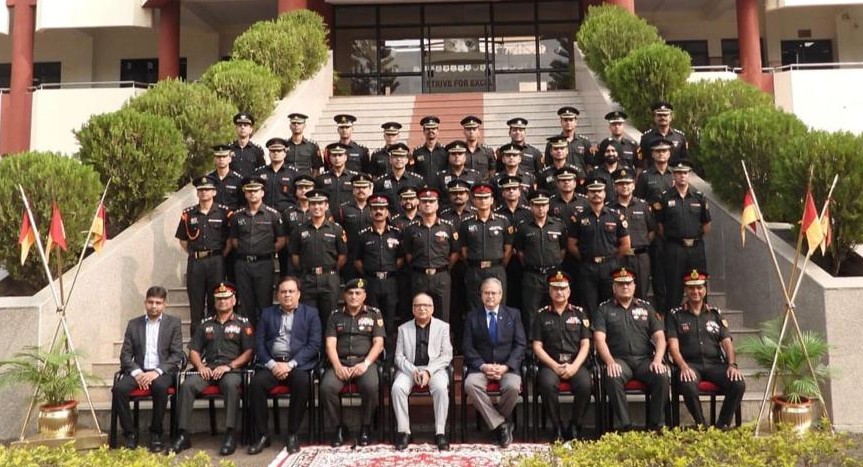
In a watershed moment for Indian defence education and technological advancement, the Indian Institute of Technology  Ropar formalized a historic Memorandum of Agreement  with the Indian Army to launch the M.Tech programme in Defence Technology. This pioneering initiative, designed exclusively for officers of the Armoured Corps Centre & School  marks an unprecedented collaboration between premier academic institutions and the armed forces, positioning India firmly on the path to becoming a global defence technology leader by 2047.

Picture 2 30.01.2026

A First for Indian Institutes of Technology

This groundbreaking programme represents the first time any IIT in India has established such a comprehensive defence technology partnership with the armed forces. The initiative goes beyond conventional academic offerings, creating a robust ecosystem where cutting-edge research, applied innovation, and military operational expertise converge to strengthen India’s defence capabilities.

Speaking at the signing ceremony, Prof. Rajeev Ahuja, Director, IIT Ropar, emphasized the transformative nature of this partnership:

“This collaboration marks a paradigm shift in how India approaches defence technology education. By bringing together the intellectual rigor of IIT Ropar with the operational excellence of the Indian Army, we are creating a unique model that will produce defence technology leaders capable of driving India’s self-reliance in critical defence sectors. This is our contribution to Viksit Bharat 2047.”

Empowering Mid-Level Officers with Advanced Defence Technology

The M.Tech  programme has been meticulously crafted through joint efforts of ACC&S and IIT Ropar, ensuring perfect alignment between academic rigor and military requirements. The curriculum emphasizes applied learning, hands-on research, and innovation-driven problem-solving, preparing officers to become technology leaders within the armed forces.

Upon successful completion of the programme, officers will be awarded an M.Tech  degree from IIT Ropar, a credential that represents the highest standards of technical excellence and innovation. This qualification will enable them to spearhead technological modernization initiatives across armoured formations and contribute significantly to indigenization efforts in defence manufacturing.

Comprehensive Research and Development Ecosystem

Beyond the academic programme, the MoA establishes an expansive framework for joint research and development initiatives that will address critical technological challenges facing India’s defence sector. The partnership encompasses several strategic focus areas like Joint Research & Development Initiatives, Next-Generation Armoured Fighting Vehicle  Technologies, Advanced Armament Solutions and New Materials and Technologies for Armoured Platforms

Distinguished Presence at Inaugural Session

The inaugural session witnessed the participation of distinguished leaders from both institutions, underscoring the strategic importance of this collaboration. The MoA was formally signed by Maj Gen Vikram Varma, AVSM, VSM, Commandant, ACC&S and Prof. Rajeev Ahuja, Director, IIT Ropar.

The ceremony was graced by eminent personalities including Lt Gen S S Mahal, PVSM, AVSM, VSM Professor of Practice, IIT Ropar; Shri Virbhadra Singh Rawat, Professor of Practice, IIT Ropar; Prof. Sarang Gumfekar, Associate Dean (PG and Research), IIT Ropar; Brig Kaushal Panwar, Commander SOTT; Col Tarun Badola, Senior Instructor, HQ SOTTT; and esteemed faculty and staff from both ACC&S and MIC&S.

Setting a New Benchmark for Defence Academia Partnerships

The IIT Ropar-Indian Army partnership is expected to serve as a template for similar collaborations across the country. It demonstrates how academic institutions and defence establishments can pool their respective strengths to address complex national security challenges while fostering innovation ecosystems.

The research outcomes from this collaboration are anticipated to benefit not only the armed forces but also contribute to civilian applications in areas such as autonomous vehicles, advanced manufacturing, and materials engineering. This dual-use approach maximizes the societal impact of research investments while accelerating technology transfer from laboratory to field.

A Testament to Innovation-Driven Leadership

As India aspires to become a global leader in defence technology and manufacturing, initiatives like the IIT Ropar-Indian Army M.Tech (Defence Technology) programme represent critical building blocks. This collaboration exemplifies innovation-driven leadership, strategic foresight, and commitment to national excellence that will define Viksit Bharat 2047.

Bank of Baroda Reports Strong Performance in Q3FY26 and 9MFY26, Driven by Robust Growth and Asset Quality

Mumbai, Jan 31: Bank of Baroda (BoB) announced its financial results for the quarter and nine months ended 31st December 2025, reporting continued growth momentum supported by stable asset quality, strong profitability, and a healthy balance sheet.

Financial Highlights – Q3FY26 & 9MFY26

  • Net Profit for Q3FY26 rises YoY; 9MFY26 Net Profit shows steady growth.

  • Operating Profit for the quarter and nine months demonstrates consistent performance.

  • Net Interest Income (NII) and Non-Interest Income grow steadily, reflecting balanced revenue streams.

  • Return on Assets (ROA) and Return on Equity (ROE) remain strong.

  • Cost of deposits declines, and Global and Domestic Net Interest Margins (NIM) remain healthy.

Asset Quality and Capital Strength

  • Gross and Net NPA ratios improve, reflecting strong credit quality.

  • Provision Coverage Ratio (PCR) remains robust.

  • Credit cost remains well under control.

  • Capital adequacy ratios, including CRAR, Tier-I, and CET-1, remain strong.

Business Performance

  • Global and domestic advances register healthy growth.

  • Deposits show steady increase across domestic and international segments.

  • Retail, Agriculture, and MSME (RAM) portfolios grow, driving portfolio diversification.

  • Corporate advances demonstrate steady expansion.

“Bank of Baroda has delivered another quarter of steady growth, underpinned by strong asset quality and robust profitability. Our strategic focus on retail, agriculture, and MSME segments continues to drive balanced growth across the portfolio. With a resilient balance sheet, prudent capital management, and customer-centric initiatives, we remain well-positioned to support India’s economic growth and strengthen our market leadership.”

Bank of Baroda continues to maintain a strong and diversified portfolio, with disciplined credit practices, robust capital adequacy, and focus on retail and MSME segments driving sustainable growth.

Siemens Recognized as Leader in Gartner Magic Quadrant for QMS Software

Jan 31: Siemens has been recognized as a Leader in the Gartner® Magic Quadrant™ for Quality Management System (QMS) Software. Gartner, a global research and advisory firm, identifies Leaders as companies providing mature, comprehensive QMS solutions that support compliance, risk management, and process improvement across industries.

Volker Albrecht, CEO of Siemens Digital Logistics and Business Line Head, Digital Manufacturing, Siemens Digital Industries Software, said:

“It is gratifying that Siemens continues to be recognized as a Leader, reflecting our advanced, integrated approach to quality management. By embedding generative AI, predictive analytics, extended reality (XR), digital twin capabilities, IoT, and other innovative technologies across the entire quality lifecycle, we empower manufacturers to standardize workflows from design to manufacturing, drive operational excellence, and adopt best practices across industries.”

Siemens’ QMS software portfolio, powered by Teamcenter® X Quality and Opcenter™ X Quality, connects design, manufacturing, and operations to enhance traceability, standardize workflows, and support continuous improvement across regulated industries.

As part of the Siemens Xcelerator portfolio of industry software, the QMS capabilities integrate digital twin technologies, advanced product engineering, product lifecycle management (PLM), manufacturing execution systems (MES), and industrial IoT (IIoT) to optimize every stage of the quality management lifecycle.

Siemens’ recognition in the Gartner Magic Quadrant highlights the company’s commitment to delivering future-focused, AI-enabled, and fully integrated digital solutions that help companies of all sizes achieve greater efficiency, enhanced compliance, and continuous improvement.

Gartner Disclaimer: Gartner does not endorse any company, vendor, product, or service depicted in its publications and does not advise technology users to select only those vendors with the highest ratings. Gartner publications represent the opinions of its research organization and should not be construed as statements of fact. Gartner disclaims all warranties, expressed or implied, regarding this publication, including any warranties of merchantability or fitness for a particular purpose.

Škoda Auto India and BBH India roll out ‘You Never Drive Alone’, spotlighting Škoda Super Care

Mumbai, Jan 31: Škoda Auto India, in partnership with BBH India, has launched an integrated campaign ‘You Never Drive Alone’ as it debuts its brand-wide service programme ‘Škoda Super Care’. Aimed at enhancing customer ownership experience across Škoda Auto India’s entire product portfolio from 2026, ‘Škoda Super Care’ introduces best-in-class ownership benefits as part of a unified service framework.

Designed with a clear business and consumer insight, the campaign ‘You Never Drive Alone’ is led by a brand film that brings Škoda’s philosophy to life. The campaign portrays driving as an experience to be enjoyed with peace of mind, beyond simply a means of reaching a destination.

The film follows a couple on a scenic drive, pausing to take in the lush, serene landscape from the comfort of their car. As they glance back, they notice the Škoda Super Care team nearby, a reminder that with a rapidly growing network across 183 cities in India, and a strengthened customer support throughout the vehicle ownership lifecycle, Škoda owners are never truly alone on the road.

Commenting on the initiative, Ashish Gupta, Brand Director, Škoda Auto India, said,

“Today marks a meaningful step forward in how we support our customers beyond the showroom. Ownership is about confidence, clarity and value every time a customer drives their car, visits a service centre or needs support. With Škoda Super Care, we are bringing together best-in-class warranty coverage and roadside assistance for four years, along with four free services including the Škoda Check-in services at 1,000 and 7,500 Kms. This gives customers an early connect with Škoda service along with affordable & predictable service costs, strong support through the ownership journey and the peace of mind they deserve. It’s a simple promise, yet a powerful one.”

Discussing the campaign, Parikshit Bhattaccharya, Chief Creative Officer, BBH India and Propagate India, added,

 “Service is usually communicated through information. We chose to communicate it through feeling. The idea was to visualise support without making it loud, to show that reassurance can exist quietly in the background of a journey.”

‘You Never Drive Alone’ is currently live across television, digital, print, and OOH.  With purposeful storytelling, the campaign builds upon long-term ownership confidence through periodic maintenance services, newly introduced Škoda Check-in services, extended warranty coverage, roadside assistance and free services, offering clarity and value.

KIMS Kurnool doctors Dr. Sheikh Mannan & Dr. Kiran Kumar who corrected S-shaped spine

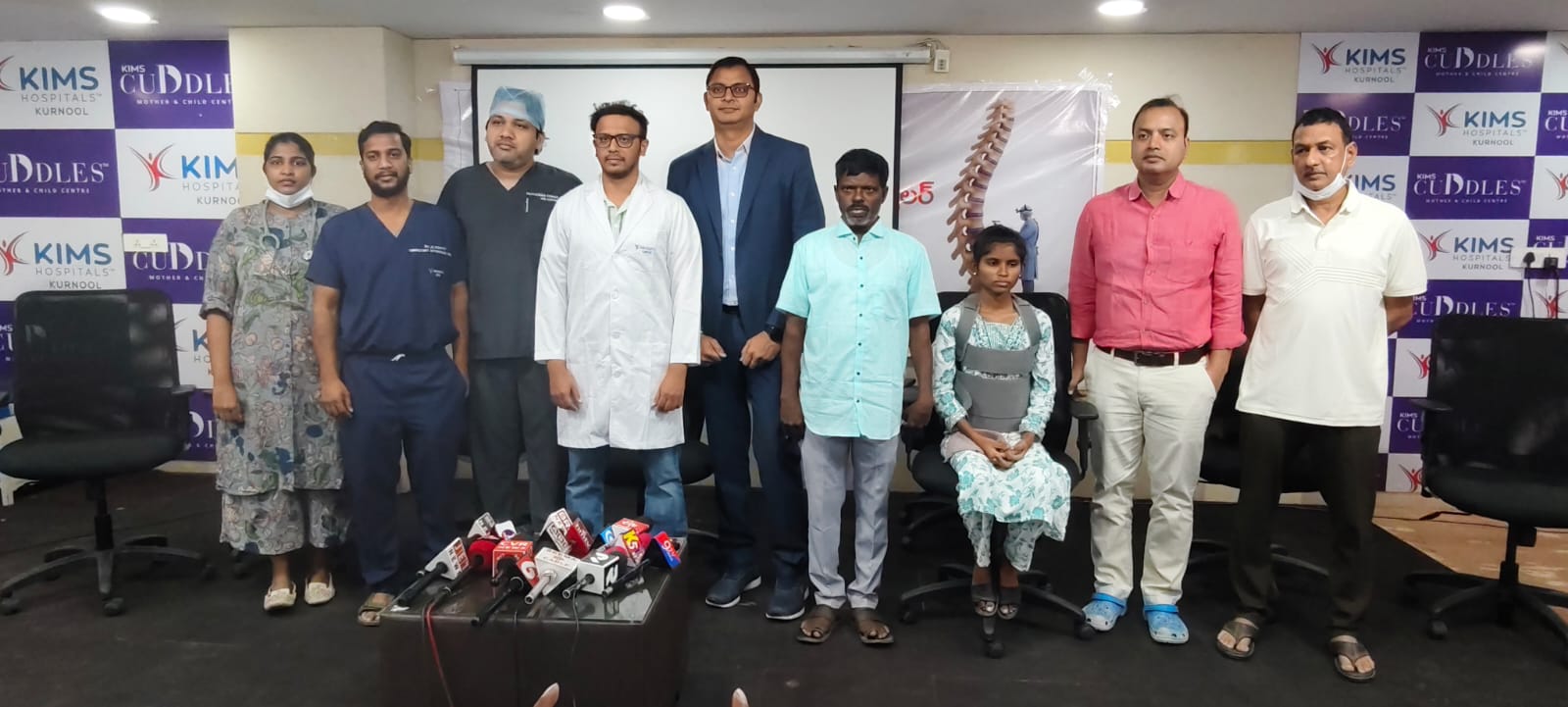
Kurnool, Jan 31: Doctors at KIMS Hospital, Kurnool, have successfully corrected a severe S-shaped spinal deformity in an 18-year-old girl through a highly complex surgery involving the placement of 30 spinal screws.

Photo 3

The patient, a resident of Vamasamudram village in Kurnool district, had been suffering for several years from persistent headaches, abnormal gait, and progressive spinal curvature. Her family, belonging to an economically weaker background, initially sought treatment at a private hospital where she underwent surgery in 2019 for Arnold–Chiari malformation, a congenital condition affecting the brain. While the headaches subsided after that procedure, the spinal deformity continued to worsen over the years, eventually resulting in a pronounced hunchback posture.

Given the high risk associated with corrective spinal surgery in such cases, including the possibility of permanent neurological damage, the patient was referred to KIMS Hospital, Kurnool.

After detailed evaluation, a team led by consultant spine surgeon Dr. Shaik Mannan and Chief Consultant and Head of the Orthopaedics Department Dr. Kiran Kumar decided to perform the surgery under continuous intra-operative neuromonitoring.

Explaining the procedure, Dr. Mannan said the patient had a spinal curvature of nearly 50 degrees extending from the D2 to L4 vertebrae.

“Despite the high risk, we were able to achieve nearly 90–95% correction using 30 specialised screws. The spinal alignment has been restored close to normal. The earlier shoulder imbalance has resolved, both shoulders are now at the same level, and the prominent bony hump on the back has significantly reduced,” he said.

Remarkably, the patient was able to walk independently from the first day after surgery, and her vital functions returned to normal soon after. The surgery was successfully completed with the support of the anaesthesia team comprising Dr. Bhuvana and Dr.Shruthi, along with, critical care Dr. Rajesh Reddy.

Orthopaedic HOD Dr. Kiran Kumar said the procedure marked one of the most complex spinal surgeries performed in the Rayalaseema region and the first successful neuromuscular scoliosis correction of its kind in the area. “This achievement once again highlights the clinical expertise and commitment of KIMS Hospital,” he noted.

KIMS Kurnool Regional COO Siddareddy stated that the entire cost of the surgery was covered under the Arogyasri scheme, making it completely free for the patient. He added that the hospital has performed over 100 highly complex spinal surgeries in the Rayalaseema region, which he described as a matter of pride for the institution.

CREDAI Hyderabad on Economic Survey 2025–26

Hyderabad: Jan 31: CREDAI Hyderabad welcomes the Economic Survey 2025–26, which reaffirms Hyderabad’s role as a key driver of India’s urban and economic growth. The Survey projects 7.4% GDP growth for FY26, supported by strong Gross Fixed Capital Formation nearing 30% of GDP, a resilient services sector growing at 9.1%, and credible fiscal consolidation with the fiscal deficit at around 4.8% of GDP.

Hyderabad’s growth stands out for its simultaneous urban densification and rapid peripheral expansion, reflecting sustained demand for high-density residential and commercial development. This pattern highlights the need for possibility-oriented urbanism, where infrastructure, mobility, and utilities keep pace with city expansion.

The Survey highlights strong sectoral performance, with the Financial, Real Estate and Professional Services sector growing by 9.9% in H1 FY26, while construction recorded 7.4% growth, underscoring the multiplier impact of public capital expenditure on housing, jobs, and infrastructure.

Commenting on the Economic Survey, Mr. Jagannath Rao Bandari, President-elect, CREDAI Hyderabad, said:

“The Economic Survey captures Hyderabad’s unique growth trajectory, with both core densification and peripheral expansion progressing together. To sustain this momentum, it is critical to address constraints in land, mobility, and infrastructure through predictable regulations, contextual compliance, and trust-based governance.”

CREDAI Hyderabad aligns with the Survey’s assessment that the high cost of capital remains a key constraint and calls for risk-mitigation tools, partial credit guarantees, and improved access to long-term finance to support housing supply across segments.

Looking ahead to the Union Budget 2026, CREDAI Hyderabad expects continued emphasis on infrastructure funding and public capex to sustain 7–8% construction growth, along with expanded support for PMAY 2.0single-window clearances, and viability gap funding for affordable housing.

On taxation for homebuyers, CREDAI Hyderabad urges further reforms including higher income-tax deductions on home loansNPS-like tax benefits linked to housing finance, and rationalisation of stamp duties, which will enhance affordability and boost middle-class homeownership.

CREDAI Hyderabad reiterates its commitment to reform-led growth, affordable housing, and sustainable urban development, and looks forward to policies that strengthen Hyderabad’s contribution to India’s $5 trillion economy.

Experts flag the East-West OdishaDevelopmental Divide: PRAHAR Seminar

Bhawanipatna, Jan 31 : PRAHAR, (Public Response Against Helplesness & Action for Redressal) a policy-focused development organisation working on employment, livelihoods and regional equity, organised a Seminar on “South-West Odisha: Economic & Employment Growth, Challenges and Opportunities” at Hotel Midtown, Bhawanipatna.

The dialogue brought together economists, development practitioners and industry experts to discuss solutions to bridge the widening intra-state developmental disparities in Odisha. The Panel highlighted that Odisha’s substantial mineral reserves, particularly in Kalahandi and Rayagada, represent an underleveraged opportunity for manufacturing-led growth. Greater integration of these resources into downstream industrial activity could support higher GDP contribution, employment creation, and improved value retention within the domestic economy.

Speaking at the forum, Dr. Ajaya Mishra, Former Professor of Geography, GM University and Kalahandi University, said,

“It is time for all of Odisha to benefit from the Viksit Odisha agenda and align with the Atmanirbhar Bharat 2047 roadmap. When industrial activity is not supported by local clustering, employment remains limited and migration continues. Odisha has a clear opportunity to leverage the world’s second-largest rich Bauxite base, supported by substantial private investments such as refineries, to drive industrialisation and create sustainable livelihoods. Policy must recognise this shift if backward regions are to genuinely catch up.”

Mr Abhay Raj Mishra, President of PRAHAR, said,

“India’s past experience demonstrates that prolonged regional intra-state disparities often translate into political and social fragmentation. From Uttarakhand to Jharkhand to Telangana, demands for separate statehood have been rooted in uneven development. Odisha must not treat regional imbalances as a peripheral issue, but as a core development challenge.”

Unlocking the untapped Bauxite Mining alone has the potential to empower 10,000 SMEs and create 2.4 million jobs for the state, accelerating Orissa’s development multifold. Data from the dialogue highlighted that districts such as Kalahandi and Rayagada continue to lag significantly in income and employment indicators. Kalahandi’s per capita income stands at approximately ₹32,000—less than one-fifth of the state average of around ₹1.8 lakh—while nearly 70 per cent of the workforce in South–Western Odisha remains dependent on agriculture, reflecting the absence of non-farm employment engines despite the region’s mineral resource wealth and home to one of the world’s largest Alumina Refineries in the state.

Mr. Ashok Pattnaik, CEO NGO Kartavya said

 “Odisha’s challenge is not the availability of resources, but the absence of a structured pathway from mineral Production to local industrial growth.” Mr. Satyanarayan Pattanayak, Founder Secretary, Seba Jagat, said: “Eastern districts are gaining jobs and industries, while western Odisha continues to lag, which is reflected in sharp per capita income gaps within the state. Odisha can close its own gap only by bringing large-scale industrial activity and employment including farm &forest based industries to western districts and different need based Skills training ( including soft skills) for youths & women which growth reaches every region.”

Speakers noted that states that have built integrated industrial ecosystems combining production, fabrication and MSME clusters have seen higher job creation, stronger regional GDP growth and lower migration. In contrast, delays in developing such domestic value chains have a clear macroeconomic cost: limited utilisation of domestic resources increases India’s reliance on imported raw materials, resulting in avoidable foreign exchange outflows and lost value addition at both the state and national levels.