Archives January 2026

AI, Innovation, and Personalised Learning Drive Education Trends for 2026

AI, Innovation, Inclusivity, and Personalised Learning Take Center Stage as Education Prepares for 2026

The year 2025 witnessed transformative shifts in the education sector, with institutions across India and globally embracing innovation, adaptability, and future-ready skills. From universities and management institutes to cutting-edge education platforms, leaders reflected on milestones achieved and outlined their vision for 2026. A strong emphasis emerged on Artificial Intelligence (AI), experiential learning, inclusivity, and global collaboration as key drivers shaping the next chapter of education.

“This year marked our Platinum Jubilee, celebrating 70 years of outstanding technical education, with the Honourable President of India gracing the occasion and the 35th convocation held in the presence of the ISRO Chairman. The growing focus on data-driven insights has redefined curricula, encouraging learners to blend computational skills with critical thinking and ethical responsibility. Looking ahead, BIT Mesra will continue to foster a holistic and inclusive ecosystem,” said Prof. Sudip Das, Registrar, Birla Institute of Technology, Mesra.

Reinforcing this shift from rote memorization to critical thinking, Mr. Harish Sanduja, Director – Schools and IT, Seth Anandram Jaipuria Group of Educational Institutions, said:

“The introduction of new NCERT textbooks with a reduced curriculum has marked a structural shift in Indian school education. The focus is now on competency-based learning, critical thinking, and skill development. The Kaushal Bodh curriculum for CBSE classes 6 to 8 aligns with the NEP vision, covering modules such as AI, Design Thinking, Financial Literacy, IT, Travel and Tourism, Beauty and Wellness, Handicrafts, and more.”

These changes at both school and university levels signal a larger transformation in the education ecosystem. Institutions are no longer treating reforms as isolated initiatives but as part of a broader movement toward adaptability and relevance. Emphasis on skill-based curricula, integration of emerging technologies, and redefinition of educator roles reflects a sector preparing for a rapidly changing global economy.

“Education is no longer confined to classrooms. It is driven by adaptability, digital integration, and purpose-led learning. Students have embraced resilience and lifelong learning, while educators have adopted innovative, learner-centric approaches. Moving into 2026, the focus must remain on building future-ready skills, ethical leadership, and inclusive growth,” said Prof. (Dr.) Daviender Narang, Director, Jaipuria Institute of Management.

Educators are also optimistic about the Government of India’s decision to establish the Higher Education Council of India (HECI), expected to unify and streamline the regulatory framework for universities and colleges. By replacing legacy bodies such as UGC, AICTE, and NCTE, HECI aims to reduce duplication, enhance transparency, and create a more agile system.

“Management education in India has undergone a paradigmatic shift. AI has evolved from a buzzword to a core strategic tool, requiring students and educators to embrace digital competency alongside ethical leadership. Adaptability is now essential. As we look toward 2026, our focus shifts to purpose-driven innovation, global mobility, and leveraging the HECI framework to elevate Indian higher education,” said Dr. Tapan Kumar Nayak, Director, Jaipuria School of Business, Ghaziabad.

The hospitality education sector has similarly undergone transformation, adapting to technological advancements, sustainability imperatives, and changing industry expectations.

“2025 was a year of crucial transformation in hospitality education, driven by technology and industry demands. AI adoption has redefined how students are prepared, balancing human-centered skills with digital proficiency. In 2026, we expect continued emphasis on sustainability, digital transformation, and personalized experiences, fostering a global community of hospitality leaders,” said Ms. Anouck Weiss, Chief Communication Officer, Sommet Education.

Echoing this view, Mr. Kunal Vasudeva, MD & Co-Founder, Indian School of Hospitality, added:

“Students now demand learning that is relevant, organic, and aligned with their lives. They behave like CEOs of their own education. Institutions that fail to adapt in 2026 and 2027 risk being left behind.”

Cross-border collaboration has also emerged as a critical trend, with institutions seeking international partnerships to provide students with global exposure and diverse perspectives through research, exchange programs, and digital platforms.

“2025 brought challenges and opportunities for the education sector. AI, personalised learning, global collaboration, and navigating visa norms became key priorities. Resilience, adaptability, and inclusivity emerged as essential for success. In 2026, AI will be at the heart of educational transformation, alongside a focus on cross-border collaboration,” said Mr. Sundar Kumarasamy, CEO & Founder, Excelerate, and Co-Founder, V-Empower Ventures.

Similarly, Mr. Bob Chopra, Founder & CEO, IvySchool.ai, observed:

“2025 marked a new era in AI, coding, and computer science education. Students embraced experiential learning, moving beyond rote methods to problem-solving and interdisciplinary applications. Generative AI tools, project-based coding challenges, and computational thinking became integral. In 2026, we aim to empower students to be future-ready leaders, coding creatively, using AI responsibly, and contributing meaningfully to the digital world.”

Together, these perspectives highlight a sector in transition, redefining the role of educators and institutions. As 2026 approaches, education is poised to move beyond conventional boundaries, ensuring learners are academically prepared and equipped with the skills and leadership capabilities to thrive in a rapidly evolving global landscape.

AAEON Outlines Plans for UP Xtreme PTL Edge Mini PC Featuring Intel Core Ultra Series 3 Platform

Taipei, Taiwan, Jan 7: Following the unveiling of the new Intel® Core™ Ultra Series 3 processors (formerly Panther Lake) at CES, AAEON’s UP brand (stock code: 6579) has announced its development timeline for the UP Xtreme PTL Edge, an AI Mini PC leveraging the platform.

Expected to enter mass production during the latter part of Q1, the UP Xtreme PTL Edge will be available with either the Intel® Core™ Ultra X7 358H or Intel® Core™ Ultra 5 Processor 338H from the new series, featuring an integrated Intel® Arc™ GPU with up to 12 Xe3 Cores and Intel NPU 5.0 for up to 180 TOPs of AI performance in total.

PTL edge

Its SoC is not the only substantial change provided by the UP Xtreme PTL Edge when compared to previous UP Mini PCs. The device’s I/O provides a number of more advanced connectivity options, including two USB 4.0 (Type-C) alongside two USB 3.2 Gen 2 (Type-A) and a pair of 2.5GbE LAN ports. Alongside these, the UP Xtreme PTL Edge will also include the 40-pin GPIO the brand’s customer base of industrial developers will be familiar with, as well as two COM ports for RS-232/422/485.

Additional improvements can be found in the system’s display options, which offer two HDMI 2.1 ports and two DP 2.1 via its USB Type-C ports for four simultaneous 8K display outputs. Compounding this selection is the enhanced graphics media display features and acceleration for video analytics offered by the system’s integrated GPU and NPU.

For storage, the UP Xtreme PTL Edge offers two M.2 2280 M-Key slots, while additional expansion for Wi-Fi comes in the form of an M.2 2230 E-Key slot. Meanwhile, the system can support up to 128GB of dual-channel DDR5 (up to 7200 MT/s) via two SODIMM slots.

With respect to OS compatibility, the UP Xtreme PTL Edge supports both Windows® 11 IoT Enterprise LTSC and Linux Ubuntu 24.04 LTS.

Bondada Engineering Commissions 120.46 MWp Solar Projects in Maharashtra and Tamil Nadu

Hyderabad, Jan 07: Bondada Engineering Limited (BSE: 543971), a leading player in India’s renewable energy EPC sector, has successfully commissioned 120.46 MWp of solar power projects in December 2025, further strengthening its execution capabilities and expanding its footprint in the clean energy space.

The projects were delivered for prominent clients including Paradigm IT, MAHAGENCO, and NLC India Limited, across multiple locations in Maharashtra—Dhule, Amaravati, Hingoli, Pathardi, Shevgaon, Kannad, and Dharni—and Tamil Nadu at Neyveli.

Over the past two months, Bondada Engineering has doubled its monthly commissioning capacity, reflecting robust execution strength, efficient project management, and enhanced operational performance within its Solar EPC business. The timely completion of these large-scale projects underscores the company’s ability to deliver high-quality solar installations while adhering to stringent safety and governance standards.

This milestone also aligns with India’s renewable energy ambitions and supports the nation’s broader transition towards clean and sustainable power generation.

Commenting on the achievement, Rear Admiral R. Sreenivas, VSM (Retd), Chief Executive Officer, Bondada Group, said:

“The successful commissioning of these projects is a testament to the dedication and capability of our execution teams, as well as our unwavering focus on timely and quality delivery. This achievement reinforces our commitment to India’s renewable energy goals while creating sustainable value for our customers and stakeholders. Our ability to scale commissioning volumes reflects improved operational efficiencies and disciplined project management. As India accelerates its clean energy transition, we remain focused on delivering reliable, large-scale renewable projects that meet the highest standards of safety, quality, and governance.”

Bondada Engineering Limited continues to expand its renewable energy portfolio, contributing meaningfully to India’s clean energy journey while creating long-term value for all stakeholders.

179th Sri Thyagaraja Aradhana to be Held in Bengaluru from 7th January to 11th, 2025 at Sringeri Shankara Matha, Chamarajapet

179th Sri Thyagaraja Aradhana to be Held in Bengaluru from 7th January to 11th, 2025 at Sringeri Shankara Matha, ChamarajapetBengaluru, Jan 07: The Sadguru Sri Thyagabrahma Aradhana Kainkarya Trust is organizing the 179th Vaidika Aradhana of the poet-saint Sri Thyagaraja from January 7 to January 11, 2026, at the Sringeri Shankara Matha, Chamarajapete, Bengaluru.

As part of the Aradhana celebrations, the traditional Pancharatna Kruthi Goshti Gayana will be held on January 7, 2026, at 8:30 a.m. at the same venue. This group rendition of Sri Thyagaraja’s Pancharatna Kritis is a revered highlight of the annual Aradhana.

In addition, classical music concerts by eminent artistes will be conducted daily from 5:00 p.m. onwards during the Aradhana period.

The event is open to all, and ENTRY FREE

Venue:
Sringeri Shankara Matha
Chamarajapete, Bengaluru

Avakai: Amaravati Festival of Cinema, Culture and Literature to Transform Vijayawada’s Riverfront with a Landmark Cultural Celebration, 8th to 10th January 2026

Avakai: Amaravati Festival of Cinema, Culture and Literature to Transform Vijayawada’s Riverfront with a Landmark Cultural Celebration, 8th to 10th January 2026 Vijayawada, Jan 07: The Government of Andhra Pradesh presents Avakai: Amaravati Festival of Cinema, Culture and Literature, a three-day public cultural celebration to be held from 8th to 10th January 2026 at Punnami Ghat and Bhavani Island, Vijayawada. Conceived as an open, inclusive riverfront festival, Avakai brings cinema, literature and the performing arts into public spaces, creating direct engagement between artists and audiences, while transforming the banks of the River Krishna into a vibrant site of cultural exchange and creative dialogue.

Anchored in the cultural geography of Amaravati–Vijayawada, Avakai foregrounds Telugu cinema and literature, while presenting a multidisciplinary programme spanning music, dance, theatre, poetry, storytelling, workshops and cultural conversations. Envisioned under the leadership of Hon’ble Chief Minister of Andhra Pradesh, Shri N. Chandrababu Naidu, organised by the Andhra Pradesh Tourism Authority, powered by KIA and produced by Teamwork Arts, the festival introduces a format new to the state, combining artistic excellence with public participation and immersive riverfront experiences. The festival is free and open to the public, and audiences are encouraged to register online at www.avakaifestival.com.

The festival opens on Thursday, 8th January 2026 at Punnami Ghat with a vibrant Opening Procession featuring giant puppets, Teen Maar drummers and bagpipers, followed by evening music by Jammers, Aarti by the Ghat & Inauguration of the House Boat followed by the Sacred Opening with Shankh, Nagada & Drums ensemble.

The ceremonial Prārambhōtsavam will be graced by Hon’ble Chief Minister, Shri N. Chandrababu Naidu, Hon’ble Deputy Chief Minister, Shri Pawan Kalyan, Hon’ble Minister of Health, Family Welfare & Medical Education – Shri Satya Kumar YadavHon’ble Minister for Tourism & Culture, Shri Kandula Durgesh, Ambassador of the European Union, H.E.Hervé Delphin, Managing Director – Teamwork Arts, Mr. Sanjoy K. Roy.

Opening performances include Her Frames, Her Fire by Omaggio Performing Company, followed by Love Story – A Musical, created especially for Avakai. On Friday, 9th January 2026, the daytime programme at Bhavani Island features conversations and workshops, including Pure Evil: Anti-Heroes of Cinema with S. Hussain Zaidi, Yandamuri Veerendranath and Sudhir Mishra in conversation with Balaji Vittal, followed by a discussion on Evolving Storytelling: The Journey of Indian Mythology, BNIM, Kasturi Muralikrishna, Sanjeev Pasricha and Anuradha Mothali in conversation. The programme also features another performative act, Katha Kalakshepam: Timeless Tales through Music and Word by StoryHour UK; Engaging with storytelling across screen and text, Cinema in the Age of OTT reflects on how streaming platforms have reshaped filmmaking, distribution and audience engagement, with Leena Yadav (Director–Producer), Sunil Chainani (Applause Entertainment), Shibasish Sarkar (Reliance Entertainment; Producers Guild of India), Saugata Mukherjee (SonyLIV), Shreerupa Mitra, and Supriya Yarlagadda (Annapurna Studios) in conversation, followed by Abhilasha: From Novel to Screen, which traces the journey of a beloved literary work to cinema, with Yandamuri Veerendranath and A. Kodandarami Reddy in conversation with Valli Padmanjali.Parallel hands-on workshops include Martial Arts with Tuhon Aditya Roy, Nagada with Nathoo Lal Solanki, Puppet-making with Shameem, and Dance with French choreographer Gilles Chuyen. As twilight descends on the sacred banks of the Krishna at Punnami Ghat, the evenings unfold into a rich celebration of music, movement and poetic expression. The programme features Carnatic Music by Chandana Bala Kalyan, followed by Dramatic Tales- Rasa United, a powerful Kuchipudi dance-theatre presentation by Vanashree Rao, and The Sound of Stories: Music & Poetry in Cinema, with Shekhar Ravjiani, Priya Saraiya and Kasarla Shyam in conversation with Rakhshanda Jalil, exploring the lyrical soul of Indian cinema. The night further deepens with Mehfil-e-Sukhan: A Mushaira Experience, featuring Aditya Singh ‘Aadi’, Azhar Iqbal, Iqbal Ashhar, Khushbir Singh Shaad, Dr Nusrat Mehdi, Payala Murali Krishna, Popular Meeruthi, Saif Nizami and Sardar Saleem, followed by Aaj Rang Hai—a transcendent collaboration between the Anirudh Varma Collective and Nizami Bandhu, blending contemporary classical with the timeless spirit of Qawwali.

On Saturday, 10th January 2026, the Bhavani Island day programme includes Words on Water, Katha Itranagalu: Art of Telugu Storytelling, Friday Release: Cinema & Journalism, Sundaramaina Telugu: Glory of Telugu Literature & Cinema, and The Art of Translation: Words Without Borders, alongside continued workshops. The closing evening at Punnami Ghat features Chowraasta Live, Natasarvabhowma NTR – Homage to the Vishwaroopam of Acting, Love Story – A Musical, the Festival Closing Ceremony, and a grand finale concert by Javed Ali.

Beyond performances and conversations, Avakai offers immersive festival experiences including interactive installations and curated culinary experiences, inviting audiences to engage deeply with the region’s cultural and artistic heritage.

KLH Global Business School Students Achieve National Sporting Distinction

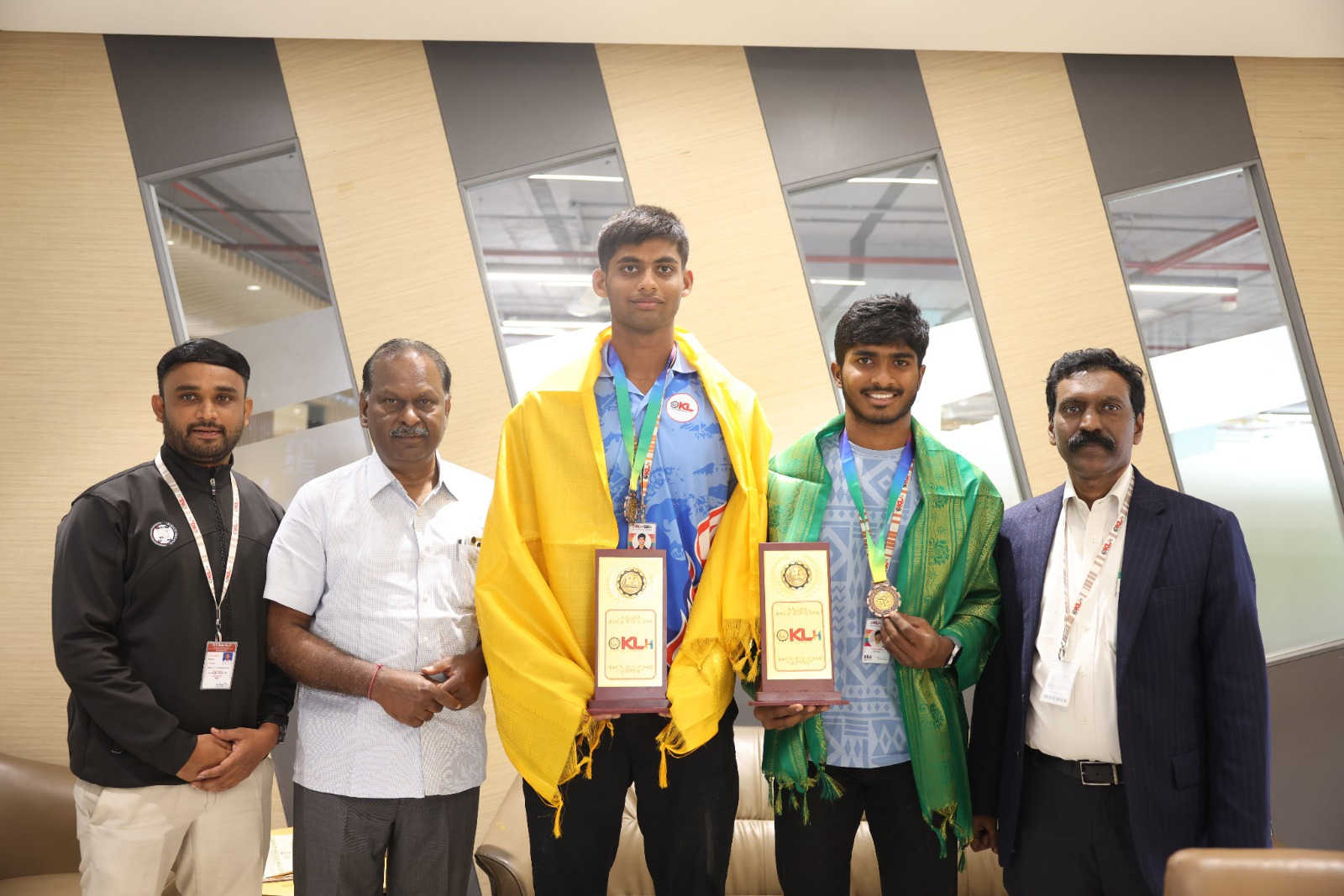
Hyderabad, Jan o7: KLH Global Business School has achieved a series of significant sporting milestones, reflecting its sustained commitment to competitive university sport and its emphasis on discipline, preparation, and performance, alongside academic pursuits.

Nitish and dheeraj

Among the notable accomplishments, Dhanush Srikanth, a first-year BBA student, has been nominated for the prestigious Arjuna Award for Air Rifle Shooting, in recognition of his consistent performances, commitment to training, and disciplined approach to sport. Adding to this achievement, M. Venkat Rami Reddy, another BBA student, secured the Gold Medal in the 800-metre event for running at the Khelo India University Games 2025, held in Rajasthan. Further strengthening the institution’s sporting record, Mogli Venkata Ram Reddy earned a bronze medal in the 800-metre event at the 4th South Asian Senior Athletics Championships 2025, bringing international recognition to the university’s student-athlete community.

This momentum continued in tennis, where KLH GBS students delivered a commendable performance at the South Zone Inter-University Tennis Tournament 2025, a competition that drew participation from leading universities across South India and was conducted through a demanding knockout format. This team comprised KLH GBS students, along with students from the KL Vijayawada and KLH Aziznagar campuses.

In the women’s category, Muruga Sera Anjum, a third-year BBA student from KLH GBS, played a decisive role, while the men’s competition witnessed impactful performances from Nashik Reddy, a third-year BBA student, and Dheeraj Reddy, a second-year BBA student. Their collective efforts resulted in one Winner position and two Runners-Up finishes. In recognition of these performances, all three students have been selected for the All-India Inter-University Team and the Khelo India University Games 2026, marking their progression to the national competitive stage.

Commenting on the achievement, Er. Koneru Lakshman Havish, Vice President, KL Deemed to be University, stated,

“Inter-university competition demands sustained preparation, discipline, and mental resilience. The achievements recorded by our students ranging from national nominations to podium finishes and team selections reflect their commitment to excellence and their ability to balance academic responsibility with competitive sport.”

KLH Global Business School views these outcomes as a reflection of sustained sporting engagement and structured preparation. Beyond medals and selections, the achievements signify the fulfilment derived from disciplined effort and competitive integrity, as students progress to higher levels of representation while upholding the values associated with university sport.

Watch2care’s Smartwatch Focusing on Traditional Chinese Medicine Makes Global Debut at CES 2026

Las Vegas, NV, USA, Jan 7: LINK2CARE, a next‑generation  preventive‑health wearable platform, today announced the global debut of “WATCH2CARE VITAL”, a breakthrough smartwatch that blends Traditional Chinese  Medicine (TCM), large‑scale real‑world health data, and advanced AI systems to deliver a new standard in proactive personal health.

Unlike traditional wearables focused only on basic biometrics, WATCH2CARE VITAL provides organ‑system insights inspired by TCM across the Heart, Liver, Spleen, Lung, and Kidney functional systems. The device continuously measures 38 physiological metrics aligned to 18 key indicators, supporting medical grade accuracy in cardiovascular monitoring, sleep analysis, activity tracking, and organ system health status.

Combining Eastern Medicine, Western Science, and Modern AI  Powered by more than 30 years of research, 9 million+ historical user cases, and 300,000 active users, WATCH2CARE VITAL uses AI to identify subtle trends across demographic categories, providing highly personalized health assessments and daily recommendations. It’s AI engine, trained on classical TCM diagnostic reference, detects early physiological changes related to blood‑pressure variability, cardiovascular strain, and stroke‑related risk factors. Taking this data, it then translates findings into clear, actionable insights.

“WATCH2CARE VITAL represents a new chapter in preventive healthcare,” said Paul Yuen, a Watch2Care spokesperson. “By combining Eastern medical principles, Western measurement science, and large‑scale AI analysis, we’re giving users unprecedented visibility into their health and empowering timely, meaningful action.”

Key Capabilities

  • Organ‑system insights blending TCM principles with real‑time biometrics
  • Cardiovascular and sleep monitoring with high‑frequency multi-sensor signals
  • Daily AI‑generated health reports and composite health scores
  • Smart Sleep Alert System for abnormal nighttime heart‑rate spikes
  • Fast charging (approx. 60 minutes)
  • 48‑hour battery life
  • Optional 4G connectivity, voice communication, and GPS (WATCH2CARE MAX)
  • Fully encrypted, anonymized data protection

Setup is simple: users scan a QR code, connect the watch, and begin receiving continuous, personalized assessments through the Link2Care app.

Live CES Session
Link2Care will host live demonstrations showing how TCM diagnostics, continuous monitoring, multi‑demographic analysis, and AI forecasting combine to advance the future of preventive health.
More information: www.link2care.asia

Understanding Cost, Turnaround Time, and Accuracy in Coal and Mineral Testing

Introduction to Coal and Mineral Testing

Coal and mineral testing is a critical process employed in the mining and resource extraction industries. It serves to assess the quality, composition, and overall characteristics of the materials being mined. The significance of testing lies in its ability to determine the value of these resources, which impacts economic viability, efficiency in processing, and compliance with environmental regulations.

The testing processes typically involve various analytical techniques designed to analyze samples of coal and minerals. These techniques may include proximate analysis for moisture and volatile matter content, ultimate analysis for elemental composition, and calorific value testing to assess energy content. Additionally, mineralogical analysis is conducted to identify the specific minerals present in a sample, which is essential for understanding the behavior and applications of the material.

Various types of coal, such as anthracite, bituminous, sub-bituminous, and lignite, are commonly subjected to testing due to their differing energy outputs and applications. Similarly, minerals such as iron ore, copper, gold, and bauxite are tested to evaluate their quality and suitability for various processes in metallurgy and production of goods. Understanding the properties of these materials through rigorous testing is vital for making informed decisions about their extraction and industrial usage.

In essence, coal and mineral testing provides vital information that influences the strategic planning and operational efficiency of mining projects. By employing precise testing methods, companies can optimize resource utilization while ensuring compliance with industry standards, thereby enhancing profitability and sustainability in resource extraction.

The Importance of Accurate Testing in Resource Management

Accurate testing in coal and mineral analysis is essential for effective resource management. The reliability of test results directly influences decision-making processes related to resource extraction, the assessment of environmental impacts, and adherence to regulatory standards. Precise data derived from testing provides stakeholders with critical insights into the composition and quality of geological resources. These insights are pivotal for planning extraction strategies that maximize efficiency while minimizing waste and environmental disruption.

For instance, when companies have exact information regarding the mineral content in a given deposit, they can optimize their extraction methods to ensure they are utilizing the most effective techniques. This not only facilitates higher yield rates but also conserves natural resources. Informing extraction operations with precise testing becomes even more significant in an era where sustainability and environmental protections are paramount concerns. Environmental impact assessments rely heavily on accurate data to predict potential damage from mining activities, influencing permitting processes and community relations.

Moreover, compliance with governmental regulations is rigorous in the mineral extraction industry. Accurate testing data serves as a basis for demonstrating compliance with environmental laws and regulations. Regulatory agencies often require detailed reports based on test results to assess potential impacts on ecosystems and to enforce sustainability practices throughout the extraction process.

In conclusion, the role of precise testing in resource management cannot be understated. It provides a foundation for efficient and sustainable practices within the coal and mineral sectors, ensuring that extraction processes are not only economically viable but also environmentally responsible.

Factors Influencing Testing Costs

Understanding the costs associated with coal and mineral testing is essential for stakeholders in the industry. Numerous factors can affect these costs, impacting on both the overall budget and the accuracy of results achieved. One primary factor is the equipment used during testing. Advanced and more sophisticated instruments often incur higher operational costs due to maintenance and calibration requirements. Conversely, the utilization of older or basic equipment may reduce testing prices, but potentially compromise the accuracy of results.

Another significant contributor to testing expenses is the laboratory fees. Different laboratories may have varying pricing structures based on their expertise, accreditation, and the quality of service they provide. Moreover, comprehensively accredited labs that comply with international standards may charge more, reflecting their established reputation within the industry.

The sample size also plays a vital role in determining testing costs. Larger sample sizes typically require more resources and time to analyze, leading to increased fees. In contrast, smaller samples may not adequately represent a bulk material, potentially affecting the reliability of the findings. Therefore, optimizing sample size is a critical consideration when planning coal and mineral testing.

Additionally, the transportation costs involved in sending samples to testing facilities can contribute significantly to the overall expenses. These costs can vary based on the distance from the collection site to the laboratory and the method of transportation employed.

Lastly, the type of analysis performed must be considered, as different analyses may demand various levels of technical expertise or specialized reagents, further impacting costs. Understanding these factors is crucial for stakeholders looking for accurate and cost-effective testing solutions in the coal and mineral sector.

Understanding Turnaround Time in Testing

Turnaround time (TAT) in the context of coal and mineral testing refers to the duration it takes from the receipt of a sample to the delivery of the test results. This timeframe is crucial as it influences decision-making processes for businesses in various sectors, including mining, energy, and manufacturing. The complexity of the testing procedure is one of the primary factors that determine turnaround time. Different tests require varying degrees of sophistication and analysis, which can significantly impact how quickly results are generated.

Moreover, laboratory capacities play a critical role in defining the turnaround time. Laboratories may have different levels of staffing, equipment availability, and technological advancements, all of which contribute to the efficiency of processing samples. A well-equipped laboratory with a streamlined process is likely to deliver results faster than one that lacks the necessary resources or has a backlog of samples awaiting analysis.

In addition, the priority assigned to tests by clients can further influence turnaround times. Certain industries, especially those that are time-sensitive, may request expedited services, placing them at the forefront of the testing queue. Laboratories often accommodate these requests; however, clients should be aware that prioritization may come with additional costs or the need for more rigorous scheduling.

Ultimately, understanding the factors that affect turnaround time is essential for clients seeking timely and accurate results from coal and mineral testing. By considering the complexity of tests, laboratory capacities, and the urgency of their needs, clients can better navigate the processes involved and make informed choices regarding their testing requirements.

Balancing Cost and Accuracy in Testing Services

In the realm of coal and mineral testing, striking a balance between cost and accuracy is crucial for stakeholders in the mining and resource extraction industries. Testing services often present a variety of options that differ in price, leading clients to question how these costs relate to the reliability and precision of the results they provide.

It is essential to understand that while lower-cost testing services may seem financially appealing, they can potentially compromise the accuracy of the test results. Testing accuracy is paramount, as it directly influences operational decisions, compliance with regulatory standards, and the overall integrity of resource management. Consequently, clients must weigh short-term savings against the long-term implications of less accurate results.

One must consider that more expensive testing services typically invest in advanced technology, highly trained personnel, and rigorous quality control measures. Such investments often lead to higher precision in test results, thus mitigating risks associated with incorrect or misleading data. Conversely, lower-cost alternatives may rely on less sophisticated methodologies or equipment, increasing the likelihood of inaccuracies that could adversely affect operational outcomes.

When selecting testing services, clients should focus not only on the price tag but also on the provider’s reputation and track record in delivering reliable results. Engaging with testing laboratories that demonstrate a commitment to quality and accuracy can ultimately result in better data for decision-making, thus tending to outweigh the initial cost savings.

In essence, the interplay between cost and accuracy in coal and mineral testing is complex. Clients need to conduct thorough research and understand the importance of investing in accurate testing services, ultimately supporting their business operations and ensuring compliance with industry standards.

Advanced Technologies in Coal and Mineral Testing

The field of coal and mineral testing has witnessed remarkable advancements in recent years, thanks to the continuous integration of cutting-edge technologies. These innovations have significantly enhanced the accuracy, efficiency, and cost-effectiveness of testing processes. One notable advancement is the adoption of high-resolution imaging techniques, which allow for detailed analysis of mineral samples. This technology enables geologists and mineralogists to uncover essential characteristics that might be overlooked through traditional methods.

Another key development is the implementation of automated sampling and analytical systems. These systems not only streamline the testing process but also minimize human error, ensuring that results are more reliable. Automated systems utilize sophisticated algorithms to analyze data quickly, thereby reducing turnaround times for test results. This is especially important in industries where timing can affect financial decisions and operational efficiency.

Additionally, advancements in spectroscopy techniques, such as X-ray fluorescence (XRF) and laser-induced breakdown spectroscopy (LIBS), have transformed the way elements and compounds in coal and mineral samples are identified and quantified. These methods provide rapid and precise analyses, aligning perfectly with the industry’s need for speed and accuracy.

The incorporation of artificial intelligence (AI) into testing procedures further enhances performance by allowing for predictive modeling and data analysis. AI can identify patterns and provide insights that improve decision-making processes for mining and resource exploration. These technologies collectively push the boundaries of traditional coal and mineral testing, offering the potential for greater accuracy, reduced turnaround times, and lower overall testing costs.

Case Studies: Cost, Time, and Accuracy in Action

To understand how cost, turnaround time, and accuracy in coal and mineral testing substantially influence decision-making and operational effectiveness, it is beneficial to examine specific case studies that showcase these factors in a real-world context.

One notable case occurred within a large mining company located in Australia, where they sought to optimize their operations and reduce costs. The company faced delays due to inaccurate assay results that required retesting and thus prolonged their production schedule. By implementing a more efficient testing protocol, they not only cut costs by 15% but also reduced turnaround time by 30%, allowing them to deliver products faster to market.

In another instance, a medium-sized mineral exploration company in Canada was contemplating a major investment in a new mining project. They required highly accurate mineral composition analysis to ensure that their investment was well-founded. By utilizing advanced testing technologies, they obtained results that had an accuracy rate above 98%. This confidence in data allowed them to move forward with the project, which ultimately led to a significant increase in their operational efficiency and profitability.

Furthermore, a testing laboratory in South Africa worked closely with various mining operations to improve their analytical processes. They introduced a rapid testing service that dramatically decreased turnaround time without compromising accuracy. This innovation not only helped clients reduce downtime but also saved on operational costs, positioning the lab as a leader in the industry.

These case studies illustrate the critical interplay between cost, turnaround time, and accuracy in coal and mineral testing, emphasizing how each element can significantly affect strategic decision-making within the mining sector. By investing in high-quality testing services, companies can achieve considerable advantages that translate into enhanced productivity and profitability.

Regulatory Compliance and Testing Standards

In the realm of coal and mineral testing, adherence to regulatory compliance and established testing standards plays a pivotal role. Regulatory bodies set forth guidelines and protocols that ensure testing is performed accurately, consistently, and ethically. These standards are designed to protect environmental health and safety, while also ensuring that the results obtained from testing are reliable. Non-compliance with these regulations can lead to significant legal repercussions, financial penalties, and damage to reputation.

The influence of compliance on costs cannot be overstated. Laboratories that adhere strictly to regulatory requirements may incur higher operational costs due to the need for advanced equipment, rigorous training of personnel, and comprehensive quality management systems. However, these costs are often justified by the benefits of obtaining accurate test results that meet the necessary regulatory standards. Accurate testing also helps organizations in making informed decisions regarding resource management, thereby potentially saving costs in future operations.

Turnaround times in coal and mineral testing are also affected by regulatory compliance. Laboratories must ensure tests are performed in accordance with the stipulated guidelines, which can introduce additional time requirements for processes such as sample preparation, analysis, and quality assurance. While a more extensive testing process may increase turnaround times, it is essential for ensuring that the results are credible and meet strict industry standards.

Lastly, accuracy in test results is inherently linked to compliance with testing standards. Regulatory frameworks are developed based on extensive research and industry best practices, which contribute to the validity of the testing procedures employed. Therefore, maintaining compliance is crucial for achieving high levels of accuracy in coal and mineral testing results, ultimately safeguarding the interests of all stakeholders involved.

Conclusion: Making Informed Decisions for Testing Needs

In the field of coal and mineral testing, stakeholders often face the critical challenge of balancing cost, turnaround time, and accuracy. Each of these factors plays a vital role in the decision-making process.

Firstly, it is essential for organizations to assess their specific testing requirements meticulously. Cost considerations should not lead to sacrificing the integrity of the testing process; therefore, selecting laboratories that provide transparent pricing alongside high-quality services is imperative. Evaluating the overall value rather than just the cost can result in more beneficial outcomes.

Secondly, turnaround time is an ever-increasing demand in today’s fast-paced industry. Prompt testing can significantly impact operational timelines and decision-making processes. Consequently, stakeholders should prioritize testing options that offer reliable yet expedited services, ensuring that both speed and accuracy are maintained without compromising the results.

Moreover, accuracy cannot be overstated in testing outcomes, particularly in industries where decisions based on data can have significant implications. It is advisable for stakeholders to select established laboratories that utilize advanced testing methodologies and adhere to stringent quality control measures. This step ensures that the results are not only timely but also trustworthy.

Incorporating these strategic considerations cost assessments, turnaround time expectations, and accuracy requirements will equip stakeholders to make informed decisions tailored to their specific needs. By engaging with certified laboratories that align with these priorities, organizations can achieve optimal testing outcomes that advance their operational goals. Ultimately, understanding the nuanced relationship between these three critical factors will facilitate better resource allocation and enhance overall project success in the coal and mineral sectors.

Source: https://darshlabsandresearch.com/coal-&-minerals-testing/understanding-cost-turnaround-time-and-accuracy-in-coal-and-mineral-testing


IHCL Announces Signing Of Gateway Hotel In Hennur, Bengaluru

 IHCL Announces Signing Of Gateway Hotel In Hennur, BengaluruMumbai, Jan 06: The Indian Hotels Company Limited (IHCL), India’s largest hospitality company, today announced the signing of a Gateway hotel in HennurBengaluru. This is a greenfield project. 

Ms. Suma Venkatesh, Executive Vice President – Real Estate & Development, IHCL, said, “Bengaluru’s growth story continues to evolve with suburbs and satellite cities emerging as vibrant development hubs. North Bengaluru, in particular, has transformed into one of Karnataka’s fastest-growing corridors, propelled by infrastructure upgrades and sectors such as technology, aerospace and education. Capturing the growing need for quality hospitality, Gateway Hennur will offer a contemporary experience that complements the city’s expansion. We are delighted to extend our partnership with Mr. Sanjay Suresh with this project.” 

The 350-key Gateway HennurBengaluru, will serve as a gateway to the destination. Guests can indulge in diverse culinary experiences at an all-day dining restaurant, a stylish bar, a specialty restaurant and a lounge. For events and conferences, the hotel offers banqueting facilities spanning over 16,000 sq. ft., supported by state-of-the-art meeting rooms. Wellness and recreation will be integral to the experience, with a fully equipped gym, health club, swimming pool and dedicated treatment rooms for rejuvenating therapies. 

Mr. Sanjay Suresh, Managing Director, Billore Ventures Pvt Ltd, said, “We are happy to continue our longstanding partnership with IHCL and add a Gateway to our offerings.” 

Hennur, a rapidly developing suburb in North Bengaluru, is strategically located near major IT hubs and the airport, offering excellent connectivity to key attractions in the city centre. 

With the addition of this hotelIHCL will have 20 hotels in Bengaluru, including 11 under development.

Italian Classics Get a New Address as Toscano Arrives in Nariman Point

Italian Classics Get a New Address as Toscano Arrives in Nariman Point

Mumbai, Jan 06: Toscano is known for serving authentic Italian cuisine, delivering a sophisticated fine-dining experience that extends well beyond its much-loved pizzas.

The much-loved Italian restaurant chain continues its expansion in Mumbai with the launch of its third outlet at Nariman Point. After winning diners over with their Tuscan-inspired flavours in Andheri and Navi Mumbai, Toscano is now arriving at one of South Mumbai’s most iconic addresses. It brings the same familiar warmth of rich, handmade creamy pastas, crisp salads, classic grills, fresh sourdough pizzas and more.

Toscano is the shared vision of Chef Jean Michel and Chef Goutham to make the true taste of Italy available across India. Chef Michel brings European techniques as Chef Goutham infuses them creatively to local sensibilities. Together, they craft traditional Italian recipes made using premium ingredients that deliver the authenticity of a faraway pizza land. Over the years, the brand has built a strong presence covering major cities like Bangalore, Chennai, Pune, Delhi, Hyderabad, and now expanding with its 3rd outlet within Mumbai.

Favourites on their menu feature artisanal Sourdough pizzas, Insalata di formaggio di capra e pere (Goat Cheese & Roasted Pear Salad), Salmone Grigliato (Grilled Norwegian Salmon), Chicken di Toscano (Spinach & Ricotta Filled Chicken Breast, an Italian comfort food) and Spaghetti Aglio Olio. For a round of desserts, you can order from the classic Tiramisu or the indulgent Kahlua Mousse which is a crowd favourite.There are refreshing mocktails like Toscano Sling, Ginger Berry Fizz, Lychee Lemonade and more that complement your main course The entire menu celebrates Tuscan traditions while appealing to modern tastes.

The interiors echo familiarity with earthy tones, warm lighting on the deep green and maroon accents. The spacious seating arrangements bring a little feel of enjoying pizzas and pastas in cozy European diners. With the new outlet, get ready to pair Toscano’s well-loved Italian flavours with one of Mumbai’s most iconic locations. Come in for a romantic date night, an after-work pizza outing or a family dine-out to relish the best creamy pastas.