Archives January 2026

Shweta Mahadik to Host Clay Bird Workshop at Kala Ghoda Arts Festival

Mumbai, Jan 29: Actor and celebrated DIY creator Shweta Mahadik will host a Clay Bird Making Workshop at the YWCA International Centre, Kala Ghoda, on Sunday, 1st February 2026, from 4:00 pm to 5:30 pm, as part of Asia’s largest street art festival, the Kala Ghoda Arts Festival.
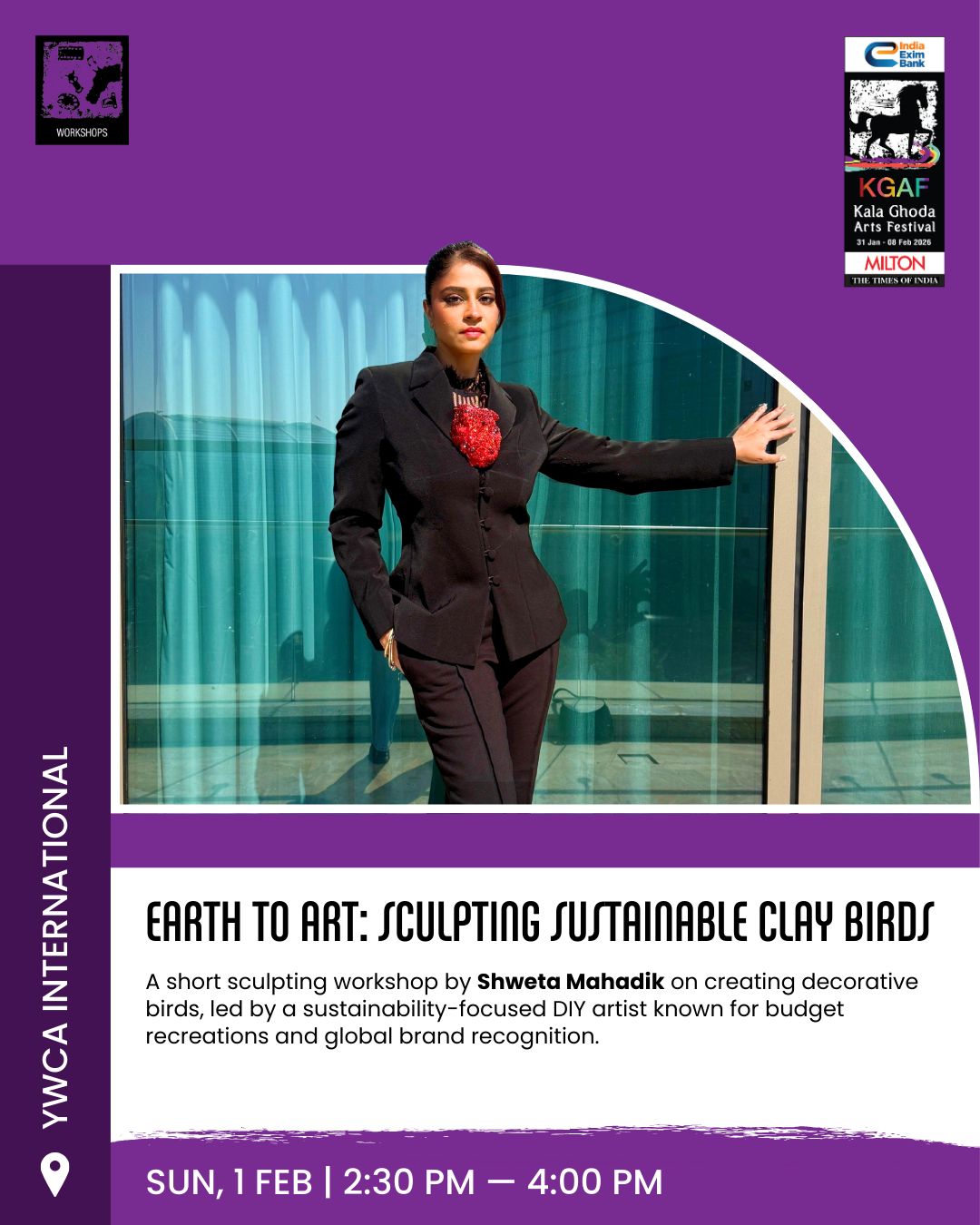
ShwetaMahadik X KalaGhodaWorkshop

The 90-minute hands-on workshop invites participants to reconnect with the joy of working with their hands. Guided step by step, attendees will shape clay into charming birds that can later be transformed into paperweights, wind chimes, or decorative table centrepieces. Designed for an intimate group of 25–30 participants, the session includes all materials and is open to beginners as well as craft enthusiasts.

More than a craft activity, the workshop celebrates mindful making, sustainability, and the beauty of imperfection, values that resonate with the spirit of Kala Ghoda.

Speaking about the initiative, Brinda Miller, Chairperson of the Kala Ghoda Arts Festival, said:

“Kala Ghoda has always been a space where art becomes something you can experience, not just observe. Workshops like this bring people closer to the creative process and remind us that art can be simple, tactile, and deeply personal.”

Shweta Mahadik first gained national attention during the COVID-19 lockdown with her imaginative DIY recreations blending fashion, sustainability, and accessibility. Her recreation inspired by the Sabyasachi Mukherjee x H&M collaboration went viral in the Indian fashion community. She later received international recognition when handpicked by American Eagle for a sustainability-focused campaign, with one of her upcycled garments showcased at an exhibition in London.

Reflecting on the workshop, Shweta Mahadik said:

“Working with clay feels grounding in a way that very few things do. These little birds are symbols of freedom and imagination, and I love the idea of people taking home something they created with their own hands. Art doesn’t have to be complicated; sometimes it just begins with touching the earth.”

Set within the vibrant Kala Ghoda precinct, the workshop promises to be more than an activity—it offers a shared moment of creativity, calm, and community amidst the city’s bustling rhythm.

For media enquiries, interviews, or further information, Shweta Mahadik is available for conversations and feature stories.

Union Budget 2026 can strengthen private credit and finance for sustainable growth

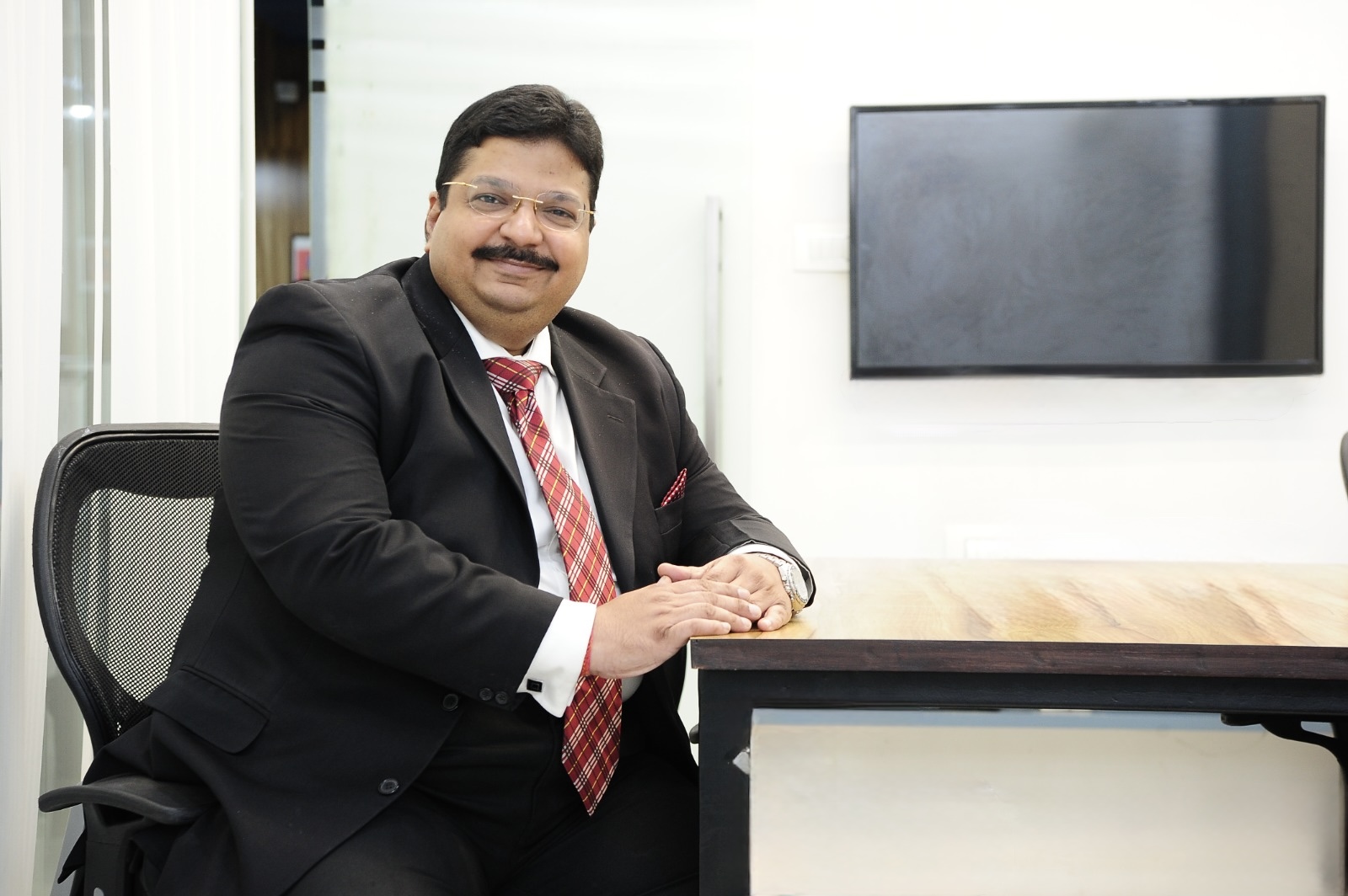
As India’s real estate and infrastructure sectors move into a more mature phase of capital formation, Budget 2026 presents a critical opportunity for the Finance Minister to strengthen the role of private credit and structured finance as engines of sustainable growth. writes Amit Goenka, CMD, Nisus Finance.
Dr.Amit Goenka
India’s real estate and infrastructure sectors are entering a more mature phase of capital formation, and the Union Budget 2026 has an opportunity to strengthen the role of private credit and structured finance in supporting sustainable growth. With residential demand remaining resilient across segments and nearly INR 18,000 crore already raised through capital markets in FY26 YTD, policy continuity and financial innovation will be critical to sustaining momentum.

From a private credit and alternative investment standpoint, we expect the Budget to focus on improving capital access for mid-market developers, enabling last-mile funding for stalled projects, and accelerating redevelopment-led urban renewal. Greater regulatory clarity for Category II AIFs, improved tax pass-through visibility, and wider participation from domestic institutional capital would further deepen India’s alternative investment ecosystem.

Continued emphasis on urban infrastructure, transit-oriented development, and redevelopment, particularly in high-density markets, along with faster approvals and predictable tax treatment, can meaningfully improve risk-adjusted returns for investors while strengthening long-term financial stability across the sector.

Life n Colors x Shabnam Gupta Reveal the ‘Neelvana’ Collection: A World of Monochromatic Forest Lore

New Delhi, India, Jan 29:  Somewhere in the soft haze between memory and imagination lies a forest that is at once quiet, layered, and deeply immersive. This is the world of Neelvana, the latest panoramic wallpapers collection by Life n Colors, India’s premier design house, co-created with the acclaimed interior designer, Shabnam Gupta.

Vana geet

Neelvana is born from a long-standing creative kinship between the two, across numerous high-profile residential and commercial projects, which reflects a shared approach towards ‘intentionally styled’ living. As its name suggests, Neelvana is a journey through an imaginary forest with illustrated landscapes and rich flora that breathe a sculptural depth into modern interiors. Through graceful arches and glimpses of architectural facades, the collection draws attention to the peace found within natural landscapes. It is a soulful reminder of the world’s vanishing greenery and a tribute to the quiet beauty we must never take for granted.

The collection features 25 scenic wallpaper designs that extend across walls, borders, ceilings, murals, panels, and wardrobes, allowing the visual language to move fluidly through a home rather than remain confined to a single plane. The impact the designs hold feels as if they were discovered rather than made, as if these patterns were unearthed from a forgotten garden or a vivid dream.

Speaking about the collaboration, Apourva, co-founder, Life n Colors, says,

“The idea of Neelvan felt natural, not as a theme, but as a state of mind. The palette in this collection mirrors the shifting soul of the forest throughout the day: the fresh Moss Green of morning, the warm Sepia of high noon, the ethereal Blue of dusk, and a Charcoal Grey that captures the mystery of the deep woods. Neelvana does not merely decorate a wall; it allows a room to breathe through the four distinct temperaments of a single day.”

Speaking on the design approach, Shabnam Gupta shares,

“The intention was to reinterpret the forest as a surface system; introducing a fresh sense of shade, scale, and layering without visual excess. These deep forests exist as an abstracted sanctuary rather than a direct reference. Working with Life n Colors brought this vision to life through their profound understanding of surfaces, scale, and the way high-end design lives within a home.”

Central to the collection are designs like Monochrome Ascents, which capture vertical vitality through stylised tree forms. In contrast, Monsoon Arches pairs the structure of architectural silhouettes with softened foliage – perfectly reflecting the signature balance of order and natural ease that defines the aesthetics of Life n Colors. Across the collection, surfaces are treated with intent: murals anchor the room’s narrative, while intricate borders provide architectural framing. Ceilings offer an unexpected depth to the room, and when extended to wardrobes and panels, the visual language integrates seamlessly into the rhythm of everyday life.

Parallel to its design narrative, Neelvana carries a quiet acknowledgment of the Aravali forests, which are slowly losing their density. This sensitivity extends into Life n Colors’ approach to making, where creation is guided by care and restraint, alongside conscious efforts to offset environmental impact. Over the past year, the brand has offset approximately 95,000 kg of CO₂ emissions.

This collection is now available through both Peacock Life & Life n Colors experience centre in Gurgaon, Mumbai, and their official website. It invites homeowners and designers alike to step out of the mundane and into a forest of their own making. An invitation to bring this soulful greenery into a space, the collection starts at INR 12,000 per 30 sqm.

Raffles Hotels & Resorts Strengthens Its Legacy in Rajasthan with the 2026 Raffles Sirmour Cup

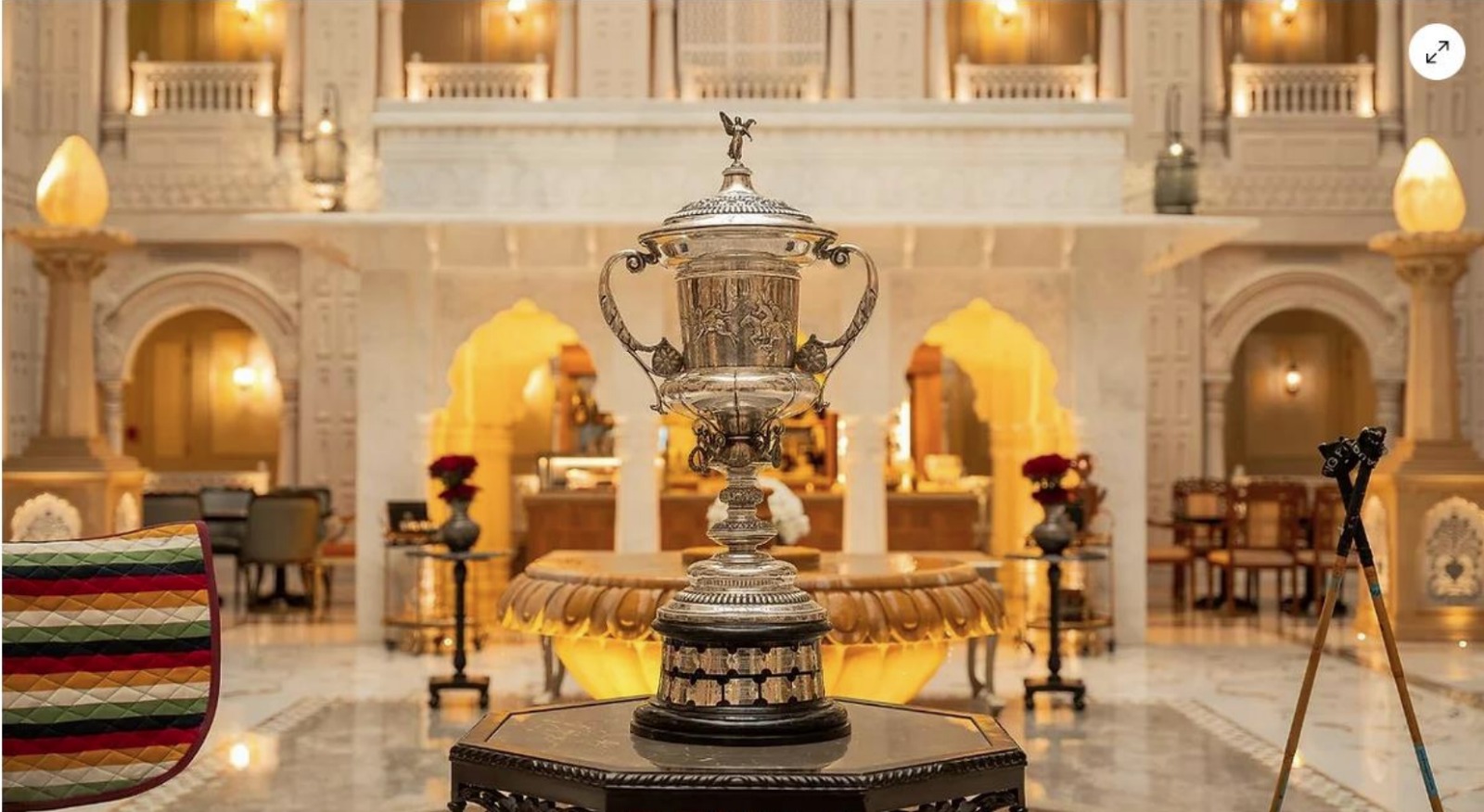
Jaipur, India, Jan 29:  Raffles Hotels & Resorts is pleased to reaffirm its association with the prestigious Rajasthan Polo Club through the continued sponsorship of the Raffles Sirmour Cup (14 goals)—one of the marquee tournaments of the Jaipur Polo Season. In 2026, Raffles Jaipur and Raffles Udaipur come together as co-sponsors, reinforcing the brand’s commitment to heritage-led experiences in India and its enduring belief in preserving and celebrating cultural traditions.

Raffles x Sirmour Cup 2026 (3)

The Raffles Sirmour Cup 2026 will be held from 9–15 February 2026, bringing together distinguished players, patrons and polo enthusiasts to celebrate the rich and storied legacy of the sport in the Pink City.

Founded under the patronage of the Royal Family of Jaipur, the Rajasthan Polo Club remains a proud custodian of Rajasthan’s equestrian heritage. Its historic grounds have, over the decades, welcomed global dignitaries including His Royal Highness Prince Philip and Her Majesty the Queen of England, HRH Prince Charles and the late Lady Diana, and former United States First Lady Jacqueline Kennedy, among others. Today, the Club continues to attract exceptional polo talent from India and abroad, seamlessly blending tradition with contemporary sporting excellence.

For Raffles, supporting the Sirmour Cup reflects a deep respect for the cultural fabric of Rajasthan. Polo, in this context, represents lineage, craftsmanship, camaraderie and pride—values that align closely with the brand’s philosophy. By championing the tournament, Raffles contributes to preserving this living legacy while offering guests an authentic window into a tradition that continues to define the region.

Commenting on the association, Rajat Sethi, Cluster General Manager, Raffles and Fairmont Jaipur, said,

“The Jaipur Polo Season is one of the city’s most defining winter traditions, and the Raffles Sirmour Cup holds a special place in that calendar. For Raffles Jaipur, this partnership allows us to deepen our role as a cultural partner—connecting guests with Jaipur’s heritage while celebrating the elegance, excellence and spirit of the sport.”

Gurnoor Bindra, General Manager, Raffles Udaipur, added,

“At Raffles Udaipur, our philosophy is rooted in thoughtful hospitality that honours India’s rich cultural heritage. Supporting the Raffles Sirmour Cup strengthens our commitment to preserving tradition and celebrating a sport deeply interwoven with Rajasthan’s identity. We look forward to contributing to a season that brings together legacy, sport and distinguished company.”

Through this continued partnership, Raffles Jaipur and Raffles Udaipur honour a cherished sporting tradition while offering guests a refined and immersive glimpse into Jaipur’s most iconic winter moments where heritage, community and the unmistakable charm of Raffles converge on and beyond the polo field.

Australia Deepens Karnataka Engagement; University of New South Wales to Establish Bengaluru Campus

Bengaluru, Jan 29: Australia is set to significantly deepen its engagement with Karnataka, positioning the state as a strategic hub for bilateral collaboration across education, technology and business.

1769578720057

Addressing delegates at an interactive session on Tariff-Free Access for Indian Exporters under the India–Australia Economic Cooperation and Trade Agreement (ECTA), Mr. Vik Singh, Consul (Commercial) and Trade & Investment Commissioner, South Asia, Australian Trade and Investment Commission, highlighted the growing momentum in Australia–India relations, with Karnataka emerging as a central pillar of this expanding partnership. The session was organised by the Bangalore Chamber of Industry & Commerce (BCIC) under the aegis of its International Business Expert Committee, in association with World Trade Center Bengaluru.

Education and technology remain priority sectors in the bilateral relationship. In a major development, the University of New South Wales (UNSW) has announced plans to establish a branch campus in Bengaluru, with discussions already underway with the Government of Karnataka. The campus is expected to become operational next year.

“As one of the world’s leading universities, UNSW’s decision to establish a presence in Bengaluru reflects the confidence Australian institutions have in Karnataka’s talent ecosystem and innovation potential,” said Mr. Singh. “The campus will play a key role in strengthening academic collaboration, research partnerships and technology exchange between Australia and India.”

Ranked among the world’s top universities, UNSW’s proposed Bengaluru campus is expected to contribute significantly to advanced education, joint research initiatives and industry-linked innovation, further reinforcing Karnataka’s position as a global education and knowledge hub. The initiative marks an important milestone in Australia’s long-term engagement with India and underscores Karnataka’s growing stature as a preferred destination for international universities and global investors.

“Karnataka has emerged as one of Australia’s most important partners in India, driven by strong synergies in education, innovation and enterprise,” Mr. Singh added. “This is reflected not only in growing trade and investment flows, but also in Australia’s decision to establish one of its largest consular presences in India here, second only to the High Commission in New Delhi.”

India–Australia ECTA: A Landmark Development

Highlighting the trade dimension, Mr. K Ravi, Senior Vice President, BCIC, said, “The implementation of tariff-free access for Indian exporters under the India–Australia ECTA is a landmark development that will significantly enhance India’s export competitiveness. With 100 percent of Australian tariff lines moving to zero duty from January 1, 2026, this historic step unlocks new opportunities across key sectors such as textiles, engineering goods, pharmaceuticals, gems and jewellery, and agriculture—accelerating MSME-led growth, boosting employment and expanding India’s export footprint.”

He added that BCIC will play a key role in supporting exporters by driving industry preparedness, facilitating buyer–seller engagements and ensuring that MSMEs are well-equipped to leverage the agreement, further strengthening bilateral trade and economic cooperation.

The deepening relationship is further underscored by the launch of a direct Sydney–Bengaluru flight by Qantas, significantly improving connectivity and accelerating business, academic and people-to-people exchanges between the two regions.

Mr. Singh also outlined the major sectors poised to benefit from deeper Australia–India engagement. Clean energy stands out, supported by Australia’s net-zero targets and rising renewable investments. Education and skills development continue to enable greater student mobility, academic collaboration and joint research. Agribusiness is gaining momentum through improved market access, food processing opportunities and agri-technology cooperation, while tourism is emerging as a high-growth sector driven by rising outbound travel from India. Overall, the services sector—particularly IT, professional services and education—is expected to be the most significant long-term beneficiary of the partnership.

India forecast to be fastest-growing major economy in 2026, says ACCA report

Jan 29:Despite significantly higher-than-expected US import tariffs, the Indian economy has demonstrated remarkable resilience, expanding 8.2% year-on-year in the July–September quarter, supported by strong consumer spending, according to ACCA’s latest Global Economic Outlook.

In contrast, the global economy is expected to grow at a steady but unspectacular pace in 2026, aided by easier monetary policy, fiscal stimulus in key economies, and the continued artificial intelligence (AI) boom. However, the outlook remains clouded by downside risks amid a volatile and unpredictable global environment.

India is set to benefit further from robust consumer demand, low inflation, GST cuts, monetary easing, and strong government-led infrastructure investment, while the services sector is expected to remain a key growth driver, supported in part by exports. Recent labour market and bankruptcy law reforms could enhance the economy’s longer-term performance. A potential trade agreement with the US and continued low global oil prices would provide additional upside, while domestic food price movements remain a key risk to monitor.

Md. Sajid Khan, Director – India at ACCA, said:

“It’s extremely encouraging to see the Indian economy remain resilient despite the sharp increase in US import tariffs, supported by strong consumer spending. Our report indicates that India is likely to remain the world’s fastest-growing major economy in 2026, with recent reforms offering the potential to strengthen its long-term performance.”

The third edition of ACCA’s annual outlook finds that global growth in 2025 was stronger than expected despite major trade disruptions and policy uncertainty. This resilience is expected to carry into 2026, with global GDP projected to expand by around 3%, broadly in line with last year, although risks remain tilted to the downside.

Former IMF Chief Economist Ken Rogoff, interviewed for the report, described the global economy as “solid but not exciting,” while warning that current financial markets may not fully reflect the scale of uncertainty. He cautioned about the risk of a significant stock market correction over the next three years, even as markets may rise further in the near term.

“Populist policies work until they don’t,” Rogoff noted, warning of potential negative consequences for the US economy emerging in 2027 and 2028.

Jonathan Ashworth, Chief Economist at ACCA and author of the report, said:

“Under a central scenario, the global economy should continue to expand steadily in 2026, supported by looser monetary policy, fiscal easing, and the ongoing AI boom. The US is likely to be the fastest-growing G7 economy, but this remains a fragile backdrop amid heightened geopolitical uncertainty, renewed trade tensions, and concerns over threats to the Federal Reserve’s independence.”

The report highlights three key themes likely to shape the global economic outlook in 2026:

  • Developments in AI: Evidence that AI investment is boosting productivity could ease concerns of an AI-led market bubble; failure to deliver such gains may heighten correction risks.

  • Advanced economy bond markets: A sharp rise in government bond yields could strain economies and raise debt-servicing costs, driven by debt sustainability concerns, political instability, or monetary tightening in Japan.

  • Global trade dynamics: The ongoing impact of higher US tariffs and the risk of renewed trade tensions warrant close monitoring.

Business leaders contributing to the report also highlighted AI adoption, geopolitics, trade, the green transition, and cybersecurity as defining issues for 2026.

Ashworth added:

“In an increasingly volatile and rapidly changing world, understanding the interaction between economic, geopolitical, political, and technological forces will be critical for businesses and policymakers alike.”

The 2026 Global Economic Outlook offers in-depth analysis and strategic insights for finance leaders navigating an uncertain global landscape. The full report is available for download.

The Gypsy Travel Festival Returns to Mumbai with Its Most Ambitious Edition Yet Wander. Discover. Dream.

Mumbai, Jan 29: Travel is no longer aesthetic-only. It’s time to swap screens for stories, hashtags for handshakes, and curated feeds for lived experiences. This February, Mumbai becomes the epicentre of global discovery as The Gypsy Travel Festival (TGTF), India’s premier consumer travel showcase, returns with its 4th edition on 7th & 8th February 2026 at Jio World Drive, BKC. Running from 3 PM to 10 PM, TGTF brings together destinations, travel brands, industry experts, and experience-led audiences under one dynamic roof, redefining how Indian travellers discover and plan their holidays.

The Gypsy Travel Festival - 5

“TGTF was created as a space where travel conversations could move beyond brochures and algorithms,” says Lubaina Sheerazi, Co-founder, The Gypsy Travel Network. “Over the years, we’ve seen Indian travellers become more curious, more informed, and far more intentional. This edition reflects that shift, bringing together destinations and brands that offer depth, authenticity, and experiences people genuinely want to engage with before they travel.”

Bringing the World to Mumbai

As India’s appetite for immersive, experience-led travel continues to surge, TGTF has evolved into a platform that brings global cultures, conversations, and journeys directly to Indian audiences.

This year’s edition features powerful destination-led storytelling and immersive showcases, including:

  • Amazing Thailand, presented in partnership with the Tourism Authority of Thailand, spotlighting culture-rich cities, island escapes, wellness journeys, festivals, and emerging sustainable routes.
  • Visit Sapporo, Japan’s northern wonderland, Hokkaido, offering a window into snow-laden landscapes, world-class produce, hot springs, and seasonal adventures that redefine experiential travel.
  • Magical Kenya, unveiling vibrant coastline, bustling cities, and experiences beyond iconic safaris and unforgettable wildlife encounters that continue to top global bucket lists.

June Chepkemei, CEO, Kenya Tourism Board, said,

“Kenya and India share a natural affinity rooted in connectivity, cultural appreciation, and a mutual understanding of quality travel experiences.” Chepkemei also stated. “Our presence in Mumbai allows us to meet Indian travellers where they are making crucial decisions about their next international journey, presenting Kenya’s full spectrum of offerings in ways that inspire genuine interest and action.”

TGTF 2026 also features a curated selection of lifestyle and hospitality partners like Club Med, CGH Earth, HomeExchange, and Rare India whose offerings reflect contemporary travel sensibilities, where design, storytelling, and utility come together in ways best experienced on the ground. The event will also feature many local and global culinary experiences, fireside chats with food voices we love and trust, and conversations with TV’s favourite Chef Vicky Ratnani and the trusted authority on India’s street food, Rocky Singh.

Across two high-energy evenings, attendees can:

  • Tune into Travel Talks led by industry insiders and seasoned travellers
  • Participate in hands-on workshops covering itinerary design, smart planning, and real-world travel hacks
  • Explore immersive installations and destination-led experiences
  • Sample global flavours, unlock festival-exclusive deals, and connect with a community that truly gets travel

Whether you’re planning your next big escape, looking for fresh inspiration, or simply craving discovery beyond the algorithm, The Gypsy Travel Festival is where travel stops being a scroll and starts becoming a story.

NICMAR’s Bharat Nav-Nirmaan Challenge Sees 500+ Colleges, Including IITs and NITs, Participate

New Delhi, Jan 29: NICMAR, India’s premier and dedicated institution for Construction, Real Estate, Infrastructure and Project Management education  has received an overwhelming nationwide response to its flagship Bharat Nav-Nirmaan Challenge, with participation from more than 500 colleges across the country. The initiative aims to encourage undergraduate students to solve real-world infrastructure challenges has now evolved into one of India’s largest student-led innovation movements focused on the built environment.

Supported by the All India Council for Technical Education , the Bharat Nav-Nirmaan Challenge offers prizes worth INR 30 lakh. Designed as a structured, multi-stage and multi-city programme, the challenge ensures wide grassroots participation while systematically identifying and nurturing promising ideas at a national level. Over 500 participating colleges are currently conducting their college-level rounds, each independently hosting evaluations to select one winning team. These rounds will conclude by 31st January, after which selected teams will advance to the next phase of the competition.

College-level winners will progress to city-level cohort rounds, where teams from peer institutions will compete regionally. City rounds are being hosted across 11 key venues including Pune, Ahmedabad, Kolkata, Chennai, Hyderabad, Delhi, Bengaluru, Kochi, Lucknow, Mumbai and Chandigarh. Winners from the city rounds will move on to the Regional Rounds, followed by the National Grand Finale, where finalists will present their ideas before industry experts, academicians and thought leaders.

The Bharat Nav-Nirmaan Challenge has also drawn participation from several leading and well-recognised institutions, underlining its academic relevance and national significance. Participating institutions include IIT Bombay, IIT Delhi, IIT Madras, IIT Kanpur, IIT Kharagpur, IIT Hyderabad, along with NIT Calicut, NIT Hamirpur, NIT Kurukshetra, NIT Meghalaya, and hundreds of other engineering, architecture and planning institutions across metro cities and emerging education hubs.

Commenting on the scale and impact of the initiative, Gaurav Bajpai, Director, Marketing, NICMAR, said, 

“The response to Bharat Nav Nirmaan Challenge has been truly overwhelming. With participation from more than 500 colleges and students engaging across multiple cities and stages, the initiative has evolved into a genuine national movement. It clearly reflects the aspiration of India’s youth to contribute meaningfully to the country’s infrastructure and development journey. Bharat Nav Nirmaan is not just a competition-it is a platform where ideas meet opportunity, and young innovators begin shaping the future of the nation.”

The initiative is anchored in the vision of Atmanirbhar Bharat and Viksit Bharat 2047 is encouraging final-year and pre-final-year undergraduate students in civil engineering, architecture, core engineering and allied disciplines to move beyond classroom learning and engage with practical, future-ready solutions for India’s infrastructure needs. Student teams are developing ideas across key focus areas such as sustainable infrastructure, urbanisation, mobility, housing, energy efficiency, water management and resilient cities.

Fynd’s Republic Day Report 2026 reveals New Shopping Patterns in Fashion E-commerce

Mumbai, Jan 29: Fynd, AI native retail technology company backed by Reliance Retail Ventures Limited, today released its Republic Day Report 2026, offering a data-led view into how India’s e-commerce landscape is evolving during one of the country’s most significant national sale events.

The Republic Day sale period in 2026 recorded 157.4K orders with a gross sales value of ₹298.2 million. While overall volumes were slightly moderated compared to 2025, the data indicates a more measured, value-conscious consumer mindset, signalling a shift away from impulse-led discount shopping toward trust, relevance, and convenience-driven purchases.

Drawing insights from leading marketplaces including Myntra, Flipkart, Amazon, AJIO, and Nykaa, the report analyses shopping behaviour across apparel, footwear, and ethnic wear categories, revealing a maturing e-commerce market where how and when India shops is changing as meaningfully as what it buys.

Key Insights:

  • Marketplace leadership holds: Myntra led Republic Day shopping with over 45% of marketplace order share, followed by Flipkart and Amazon, reaffirming marketplaces as the default discovery channel
  • Prepaid trust strengthens: Digital payments crossed 53% of total transactions during the sale period, signalling rising consumer confidence in prepaid modes even during high-volume events
  • Discounting stays aggressive, but segmented: Fashion-led platforms offered average discounts of 50–60%, while premium and luxury platforms maintained tighter discount strategies under 40%
  • Monday outperformed weekends: Contrary to conventional sales patterns, Monday recorded the highest order volumes during the Republic Day sale period
  • Late evenings dominate: Order activity peaked around 10 PM, highlighting post-work, leisure-driven browsing as the primary conversion window
  • Omnichannel fulfilment balances out: Store-based fulfilment matched warehouse dispatches in 2026, with store leading 50.8% compared to 49.2% by warehouse, reflecting improved store readiness and smarter inventory routing
  • Clear category platform affinities: Casual wear category was led by Myntra and Flipkart, ethnic wear was overwhelmingly Myntra-led, while footwear demand was distributed across multiple marketplaces
  • Non-metro demand leads: Tier 2 and 3 cities together accounted for over 60% of total Republic Day orders, reinforcing the continued expansion of e-commerce beyond metro.

“This Republic Day, Indian ecommerce proved it’s evolving not just in scale, but in intelligence. Brands are no longer just participating in sales; they are optimizing them. From using stores to fulfill more orders to narrowing discount bands and engaging late-night shoppers, we are seeing a smarter, more agile playbook emerge. With deep omnichannel expertise, Fynd’s platform enables brands to seamlessly unify online and offline operations, bringing data, inventory, and customer experiences together in one intelligent layer,” said Ragini Varma, Chief Business Officer, India, Fynd”, said Ragini Varma, Chief Business Officer – India, Fynd.

While Republic Day is a shorter shopping window compared to festive seasons, the findings mirror broader structural shifts in Indian e-commerce from weekday-led demand and prepaid trust to omnichannel readiness and tighter platform-category alignment, signalling a market that is growing smarter, not just larger.

Real Estate Experts Call for Budget Measures to Boost Affordable Housing and Urban Development

Mr. Darshan Govindaraju, Executive Director at Vaishnavi Group

The upcoming Budget is a key opportunity to deepen buyer confidence and strengthen the housing ecosystem. A sustained push on urban infrastructure, access to long-term capital, and ease-of-doing-business reforms will be critical for stable, long-term growth in real estate. Policy measures that support homebuyers and improve sector liquidity can meaningfully accelerate India’s urban development agenda.

Mr. Madhusudan G, CMD at Sumadhura Group

As we look ahead to Budget 2026, the real estate sector is seeking not blanket measures, but thoughtful, targeted policies that reflect a maturing and increasingly segmented market. Moreover, it is important to revisit the ₹45 lakh affordable housing cap on a city-specific basis so that incentives reach genuine first-time buyers. Long-pending structural reforms such as a time-bound single-window clearance system to streamline project approvals and the formal recognition of real estate as an industry are also crucial.

Ramji Subramaniam, Managing Director, Sowparnika Projects

One of the key interventions that we urge the government to consider is extending the 1% GST benefit for affordable housing to homes priced up to INR 65-75 lakh, from the current INR 45 lakh threshold. With land prices in cities rising by 50-75% in recent years and construction costs escalating due to higher raw material prices and a persistent shortage of skilled labour, such a move would reflect current market realities. It would offer relief to first-time homebuyers while allowing developers to focus on making housing accessible for all.