Archives February 2026

Sesame Workshop, Abbott Launch Initiative to Promote Healthy Habits in Indian Children

Sesame Workshop, the global nonprofit behind Sesame Street, with support from global healthcare company Abbott, today launched new healthy habits resources in India. This program aims to help families establish routines around nutrition, physical activity, and sleep from an early age, laying the foundation for lifelong wellness and reducing the risk of chronic illnesses. Abbott and Sesame Workshop in India are sharing resources in Hindi to help make health concepts easy and simple to understand and practice. This adaptation of the global program reflects local culture, community systems, and the unique needs of children and caregivers in India.

As part of this program, a family special, Elmo’s World: Dance Party, was premiered in Hindi on the India YouTube channel Featuring everyone’s favorite Sesame Street residents, lively music, and engaging movement activities, the special encourages children and caregivers to explore healthy behaviors together in a fun and supportive environment.

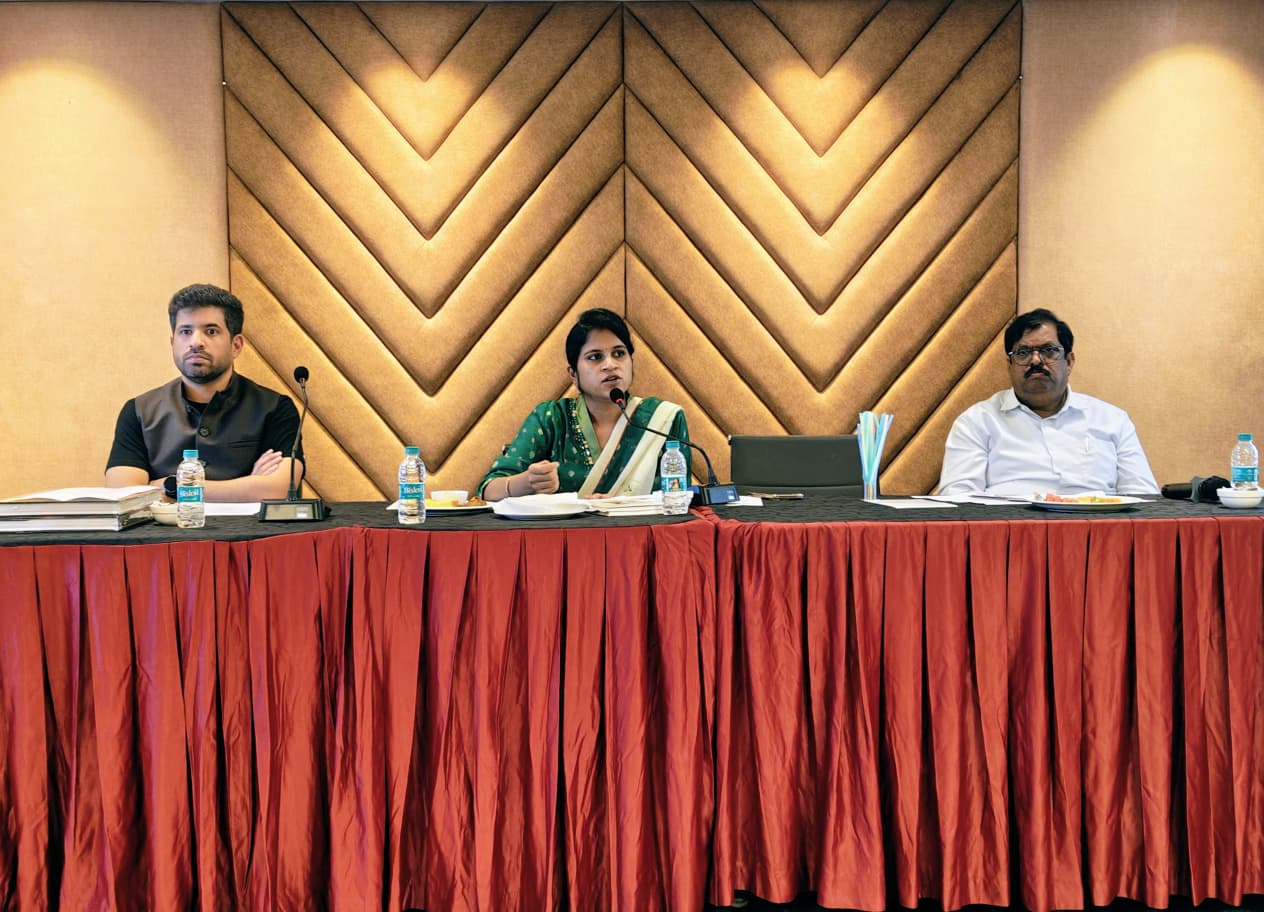
The program was officially launched recently in Lucknow by Smt. Leena Johri, Additional Chief Secretary – Women and Child Development, Government of Uttar Pradesh. The on-ground launch brought together representatives from the government, Sesame Workshop India, Abbott India, and frontline health workers from local Anganwadi centers. This on-ground launch represents a significant step toward fostering healthy routines from an early age.

At the event, Anganwadi workers received the healthy habits resources, highlighting the critical role of community systems and government support in promoting healthy behaviors at the grassroots level. Designed with a strong focus on early childhood, the resources feature beloved Sesame Street characters and use play-based learning and simple activities to help children and caregivers adopt healthy habits. In India, the program offers Hindi-language resources such as storybooks, activity books, yoga guides, calendars, flashcards, and interactive games. These materials are distributed through childcare centers, community platforms, and digital channels to support families and frontline workers (from local Anganwadi Centres).

During the launch, Smt. Johri emphasized the need to address the physical, mental, and emotional wellbeing of children in a timely manner, noting that encouraging healthy habits, such as balanced nutrition, regular physical activity, structured daily routines, and positive thinking, from an early age plays a crucial role in enabling children to lead healthy and empowered lives. She also drew attention to the importance of focused efforts in remote and underserved areas, stressing the value of play-based and activity-oriented learning, connection with nature, and the creation of safe, supportive, and nurturing environments for children.

She further reiterated the Department of Women and Child Development’s ongoing efforts to strengthen the implementation of programs related to nutrition, health, education, and mental wellbeing at the grassroots level, and highlighted the importance of collaborative initiatives involving government systems, local communities, Anganwadi workers, ASHA workers, and social organizations in achieving these objectives.

Reflecting on the initiative, Sonali Khan, Managing Director, Sesame Workshop India, said

“The healthy habits program is rooted in the belief that healthy habits, when introduced early, can shape a child’s wellbeing for life. Through this initiative, we are reaching more than 10000 children and caregivers on-ground by working closely with Anganwadi centres and ASHA workers, while also connecting with millions of families through digital platforms, including our YouTube special and related resources. By aligning with existing government programs and community systems active in Uttar Pradesh, the initiative complements the state’s ongoing efforts to strengthen nutrition, health, and early childhood development, helping make healthy routines a part of everyday life for children and families”

Rackspace and Palantir Partner to Run Foundry and AIP in Production with Governed Managed Operations

Customers to gain accelerated AI-driven business outcomes from implementation expertise, cloud hosting, and data migration support in a governed operating model

 San Antonio, TX – Feb 19– Rackspace Technology® (NASDAQ: RXT), a hybrid multicloud and AI solutions company, and Palantir Technologies Inc. (NASDAQ: PLTR), a global leader in operational artificial intelligence platforms, today announced a strategic partnership to help enterprises rapidly deploy and operate Palantir’s Foundry and Artificial Intelligence Platform (AIP) in production to achieve measurable business outcomes.

 Through this partnership, Rackspace’s governed operating model will provide consistent security, operating controls and compliance from edge to core to cloud enabling customers to deploy AI use cases with Palantir in production in weeks or months versus months or years. The companies are also collaborating to run Palantir software in Rackspace’s Private Cloud and UK Sovereign data centers. This is especially critical for regulated industries where AI deployments must meet strict data sovereignty and compliance requirements. 

 Organizations struggle to extract business value from AI and data platforms because deploying and operating these systems at scale requires specialized expertise they often don’t have in-house. As Palantir’s strategic partner in data migration and global implementation services, Rackspace will help customers prioritize their most high-impact business problems, then deliver implementation, including data readiness, hosting, and ongoing managed operations of Palantir’s platform to realize outcomes. As part of this collaboration, Rackspace has 30 Palantir-trained engineers to provide data migration and apply a forward deployed approach to solving high impact customer problems and is on track to scale to over 250 in the next 12 months.

 “Organizations need AI that works in production, not just in demos,” said Gajen Kandiah, CEO of Rackspace Technology. “Palantir’s platform, combined with Rackspace’s governed cloud operations and our shared forward deployed engineering approach, enables customers to accelerate time to value and drive competitive business impact with governance and security. This is especially important in regulated industries.”

 The partnership combines Rackspace’s 25 years of experience managing mission-critical enterprise workloads across hybrid environments with Palantir’s decision-intelligence platform. Customers can benefit from a turnkey deployment model designed to reduce risk and operational burdens and accelerates time to value. For regulated and data-sensitive organizations, this partnership aims to deliver greater confidence to deploy advanced AI capabilities in a private cloud environment that meets sovereignty, security, and residency requirements.

 “Organizations that adopt our AI Operating Systems fundamentally change their unit economics. In the context of migrating complex data environments, Palantir AIP is taking completion timelines from years to days. Rackspace will help our customers accelerate their pace of adoption and as a result, lead their respective industries,” said Sameer Kirtane, Head of US Commercial at Palantir.

 Integrated Service Delivery Across the Stack

Customers want a consistent way to deploy, govern, and operate AI across their data environments, with accountability and measurable outcomes. Unlike point solutions that require customers to manage infrastructure, data pipelines, and AI operations separately, this partnership is aimed at providing end-to-end infrastructure hosting, data migration, implementation services and ongoing managed operations as an integrated service.


Is Humanity Sleepwalking Into a Digital Dark Age… Why Nearly All Knowledge Is Still at Risk…

PHOENIX, Ariz, Feb. 19— What if humanity’s greatest knowledge crisis isn’t in the past — but unfolding right now? In an age of cloud storage, artificial intelligence and instant information, global innovator and engineer Jack R. Bialik warns of the hidden risks of a fully digital society — and what history reveals about how knowledge is lost.

 “A DVD or a CD … those only last 30 or 40 years,” Bialik said in a recent interview. “Thumb drives or USB drives or solid-state drives … how long do those last? How long does your computer last? Five or 10 years? We’re taking our information, putting it on denser things with no thought about how long it lasts.”

 In his new book, Lost in Time: Our Forgotten and Vanishing Knowledge, Bialik reveals a startling reality: only 1.6 percent of our collective history has been preserved, and today’s preferred method of preservation — digital records — may be placing humanity’s memory on its most unstable footing yet.

 Through bite-sized nuggets of wisdom, Lost in Time takes readers on a captivating exploration of humanity’s lost ingenuity and the forgotten knowledge that once shaped civilizations. Spanning centuries and continents, the book uncovers astonishing technologies, philosophies and cultural practices that have been buried under the sands of time — some of which are more advanced than what people use today. Bialik effortlessly confronts the assumption that only modern-day humans are capable of producing innovative feats of technology and brilliance.

 With meticulous research that spanned over 10 years and compelling storytelling, Bialik highlights how these past innovations could still hold the potential to address modern challenges, from knowledge sustainability to societal resilience. Lost in Time unravels the intricate tapestry of human civilization, weaving together narratives of inventions of yesterday, overlooked pioneers and epoch-defining discoveries that have shaped the modern world.

 Among the amazing facts readers will learn:

•             Cataract surgery was being performed in India more than 2000 years ago.

•             The first known fountain pen was created centuries before Europe “invented” it.

•             Ancient civilizations debated waste disposal and sanitation solutions that rival or even surpass some modern systems.

 Through thought-provoking analysis, Lost in Time examines the fragile nature of human knowledge and the forces — be they war, natural disasters or changing priorities — that contribute to its disappearance.

 However, Lost in Time is more than an archive of historical losses. Bialik inspires readers to reconnect with the lessons of the past as a means of fostering a more informed and innovative future. He challenges readers to consider whether humanity is building a legacy of accessible wisdom — or an archive of forgotten lessons.

 In Bialik’s own words: “We keep trying to save knowledge, and what we need to do is turn the knowledge into wisdom so that it can be saved from generation to generation.”

 Both a cautionary tale and a celebration of resilience, this book illuminates the enduring power of human curiosity and determination. Readers will contemplate how much of humanity’s ingenuity has been left behind, urging them to consider the steps needed to safeguard knowledge for generations to come.

 From history enthusiasts to curious thinkers to those passionate about reclaiming lost wisdom, this book offers a fascinating lens through which to view humanity’s enduring quest for progress. This book is appropriate for grade school children all the way to adults of all ages.


Mukta Arts and Green Gold Animation Partner to Create Animated Shows and Films from Mukta IP

Mumbai, Feb 19 : Mukta Arts Ltd. and Green Gold Animation have announced the signing of a Memorandum of Understanding (MOU) to collaborate on the development and production of animated shows and feature films based on Mukta Arts’ iconic intellectual property portfolio.

As part of its strategic expansion into animation, Mukta Arts launched SGM Animation Studio in 2025 as its dedicated Animation and Games division. The studio is focused on developing, producing and co-producing animated films, series, comic books and games, leveraging Mukta Arts’ rich IP library built over four decades, along with creating new original properties rooted in the company’s storytelling legacy.

Green Gold Animation, founded by Rajiv Chilaka, is India’s leading animation studio and the creator of some of the country’s most successful homegrown animation IPs, including the globally popular Chhota Bheem universe. With decades of experience and hundreds of hours of animated content, Green Gold brings deep expertise in building scalable, character-driven franchises for television, OTT and feature films.

Under the MOU, Mukta Arts and Green Gold Animation will work together to develop multiple animated IPs inspired by landmark films from Mukta Arts’ celebrated catalogue, including Kalicharan, Karz, Hero, Karma, Ram Lakhan, Khalnayak, Saudagar, Iqbal and more, along with character-led spin-offs from these universes.

Creative teams from Mukta Arts and Green Gold Animation have already initiated discussions, with the first project currently in development.

Commenting on the collaboration, Rajiv Chilaka, Founder and CEO, Green Gold Animation, said

“This partnership with SGM Studios allows us to apply our experience in building long-lasting animation IPs to a truly iconic film catalogue. Together, we aim to create animated worlds that are rooted in these legendary stories, yet designed to connect with today’s young, global audiences.”

Subhash Ghai, Filmmaker and Founder, Mukta Arts Ltd added,

“Mukta Arts has always believed in creating stories with lasting emotional value. Through animation, we are extending our IP into a new medium for the next generation.”

Edge Announces Edge Elevate, Establishing Company as Unified Talent Network

New cohesive talent experience enables long-term workforce reliability and scale to address the rapidly escalating administrative capacity crisis

 SAN FRANCISCO – Feb. 19 –Edge announced Edge Elevate, a significant evolution of its talent experience designed to support scalable growth across roles, markets, and categories globally. Employers are shifting from hiring for isolated roles to building ongoing, distributed workforces. This platform-level evolution addresses that shift, establishing Edge as a unified talent network built for scale and empowering customers with long-term workforce durability.

 Most workforce platforms are based on transactional hiring models, which rely on static resumes, one-off applications, and opaque advancement paths. This clearly isn’t working, as the administrative capacity crisis is rising faster than organizations can adapt. More than three-fourths (75.5%) of healthcare leaders we recently surveyed reported that workload has increased over the last 12 months, and 56.3% are facing weekly or daily administrative backlogs.

 Edge Elevate replaces this fragmented, suboptimal approach with a cohesive talent experience based on single, enduring talent profiles, standardized roles, structured development, and transparent progression.

 “Fragmented hiring experiences no longer support the reliability or scale modern businesses require,” said Edge CEO Iffi Wahla. “As roles become more specialized and teams more global, companies need talent models that prioritize consistency, transparency, and long-term development. Edge is answering the call with a durable platform experience.”

 Key elements of Edge’s unified talent network include:

  • Talent Application 2.0 – Serving as a single, enduring talent profile that captures experience, feedback, certifications, and readiness
  • Standardized role catalog – Clearly defining the roles supported by the platform
  • Edge Edu integration – Tying Edge certifications directly to advancement

“Talent Application 2.0 is the anchor for our platform evolution,” explained Ghazanfar Idrees, Edge chief product officer. “Giving talent a persistent profile and clear visibility into roles, feedback, and growth creates better experiences for workers and a higher-quality network for Edge customers – empowering these organizations to conquer the administrative capacity crisis, effectively scale their operations, and grow stronger.”

Talent benefits from:

  • Having one profile that carries forward, instead of having to reapply for jobs repeatedly
  • Gaining clearer visibility into roles, expectations, and growth paths
  • Accessing structured development tied directly to advancement

Customers benefit from:

  • More consistent quality and role clarity
  • Talent who are developed and progressed against defined standards
  • Reduced variability as Edge scales across roles and markets

 “After five years of rapid expansion, Edge is entering our next phase of growth,” said Wahla. “Far beyond job-by-job hiring, Edge Elevate reflects our deliberate shift toward a unified talent network, built to scale with clarity, consistency, and long-term development at its core.”


MAHE Partners with OpenAI to Integrate Artificial Intelligence Across Teaching, Learning, and Research

Manipal, Feb 19th: Manipal Academy of Higher Education (MAHE), an Institution of Eminence Deemed to be University, has partnered with OpenAI to integrate advanced artificial intelligence (AI) tools across teaching, research, and academic administration. This collaboration aims to enhance learning outcomes, accelerate research productivity, and equip students and faculty with critical AI skills for a rapidly evolving global workforce. MAHE will implement AI-powered tools and resources across its academic programs to support personalised learning, boost critical thinking, and encourage ethical AI use. Faculty will also gain access to advanced AI tools for curriculum planning, research, and innovation.

Lt. Gen. (Dr.) M D Venkatesh, Vice Chancellor, VSM (Retd.), MAHE, said, “MAHE has always been guided by academic excellence and innovation. Our partnership with OpenAI represents a strategic step toward embedding AI as a transformative enabler across teaching, research, and administration. By integrating advanced AI tools responsibly, we aim to enhance learning outcomes, accelerate research impact, and prepare our students for leadership in an AI-driven world.

The collaboration will focus on building AI literacy across disciplines, ensuring that students from Health Sciences, Technology & Science, Management, Law, Humanities & Social Sciences, and allied fields gain practical exposure to AI applications relevant to their domains. MAHE will also promote interdisciplinary research and innovation using AI to address complex real-world challenges.  MAHE will also establish structured AI governance guidelines to ensure responsible, ethical, and transparent governance use of artificial intelligence across academic functions.

The partnership aligns with MAHE’s long-term digital transformation roadmap and reinforces its commitment to innovation, industry relevance, and societal impact. With this collaboration, MAHE reinforces its vision of becoming a globally benchmarked, AI-enabled university committed to shaping responsible innovation and future-ready leaders.

Capgemini becomes proud partner of India-France Year of Innovation 2026

Mumbai, Feb 19th: Capgemini today announced its platinum partnership with the India-France Year of Innovation 2026, reinforcing the company’s commitment to accelerating innovation and strengthening cross-border collaboration between the two countries. As part of this collaboration, Capgemini has developed a digital platform that connects innovators across India and France, creating a single environment for organizations to partner, connect, learn, and stay updated on programs and events in both countries.

Capgemini’s selection as a partner is underpinned by its global innovation capabilities, and its proven track record in building global ecosystems that connect organizations with emerging technologies, start-ups and academic institutions – to empower enterprises to accelerate real-world innovation and turn ideas into scalable impact. The company’s continued investments in advanced technologies, supported by a significant number of employees being trained in generative AI, further positions Capgemini to support innovation initiatives at scale.

“India and France are deepening their collaboration in emerging technologies, particularly in areas such as artificial intelligence, where both countries share a common vision and long‑term strategic interests. This makes 2026 a significant milestone in their innovation journey. As an AI‑powered business and technology company and a proud partner for the Year of Innovation, Capgemini brings its expertise in supporting complex, multi‑stakeholder initiatives across geographies. We combine our technology leadership with extensive experience in large ecosystem engagements to help organizations collaborate in a more structured, seamless, and effective way,” said Aiman Ezzat, Chief Executive Officer of the Capgemini Group.

With deep expertise in technology-led transformation and ecosystem orchestration, Capgemini is adept at enabling structured engagement, greater visibility, and seamless knowledge exchange across diverse stakeholder groups.

greytHR Unveils ‘HR Predictions for 2026,’ Highlighting Strengths and Readiness Gaps

Bengaluru, Feb 19: greytHR, India’s most trusted full-suite HRMS for hire-to-retire solutions today announced the release of HR Predictions for 2026 – A greytHR Perspective, a flagship insights release based on findings from the 2026 HR Leader Prediction Index, developed from responses by over 500 senior HR leaders and features exclusive viewpoints from experienced HR practitioners and industry leaders.

The Index assesses organisational readiness using greytHR’s HR Prediction Score (HPS), measuring confidence across six dimensions of HR maturity. While results show visible progress across several areas, the data also highlights uneven preparedness as organisations face scale, skills disruption, and rapid AI adoption.

According to the findings, Performance Enablement, Organizational Vitality, and Workforce Experience are showing strong progress.

  • Performance Enablement recorded the highest HPS (+66.08), reflecting a shift towards “hard HR,” with systems linking individual output to business strategy becoming central to success.
  • Organizational Vitality scored +64.58, indicating healthy leadership pipelines and effective manager training, allowing organisations to take bigger risks with AI and reskilling.
  • Workforce Experience scored +61.57, showing a move from perks to stability, with hybrid work models largely stabilised.

Yet, the Index also highlights areas that need attention. Culture & Inclusion, Digital Dilemma, and Talent Agility highlight emerging vulnerabilities.

  • Culture and Inclusion scored +59.74, sitting just below the confidence zone; well-being programmes are active, but burnout remains a persistent risk.
  • Digital Dilemma scored +57.12, with tech fragmentation diminishing and unified data platforms emerging, though trust in AI and accountability in digital decisions remain uneven.
  • Talent Agility was the weakest dimension (+50.39), with skill obsolescence, limited internal mobility, and the need for dynamic skill graphing as key challenges.

The greytHR perspective notes that many of today’s workforce challenges—burnout, stalled career progression, and leadership strain—are structural rather than individual, rooted in how work, skills, and technology are designed and governed. As AI moves from experimentation to operational use, the findings emphasise the need for human-in-the-loop governance, workflow redesign, and AI literacy.

“The future of HR is about intentional design—where performance, skills, leadership, and technology evolve as one connected system. Organisations that integrate these elements thoughtfully can unlock greater potential, foster stronger engagement, and drive sustainable growth in an ever-changing business landscape.”

 Girish Rowjee, Co-founder and CEO, greytHR. 

“We are at an exciting inflection point where AI and digital systems are becoming integral to how HR operates. The opportunity now is to build intelligent, interoperable platforms that combine strong data foundations with human insight. When technology and judgment work seamlessly together, organisations gain the clarity and agility needed to scale with confidence.”

Sayeed Anjum, Co-founder and CTO, greytHR. 

The release concludes with five priority actions for HR leaders, offering practical guidance to help organisations move from HR maturity to strategic acceleration as they prepare for 2026.

SIAM Hosts 4th International Conference on Sustainable Circularity, Calls for Systemic Shift to Automotive Circular Economy

Mumbai, Feb 19th:  Marking the third day of SIAM Sustainable Mobility Week 2026, The Society of Indian Automobile Manufacturers (SIAM) today organised the 4th International Conference on Sustainable Circularity at the India Habitat Centre. Held under the theme, “Accelerating India’s Systemic Transition to an Automotive Circular EconomyPolicy Leadership, Innovation and Collaborative Action,” the conference highlighted the importance of embedding circular economy principles into India’s automotive growth through strong policy support, innovation and collaborative action across the value chain.

SIAM Sustainable Mobility Week 2026 is being held from February 16–19, 2026, which also includes the Sustainable Mobility Zone showcasing next-generation vehicle platforms, advanced safety systems, alternative fuels and enabling infrastructure solutions. The four-day initiative has brought together policymakers, regulators, industry leaders, researchers and technology innovators to chart a clear roadmap for sustainable mobility in India.

The conference focuses on a lifecycle approach to automotive production, covering eco-design, new materials, recycling systems, digital tracking and regulatory alignment, while sessions address key priorities such as decarbonisation, material compliance, post-crash response and resource efficiency.

Welcoming the dignitaries, Mr. Prashant K BanerjeeExecutive Director, SIAM, said, “We must address air quality and vehicle end of life management, especially in Delhi NCR. ELV feed to Registered Vehicle Scrappage Facilities (RVSFs) needs to be increased. Documentation gaps with previous owners, especially for two-wheelers, and pending issues like unpaid challans, insurance and road tax must be resolved urgently. As we push the circularity agenda, we have to balance growth with responsibility. The industry must act together and build practical solutions aligned with the vision of Viksit Bharat 2047.”

The Chief Guest, Mr. Mahmood AhmedAdditional Secretary, Ministry of Road Transport and Highways, Government of India, said, “We have a larger responsibility to meet the needs of the country. Our regulations and standards are aligned to reduce emissions, improve fuel efficiency, and promote cleaner fuels. The Vehicle Scrapping Policy, is a major step forward and the ecosystem is now developing with nearly 125 to 130 Registered Vehicle Scrapping Facilities operational. We support a fitness based approach, while restrictions on older vehicles continue in Delhi NCR as per Supreme Court directions. Circularity and sustainability must remain central to our progress as we expand the world’s second largest road network.”

Guest of Honour Dr. Virinder Sharma, Member Technical, Commission for Air Quality Management, said – “Digital tracking of end of life vehicles has improved monitoring. It has also made disposal planning more strategic. The automotive sector contributes nearly 7 percent to GDP. It has a key role in driving decarbonisation and supporting India’s Net Zero 2070 commitment. A coordinated and circular economy is essential to achieve this.”

Addressing the gathering, Mr. Vikram Kasbekar, Executive Director and Chief Technology Officer, Hero MotoCorp Ltd, said – “The development of Registered Vehicle Scrapping Facilities is key to a sustainable mobility ecosystem. Initiatives like PM E-Drive have strengthened the industry and sped up readiness. Engaging non-registered recyclers constructively will help formalise processes. Our focus must remain on practical solutions for structured, inclusive and scalable progress.”

Setting the context, Mr. Ashim Sharma, Senior Partner, Nomura Research Institute, said – “We must adopt the 3R framework by reducing resource use, reusing components, and recovering secondary materials. Policies are in place, but implementation must be more uniform. Automated Testing Stations need to be strengthened with greater presence throughout the country and it needs to be ensured that majority of vehicles are tested at these facilities, which will help improve the availability of ELVs for scrapping.”

Taking the discussion ahead Sanjay Mehta, President, Material Recycling Association of India, said, “The automotive industry is facing higher input costs, stricter carbon targets, and rising global competition, making new revenue streams essential. End of life vehicles must be seen as future material banks. Strong EPR regulations and a robust framework will help build the right ecosystem.”

The Context Paper titled “Accelerating India’s Transition to an Automotive Circular Economy” was formally released during the session.

The session was concluded by Mr. M S Anand Kumar, Chairperson of SIAM Recycling & Material Groups and Assistant Vice President at TVS Motor Company, who highlighted the critical role of circular economy principles in shaping a sustainable and resilient automotive ecosystem.

The Thematic Session 1 on “Designing for Automotive Circularity: Materials Innovation, Recycling Systems, and Policy Pathways” opened with remarks by Ms. Kiran Sarkar, Head – Sustainability, Mahindra & Mahindra, followed by an address by Guest of Honour Mr Dinabandhu Gouda, Director, Central Pollution Control Board (CPCB). He added “The gap in advancing recycling was never technology; it was the lack of trust and coordinated promotion among producers, OEMs and government. Recycling technologies are available and globally recognised, but challenges remain around traceability, policy clarity, quality perception and informal leakages. With stronger institutional mechanisms and EPR implementation, we can build a credible, transparent ecosystem.”

The session also featured presentations by Mr. Kenichiro Yajima, Managing Director of Maruti Suzuki Toyotsu India; Mr. Anant Bhargava, CEO of IFP Petro; and Mr. Shridhar Rajappanavar, Founder and CEO of Key Sustainability. It concluded with a panel on integrating circularity into product design, promoting sustainable materials, and fostering collaboration among OEMs, suppliers, recyclers, and policymakers, with additional panellists Mr. Harsh Gandhi, Managing Director of GRP Ltd; Mr. Nitin Chitkara, CEO of Meta Material Circular Markets; and Ms. Archana S, Sustainability Expert at Global PCCS.

The Thematic Session 2 was moderated by Mr. Senthilkumaran V, Associate Chief Engineer and Sr General Manager & Head – Materials Technology & Component Validation, Systems Evaluation, Mahindra & Mahindra, on “Startups Driving Breakthrough Recycling Innovations That Overcome Scaling Challenges Through Collaboration with OEMs, Government, and Research Institutions, Supported by Financing and Regulations, with Proven Pilots Paving the Way for Commercial Growth”; the session also included presentations by Mr. Raman Sharma, Managing Director, Exigo Recycling India; Mr. Mayur Karmarkar, Managing Director, International Copper Association India; and Dr. Rinkel Jindal, Head – Global Regulatory Compliance, Apollo Tyres, Mr. Sunil Gupta, Principal Engineer, ICAT; Mr. Jaideep Garg, Head of Carbon Business, Lohum Cleantech; Dr. S K Goyal, HoD, CSIR NEERI and Mr. Richie Stephen, Senior Regional Standards Project Manager, UL Standards.

The conference reinforced that circularity is not limited to end of life recycling. It spans design philosophy, material sourcing, manufacturing practices, reverse logistics and digital tracking. Participants agreed that India has the opportunity to build a structured circular automotive framework that strengthens competitiveness while reducing environmental impact.

Sustainable Mobility Week will culminate on February 19, 2026 with the 1st International Conference on Automotive Material Compliance and Sustainability, marking the next step in strengthening the industry’s approach to responsible manufacturing and future focused mobility.


With consistent collaboration across government, industry, and civil society, SIAM continues to shape a mobility ecosystem that is cleaner, safer, and built on resource efficiency.

From Shabad – Reet aur Riwaaz to Kantar: 5 stories where India’s small-town culture takes centre stage

India’s most powerful stories often rise from its smallest towns – from temple courtyards, riverbanks, dense forests, and bustling bazaars where culture is not performed for spectacle but lived every single day. Across languages and regions, storytellers are returning to these deeply rooted spaces, discovering that when narratives emerge from authentic tradition, they carry an emotional weight that travels far beyond geography.

Shabad – Reet aur Riwaaz | Punjab (ZEE5)

Shabad – Reet aur Riwaaz immerses viewers in a family of Ragi singers devoted to Sikh customs, where music is prayer and tradition is inheritance. Against this devotional backdrop, the series delicately explores the tension between faith and individuality, as a son grapples with carving his own path without severing the spiritual ties that bind him to his father and community. Punjab here is not just a location but a rhythm, discipline, devotion, and generational memory, shaping every decision and emotional fracture within the family.

Stree | Chanderi (JioHotstar)

In the narrow lanes of Chanderi, Stree transforms local folklore into a wildly entertaining yet culturally sharp narrative. Rooted in the legend of a mysterious female spirit who kidnaps men at night, the film blends horror and humour while subtly examining gender dynamics within a small-town ecosystem. The town’s gossip networks, festive energy, and collective belief systems make the folklore feel lived-in rather than imagined, proving how deeply myths are woven into everyday life in India’s smaller communities.

Kantara | Karnataka (Prime Video)

Moving to coastal Karnataka, Kantara draws from the sacred ritual of Bhoota Kola and Daiva worship, placing indigenous belief systems at the centre of a gripping tale about land, power, and identity. The forests, rituals, and ancestral traditions are not decorative elements but living forces that dictate morality and justice within the community. By grounding its drama in local spiritual practice, Kantara demonstrates how stories born from soil and shrine can achieve both cinematic spectacle and cultural authenticity.

Dashavatar | Konkan (ZEE5)

Along the Konkan coast, Dashavatar (ZEE5) celebrates Maharashtra’s traditional folk theatre form inspired by the ten avatars of Vishnu, while examining the generational shifts that challenge age-old art forms. Notably, the film made history as the first Marathi film to enter Oscar contention in 2026, marking a landmark moment for regional cinema. At its heart lies the emotional journey of an ageing performer confronting changing times, making the story not just about performance but about preserving identity in a rapidly evolving world.

Masaan | Varanasi (Netflix)

On the ghats of Varanasi, Masaan captures the quiet intensity of small-town life where tradition and modern aspiration collide. Set against the sacred rituals along the Ganga, the film sensitively portrays characters negotiating love, loss, caste, and societal expectations. The city’s spiritual weight and conservative social codes shape every conflict, showing how even the most intimate personal struggles are deeply influenced by cultural context.

What connects these stories is their rootedness. India is not a singular narrative but a mosaic of dialects, rituals, landscapes, and inherited belief systems. When filmmakers embrace this diversity whether through Punjab’s devotional music or Chanderi’s folklore, they create stories that feel intimate yet universal. Because when culture is treated not as a backdrop but as a living character, the impact lingers long after.

Tune in to these stories if you want to explore India’s culture even more, Shabad – Reet aur Riwaaz now streaming exclusively on ZEE5