Archives February 2026

SIAM Hosts 4th International Conference on Sustainable Circularity, Calls for Systemic Shift to Automotive Circular Economy

Mumbai, Feb 19th:  Marking the third day of SIAM Sustainable Mobility Week 2026, The Society of Indian Automobile Manufacturers (SIAM) today organised the 4th International Conference on Sustainable Circularity at the India Habitat Centre. Held under the theme, “Accelerating India’s Systemic Transition to an Automotive Circular EconomyPolicy Leadership, Innovation and Collaborative Action,” the conference highlighted the importance of embedding circular economy principles into India’s automotive growth through strong policy support, innovation and collaborative action across the value chain.

SIAM Sustainable Mobility Week 2026 is being held from February 16–19, 2026, which also includes the Sustainable Mobility Zone showcasing next-generation vehicle platforms, advanced safety systems, alternative fuels and enabling infrastructure solutions. The four-day initiative has brought together policymakers, regulators, industry leaders, researchers and technology innovators to chart a clear roadmap for sustainable mobility in India.

The conference focuses on a lifecycle approach to automotive production, covering eco-design, new materials, recycling systems, digital tracking and regulatory alignment, while sessions address key priorities such as decarbonisation, material compliance, post-crash response and resource efficiency.

Welcoming the dignitaries, Mr. Prashant K BanerjeeExecutive Director, SIAM, said, “We must address air quality and vehicle end of life management, especially in Delhi NCR. ELV feed to Registered Vehicle Scrappage Facilities (RVSFs) needs to be increased. Documentation gaps with previous owners, especially for two-wheelers, and pending issues like unpaid challans, insurance and road tax must be resolved urgently. As we push the circularity agenda, we have to balance growth with responsibility. The industry must act together and build practical solutions aligned with the vision of Viksit Bharat 2047.”

The Chief Guest, Mr. Mahmood AhmedAdditional Secretary, Ministry of Road Transport and Highways, Government of India, said, “We have a larger responsibility to meet the needs of the country. Our regulations and standards are aligned to reduce emissions, improve fuel efficiency, and promote cleaner fuels. The Vehicle Scrapping Policy, is a major step forward and the ecosystem is now developing with nearly 125 to 130 Registered Vehicle Scrapping Facilities operational. We support a fitness based approach, while restrictions on older vehicles continue in Delhi NCR as per Supreme Court directions. Circularity and sustainability must remain central to our progress as we expand the world’s second largest road network.”

Guest of Honour Dr. Virinder Sharma, Member Technical, Commission for Air Quality Management, said – “Digital tracking of end of life vehicles has improved monitoring. It has also made disposal planning more strategic. The automotive sector contributes nearly 7 percent to GDP. It has a key role in driving decarbonisation and supporting India’s Net Zero 2070 commitment. A coordinated and circular economy is essential to achieve this.”

Addressing the gathering, Mr. Vikram Kasbekar, Executive Director and Chief Technology Officer, Hero MotoCorp Ltd, said – “The development of Registered Vehicle Scrapping Facilities is key to a sustainable mobility ecosystem. Initiatives like PM E-Drive have strengthened the industry and sped up readiness. Engaging non-registered recyclers constructively will help formalise processes. Our focus must remain on practical solutions for structured, inclusive and scalable progress.”

Setting the context, Mr. Ashim Sharma, Senior Partner, Nomura Research Institute, said – “We must adopt the 3R framework by reducing resource use, reusing components, and recovering secondary materials. Policies are in place, but implementation must be more uniform. Automated Testing Stations need to be strengthened with greater presence throughout the country and it needs to be ensured that majority of vehicles are tested at these facilities, which will help improve the availability of ELVs for scrapping.”

Taking the discussion ahead Sanjay Mehta, President, Material Recycling Association of India, said, “The automotive industry is facing higher input costs, stricter carbon targets, and rising global competition, making new revenue streams essential. End of life vehicles must be seen as future material banks. Strong EPR regulations and a robust framework will help build the right ecosystem.”

The Context Paper titled “Accelerating India’s Transition to an Automotive Circular Economy” was formally released during the session.

The session was concluded by Mr. M S Anand Kumar, Chairperson of SIAM Recycling & Material Groups and Assistant Vice President at TVS Motor Company, who highlighted the critical role of circular economy principles in shaping a sustainable and resilient automotive ecosystem.

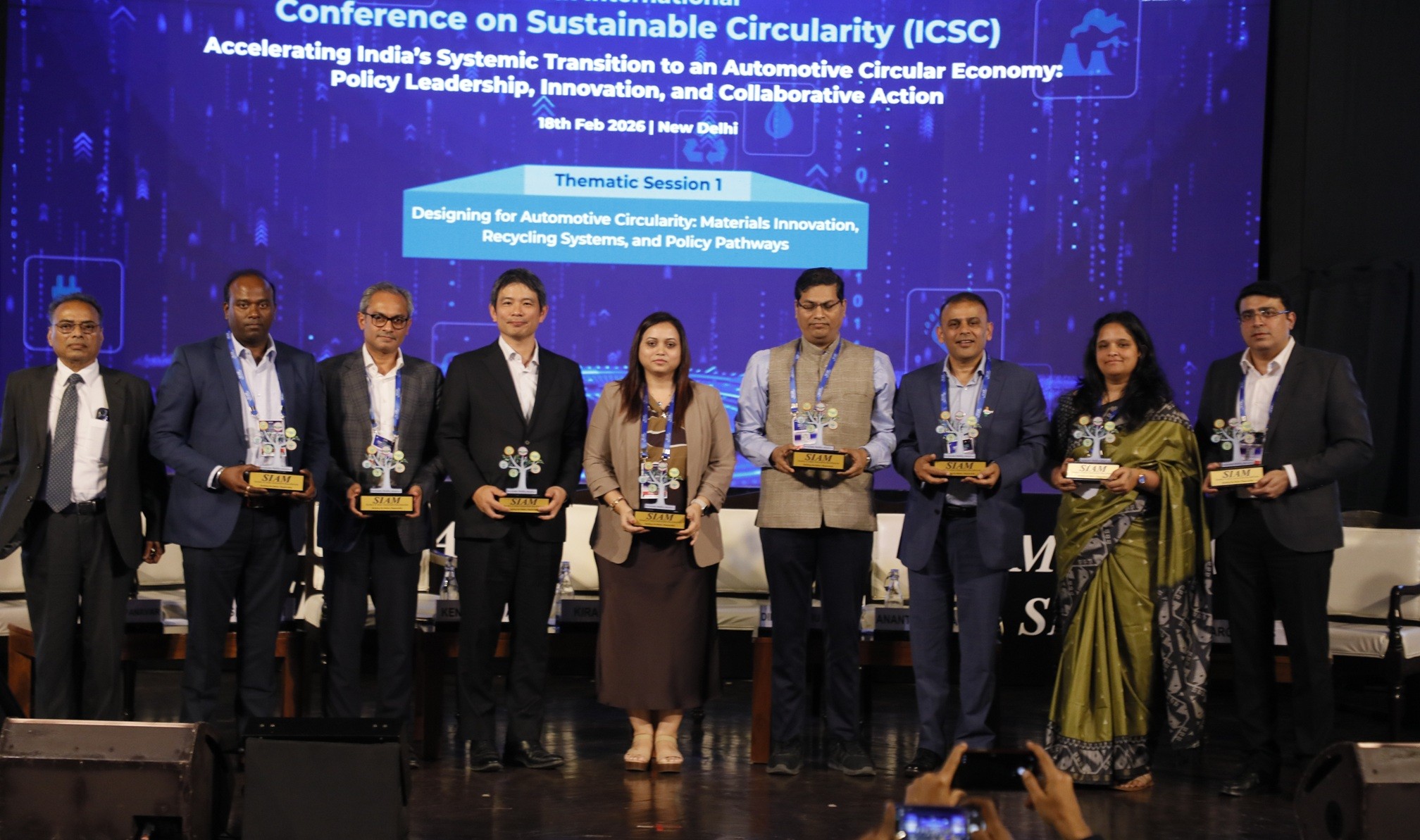
The Thematic Session 1 on “Designing for Automotive Circularity: Materials Innovation, Recycling Systems, and Policy Pathways” opened with remarks by Ms. Kiran Sarkar, Head – Sustainability, Mahindra & Mahindra, followed by an address by Guest of Honour Mr Dinabandhu Gouda, Director, Central Pollution Control Board (CPCB). He added “The gap in advancing recycling was never technology; it was the lack of trust and coordinated promotion among producers, OEMs and government. Recycling technologies are available and globally recognised, but challenges remain around traceability, policy clarity, quality perception and informal leakages. With stronger institutional mechanisms and EPR implementation, we can build a credible, transparent ecosystem.”

The session also featured presentations by Mr. Kenichiro Yajima, Managing Director of Maruti Suzuki Toyotsu India; Mr. Anant Bhargava, CEO of IFP Petro; and Mr. Shridhar Rajappanavar, Founder and CEO of Key Sustainability. It concluded with a panel on integrating circularity into product design, promoting sustainable materials, and fostering collaboration among OEMs, suppliers, recyclers, and policymakers, with additional panellists Mr. Harsh Gandhi, Managing Director of GRP Ltd; Mr. Nitin Chitkara, CEO of Meta Material Circular Markets; and Ms. Archana S, Sustainability Expert at Global PCCS.

The Thematic Session 2 was moderated by Mr. Senthilkumaran V, Associate Chief Engineer and Sr General Manager & Head – Materials Technology & Component Validation, Systems Evaluation, Mahindra & Mahindra, on “Startups Driving Breakthrough Recycling Innovations That Overcome Scaling Challenges Through Collaboration with OEMs, Government, and Research Institutions, Supported by Financing and Regulations, with Proven Pilots Paving the Way for Commercial Growth”; the session also included presentations by Mr. Raman Sharma, Managing Director, Exigo Recycling India; Mr. Mayur Karmarkar, Managing Director, International Copper Association India; and Dr. Rinkel Jindal, Head – Global Regulatory Compliance, Apollo Tyres, Mr. Sunil Gupta, Principal Engineer, ICAT; Mr. Jaideep Garg, Head of Carbon Business, Lohum Cleantech; Dr. S K Goyal, HoD, CSIR NEERI and Mr. Richie Stephen, Senior Regional Standards Project Manager, UL Standards.

The conference reinforced that circularity is not limited to end of life recycling. It spans design philosophy, material sourcing, manufacturing practices, reverse logistics and digital tracking. Participants agreed that India has the opportunity to build a structured circular automotive framework that strengthens competitiveness while reducing environmental impact.

Sustainable Mobility Week will culminate on February 19, 2026 with the 1st International Conference on Automotive Material Compliance and Sustainability, marking the next step in strengthening the industry’s approach to responsible manufacturing and future focused mobility.


With consistent collaboration across government, industry, and civil society, SIAM continues to shape a mobility ecosystem that is cleaner, safer, and built on resource efficiency.

From Shabad – Reet aur Riwaaz to Kantar: 5 stories where India’s small-town culture takes centre stage

India’s most powerful stories often rise from its smallest towns – from temple courtyards, riverbanks, dense forests, and bustling bazaars where culture is not performed for spectacle but lived every single day. Across languages and regions, storytellers are returning to these deeply rooted spaces, discovering that when narratives emerge from authentic tradition, they carry an emotional weight that travels far beyond geography.

Shabad – Reet aur Riwaaz | Punjab (ZEE5)

Shabad – Reet aur Riwaaz immerses viewers in a family of Ragi singers devoted to Sikh customs, where music is prayer and tradition is inheritance. Against this devotional backdrop, the series delicately explores the tension between faith and individuality, as a son grapples with carving his own path without severing the spiritual ties that bind him to his father and community. Punjab here is not just a location but a rhythm, discipline, devotion, and generational memory, shaping every decision and emotional fracture within the family.

Stree | Chanderi (JioHotstar)

In the narrow lanes of Chanderi, Stree transforms local folklore into a wildly entertaining yet culturally sharp narrative. Rooted in the legend of a mysterious female spirit who kidnaps men at night, the film blends horror and humour while subtly examining gender dynamics within a small-town ecosystem. The town’s gossip networks, festive energy, and collective belief systems make the folklore feel lived-in rather than imagined, proving how deeply myths are woven into everyday life in India’s smaller communities.

Kantara | Karnataka (Prime Video)

Moving to coastal Karnataka, Kantara draws from the sacred ritual of Bhoota Kola and Daiva worship, placing indigenous belief systems at the centre of a gripping tale about land, power, and identity. The forests, rituals, and ancestral traditions are not decorative elements but living forces that dictate morality and justice within the community. By grounding its drama in local spiritual practice, Kantara demonstrates how stories born from soil and shrine can achieve both cinematic spectacle and cultural authenticity.

Dashavatar | Konkan (ZEE5)

Along the Konkan coast, Dashavatar (ZEE5) celebrates Maharashtra’s traditional folk theatre form inspired by the ten avatars of Vishnu, while examining the generational shifts that challenge age-old art forms. Notably, the film made history as the first Marathi film to enter Oscar contention in 2026, marking a landmark moment for regional cinema. At its heart lies the emotional journey of an ageing performer confronting changing times, making the story not just about performance but about preserving identity in a rapidly evolving world.

Masaan | Varanasi (Netflix)

On the ghats of Varanasi, Masaan captures the quiet intensity of small-town life where tradition and modern aspiration collide. Set against the sacred rituals along the Ganga, the film sensitively portrays characters negotiating love, loss, caste, and societal expectations. The city’s spiritual weight and conservative social codes shape every conflict, showing how even the most intimate personal struggles are deeply influenced by cultural context.

What connects these stories is their rootedness. India is not a singular narrative but a mosaic of dialects, rituals, landscapes, and inherited belief systems. When filmmakers embrace this diversity whether through Punjab’s devotional music or Chanderi’s folklore, they create stories that feel intimate yet universal. Because when culture is treated not as a backdrop but as a living character, the impact lingers long after.

Tune in to these stories if you want to explore India’s culture even more, Shabad – Reet aur Riwaaz now streaming exclusively on ZEE5

Ministry of Ayush Marks Unani Day 2026 with National Conference on “Innovation and Evidence in Unani Practice” in Mumbai

Mumbai, Feb 19: The Ministry of Ayush, Government of India, commemorated World Unani Day 2026 by organising a two-day National Conference on “Innovation and Evidence in Unani Practice” on February 14–15, 2026, in Mumbai. Held under the aegis of the Central Council for Research in Unani Medicine (CCRUM), the conference brought together policymakers, researchers, academicians, and industry stakeholders in a hybrid format.

Shri Prataprao Jadhav, Hon’ble Minister of State (Independent Charge), Ministry of Ayush and Minister of State, Ministry of Health and Family Welfare, Government of India, graced the occasion as Chief Guest. Shri Babasaheb Mohanrao Patel, Minister of Co-operation of Maharashtra, and Vaidya Rajesh Kotecha, Secretary, Ministry of Ayush were present as the Guests of Honour. The event was also attended by senior dignitaries including Ms. Monalisa Dash, Joint Secretary, Ministry of Ayush; Dr. M. A. Qasmi, Advisor (Unani), Ministry of Ayush; Dr. Syed Shah Alam, Director, NIUM, Bengaluru; and Dr. N. Zaheer Ahmed, Director General, CCRUM.

Observed annually on February 11 to commemorate the birth anniversary of Hakim Ajmal Khan, Unani Day highlights the legacy and contemporary relevance of Unani Medicine. The 2026 conference focused on strengthening scientific validation, promoting innovation in diagnostics and therapeutics, advancing clinical documentation, and fostering integration of traditional knowledge with evidence-based medical approaches.

The deliberations addressed the growing need for rigorous research, standardisation, and outcome-based studies to enhance the credibility and global acceptance of Unani practice, particularly in the context of rising chronic and lifestyle diseases.

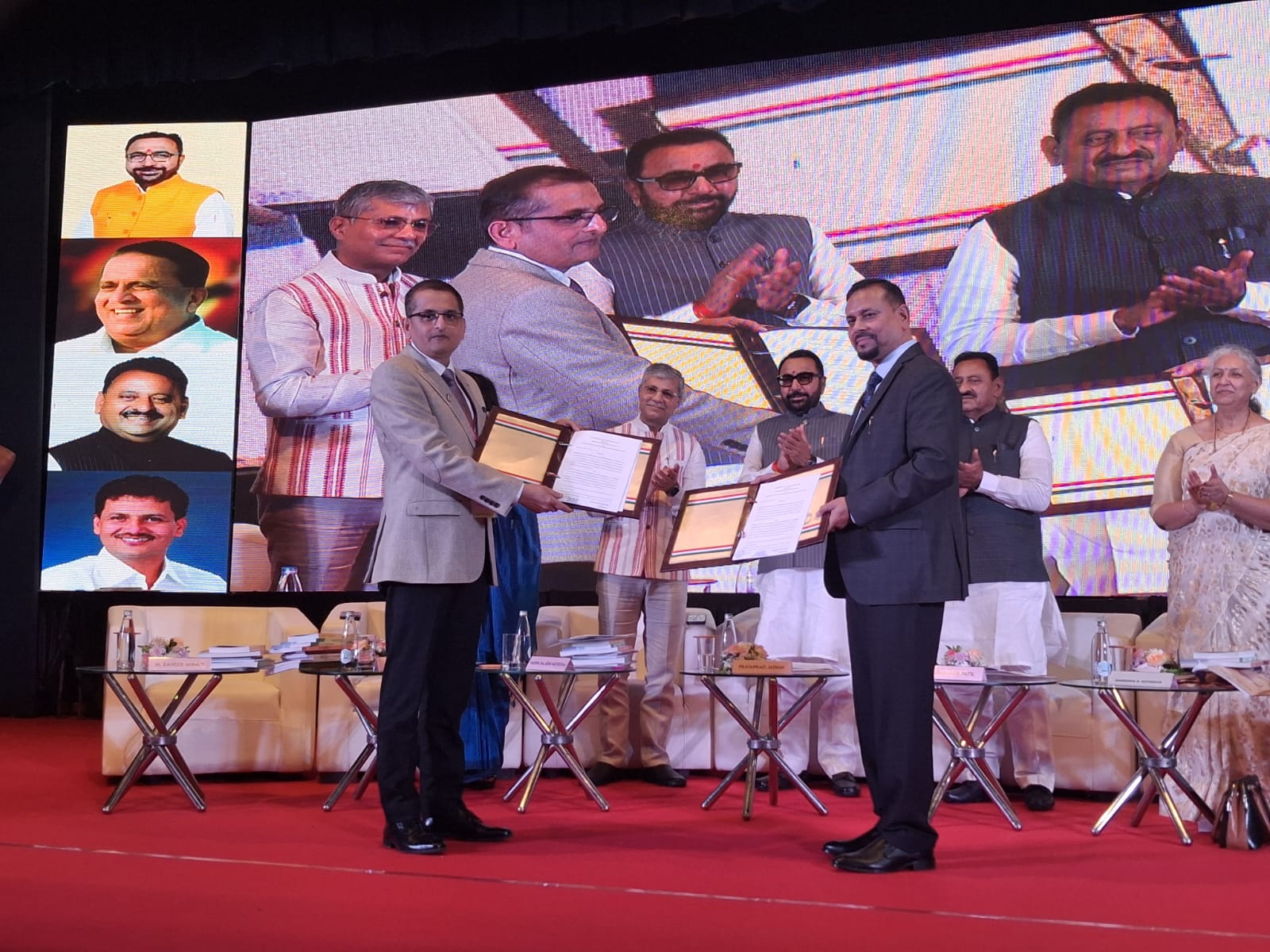
An industry delegation led by Hamdard Laboratories also participated in the conference, represented by Mr. Abdul Majeed, Chairman and Managing Trustee, Hamdard Laboratories, along with other senior representatives. On the occasion, an MoU was exchanged between Hamdard Laboratories (India), represented by Dr. Santosh Joshi, Head, R&D, Hamdard Laboratories and Dr. N. Zaheer Ahmed, Director General, CCRUM, to strengthen collaborative research and innovation in Unani Medicine.

The conference served as a platform for knowledge exchange, thematic discussions, and showcasing research outcomes aimed at reinforcing the role of innovation and evidence in advancing Unani practice within India’s evolving healthcare framework and the broader vision of Viksit Bharat 2047.

Aetna Donates $50,000 to Child Care Aware of Missouri

Contribution will strengthen infrastructure for the nonprofit’s new child care cost-sharing program.


(St. Louis, Mo., February 18, 2026) Child Care Aware of Missouri (CCAMO) recently received a $50,000 donation from Aetna to support Child Care Works, the newest initiative administered by CCAMO designed to increase family access to affordable, high-quality child care through locally coordinated cost-sharing exchanges.


The support from Aetna is important at a time when many Missouri families are struggling to balance the rising cost of child care with work and other basic needs. Aetna’s contribution will directly support Child Care Works in making child care more affordable, providing families with quality child care options, which can lead to greater employment opportunities, improved quality of life and overall health benefits. Child Care Works launched in late 2025 as Missouri’s first statewide child care cost-sharing initiative.


Modeled after the Tri-Share approach, Child Care Works divides the cost of child care among employers, families and either state government or a philanthropic partner, making it easier for working parents to find and afford reliable care while helping employers retain a stable workforce.


“Access to reliable, high-quality child care is directly tied to a family’s health and stability,” said Dr. Michelle Bucknor, Chief Medical Officer, Aetna Better Health. “When parents know their children are safe and supported, it is easier to stay employed, keep medical appointments and manage chronic conditions. Our support for Child Care Works reflects our commitment to addressing the real-life barriers that affect health, far beyond the walls of a clinic or hospital.”


“Child Care Works was created to make quality child care a realistic option for more Missouri families who don’t qualify for state child care subsidy,” said Robin Phillips, CEO of Child Care Aware of Missouri. “Aetna’s investment strengthens this new program by helping employers, families, and community partners share costs, stabilize the child care workforce, and keep parents connected to the jobs that power our state’s economy.”


Founded in 1999, CCAMO is a statewide nonprofit that focuses on a comprehensive early childhood education experience through impactful programs and partnerships. The organization’s services include resource and referral, workforce development, child care business supports, advocacy and policy work. For more information, call (314) 535-1458 or visit  www.mochildcareaware.org .

Xitus Names INTX as Core Insurance Operating System Supporting Global Portfolio and Captive Operations

AUSTIN, Texas– INTX Insurance Software, a complete Insurance Operating System for specialty P&C insurers, MGAs, reinsurers and captives, today announced that Xitus has selected INTX as its core insurance operating system to support and scale global run-off, LPT, IBT and captive (re)insurance- operations across its subsidiaries, Xitus Bermuda, Xitus UK, Xitus Europe including its latest acquisition of Chevron Captive, Insco. 

Xitus expanded its use of the INTX platform for capital visibility across long-tail portfolios and faster execution of LPTs and acquisitions. INTX supports this work by enabling enhanced portfolio monitoring, reporting, and coordination tied to acquisitions and loss portfolio transfers. 

“As an early adopter, we are growing the relationship with INTX because the platform gives us the control to manage our business at scale and as our transaction volume and geographic footprint expand, INTX is the core system we can rely on to operate with confidence and control,” said Benjamin Dovey, Head of Commercial & Operations at Xitus. “INTX brings structure to historically fragmented and manual processes and gives our team confidence to move quickly as we take on more transactions.” 

Unlike general-purpose core systems, INTX is designed for the operational and financial realities of legacy and captive insurance. As transaction activity increases and management of reinsurance treaties becomes more complex, by implementing the INTX platform Xitus puts the operational structure in place to manage that evolution with a modern approach, combining specialized expertise with a unified technology designed to scale. 

“Runoff and captive portfolios demand a level of financial control and the ability to utilize Predictive AI Actuarial modelling that legacy systems were never designed to deliver. INTX gives organizations like Xitus real-time visibility and governance across complex, multi-entity portfolios as they scale globally,” said Rob Lewis, CEO of INTX Insurance Software. “Our platform gives leadership real-time visibility into reinsurance and claims activity that provides clean data for their predictive AI Models and regulatory oversight.”

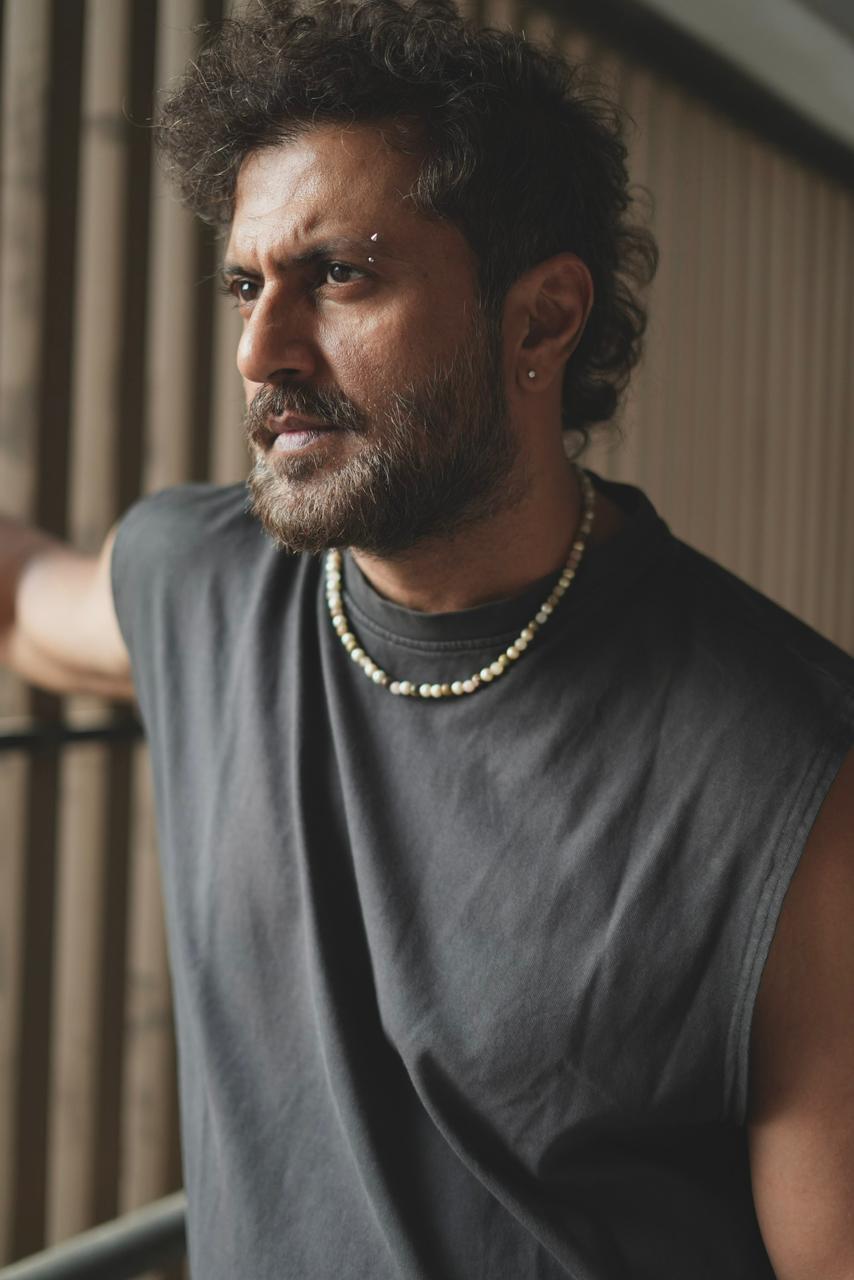
Kennedy Actor Aamir Dalvi on Director Anurag Kashyap’s Process: Doing Less Became Everything for This Film

For Aamir Dalvi, stepping onto the set of Kennedy meant stepping into Anurag Kashyap’s way of seeing cinema. It was a space where performance was not pushed, emotions were not explained, and silence was treated as dialogue.

Talking about working with Kashyap, Aamir says the director dismantled many of his instincts as an actor. “Anurag never wanted anything loud or dramatic from me. At first, it’s unsettling, because as actors we’re trained to fill silence, to justify emotion. Here, he was asking me to trust it.”

That trust, Aamir explains, did not come overnight. Even after Anurag sir saw the first shots of the character, the process remained about observation rather than instruction. “He wouldn’t over-explain scenes or spell out emotions. Sometimes he’d just watch and say very little, or in fact nothing. What spoke instead was his smile or a shift in energy. It was like a vibe check after each shot. With sir, you slowly realise he wants the character to exist, not perform. That kind of faith pushes you into uncomfortable territory, but it also frees you.”

It is this approach that shaped Salim Kattawala into a presence rather than a personality. Quiet, controlled, and deeply unsettling, the character never announces himself. “When you stop performing and allow stillness to take over, the character begins to breathe on its own,” Aamir shares. “That’s when it becomes dangerous, because it feels disturbingly real.”

Though Kennedy marks his first Bollywood film as an antagonist, Aamir says working with Kashyap shifted his focus away from labels. “This was my first time playing an antagonist in a Bollywood film, and it came with a certain weight. But Anurag sir never framed it as good or bad. He only spoke about honesty. I kept thinking that if I’m going to be remembered for this, it has to be honest, even the ugly parts.”

That emotional honesty followed him home. “There were days later when I felt heavy and unsettled, even though the scenes were quiet. Nothing dramatic had happened, yet something stayed with me. That’s when I realised the character had entered me quietly, the same way he enters the film.”

He ends with a thought that lingers. “If a character leaves me disturbed and unfinished, I know something has been done right. Salim didn’t leave me soon after the shoot ended. He stayed, and I think that’s exactly what Anurag sir wanted the audience to feel too.”

Starring Rahul Bhat alongside Sunny Leone, Kennedy unfolds as a bleak, immersive noir where survival comes at a cost. Directed by Anurag Kashyap, the film premieres on ZEE5 on February 20.

Celebrate the Chinese New Year at Vintage Asia, JW Marriott Kolkata

Celebrate the spirit of the Lunar New Year at Vintage Asia, JW Marriott Kolkata – a specially curated menu “A Taste of Prosperity,” available from February 17th to 22nd. This festive experience blends traditional Cantonese techniques with modern flavours, featuring signature dishes like the five-spiced Aromatic Duck, Devil’s Crab Meat, and artisanal dim sum such as the Morel Mushroom Philadelphia Dumpling.

From the fiery Wild Pepper Fish to the comforting Golden Onion Moon Faan Rice, every plate is designed to bring flavor and fortune to your table. Guests can also enjoy contemporary highlights like Wasabi Prawns or Singaporean Crab Noodles, followed by a decadent Chocolate & Matcha parfait to ensure a sweet and prosperous start to the new year.

At: Vintage Asia, JW Marriott Kolkata

Dates: 17th to 22nd, 2026

Bihar’s Grassroots Growth and Cluster Innovation Take Center Stage at Conclave

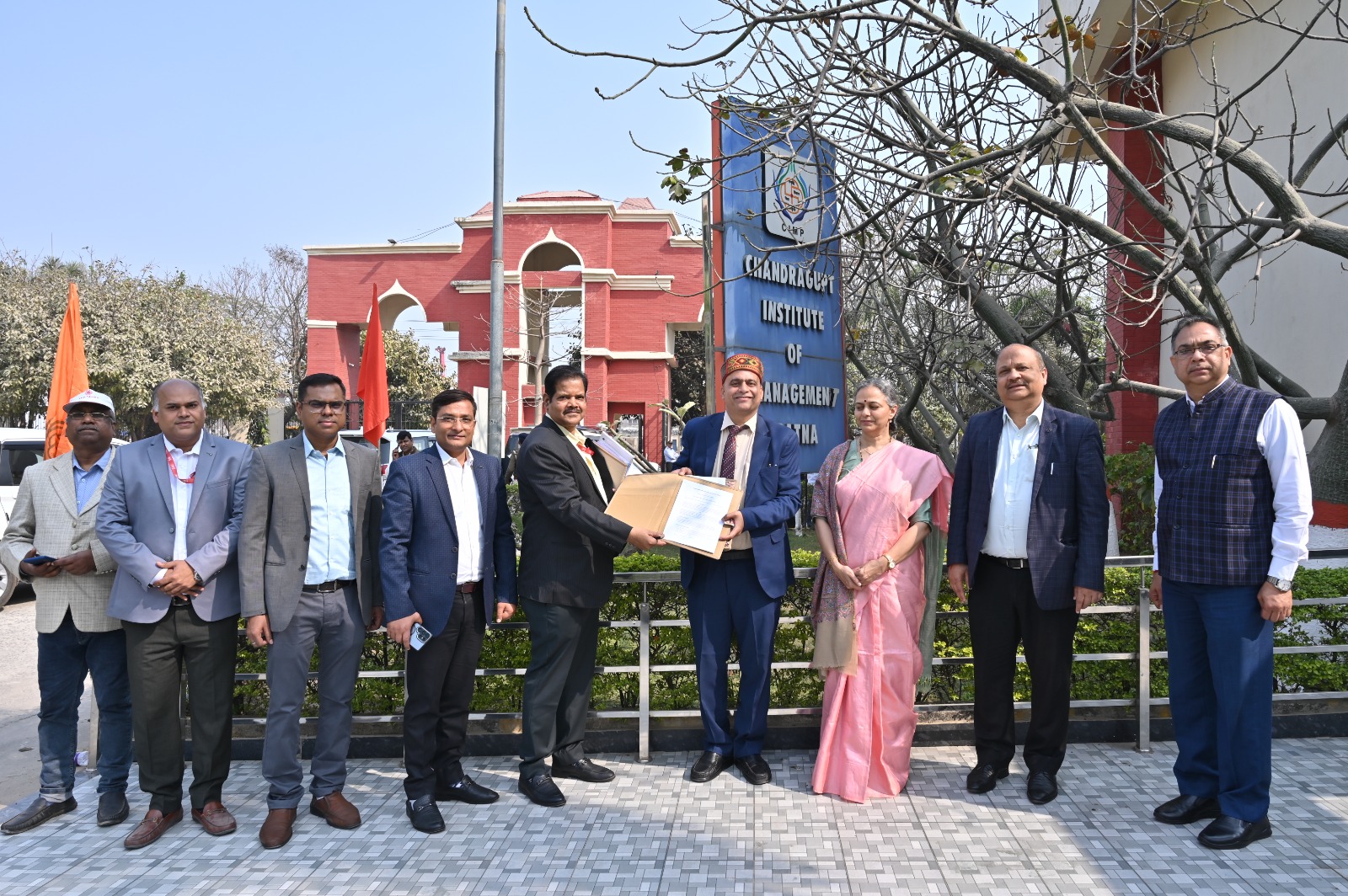
National Productivity Council (NPC), DPIIT, Ministry of Commerce & Industry, Government of India and CIMP is jointly organised Conclave on National Productivity Week Celebration on Wednesday, 18th February 2026 at CIMP campus.

The theme of the conclave was “Clusters as Growth Engine: Maximizing Productivity in MSMEs – Towards Viksit Bharat @2047 through Competitive MSME Clusters”.

The conclave began with the lighting of the lamp by dignitaries and the welcome note was delievered by Shri Kumod Kumar, CAO, CIMP and, Chair- Bihar Chapter, PHD chamber of commerce & Industry. He said, “MSMEs are rightly called the backbone of sustainable growth. In Bihar, they hold immense potential to transform the state’s economy by creating jobs, fostering entrepreneurship, and driving inclusive development.”

The Chief Guest at the conclave was Shri Mihir Kumar Singh, IAS, Development Commissioner, Bihar. Addressing the conclave he said “The true measure of Bihar’s progress lies not only in large-scale infrastructure or industrial growth, but in the empowerment of its people at the grassroots. Sustainable development must begin in our villages and small towns, where every initiative in education, health, and livelihood creates a ripple effect of prosperity. By strengthening MSMEs, agriculture, and local enterprises, Bihar can build a model of inclusive growth that uplifts communities and ensures that development reaches the last mile.”

Smt. Neerja Sekhar, IAS, Director General, National Productivity Council, said, “Clusters are the lifeblood of productivity and innovation. At NPC, we have worked tirelessly to nurture these clusters, enabling them to collaborate not only across India but also on international platforms. By strengthening linkages, fostering knowledge exchange, and building capacity, NPC has helped clusters evolve into engines of competitiveness and sustainability. My early years working in Bihar remain close to my heart, as they taught me the value of grassroots engagement and the immense potential that lies in empowering local enterprises. That experience continues to inspire my commitment to ensuring that clusters become catalysts for inclusive growth across the nation.” 

The other dignitaries present will be Smt. Neerja Sekhar, IAS, Director General, National Productivity Council; Prof. ( Dr.) Rana Singh, Director, CIMP; Shri Kumod Kumar, CAO, CIMP and, Chair- Bihar Chapter, PHD chamber of commerce & Industry; Ms. Shweta M Devtale, Asstt. Director, MSME DFO, Patna; CA Ashish Rohtagi, Former Vice President

Bihar Industry Association; Dr Sanjeev K Jain, Joint director & Head, CIPET Bihta; Shri J.K Singh, Regional Director, NPC, Patna; and Shri B K Sinha, Secretary General, Bihar State Productivity Council. 

Speaking at the conclave CA Ashish Rohtagi, Former Vice President, Bihar Industry Association said, “Industry associations play a vital role in bridging entrepreneurs with policy makers. Bihar’s industrial growth story is being shaped by collaboration, resilience, and the spirit of enterprise.”

Dr. Sanjeev K. Jain, Joint Director & Head, CIPET Bihta said “Innovation in plastics and materials technology is central to modern industry. At CIPET Bihta, we are committed to equipping Bihar’s youth with skills that make them globally competitive.”

Shri J.K. Singh, Regional Director, NPC, Patna said, “Productivity is the cornerstone of sustainable development. NPC has been working to strengthen clusters in Bihar, ensuring that local enterprises can thrive and connect to national and international markets.”

Shri B.K. Sinha, Secretary General, Bihar State Productivity Council said, “Grassroots productivity initiatives are essential for Bihar’s progress. By empowering small enterprises and fostering collaboration, we can build a model of growth that is both inclusive and sustainable.”

The conclave bought together policymakers, industry leaders, academicians, and experts to deliberate on the role of MSME clusters as engines of growth and their contribution to India’s vision of Viksit Bharat @2047.

There was also open house discussions among startups and the dignitaries. The vote of thanks was delivered by Shri B K Sinha, Secretary General, Bihar State Productivity Council.

Vegas Mall Dwarka Hosts High-Octane Biker’s Breakfast Run, Builds Momentum for Riders Music Festival 2025

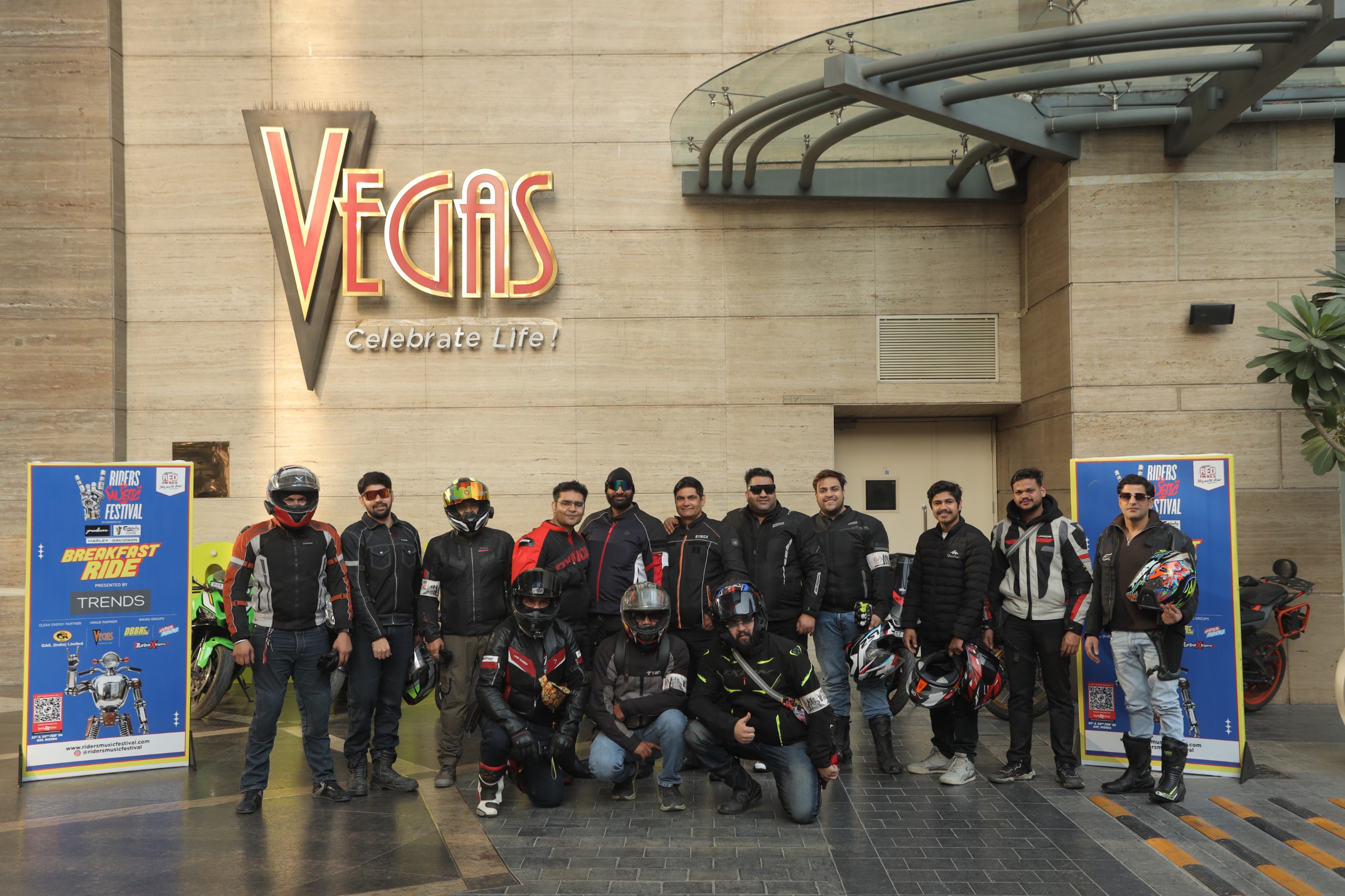
Delhi, Feb 18th: Vegas Mall, Dwarka successfully hosted the Biker’s Breakfast Run today at its vibrant Central Piazza in collaboration with Red FM, as a promotional lead-up to the much-awaited Riders Music Festival 2025. The event witnessed an enthusiastic turnout of prominent biker communities from across the city, transforming the venue into a high-energy hub of roaring engines, music, and camaraderie. The initiative created strong buzz and engagement, setting the tone for the upcoming festival. The morning began with a lively breakfast gathering, offering riders an opportunity to network, interact, and celebrate their shared passion for biking.

The Central Piazza came alive with vibrant moments, photo opportunities, and spirited conversations, culminating in the official riders’ flag-off. The ceremonial send-off marked an exciting highlight of the event, amplifying visibility and anticipation for the Riders Music Festival 2025.

Speaking on the occasion, Ravinder Choudhary, Vice-President, Vegas Mall, said, “We are delighted with the tremendous response to the Biker’s Breakfast Run. The passion and energy of the biker community truly reflect the spirit of the Riders Music Festival 2025. At Vegas Mall, we remain committed to curating engaging experiences that bring communities together and create memorable moments for our visitors.

GNA Energy Launches ‘Vidyut AI’ at AI Impact Summit Under Ministry of Power Framework

Feb, 18 :Gurgaon-headquartered GNA Energy today launched ‘Vidyut AI’ at the India AI Impact Summit. The platform has been developed as an AI-enabled intelligence layer designed to work in sync with the government’s India Energy Stack (IES) framework.The India Energy Stack is the Ministry of Power’s proposed digital public infrastructure for the electricity sector aimed at enabling seamless data exchange, transparency and innovation across the power ecosystem.

GNA Energy, a Central Electricity Regulatory Commission (CERC)-regulated over-the-counter (OTC) platform, said Vidyut AI will transform structured power-sector datasets into real-time decision support for utilities, generators, traders and regulators.The company said the platform is aimed at accelerating data-driven decision-making across the electricity value chain at a time when India’s power markets are witnessing rapid structural shifts, increasing short-term trading volumes and growing regulatory oversight.

“India’s power sector generates enormous volumes of operational and market data every day. Vidyut AI transforms this complexity into clarity. By enabling instant access to actionable intelligence, we are empowering utilities, generators and market participants to make smarter, faster decisions,”

said Sanjeev Kumar, Managing Director, GNA Energy.

According to the company, Vidyut AI bridges the gap between granular system data and boardroom-level decisions by converting raw data into automated summaries, trend analyses and downloadable reports.For distribution companies (DISCOMs) the platform provides real-time access to procurement data, deviation settlement mechanism (DSM) exposure, open access transactions and demand forecasting analytics. Power generators can track bid performance, plant dispatch patterns, clearing prices and revenue optimisation metrics. Transmission utilities and system operators can gain simplified access to congestion patterns and grid performance analytics while traders and market participants can use natural-language search to compare contracts and track price trends.Regulators and policymakers can also leverage the system for automated trend analysis and faster regulatory impact assessment, the company said.

GNA Energy stated that Vidyut AI is been built on a secure and scalable architecture suitable for enterprise-grade deployment with a strong emphasis on transparency, compliance and market efficiency.The launch comes amid a broader push for technology-led reforms in India’s power sector including digitisation of operations, enhanced market transparency and data-backed governance.GNA Energy is a CERC-regulated OTC platform focused on building next-generation digital infrastructure for India’s electricity markets with expertise spanning market design, utility operations and data management.