Archives February 2026

Digital Risks and Financial Pressures Shape Hyderabad’s Uncertainty Index

Hyderabad, Feb 03: India continues to face elevated uncertainty driven by financial pressures, health-related challenges, digital risks, and broader societal factors. With the national Index at 79, concerns around financial readiness, personal safety, healthcare costs, and long-term stability remain persistent despite economic growth.

Hyderabad records an Index of 76—lower than the national average but still above the South Zone benchmark of 71. Digital safety emerges as the dominant theme shaping uncertainty in the city. Residents rank personal data safety, security of online financial transactions, and vulnerability to online scams as their top three worries. These are followed by concerns about rising crime rates, growing pollution levels, and the impact of government tariffs on cost of living.

Infrastructure-related anxieties also feature prominently, including doubts about whether the city’s systems can keep pace with rapid population growth. Additionally, workplace stress, mental health issues, and the impact of global conflicts on prices contribute to a multi-layered uncertainty landscape.

City-level data shows strong linkages between financial protection and confidence. Uncertainty declines steadily as insurance coverage increases—dropping from 77 among residents with one or two policies to 64 among those with four or more. A similar pattern appears in investment ownership, where the lowest uncertainty is seen among individuals holding either one (Index: 69) or four-plus investment instruments (Index: 67).

Socio-economic segmentation indicates pronounced differences. Respondents from SEC B (82) and SEC C (83) report significantly higher uncertainty than those in SEC A (64), underlining the importance of financial buffers, resource access, and preparedness.

Across demographics, uncertainty levels remain broadly consistent, though women report slightly higher anxiety than men. Older residents—especially Baby Boomers and Gen X—show higher uncertainty than Millennials and Gen Z. Professionally, business owners and salaried individuals report nearly identical uncertainty levels. By life stage, married individuals with children indicate marginally higher anxiety than singles or married individuals without children.

Overall, Hyderabad’s findings mirror the national pattern where financial responsibilities, digital safety concerns, health preparedness, and lifestyle pressures intersect across life stages. The study reinforces that proactive planning and securing adequate protection remain essential for helping residents build confidence and reduce uncertainty over time.

Budget 2026 Boosts Aerospace R&D and Deep-Tech Manufacturing

Shreepoorna S Rao, Founder & CEO, Arctus Aerospace

“Budget 2026 signals a clear shift in how India views aerospace and deep-tech manufacturing. The emphasis on R&D incentives, domestic component ecosystems, and easier access to capital for high-tech startups directly strengthens companies building complex platforms like high-altitude UAVs. What’s encouraging is the recognition that strategic sectors need long-term patient capital and testing infrastructure, not just subsidies. If executed well, this budget can materially accelerate India’s transition from being an importer of aerospace systems to becoming a global developer of critical aerial and Earth intelligence technologies”.

Industry Leaders Weigh In on Union Budget 2026 at BCIC Meet

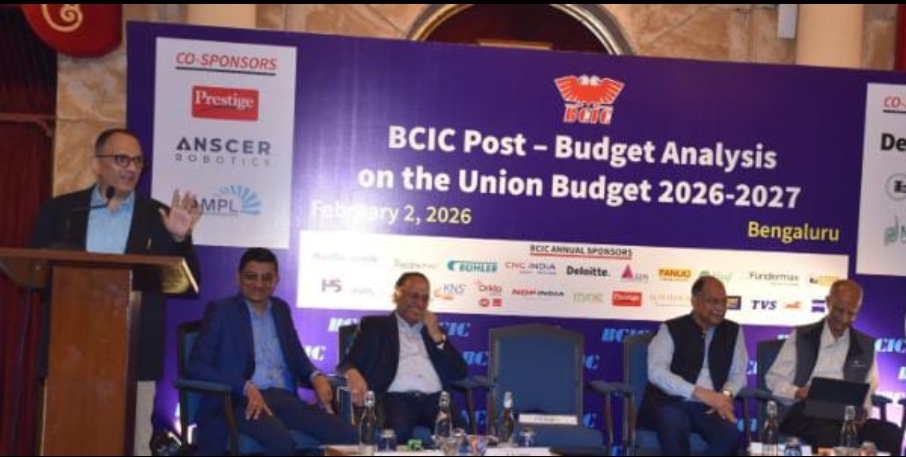
Bengaluru, Feb 03: Industry leaders have welcomed the Union Budget 2026 for its strong focus on manufacturing, MSMEs, employment generation, and long-term economic fundamentals. These views were shared during the BCIC Post-Budget Analysis of the Union Budget 2026-27, organised by the Bangalore Chamber of Industry and Commerce (BCIC).
1770042534761
Prashant Gokhale, President of the Bangalore Chamber of Industry and Commerce (BCIC) and Managing Director of Bühler India, said the Union Budget 2026-27 takes a measured approach to strengthening economic resilience amid geopolitical uncertainty. He noted that targeted measures in agriculture value addition, infrastructure and policy clarity for data centres and IT are expected to support connectivity and the digital ecosystem. He added that the continued focus on MSMEs and manufacturing is likely to aid employment generation and sustain demand for capital goods.
“The ₹10,000 crore equity capital allocation for MSMEs, along with an additional ₹2,000 crore for micro-MSMEs is a potential ‘game changer,’ marking a shift from credit-heavy support to a more sustainable equity-based funding model,” said K. R. Sekar, Past President & Mentor, Direct Taxes Expert Committee, BCIC, and Partner, Deloitte. He also welcomed the renewed thrust on manufacturing through initiatives spanning biopharma, semiconductors, electronics system manufacturing, logistics corridors, and employment-intensive sectors such as textiles and tourism. He added that sustainable solutions to India’s unemployment challenge are intrinsically linked to stronger incentives for manufacturing and MSMEs.
Drawing from the Economic Survey, Sekar highlighted the significant improvement in MSME financial inclusion, noting that the proportion of MSMEs without access to formal banking has declined sharply from nearly 75% in 2021-22 to about 27% now. He said this shift reflects improved production levels and performance, reaffirming MSMEs as a cornerstone of India’s economic framework. He observed that the Union Budget mirrors the Economic Survey’s core themes and aligns with global best practices seen in economies such as Hong Kong and Singapore.
F R Singhvi, Joint Managing Director of Sansera Engineering Ltd., described the Budget as fiscally steady and comparable to the methodology adopted by advanced economies such as Japan. He pointed to a stable fiscal deficit path and continued efforts at debt reduction, alongside a sustained rise in allocations for education and infrastructure over the past decade. He highlighted the need to substantially increase the equity support to MSME sector and create infrastructure of testing, quality etc., for the manufacturing sector to improve the scale of operations to meet global market aspirations. At the same time, he observed that the Budget does not mark a major historical inflection and cautioned against over-reliance on government intervention at a time when India is growing at around 7%. “The private sector is sitting on significant cash reserves and must step up investment for R&D, innovations, product development etc., even as it manages shareholder expectations and risk,” he said.
From an industry standpoint, K. Ullas Kamath, founder of UK&Co and former Joint Managing Director of Jyothy Labs Ltd., said the Budget reinforces confidence in long-term policymaking rather than short-term market reactions. He said it’s in line with past budgets focussed mainly on capital investment to create world class infrastructure and ecosystem to enable Indian enterprises to be competitive in the world. In line with make in India made for the world. However, “The backbone of Indian economy, the MSMEs who are collectively the biggest employers after Agri sector continue to face constraints around credit access, delayed payments and implementation bottlenecks. The challenge lies in translating intent into outcomes”. Rs10,000 crores of dedicated fund for SME is good but not sufficient considering the sheer number of SMEs in the country adding that constructive engagement between industry and policymakers is essential for inclusive growth. Overall, it’s a very progressive budget keeping in mind viksit bharat @ 2047 he opined.
P V Srinivasan, Mentor, Indirect Taxes Expert Committee, BCIC and Partner and Chief Mentor, PVS Advisors, said,
“Our recommendation is that tax incentives extended to foreign service providers must also be made available to Indian businesses serving overseas customers, so that domestic players can build scale and compete on equal terms.”
Offering an investor perspective, Siddarth Pai, Founding Partner, CFO and ESG Officer at 3one4 Capital, said the Budget misses an opportunity to strengthen long-term investor confidence. He pointed out that global capital, particularly in emerging areas such as artificial intelligence, increasingly flows to jurisdictions with stable and predictable policy regimes. “In India, frequent regulatory changes, prolonged litigation and uncertainty around exits continue to weigh on foreign and private capital, including long-term investments in MSMEs,” he said.
The BCIC post-Budget analysis brought together industry leaders, tax experts, and investors to deliberate on the budget’s implications for the economy, manufacturing, MSMEs, startups, and employment, offering a comprehensive and sector-spanning perspective on India’s fiscal roadmap.
CFTI Fast-Tracks School Development Initiatives Pre FY-End

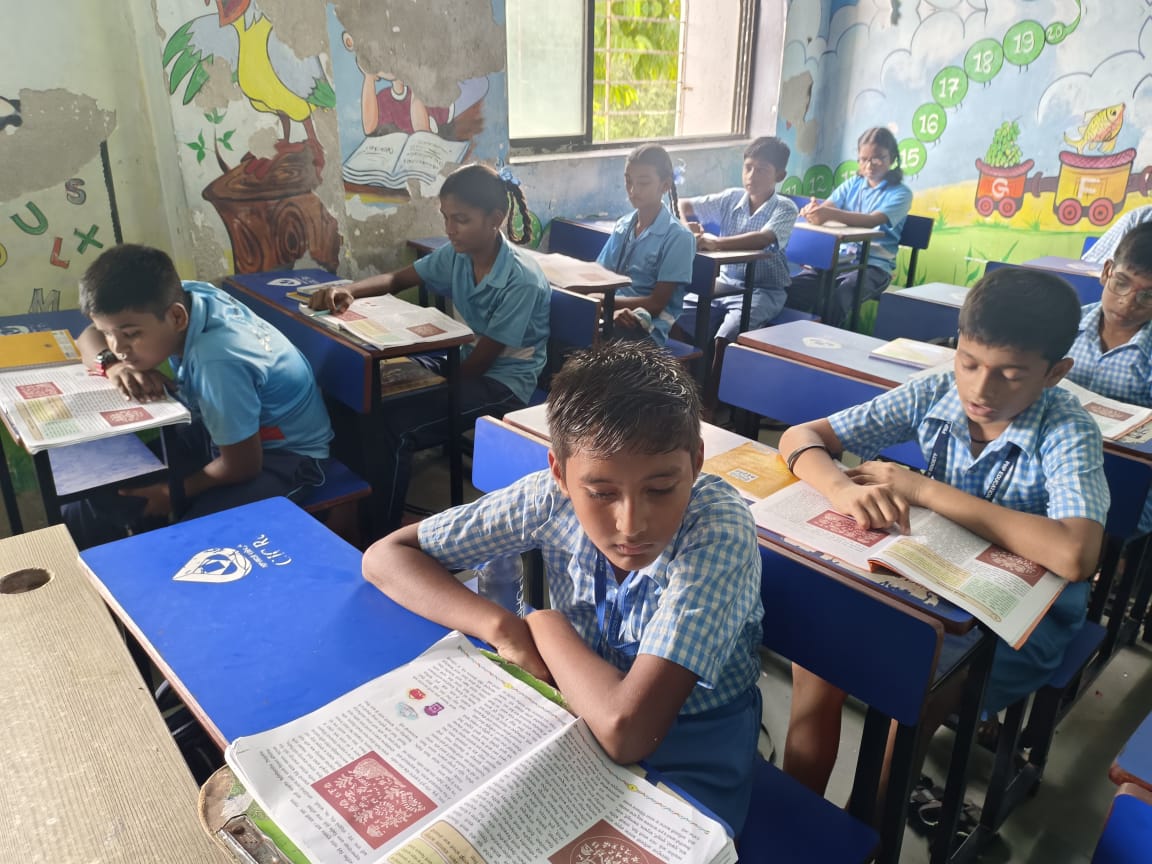
Mumbai, Maharashtra, Feb 03: With the March 31 financial year-end approaching, the Centre for Transforming India (CFTI) has rolled out a set of education-focused initiatives across schools in Mumbai and rural regions to support the timely utilisation of unspent CSR funds. These projects are designed for execution within short timelines and aim to address persistent gaps in school infrastructure, access to learning resources, and student mobility—key factors impacting attendance and learning outcomes in government and rural schools.

Education

The initiative spans a wide range of school development and education support interventions that can be implemented within FY-end timelines. These include student mobility support such as bicycle distribution for girls; provision of academic kits and scholarships; digital learning enablement through tablets and computer installations; classroom and furniture upgrades; drinking water and sanitation improvements; and the development of sports and physical education infrastructure in rural schools.

CFTI brings significant on-ground implementation experience, having previously executed similar initiatives across multiple states. This includes the distribution of over 35,000 bicycles, award of more than 1,300 scholarships covering students from early education to postgraduate levels, and deployment of over 800 tablets and 100 computers to improve digital access. Infrastructure interventions have included upgrades to more than 90 classrooms, donation of over 1,200 benches across Maharashtra, Bihar, Vizag, and Pondicherry, installation of 34 RO water purifiers, integrated upgrades across 144 schools, and the development of sports facilities in select rural locations.

Commenting on the initiative, Amit Deshpande, Chief Operating Officer, Centre for Transforming India (CFTI), said,

“As the financial year draws to a close, CSR teams often face time and execution constraints. Having projects that are implementation-ready enables CSR funds to be deployed within the reporting cycle while addressing specific, on-the-ground needs of schools and students.”

Through an approach centred on execution readiness, monitoring, and transparent reporting, CFTI partners with corporates to deliver education projects within the financial year, with the objective of converting CSR allocations into clearly defined and measurable outcomes at the school and community level.

AU Small Finance Bank partners with Honda Motorcycle & Scooter India for two-wheeler financing

Mumbai, Feb 03: AU Small Finance Bank (AU SFB), Indias largest Small Finance Bank and the first in over a decade to receive in‑principle approval to transition into a Universal Bank, has entered into a strategic Memorandum of Understanding (MoU) with Honda Motorcycle & Scooter India (HMSI). The collaboration will offer customers affordable and convenient financing options for purchasing Honda two-wheelers across India.

As a preferred financier for Honda two-wheelers, AU Small Finance Bank will provide STP-enabled, analytics-based faster credit decisioning supported by Account Aggregator, along with digitally enabled repayment solutions to deliver a smoother, simpler, and more convenient financing experience. The partnership also includes joint marketing and promotional efforts across HMSI dealerships and AU Small Finance Bank branches.

Key Highlights of the Partnership

This collaboration will help to fulfil the dream of customers across segments including the first-time two-wheeler buyers, by enabling quicker eligibility assessment with paperless process, making it easier to own their vehicle. Honda customers will benefit from competitive schemes, promotional offers, and pre-approved offers, along with end-to-end tech-enabled loan support from AU Small Finance Bank.

AU Small Finance Bank customers will also gain the ability to purchase Hondas trusted range of motorcycles and scooters, supported by the banks seamless system integration that enables online applications, real-time status tracking, and a frictionless financing experience. The tie-up further provides AU customers with direct access to HMSIs extensive dealership network across India.

Commenting on the occasion, Uttam Tibrewal, ED & Deputy CEO, AU Small Finance Bank, said, “Partnering with Honda Motorcycle & Scooter India marks a significant milestone in AU Small Finance Banks journey of expanding mobility finance across the country. Honda is one of the most trusted and aspirational two‑wheeler brands in India, and this collaboration strengthens our commitment to enabling millions of customers with easier access to high‑quality mobility. As we progress toward becoming a Universal Bank, such partnerships reinforce our national distribution strength, customer‑first philosophy, and our ability to deliver transparent and innovative financial solutions at scale.”

Mr. Yogesh Mathur – Director, Sales and Marketing, Honda Motorcycle & Scooter Indiasaid, “Strengthening the financing ecosystem is central to HMSIs customer-centric approach. This collaboration with AU Small Finance Bank is aimed at enhancing the credit solutions offered to the customers at HMSI dealerships across India. It will simplify the purchase journey and enable us to offer customers affordable and convenient financing options, while creating trust and transparency at every stage of the buying experience.

Through this integrated operational framework, both organizations aim to maximize the effectiveness of the partnership and deliver a consistent, efficient, and customer‑focused financing experience.

AWL Agri Business Ltd. (formerly Adani Wilmar Ltd.) Reports Q3 FY26 Financial Results

Q3 FY26 Performance

AWL Agri Business recorded robust revenue growth in Q3 FY26, supported by a 3% increase in volumes. Edible oils led the growth, while operational EBITDA and PAT remained resilient. On a last-twelve-month (LTM) basis, the company delivered record revenues and operational performance.

Distribution & GTM Strategy

  • Direct reach expanded from ~600,000 outlets in March 2023 to 949,000 outlets as of December 2025

  • Rural town coverage increased from 13,000 to over 60,000 towns

  • 98 stock points nationwide, supported by micro-fulfilment centres for smaller-town distribution

Alternate Channels

  • E-commerce, Q-commerce, and Modern Trade achieved strong volume growth in Q3 FY26

  • Edible oils’ alternate channel share increased from ~5% to 9%; Food & FMCG from 11% to 25% over 15 quarters

  • Q-commerce contributed ~30% of volumes within alternate channels

Other Channels

  • HoReCa volumes grew 54% YoY; branded exports up 43% YoY, supported by global distribution networks

Project Updates & Capex

  • Fully operational integrated food complex at Gohana expected to drive efficiencies and operational synergies

  • New oleochemical facility planned in South India

New Product Development (NPD)

  • Launch of Fortune Multi Grain Atta strengthens value-added offerings in staple foods

Segment Performance – Q3 FY26

Segment Volume (MT) YoY Growth
Edible Oil 1.1M 12%
Food & FMCG 0.3M 9%
Industry Essentials 0.3M 1%
Total 1.7M 10%

Financial Summary – Q3 FY26

Metric YoY Change
Revenue from Operations 10%
EBITDA -20%
PAT -35%

Comment from the MD & CEO
Mr. Shrikant Kanhere, MD & CEO, said:

“Despite a challenging macro environment, AWL Agri Business achieved steady volume growth, led by resilient performance in edible oils and a rebound in our Food & FMCG portfolio. We continue to enhance distribution reach, strengthen alternate channels, and focus on sustainable, profitable growth. Leveraging the Wilmar Group’s global network and our integrated operations, we remain confident in capturing emerging opportunities in India’s evolving food ecosystem.”

Budget 2026 Boosts Emotional Wellbeing and Tech-Driven Healthcare, Says coto CEO

Tarun Katial, Founder & CEO at coto

“The Union Budget 2026 marks an important shift in how India is re-imagining healthcare and human development. By reinforcing preventive healthcare, holistic wellbeing and early intervention, the Budget creates space to recognise emotional and mental wellbeing as a foundational pillar of long-term health and quality of life.

The articulation of the government’s third core kartavya aligns with the vision of “Sabka Sath, Sabka Vikas” towards a Viksit Bharat, and its explicit focus on empowering vulnerable communities to access mental health and trauma care is a significant and timely acknowledgement of emotional well-being as an inclusion priority.

Equally important is the government’s forward-looking approach to technology, including the announcement of a high-powered committee to assess the impact of artificial intelligence on the services sector. This reflects a clear intent to enable responsible, technology-led innovation.

Together, these policy directions create an enabling environment for platforms like coto to expand access to emotional wellness through human-centred, digitally delivered and ethically designed solutions that support individual resilience and societal wellbeing.”

St. Joseph’s School Celebrates 25 Glorious Years with Spectacular AgLumina Festival

St josesh

Feb 3: St. Joseph’s School, Asmangadh Palace, Malakpet, Hyderabad, celebrated its Silver Jubilee Annual Cultural Festival, AgLumina — Illuminating Talent, Celebrating Excellence, at GSR Conventions, Hasthinapuram. The two-day festival stood as a fitting reflection of the institution’s legacy built over 25 years of dedicated service.

The programme commenced on Saturday, 31st January, 2026 with a welcome address by the Principal, Mrs. U. A. Sundari, who briefly outlined the significance of the Silver Jubilee celebrations and the school’s journey over the years. The Chief Guest for the day was Dr. K. S. Jawahar Reddy, IAS (Retd.), Chief Secretary (Retd.), Government of Andhra Pradesh, who addressed the gathering and appreciated the school’s consistent academic and co-curricular growth. The event was also graced by the presence of Shri M. Anil Kumar, IRS, Principal Chief Commissioner of Income Tax, AP & Telangana Region.

The celebrations continued on Sunday, 1 February 2026 with the blessings of Rev. Msgr. Yeruva Balashowreddy, Vicar General, Archdiocese of Hyderabad.

The Chief Guest for the day was Prof. Dr. V. Balakista Reddy, Chairman, Telangana Higher Education Council (TGCHE).

Mrs. Dhatri Reddy, IAS, CEO, Ratan Tata Innovation Hub, Government of Andhra Pradesh, and an alumna of St. Joseph’s School, attended as Guest of Honour.

The event gained further distinction through the gracious attendance of Shri T. Vijay Kumar Reddy, Indian Information Service (IIS), eminent civil servant and distinguished administrator, and U Alexander Reddy, Secretary, St. Anthony’s Education Society, across both days of the celebration. Parent representatives of the School Cabinet were also invited as the special guests on the occasion.

St. Joseph

Students from various classes presented cultural performances spread across the two days. A special highlight of the programme was the dance drama by the students of Grade 9, “A Vision That Became a Legacy,” tracing the journey of the founder and the growth of the institution from its inception to its present standing. Gold medals were awarded to the school’s ICSE Board Examination 2025 toppers and class wise proficiency winners, acknowledging their scholastic achievements.

The Silver Jubilee Annual Cultural Festival, AgLumina, concluded on a high note, embodying the event’s motto of illuminating talent and celebrating excellence. As gold medals gleamed under the lights and applause echoed for the students’ stellar performances, the event not only honoured 25 years of transformative education but also inspired a new generation to carry forward this illustrious legacy with pride and passion.

What Remains Awake: Dream, Depth & the Fourth – Sonika Agarwal Solo Exhibition Preview

The preview of What Remains Awake: Dream, Depth & the Fourth (Jagrat · Swapna · Sushupti · Turiya), a solo exhibition by Sonika Agarwal, was held on Friday, 30 January 2026, at Kalamkar Gallery, Bikaner House, New Delhi. The event was attended by artists, curators, collectors, and members of the cultural community.

The opening was led by Ms. Uma Jain, Director of Dhoomimal Gallery, as Chief Guest. Special Guests included H.E. Ms. Mahishini Colonne, High Commission of Sri Lanka, and Shri M. Sovan Kumar, Regional Secretary, Lalit Kala Akademi.

The exhibition explores consciousness through four traditional Indian states of awareness—waking, dreaming, deep sleep, and the fourth state. Rather than representing these states directly, Sonika Agarwal interprets them through abstract forms, colour, and spatial composition.

Working across painting, sculpture, and installation, the artist moves beyond the traditional canvas. Her use of colour shifts with light and time, inviting viewers to slow down and engage deeply in today’s fast-paced world.

Curated under the guidance of Myna Mukherjee, the exhibition emphasizes inner reflection and awareness. Sculptural works add depth to the show, exploring themes of desire, silence, power, and compassion.

A self-taught artist with over seventeen years of experience, Sonika Agarwal has exhibited widely in India and internationally. She is a recipient of the National Stree Shakti Award from the President of India, and her works have been recently acquired by the Museum of Sacred Arts (MoSA), Belgium.

What Remains Awake encourages viewers to reflect on their own consciousness, offering a quiet, contemplative experience beyond the rush of everyday life.

AF1 ‘Unmistakable’: Nike Reimagines Iconic Sneaker for India

Mumbai,  Feb 03:  Nike and Superkicks come together to introduce the Air Force 1 ‘Unmistakable’, an India – exclusive iteration of one of the world’s most iconic sneaker silhouettes. Born on the court and adopted by the streets, the AF1 has long stood as a symbol of confidence and cultural expression. With ‘Unmistakable’, that legacy is reimagined through an Indian lens, celebrating ambition, resilience, and individuality.
IMG_2029

The sneaker retains the timeless construction of the classic AF1, refreshed with bold blue accents on the Swoosh, heel tab, and outsole, alongside a tri colour-inspired palette of blue, green, orange, and white. A special ‘Just Do It’ keychain adds a finishing touch, nodding to the relentless spirit of India’s youth. Proudly made in India, the AF1 ‘Unmistakable’ blends heritage design with contemporary cultural storytelling.

Worn by Nike athletes Shubman Gill, Tilak Varma, Shreyas Iyer, and Manika Batra, the campaign celebrates Indian athletes who continue to defy odds and carve their own paths. Shot across grassroots sports academies in Mumbai and Jaipur, the campaign captures the intersection of sport, style, and self-belief.

Speaking on the collaboration, Sangeet Paryani, CEO & Co-founder, Superkicks, shares,

The Air Force 1 has always been a symbol of confidence and self-expression. Bringing the AF1 ‘Unmistakable’ to India with Nike feels like a natural extension of Superkicks’ culture-first journeyone that celebrates individuality, ambition, and the community shaping street culture today.”